Artwork
The Reverend John Atwood and His Family
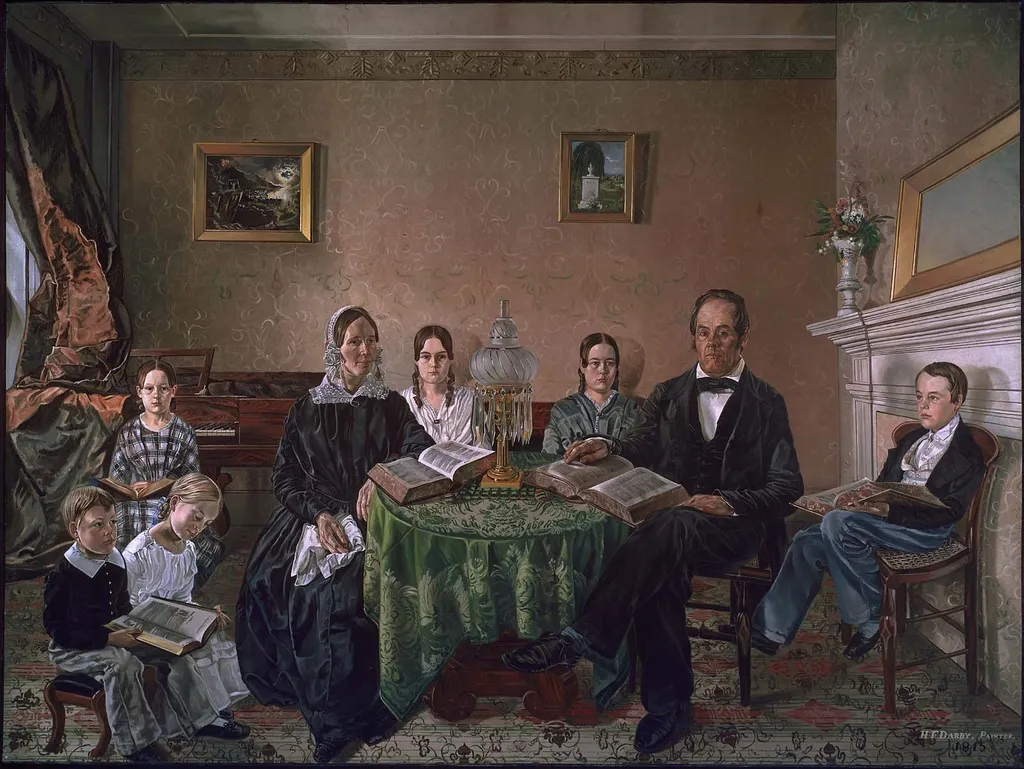
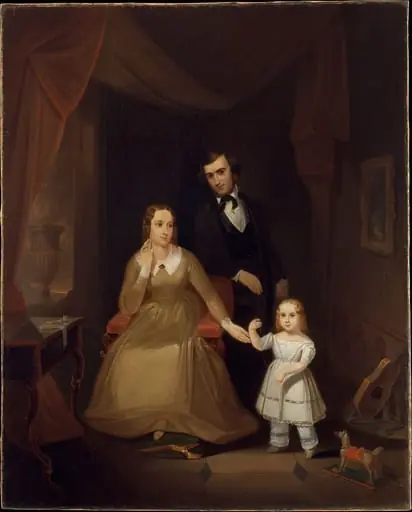
The Reverend John Atwood and His Family is an oil painting by the British Romanticist artist Henry F. Darby. It dates from 1845 and is held in the collection of the Museum of Fine Arts Boston. Painted in 1845 by Henry F.
About this work
Overview
Painted in 1845 by Henry F. Darby, this oil portrait captures the Atwood family in a domestic interior. The work is part of the collection at the Museum of Fine Arts, Boston. It presents a group of eight family members in a composed, intimate setting, emphasizing quiet unity rather than formal grandeur. The composition reflects mid-19th century American ideals of family life and moral order.
Subject & Meaning
The painting centers on Reverend John Atwood and his wife, seated at the head of a table, surrounded by their six children, each absorbed in reading.
The painting centers on Reverend John Atwood and his wife, seated at the head of a table, surrounded by their six children, each absorbed in reading. The choice of books as the primary activity suggests an emphasis on education, piety, and intellectual discipline. The family’s stillness and uniform attire convey a sense of shared values, aligning with Protestant ideals of domestic virtue and quiet devotion.
Technique & Style
Darby employed a restrained palette and precise brushwork to render textures of fabric, wood, and paper. Lighting is soft and even, illuminating faces and books without dramatic contrast. The arrangement is symmetrical, reinforcing order and balance. Background elements like the fireplace and piano are rendered with subtle detail, contributing to a sense of cultivated domesticity without overwhelming the figures.
History & Provenance
Commissioned by the Atwood family, the painting remained in their possession until its acquisition by the Museum of Fine Arts, Boston. Its documented history is limited to family records and museum archives. No major exhibitions or public displays are recorded prior to its inclusion in the museum’s collection, suggesting it was primarily a private commemorative work.
Context
Created during a period when American middle-class families increasingly valued literacy and moral instruction at home, the painting reflects broader cultural trends. Clergymen like Atwood were seen as pillars of community virtue, and domestic scenes emphasizing education were common in portraiture. The inclusion of a piano hints at musical training, another marker of refined upbringing in antebellum New England.
Legacy
The painting serves as a quiet record of a specific family’s identity and values, offering insight into the private lives of New England’s educated class. While not widely known outside museum circles, it contributes to the understanding of 19th-century American portraiture beyond grand historical or aristocratic subjects, highlighting the dignity of everyday domestic life.
Own this work as a print
Artist & collection

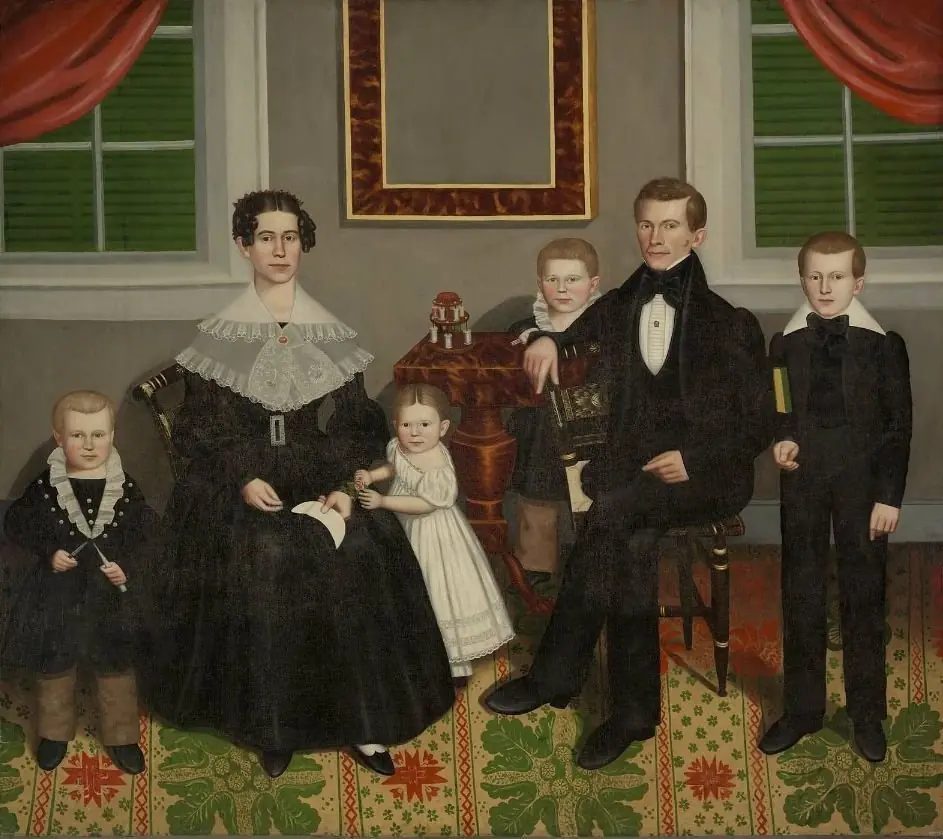 Joseph Moore and His Family
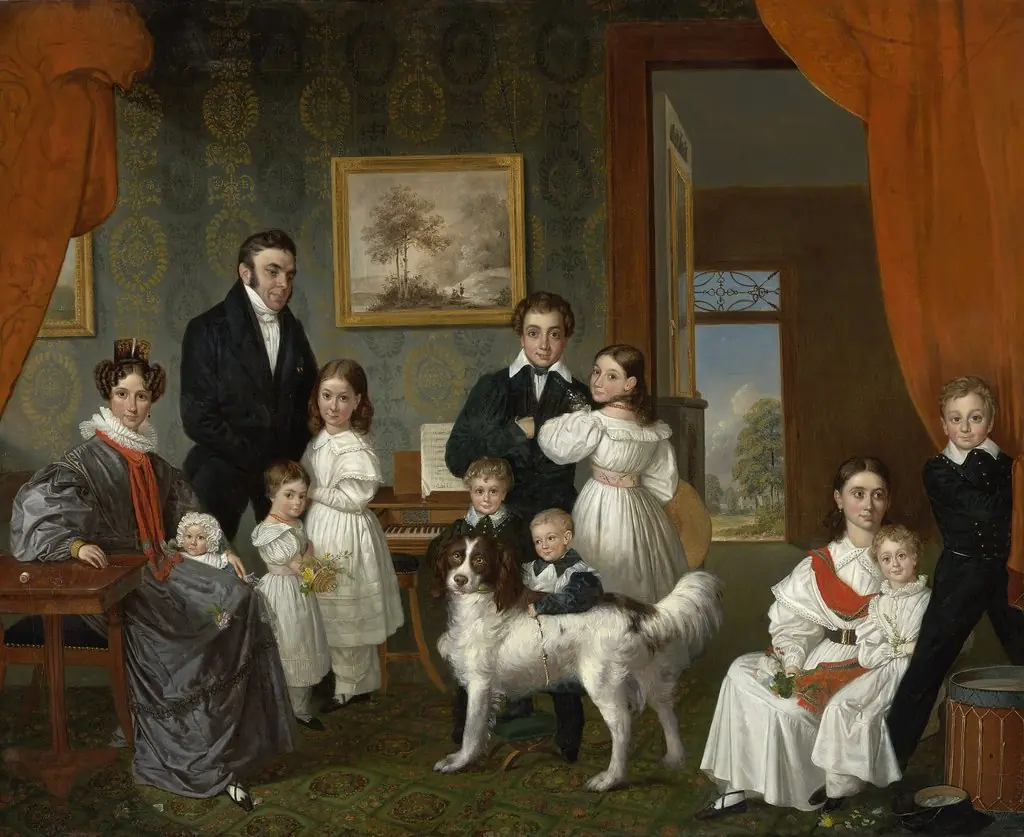 Portrait of the Baud family in their country house in Voorburg
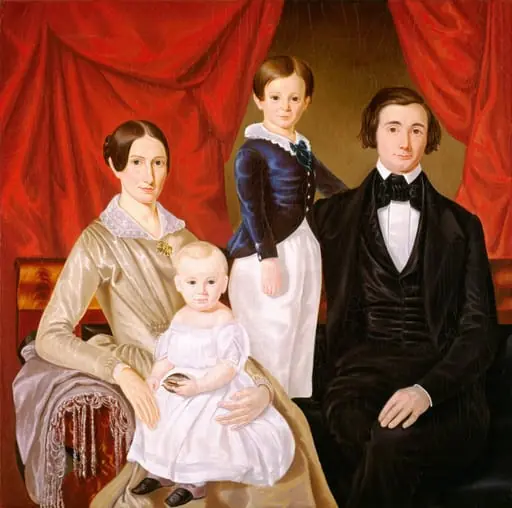 The Gage Family
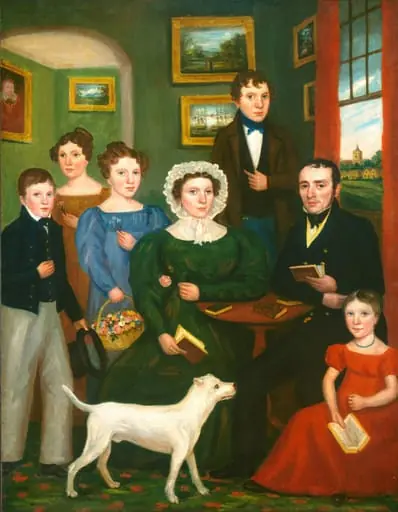 Portrait of an Unknown Family with a Terrier
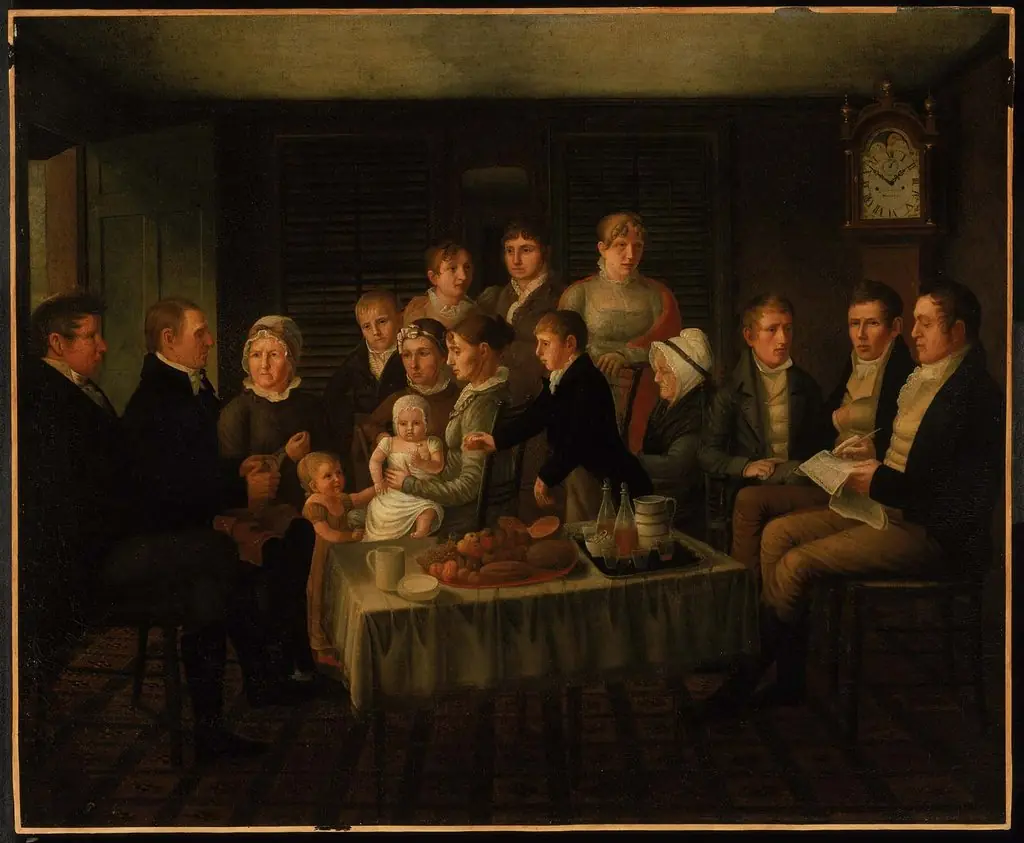 The Peckham-Sawyer Family
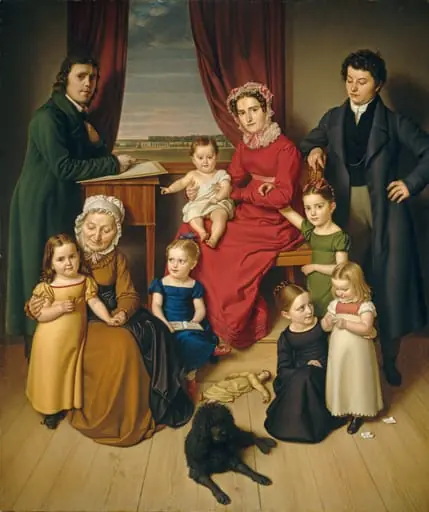 An Artist and His Family
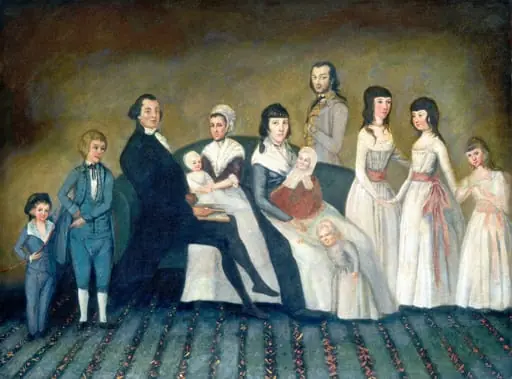 The Cheney Family
 The Hatch Family
 Samuel Beals Thomas, with His Wife, Sarah Kellogg Thomas, and Their Two Daughters, Abigail and Pauline
 The Younger Generation
 Frierens besøg
 The Williamson Family