Artwork
Man at Desk
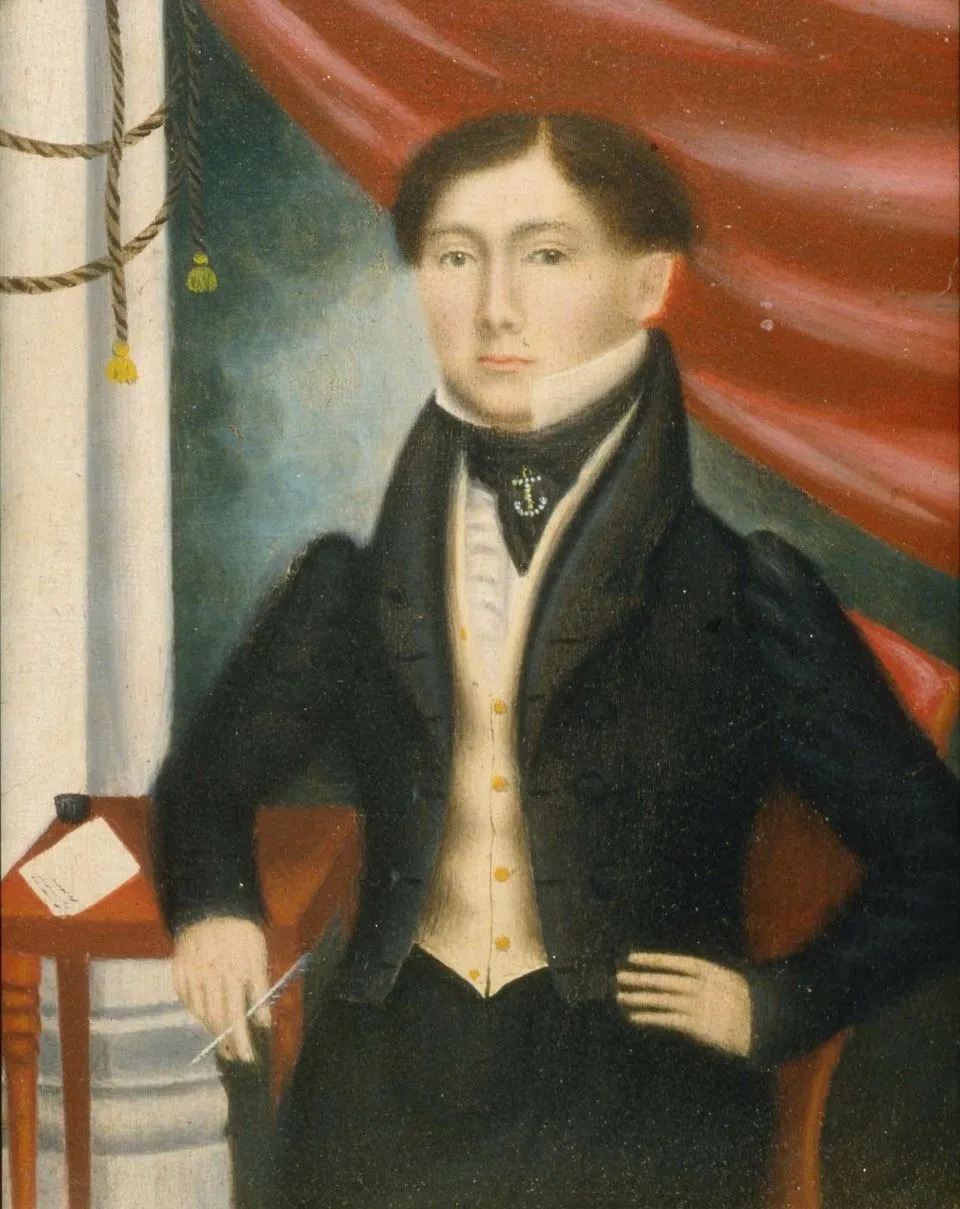
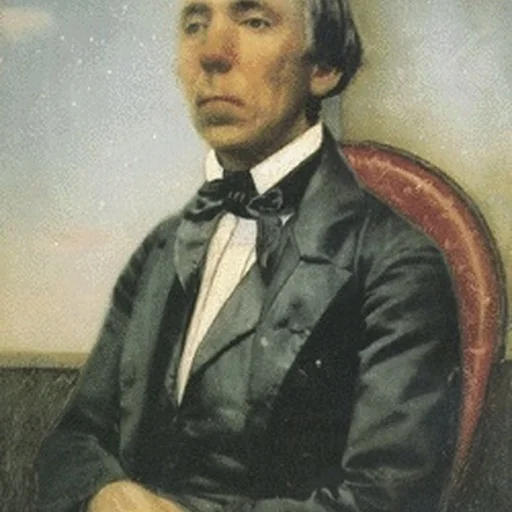
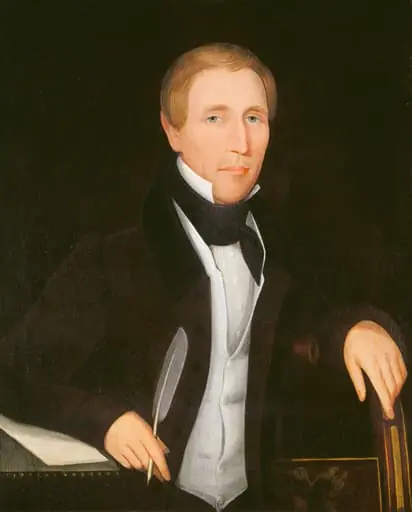
Man at Desk is an oil painting by the Realist artist Erastus Salisbury Field. It dates from 1830 and is held in the collection of the Museum of Fine Arts Boston.
About this work
Overview
The painting reflects his interest in capturing individual presence through careful attention to dress, posture, and spatial arrangement.
Erastus Salisbury Field painted *Man at Desk* in 1830 using oil on canvas. Though trained briefly in New York under Samuel F. B. Morse, Field worked primarily in Massachusetts, where he developed a distinctive approach to portraiture. The painting reflects his interest in capturing individual presence through careful attention to dress, posture, and spatial arrangement. It is now part of the Museum of Fine Arts, Boston’s collection.
Subject & Meaning
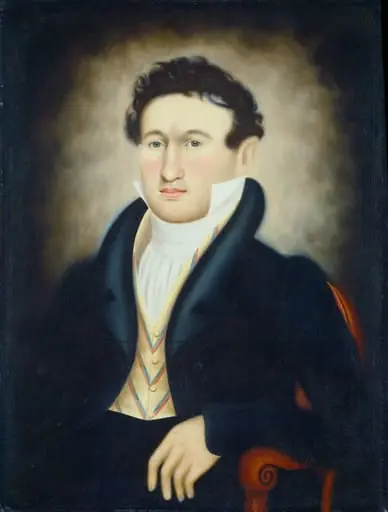
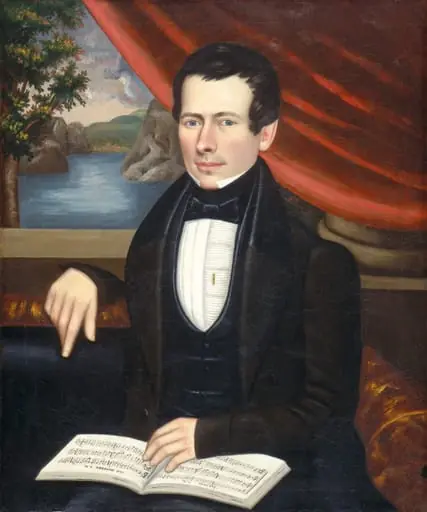
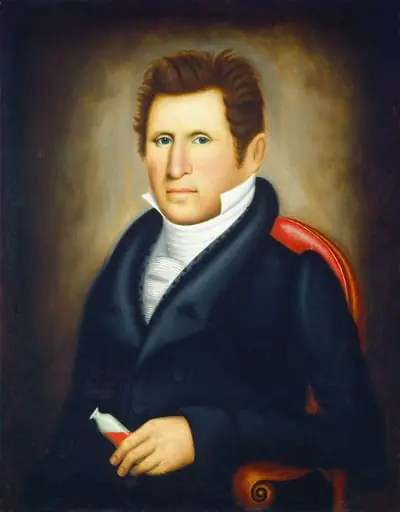
The figure is a man dressed in formal 19th-century attire—dark jacket, white shirt, black bow tie—standing confidently before a desk. His right hand rests on his hip, left holds a quill, suggesting contemplation or composition. The absence of identifying marks leaves his profession ambiguous, but the setting implies intellectual or administrative work. His serious expression and upright stance convey dignity rather than narrative specificity.
Technique & Style
Field employs chiaroscuro to model the figure with subtle light and shadow, giving volume to the form against a flat background of red curtain and blue wall. The brushwork is precise but not overly refined, characteristic of American folk portraiture. Details like the inkwell and paper are rendered with clarity, anchoring the scene in tangible reality without decorative flourish. The composition centers the subject, minimizing distraction.
History & Provenance
Painted in 1830, the work emerged during Field’s early career, shortly after his brief apprenticeship with Morse. It remained in private hands for much of the 19th and 20th centuries before entering the Museum of Fine Arts, Boston’s collection. Its survival and preservation reflect growing institutional interest in American folk art during the mid-20th century, though its exact ownership history before museum acquisition is not fully documented.
Context
In the 1830s, American portraiture was shifting from formal aristocratic commissions to depictions of middle-class professionals. Field’s work aligns with this trend, portraying an individual not by lineage but by occupation and demeanor. While influenced by academic training, his style retains the directness and simplicity common among itinerant painters serving provincial communities outside major urban centers.
Legacy
Though not widely known during his lifetime, Field’s body of work, including *Man at Desk*, gained renewed attention in the 20th century as scholars reevaluated American folk art. His ability to convey quiet authority through restrained composition and clear detail influenced later studies of regional portraiture. The painting remains a representative example of early 19th-century American visual culture beyond the academic mainstream.
Artist & collection