Artwork
Saint Jerome in the Wilderness
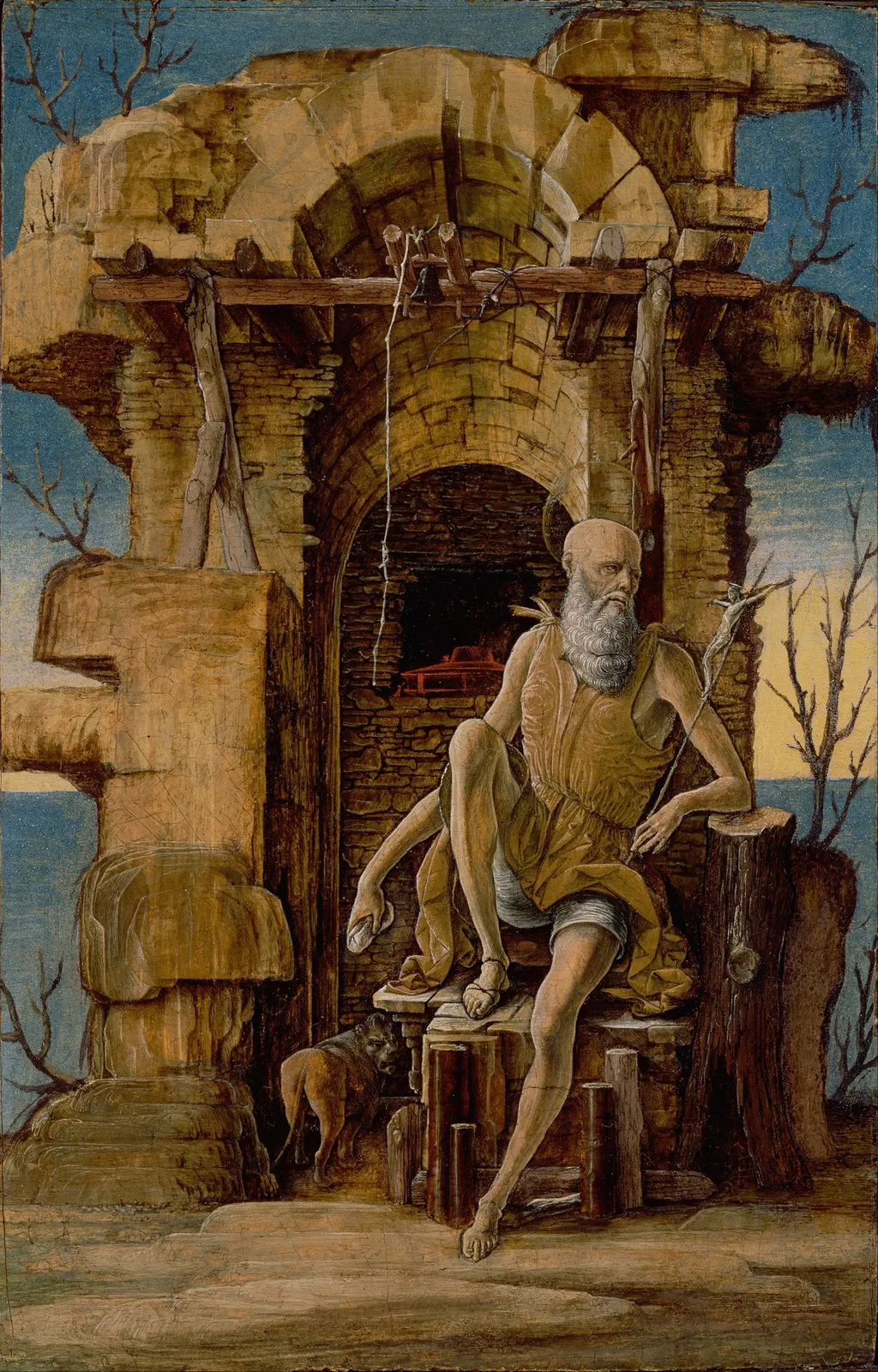
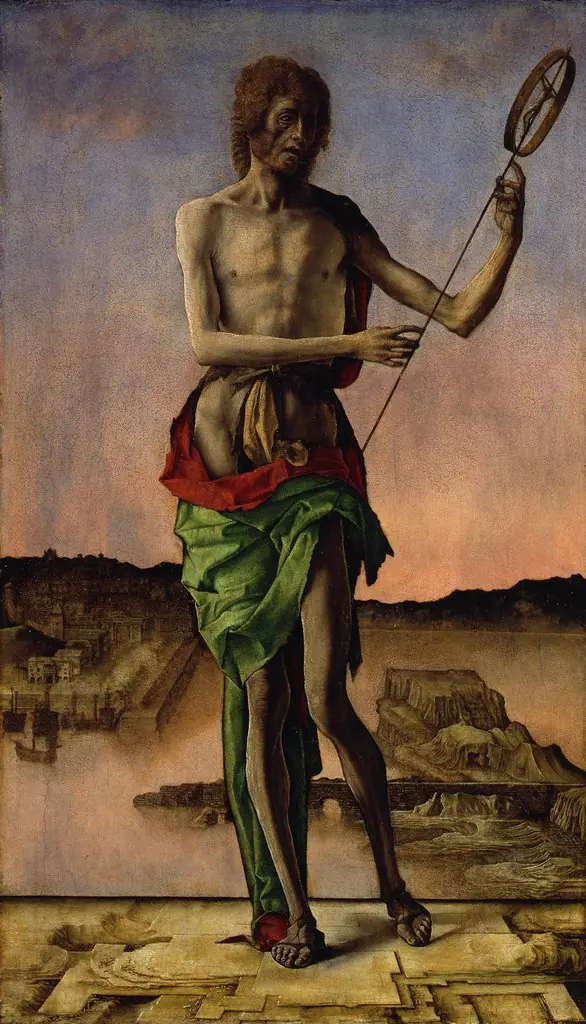
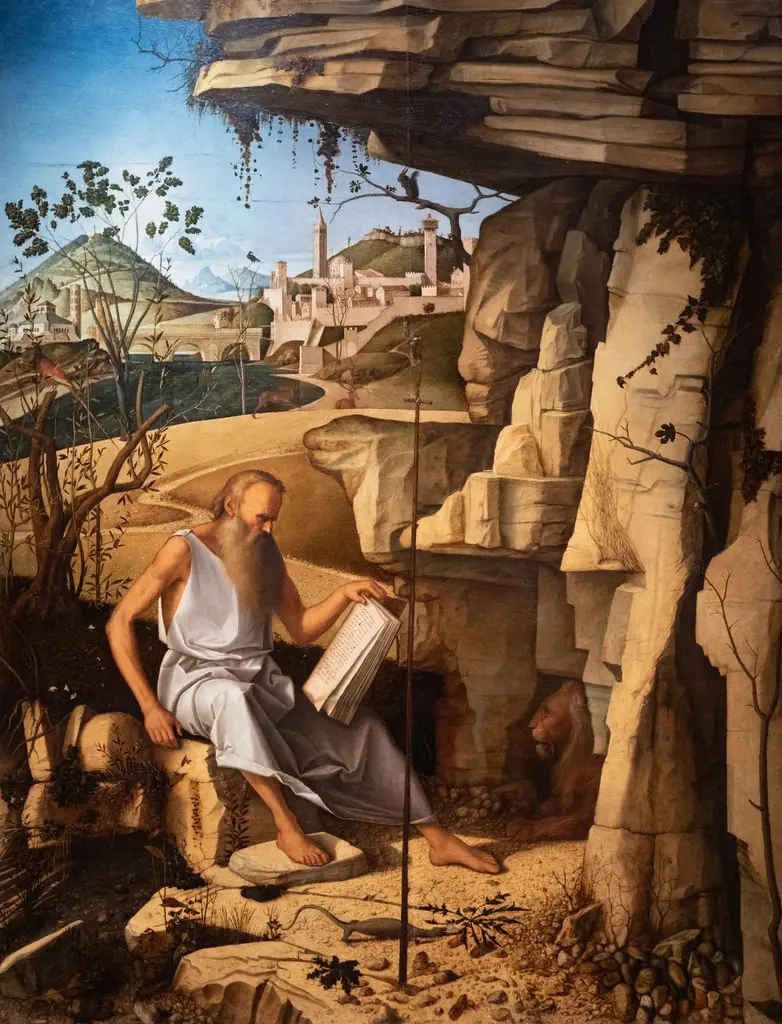
Saint Jerome in the Wilderness is a tempera painting by the Early Renaissance artist Ercole de' Roberti. It dates from 1470 and is held in the collection of the J. Paul Getty Museum.
About this work
Overview
Ercole de'Roberti's 'Saint Jerome in the Wilderness' is a tempera painting from 1470, now part of the J. Paul Getty Museum's collection. The work portrays a solitary figure in a serene, natural setting.
Subject & Meaning
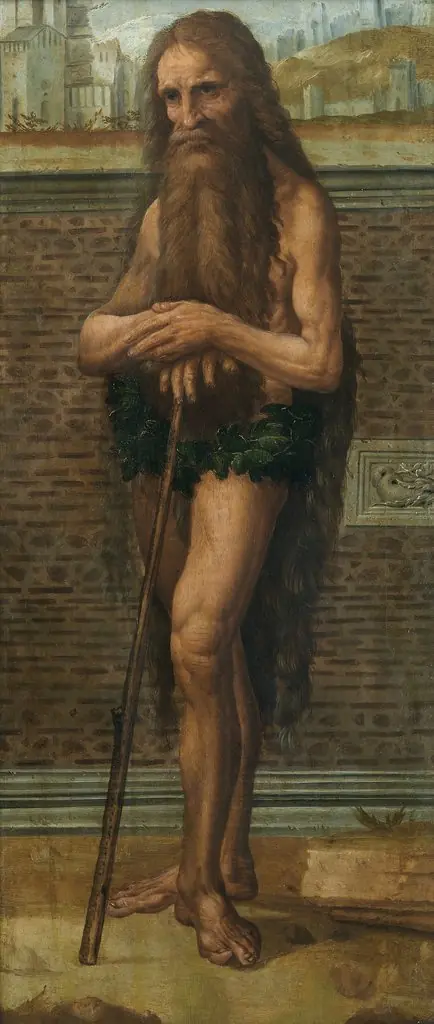
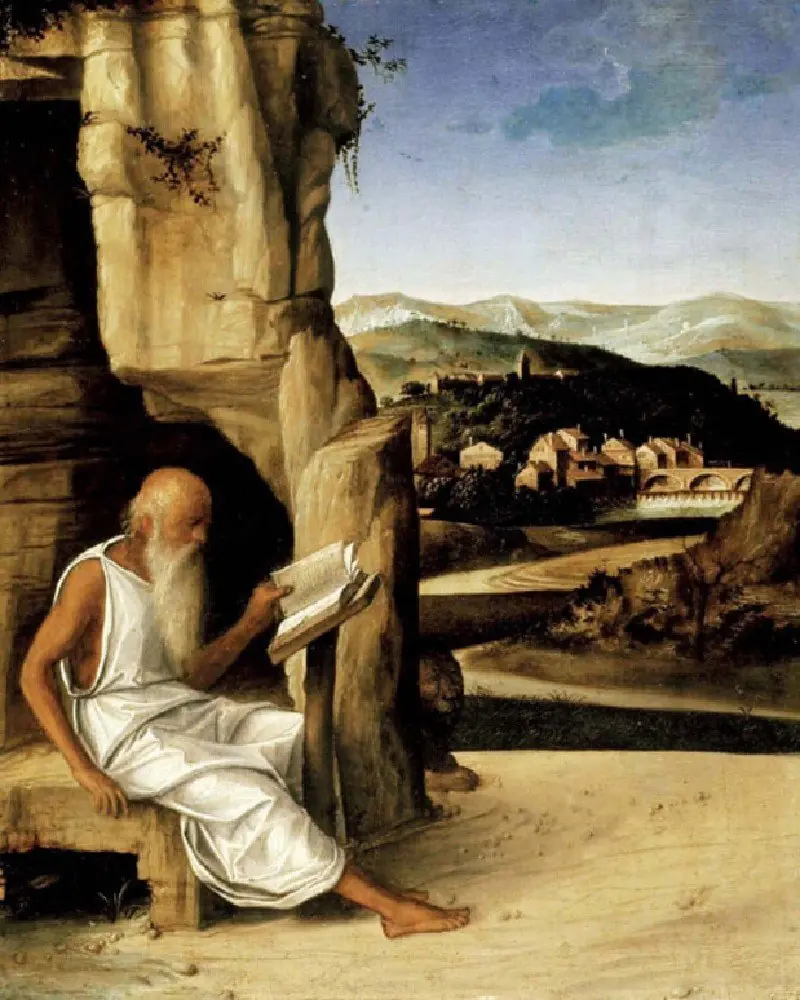
The painting depicts Saint Jerome, identifiable by his long white beard and simple attire, engaged in contemplation. His pose, with crossed legs and staff in hand, conveys a sense of introspection. A dog by his side adds a note of companionship in solitude.
Technique & Style
Executed in tempera, the painting showcases the medium's characteristic clarity and detail. The somber, contemplative atmosphere is enhanced by the contrast between the warm, earthy tones of the figure and surroundings, and the cooler blues of the distant sky and water.
History & Provenance
Created in 1470, the painting's history prior to its acquisition by the J. Paul Getty Museum is not detailed here. Its current location ensures its preservation and public accessibility.
Context
Painted during the Italian Renaissance, 'Saint Jerome in the Wilderness' reflects the era's interest in religious themes and naturalistic settings. The depiction of Jerome, a scholar and ascetic, may also allude to the Renaissance humanist values.
Own this work as a print
Artist & collection

Artist
Ercole de' Roberti was born in Ferrara around 1450 and trained under the painters Cosmè Tura and Francesco del Cossa, with whom he collaborated on frescoes at the Palazzo Schifanoia in 1470.