Artwork
Untitled
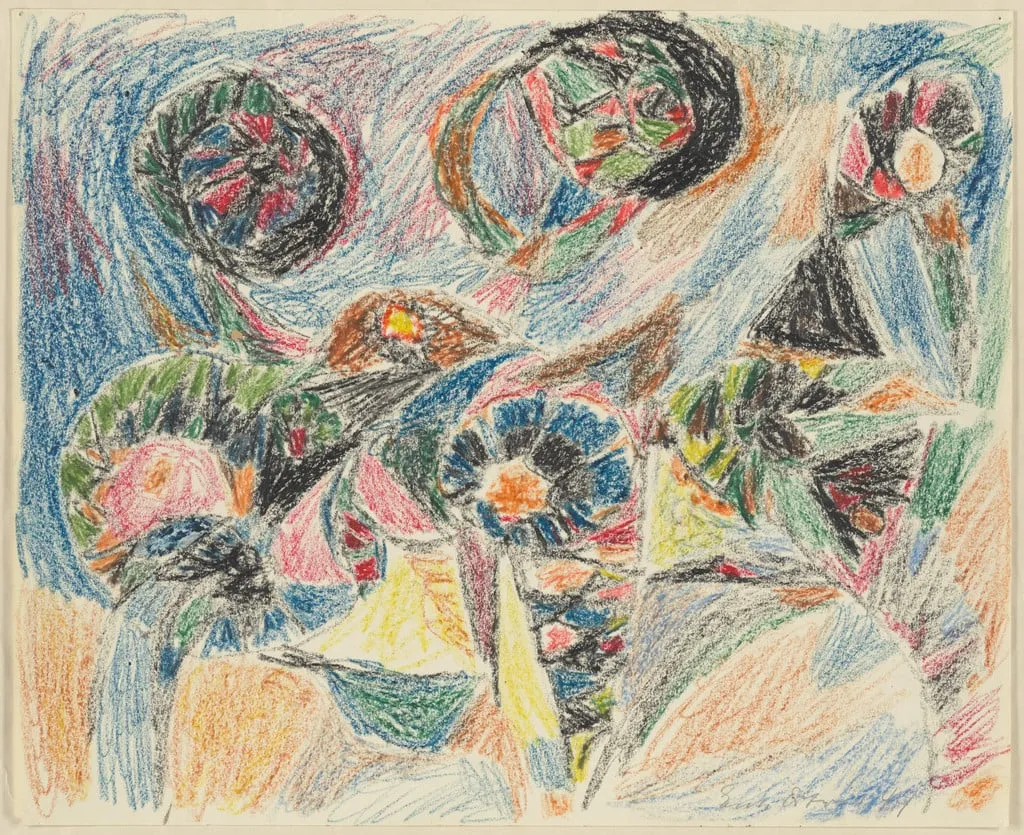
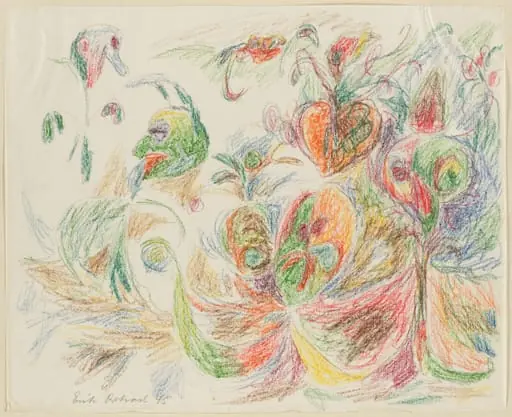
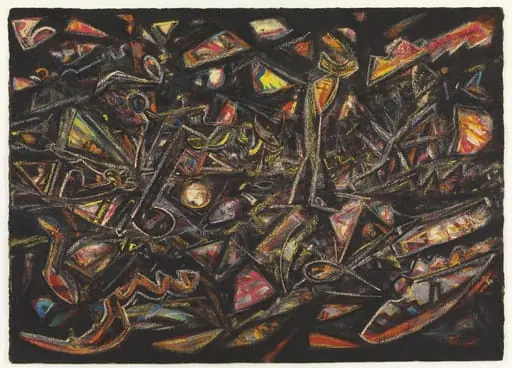
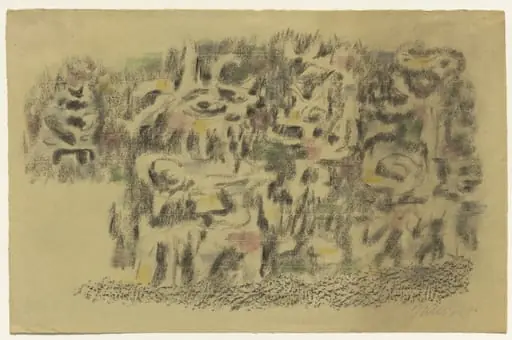
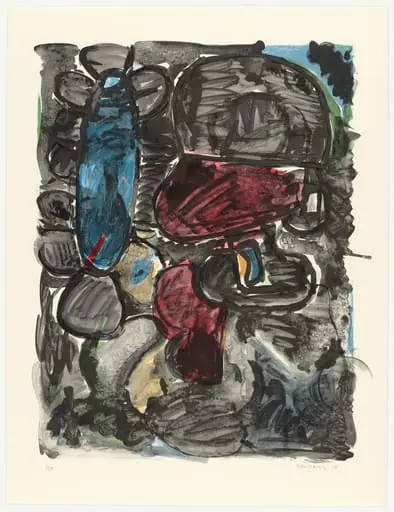
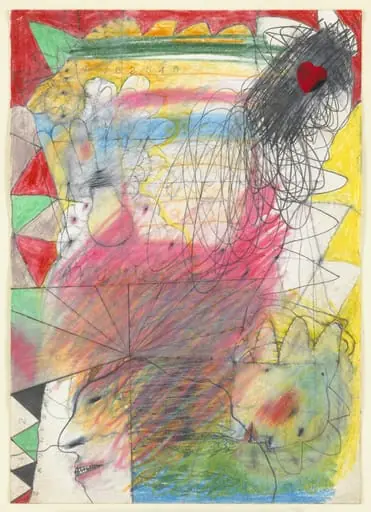
Untitled is a crayon drawing by Erik Ortvad. It dates from 1944 and is held in the collection of the Museum of Modern Art.
About this work
If you like this drawing, you might also enjoy the work of Erik Ortvad, the Danish artist who created it in 1944.
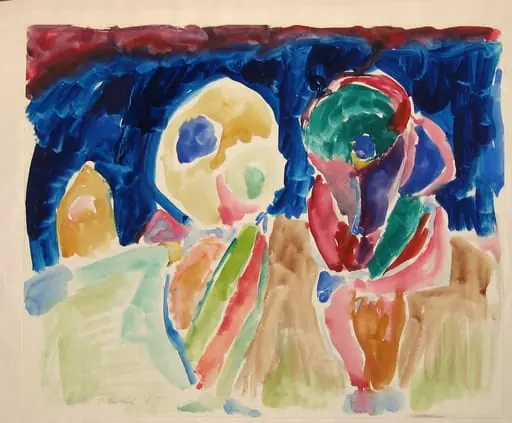
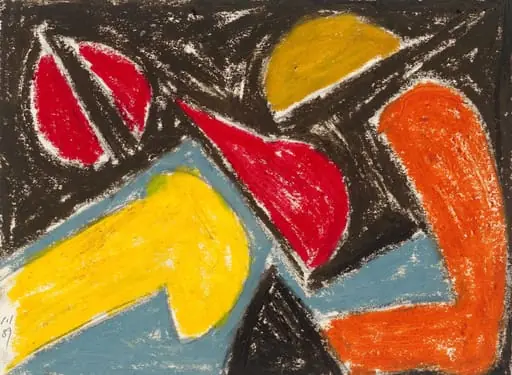
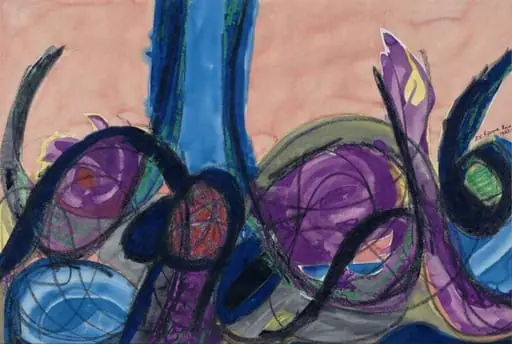
This abstract drawing is made with crayon on paper. The colors are vibrant, with lots of blue, orange, and green. There are circular shapes and lines that twist and turn.
The drawing has a sense of movement and energy. The colors are bold and bright, and the lines are expressive and dynamic. The overall effect is one of spontaneity and creativity.
If you like this drawing, you might also enjoy the work of Erik Ortvad, the Danish artist who created it in 1944.
Overview
Created in 1944, this crayon drawing on paper is one of several works by Danish artist Erik Ortvad produced during his exile in Sweden. Ortvad, who began exhibiting in 1935, developed a distinctive visual language blending abstraction with expressive line work. The piece reflects his engagement with surrealism and his response to the political turmoil of the era, made while he lived as a refugee due to his communist affiliations and his marriage to a Jewish woman.
Subject & Meaning
The drawing resists literal interpretation, instead conveying emotional intensity through non-representational forms. Swirling lines and overlapping circles suggest motion, rhythm, or internal states rather than external subjects. Its abstract nature aligns with Ortvad’s broader tendency to use visual chaos as a counterpoint to the rigid ideologies of wartime Europe, offering a private space of freedom amid public constraint.
Technique & Style
Ortvad employed crayon for its immediacy and rich pigment, layering bold hues of blue, orange, and green to create visual tension. The lines are fluid and unrefined, emphasizing gesture over precision. The composition lacks a central focus, distributing energy evenly across the surface. This approach reflects a spontaneous, almost improvisational method, characteristic of his wartime drawings where material constraints and emotional urgency shaped his process.
History & Provenance
Made during Ortvad’s years in Sweden, where he sought refuge from Nazi-occupied Denmark, the work was later acquired by The Museum of Modern Art. Its inclusion in the museum’s collection underscores its significance as a personal artifact of displacement and artistic resilience. The drawing remained largely private until postwar institutional recognition, when Ortvad’s broader oeuvre began to be reassessed within the context of European modernism.
Context
Ortvad’s exile in Sweden coincided with heightened political repression in Denmark and the persecution of Jewish communities. His art during this period, including this drawing, diverged from overt political messaging, instead channeling anxiety and hope into abstract forms. The vibrant palette and kinetic lines contrast with the grim realities of war, suggesting an internal world where creativity persisted despite external oppression.
Legacy
Though Ortvad is less widely known than some of his contemporaries, this drawing contributes to a growing recognition of his role in mid-century Scandinavian modernism. His use of abstraction to navigate personal and political trauma influenced later generations of Danish artists exploring identity and displacement. The work remains a quiet testament to art as a form of endurance under duress.
Artist & collection
Artist
Erik Ortvad (18 June 1917 in Copenhagen – 29 February 2008 in Kvänjarp) was a painter and a creator of many drawings.