Artwork
Untitled
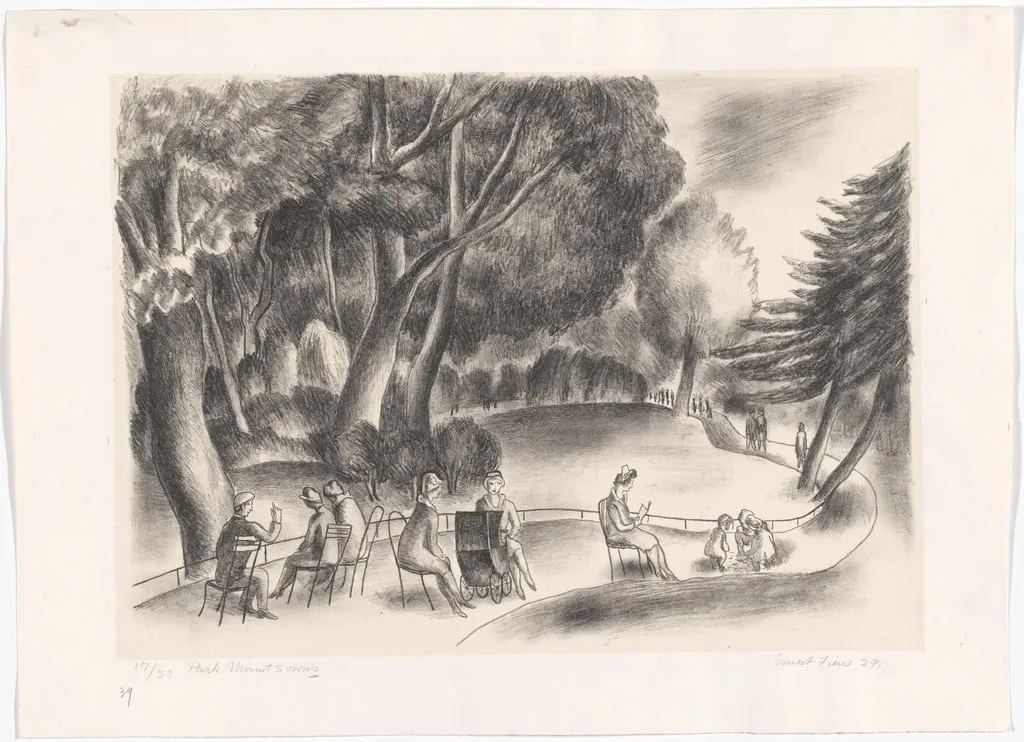
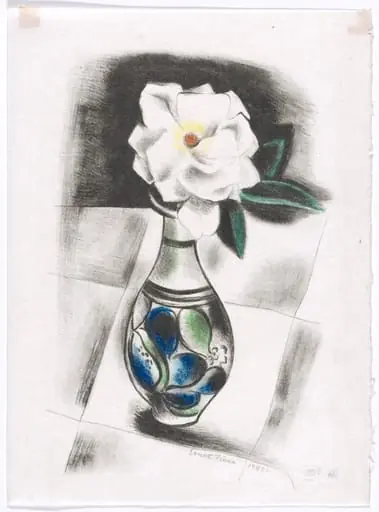
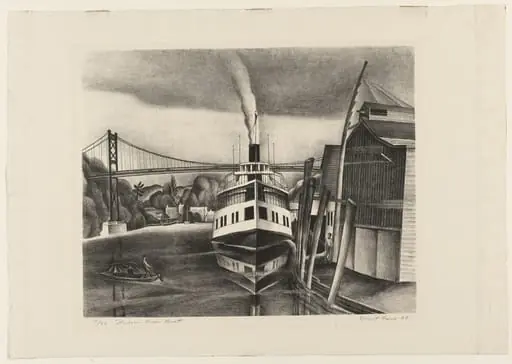
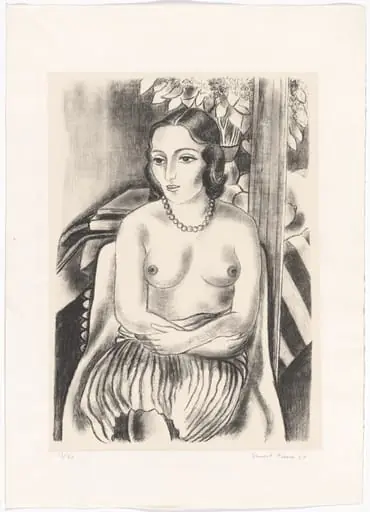
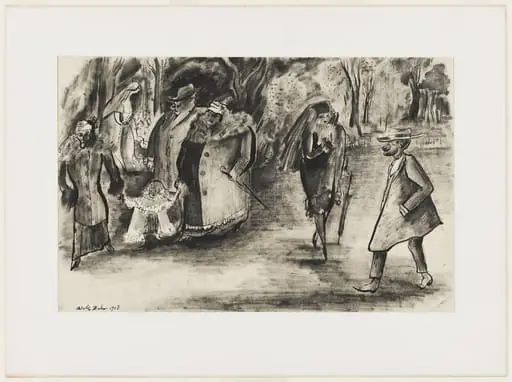
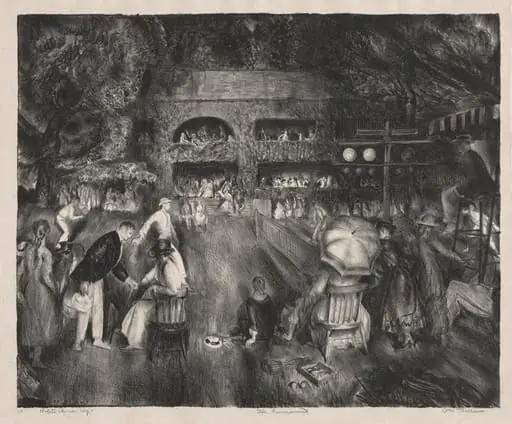
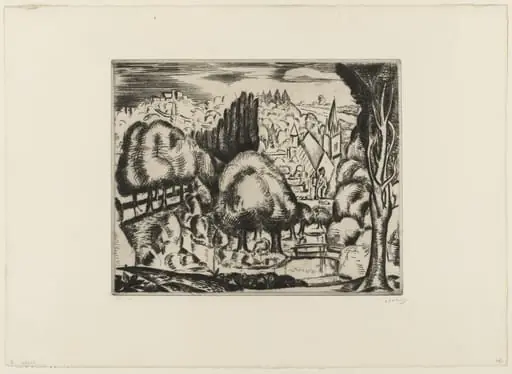
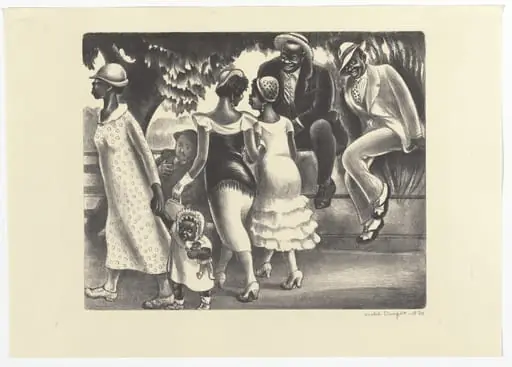
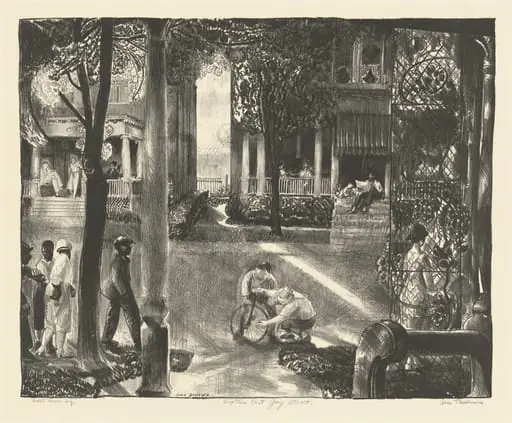
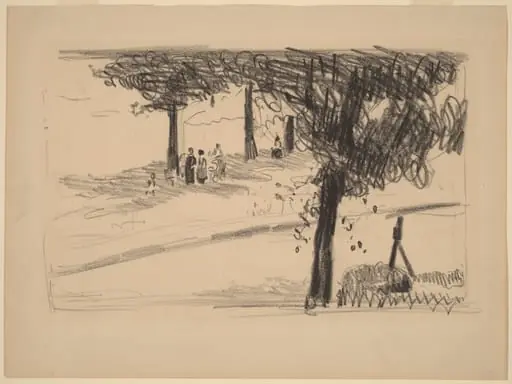
Untitled is an ink print by Ernest Fiene. It dates from 1929 and is held in the collection of the Museum of Modern Art.
About this work
Overview
The piece belongs to a period when Fiene was exploring abstraction, moving away from representational forms toward expressive mark-making.
Ernest Fiene created this lithograph in 1929 during a stay in Paris. The work is a minimalist print on pale gray paper, dominated by a single, irregular black line that cuts diagonally across the surface. It is part of the collection at The Museum of Modern Art. The piece belongs to a period when Fiene was exploring abstraction, moving away from representational forms toward expressive mark-making.
Subject & Meaning
The print lacks recognizable imagery, yet the jagged line evokes natural or mechanical fractures—like a split in ice or a sudden electrical discharge. Its abruptness suggests tension, urgency, or disruption. Though not a depiction of any specific event, the work resonates with the unease of its time, subtly mirroring the social and economic instability that would soon escalate globally.
Technique & Style
Fiene used lithography to achieve a stark contrast between the dense black line and the muted gray ground. The line’s uneven, hand-drawn quality reveals the artist’s direct engagement with the stone, emphasizing spontaneity over precision. The absence of shading or detail focuses attention on the line’s rhythm and placement, turning negative space into an active element of the composition.
History & Provenance
Created in Paris in 1929, the print was made shortly before the Wall Street Crash, a moment of global uncertainty. Fiene, an American artist living abroad, was influenced by European modernism but retained a personal, introspective approach. The work entered MoMA’s collection in the decades following its creation, recognized for its quiet yet potent abstraction within the context of interwar printmaking.
Context
In the late 1920s, many artists in Europe and America were redefining visual language through abstraction. Fiene’s work aligns with contemporaries who sought emotional resonance through form rather than narrative. Lithography, valued for its immediacy, allowed him to translate inner states into simple, bold gestures—reflecting a broader shift toward expressive minimalism in print culture.
Legacy
This lithograph exemplifies Fiene’s contribution to American modernism through restraint and subtlety. While less known than his contemporaries, the work remains a quiet reference point in discussions of abstraction in printmaking. Its enduring presence in MoMA’s collection underscores its role in expanding the possibilities of the medium beyond illustration toward pure visual sensation.
Artist & collection
Artist
Ernest Fiene was a 20th-century American graphic artist who primarily worked in New York City and Woodstock, New York.