Artwork
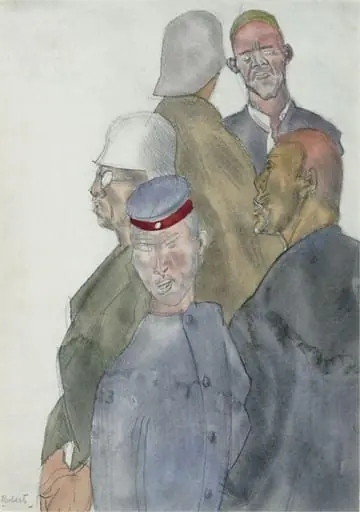
Prisoners in an Interior
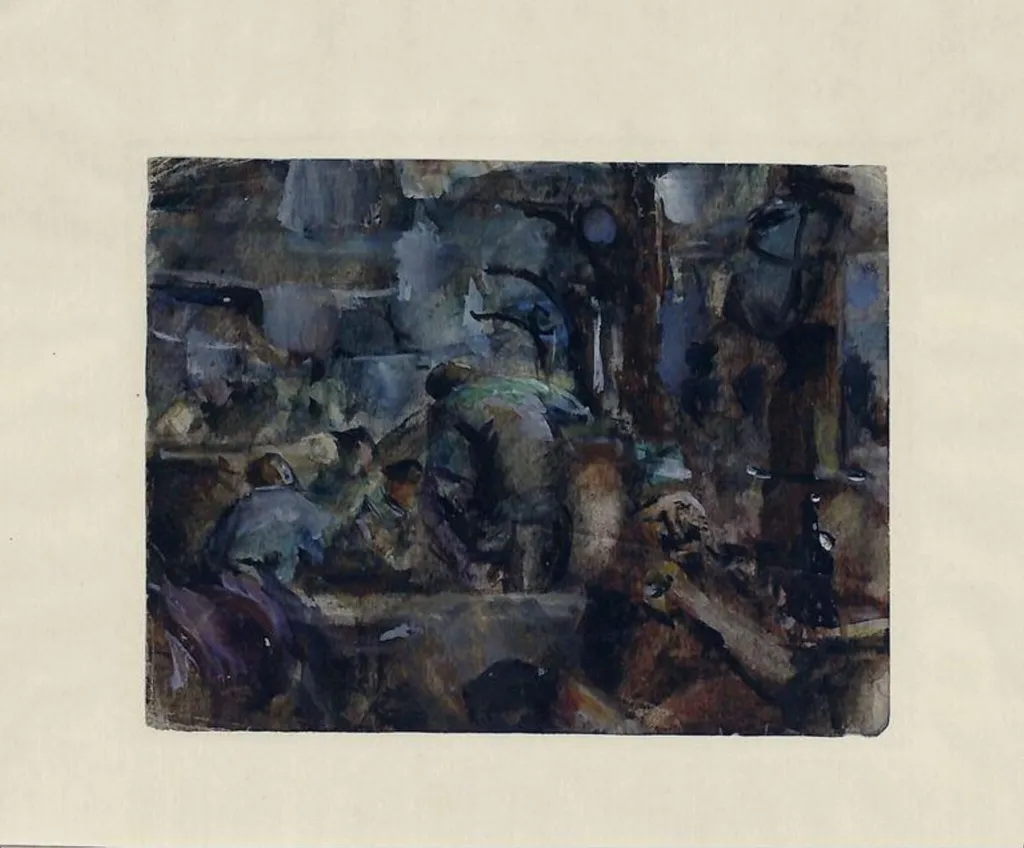
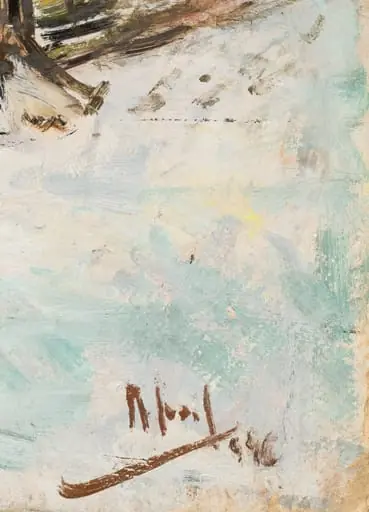
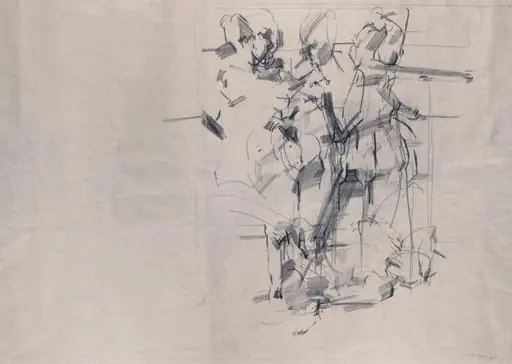
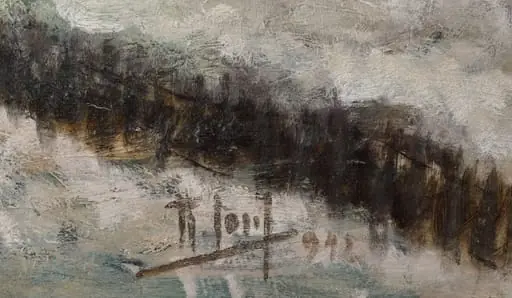
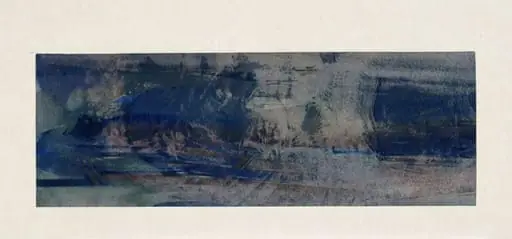
Prisoners in an Interior is a paint painting by Ervin Bossanyi. It dates from 1916 and is held in the collection of the Victoria and Albert Museum.
About this work
Overview
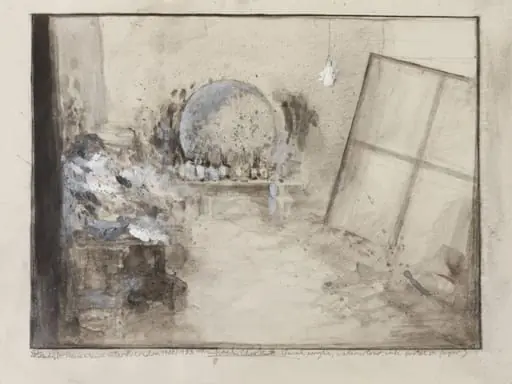
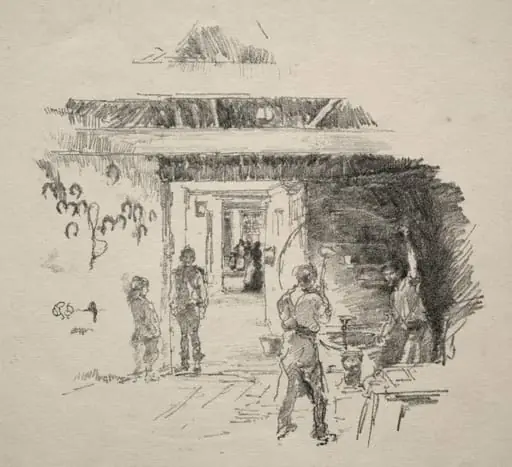
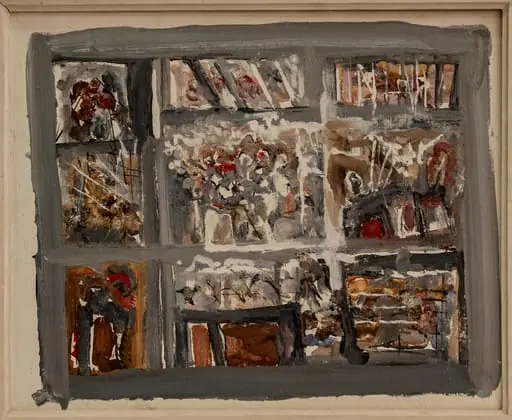
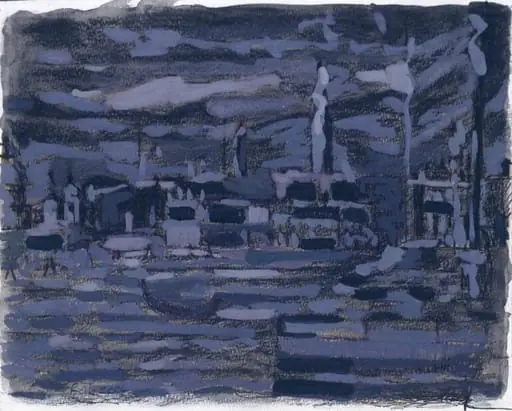
Painted in 1916 by Ervin Bossanyi, this watercolor depicts a group of prisoners of war gathered in a confined interior space. The composition centers on their quiet, introspective presence, rendered in muted tones that emphasize the somber atmosphere. The scene lacks overt action, instead conveying a sense of shared endurance through posture and stillness.
Subject & Meaning
The figures, dressed in dark, indistinct garments, form a loose circle, suggesting communal solidarity amid captivity. Some gaze downward in resignation; others meet each other’s eyes, hinting at unspoken communication. The absence of guards or weapons shifts focus to psychological weight rather than physical restraint, framing the image as a meditation on human resilience under duress.
Technique & Style
Bossanyi employs watercolor with restrained washes, building depth through layered grays and browns. Light enters from outside the frame, casting faint highlights on faces and shoulders, but the room remains largely shadowed. The brushwork is loose yet deliberate, avoiding detail to preserve an atmosphere of ambiguity and emotional gravity.
History & Provenance
Created during World War I, the work reflects Bossanyi’s engagement with the human cost of conflict. Though specific details of its early ownership are undocumented, its subject aligns with contemporaneous artistic responses to wartime suffering. The painting entered institutional collections in the mid-20th century, where it has been preserved as a record of civilian and military detention.
Context
In 1916, as global conflict intensified, artists across Europe turned to intimate scenes of captivity and displacement. Bossanyi’s work diverges from heroic war imagery, instead focusing on the quiet dignity of those held in limbo. This approach resonates with broader modernist tendencies to prioritize psychological realism over narrative spectacle.
Legacy
The painting remains a quiet testament to the emotional toll of war, often referenced in studies of early 20th-century refugee and prisoner experiences. While not widely exhibited, it contributes to a lesser-known strand of wartime art that values restraint over spectacle, influencing later depictions of confinement in 20th-century visual culture.
Artist & collection
Artist
Ervin Bossányi (3 March 1891 in Rigyica / Riđica, Austria-Hungary – 11 July 1975 in Eastcote in Greater London, England) was a Hungarian artist, who worked mainly in northern Germany until his emigration in 1934.