Artwork
The Tyresmith
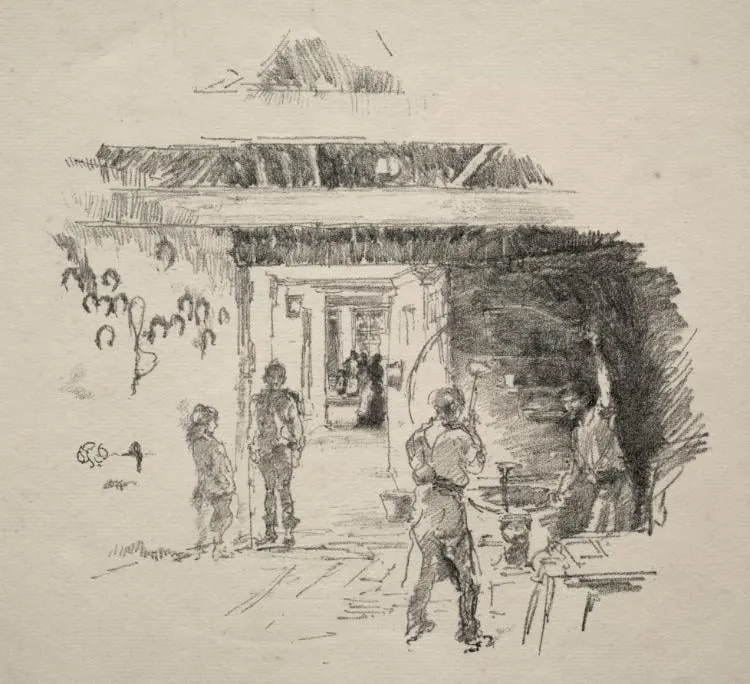
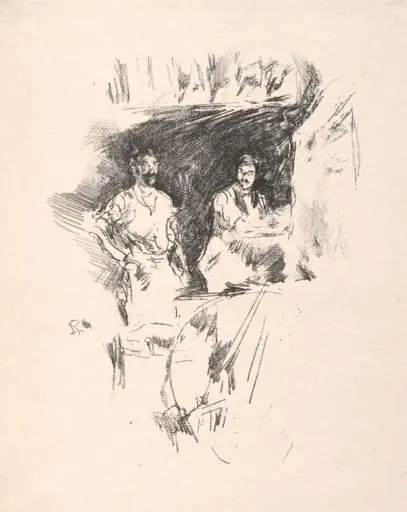
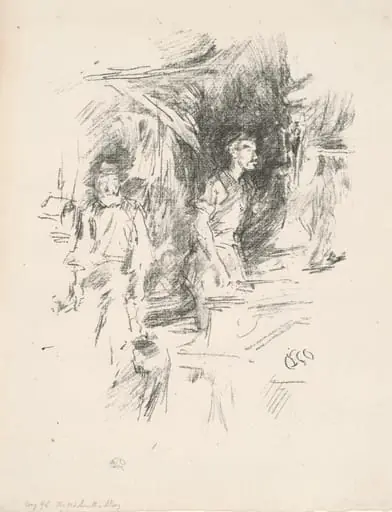
The Tyresmith is a print by the Impressionist artist James McNeill Whistler. It dates from 1890 and is held in the collection of the Cleveland Museum of Art.
About this work
Overview
Created in 1890 by James McNeill Whistler, The Tyresmith is a graphite sketch on paper, currently held by The Cleveland Museum of Art.
Created in 1890 by James McNeill Whistler, The Tyresmith is a graphite sketch on paper, currently held by The Cleveland Museum of Art. It captures a moment in a modest workshop, rendered with swift, loose lines that suggest immediacy rather than finish. Whistler favored such informal studies, often documenting ordinary labor over grand narratives. The work reflects his interest in transient scenes and atmospheric conditions, typical of his later graphic practice.
Subject & Meaning
The scene depicts a blacksmith or tire repairman bent over a large circular object, possibly a wagon tire, while two figures observe nearby. The setting is unadorned—a cluttered, dim interior with hanging tools and uneven walls. Whistler avoids dramatization; the focus is on quiet, unremarkable labor. The composition conveys dignity in routine work, aligning with his broader interest in the quiet rhythms of everyday life rather than theatrical storytelling.
Technique & Style
Whistler employed rapid graphite strokes to suggest form and shadow without detailed rendering. The light source, faint and directional, emerges from a distant opening, casting soft contrasts across the figures and surfaces. His approach is economical: contours are implied, textures hinted, and volume suggested through tonal shifts rather than precise line. This sketch-like method reflects his belief in capturing the essence of a moment over its literal accuracy.
History & Provenance
The drawing entered The Cleveland Museum of Art’s collection through established channels, though its exact path from Whistler’s studio to the museum remains undocumented. It was likely acquired during the early 20th century as part of broader interest in Whistler’s graphic works. Its preservation as a standalone sketch, rather than a study for a larger piece, underscores its value as an independent record of observation.
Context
In the 1890s, Whistler increasingly turned to drawings and etchings of working-class environments, moving away from his earlier portraits and nocturnes. This shift paralleled broader European trends toward Realism and the documentation of industrial labor. The Tyresmith aligns with his contemporaries’ fascination with urban and artisanal life, though his treatment remains subdued, avoiding social commentary in favor of quiet observation.
Legacy
The Tyresmith exemplifies Whistler’s late graphic style—minimalist, atmospheric, and attentive to light and gesture. It influenced later artists interested in the poetic potential of everyday scenes, particularly those working in drawing and printmaking. While not widely exhibited, it remains a key example of how Whistler transformed casual observation into a refined visual language, bridging realism and aestheticism.
Artist & collection
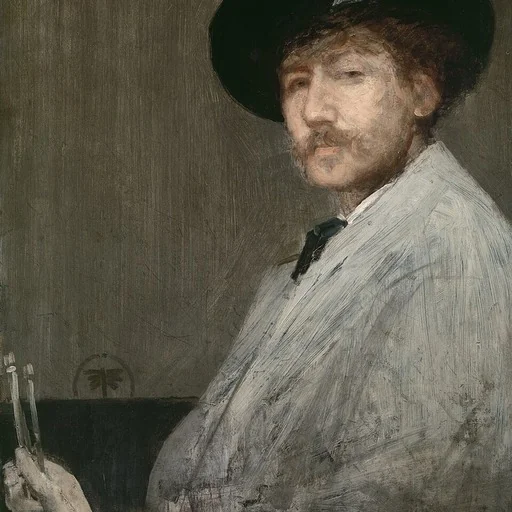
Artist
James Abbott McNeill Whistler was an American painter in oils and watercolor, and printmaker, active during the American Gilded Age and based primarily in the United Kingdom.

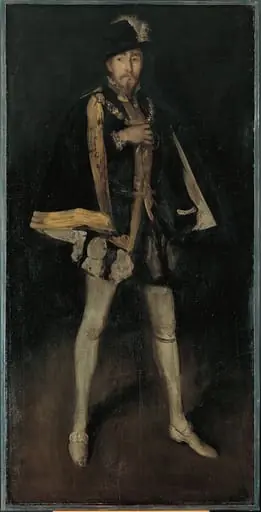 Arrangement in Black, No. 3: Sir Henry Irving as Philip II of Spain
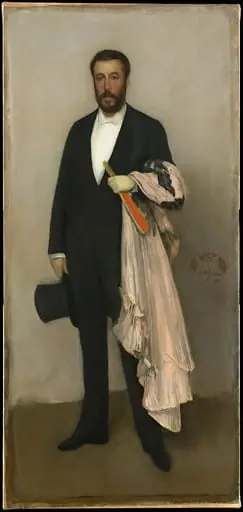 Arrangement in Flesh Colour and Black: Portrait of Theodore Duret
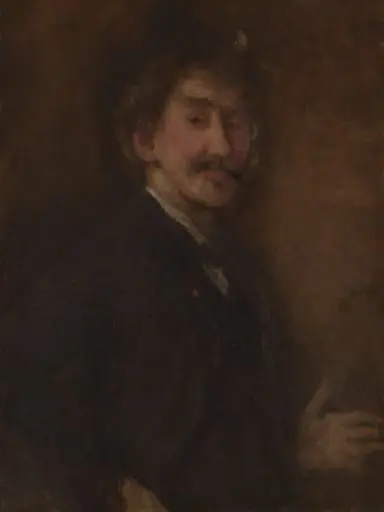 Gold and Brown: Self-Portrait
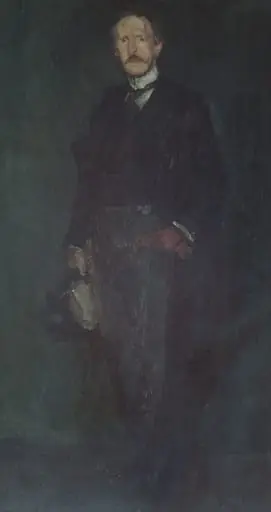 Edward Guthrie Kennedy
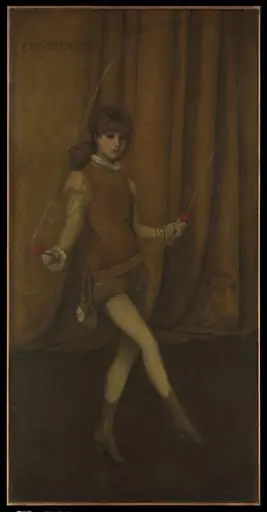 Harmony in Yellow and Gold: The Gold Girl—Connie Gilchrist
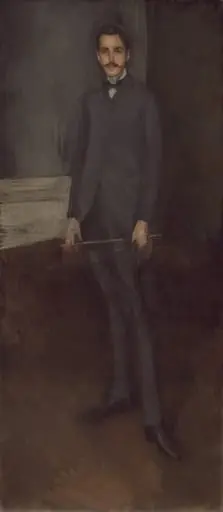 George W. Vanderbilt
 Symphony in White, No. 1: The White Girl
 Henry Irving as Philip II of Spain