Artwork
Nudes
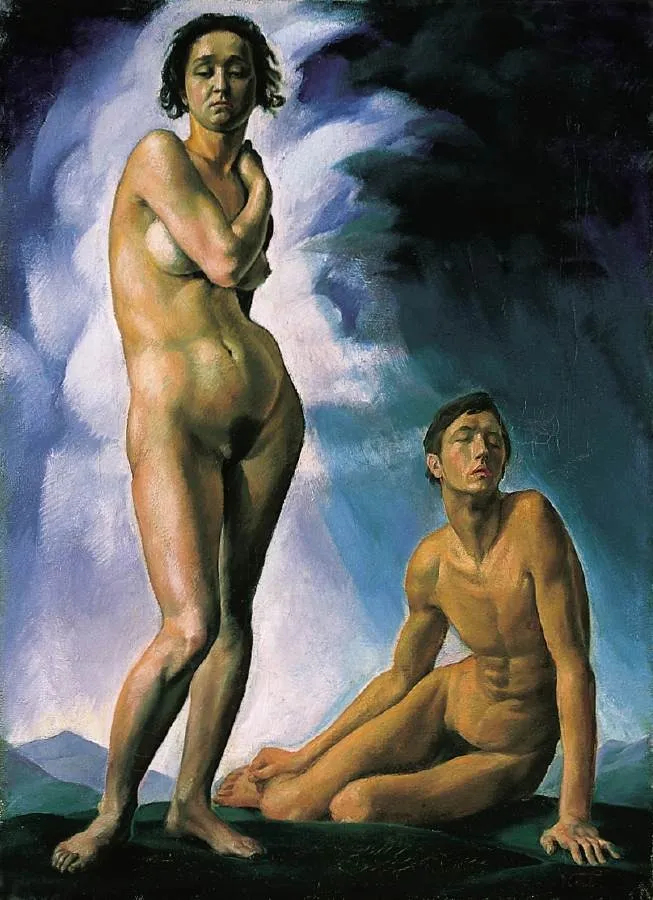
Nudes is an oil painting by the Post-Impressionist artist Erzsébet Korb. It dates from 1920 and is held in the collection of the Hungarian National Gallery.
About this work
Overview
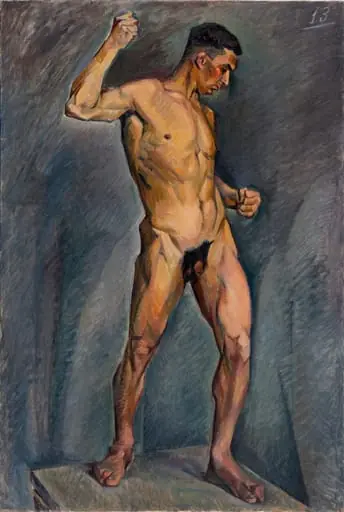
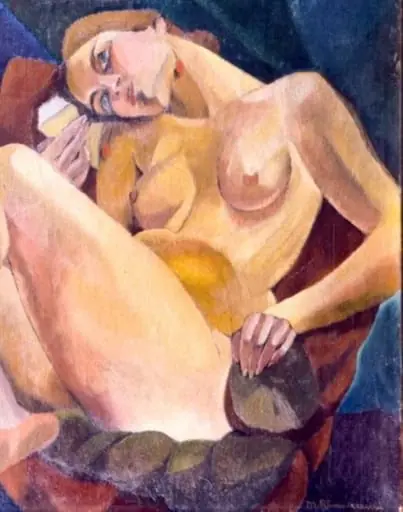
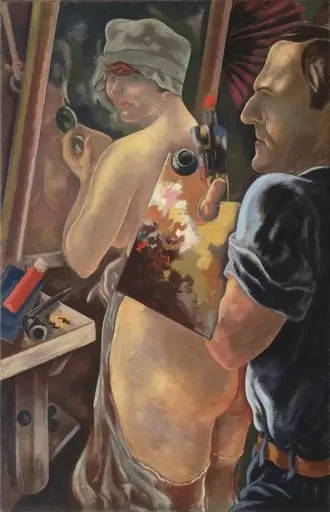
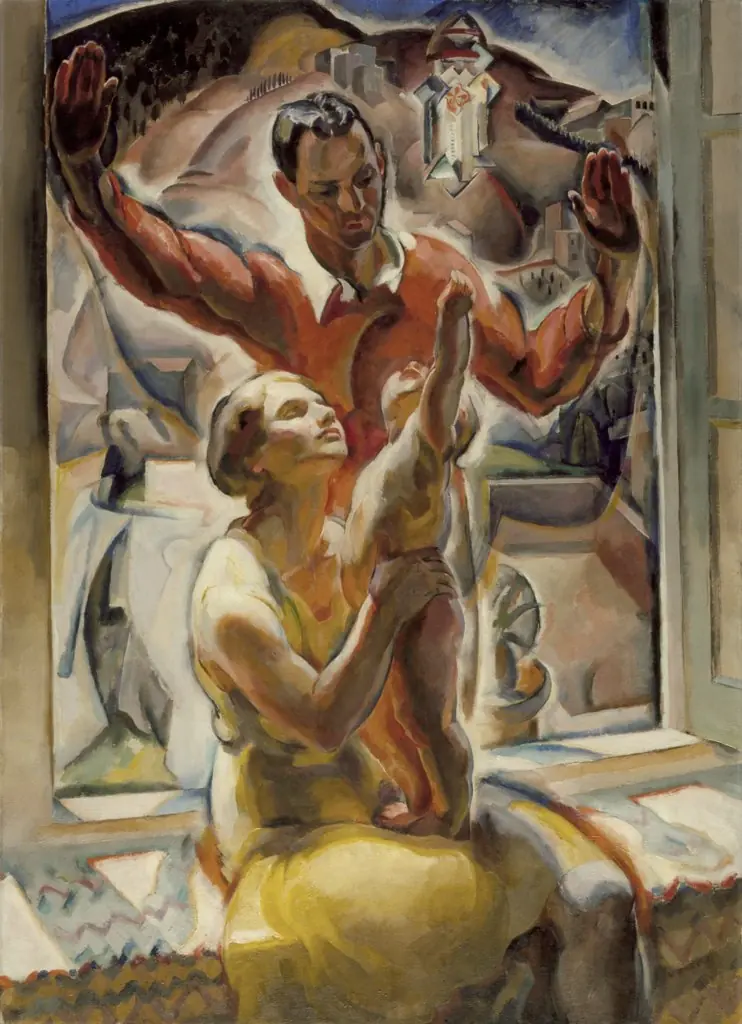
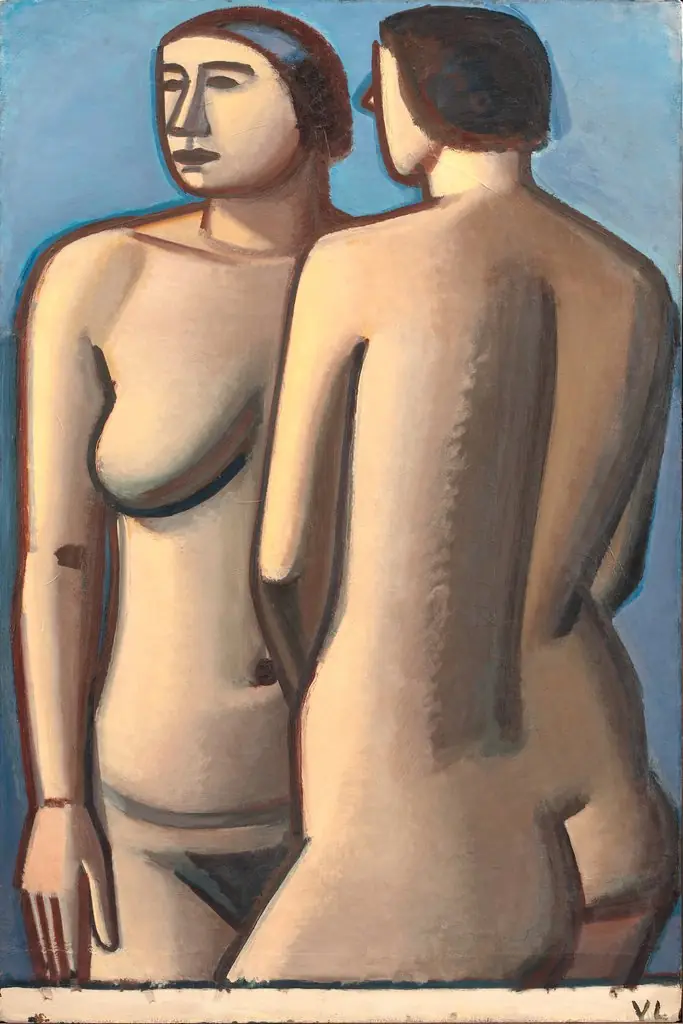
Painted in 1920 by Erzsébet Korb, this oil on canvas work depicts a nude woman standing beside a seated man. The composition centers on their physical and psychological distance, rendered with deliberate contrasts in lighting. The painting resides in the Hungarian National Gallery, where it is recognized as one of Korb’s few surviving figurative works from the early 20th century.
Subject & Meaning
The woman, standing upright with arms crossed, appears withdrawn, while the seated man gazes upward, his posture suggesting contemplation or vulnerability. The spatial and emotional divide between them evokes themes of isolation and unspoken tension. The woman’s exposed form is not idealized but presented with quiet dignity, resisting overt eroticism in favor of psychological nuance.
Technique & Style
Korb employs chiaroscuro to define form and mood, illuminating the woman’s body while leaving the man in shadow. This contrast enhances the three-dimensionality of the figures and reinforces their emotional separation. Brushwork is restrained, favoring smooth transitions over texture, aligning the work with early modernist tendencies that prioritized emotional resonance over decorative detail.
History & Provenance
Created in 1920, the painting entered the collection of the Hungarian National Gallery in the mid-20th century. Little documentation exists regarding its early exhibition history or ownership prior to its institutional acquisition. Korb’s limited surviving oeuvre makes this piece a significant reference for understanding female artists’ contributions to interwar Hungarian modernism.
Context
In post-World War I Hungary, artistic expression shifted toward introspection and social observation. Korb’s work reflects this climate, avoiding grand narratives in favor of intimate, psychologically charged scenes. While male artists dominated public discourse on the nude, Korb’s approach—quiet, unadorned, and emotionally complex—offers a rare female perspective within the national canon.
Legacy
Though Korb’s career was brief and largely overlooked during her lifetime, this painting has gained renewed scholarly attention as part of broader efforts to reassess women artists in Central European modernism. Its restrained composition and emotional subtlety distinguish it from more sensationalized depictions of the nude, positioning it as a quiet but enduring contribution to early 20th-century figurative painting.
Artist & collection