Artwork
El paso del mar Rojo
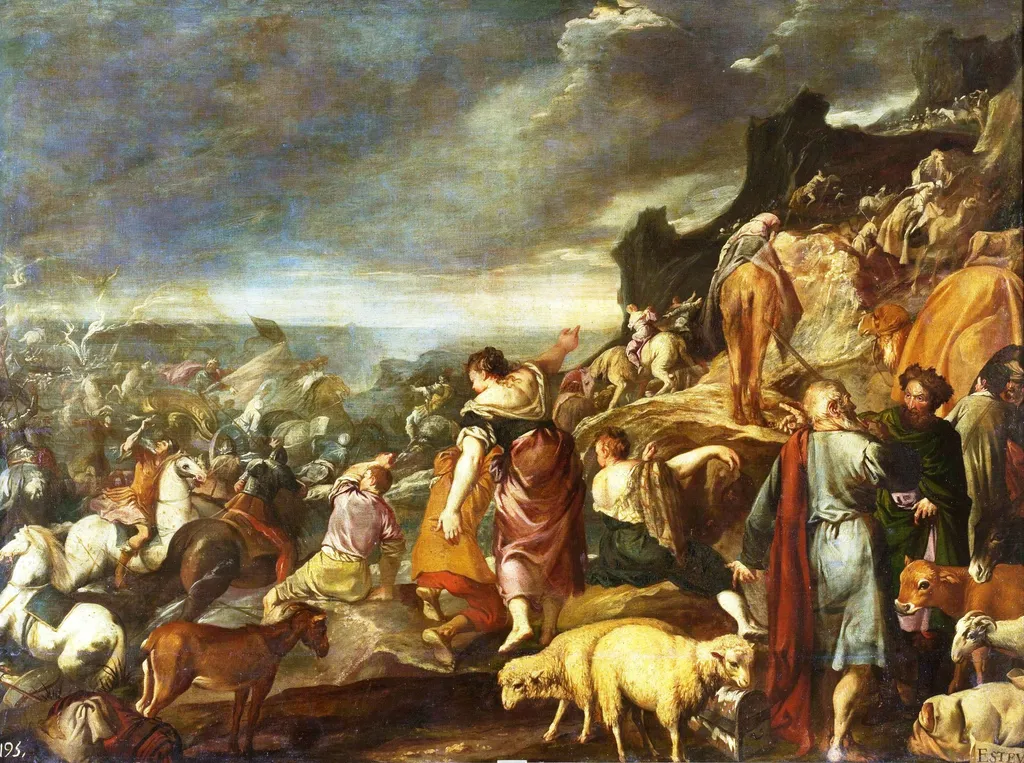
El paso del mar Rojo is an oil painting by the Early Baroque Italian artist Esteban March. It dates from 1601 and is held in the collection of the Museo del Prado.
About this work
Overview
El paso del mar Rojo is an oil painting dated to 1601 that belongs to the early Baroque period. Though the work is executed in an Italianate style, it is attributed to the Spanish painter Esteban March, who was active in Valencia in the first half of the seventeenth century. The canvas is part of the permanent collection of the Museo del Prado in Madrid.
Subject & Meaning
The composition portrays a frantic exodus across a rugged landscape, populated by humans and livestock—goats, sheep and a horse—caught in a moment of panic. A storm‑laden sky dominates the background, while a luminous source on the right casts a sudden beam of light over the fleeing figures, suggesting a dramatic rescue or divine intervention.
Technique & Style
March employs a pronounced chiaroscuro, juxtaposing deep shadows with bright highlights to heighten the sense of urgency. The palette is dominated by earthy browns and muted grays, punctuated by vivid reds and yellows in the clothing, which draw the eye toward the chaotic movement. The brushwork conveys texture in both the rocky ground and the turbulent sky.
History & Provenance
Created in 1601, the painting entered the Spanish royal collections before being transferred to the Museo del Prado, where it remains on display. Its attribution to March reflects the artist’s early career, preceding his later, more refined works produced in Valencia until his death around 1668.
Context
The work reflects the early Baroque fascination with dramatic narrative and emotional intensity, echoing contemporary religious and mythological scenes that emphasized divine intervention. Its Italianate composition aligns with the diffusion of Caravaggisti techniques into Spanish art during the early seventeenth century.
Own this work as a print
Artist & collection
Artist
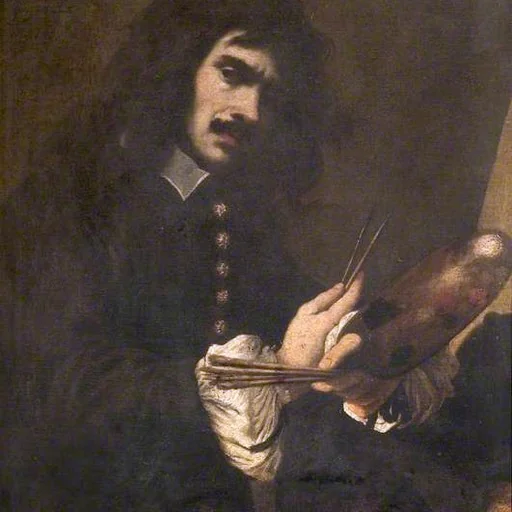
Esteban March (c,1610, Valencia - c.1668, Valencia) was a Spanish Baroque painter. Most of what is known about his life comes from writings by Antonio Palomino, who lived slightly later than March.
