Artwork
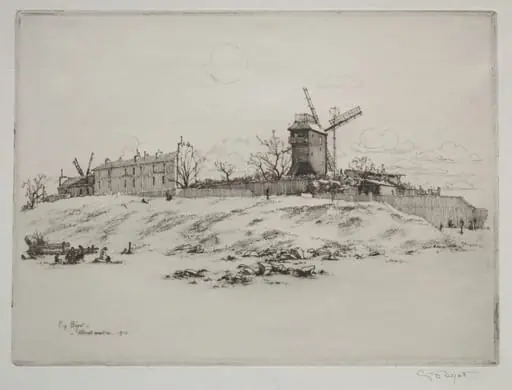
Montmartre, le Moulin de la Gallette
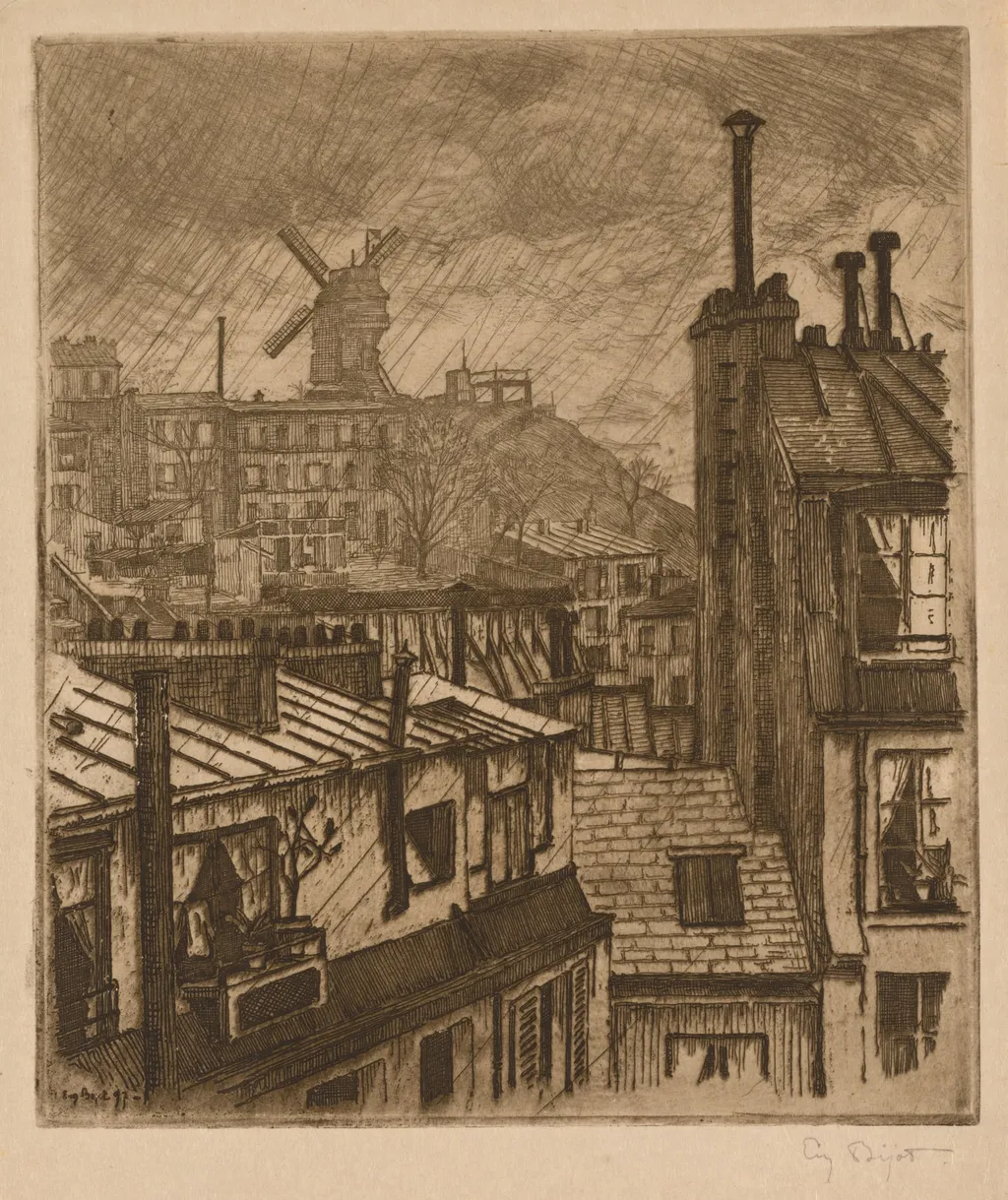
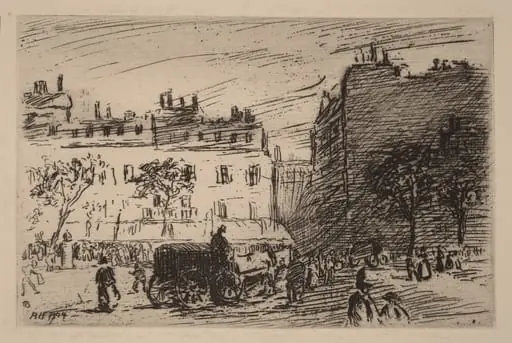
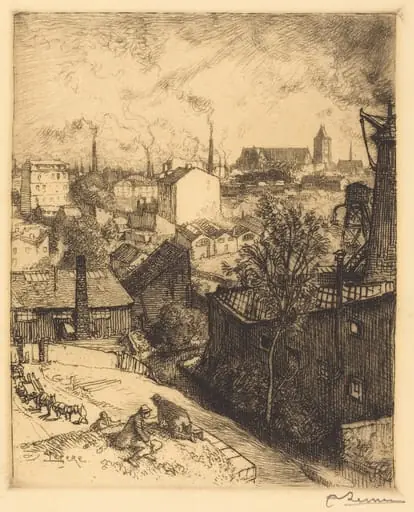
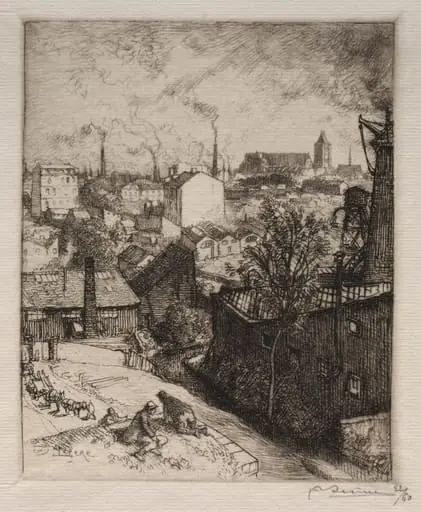
Montmartre, le Moulin de la Gallette is a print by the Impressionist artist Eugène Béjot. It dates from 1897 and is held in the collection of the Cleveland Museum of Art. Created in 1897 by Eugène Bejot, this print captures a quiet corner of Montmartre, a village then on the outskirts of Paris.
About this work
Overview
The work is held in the collection of The Cleveland Museum of Art and reflects a focus on ordinary urban life rather than grand or picturesque subjects.
Created in 1897 by Eugène Bejot, this print captures a quiet corner of Montmartre, a village then on the outskirts of Paris. Rendered in a sketchlike manner, it presents a dense cluster of modest dwellings climbing a slope, dominated by a tall windmill. The work is held in the collection of The Cleveland Museum of Art and reflects a focus on ordinary urban life rather than grand or picturesque subjects.
Subject & Meaning
The scene depicts the everyday architecture of Montmartre—wooden homes, narrow streets, and functional chimneys—without idealization. The windmill, once a working structure, stands as a quiet relic amid growing urbanization. Bejot’s choice to emphasize humble structures suggests an interest in the rhythms of working-class life, documenting a neighborhood undergoing change before full integration into the city.
Technique & Style
Bejot employed a rough, linear technique, using incised or scratched lines to build texture across rooftops and walls. The contrast between light and shadow is achieved through varied pressure and density of marks, not wash or tone. This method gives the scene a tactile, almost worn quality, reinforcing the sense of age and lived-in reality in the buildings and terrain.
History & Provenance
The print was made in 1897, during a period when Montmartre was transitioning from rural hamlet to urban district. Bejot, a lesser-known printmaker, documented local scenes with little fanfare. The work entered The Cleveland Museum of Art’s collection through documented acquisition, though its earlier ownership history remains unrecorded in public sources.
Context
In the late 19th century, Montmartre attracted artists drawn to its affordable rents and rustic character. While contemporaries like Toulouse-Lautrec depicted its nightlife, Bejot turned to its built environment. His focus on architecture over people aligns with a broader trend among printmakers who valued quiet observation over dramatic narrative.
Legacy
Bejot’s print contributes to a modest but persistent body of work documenting Paris’s peripheral neighborhoods before modernization erased their character. Though not widely exhibited, it remains a quiet testament to the value of everyday urban landscapes in art, offering a counterpoint to more celebrated depictions of the era.
Artist & collection