Artwork
Paris Street Scene
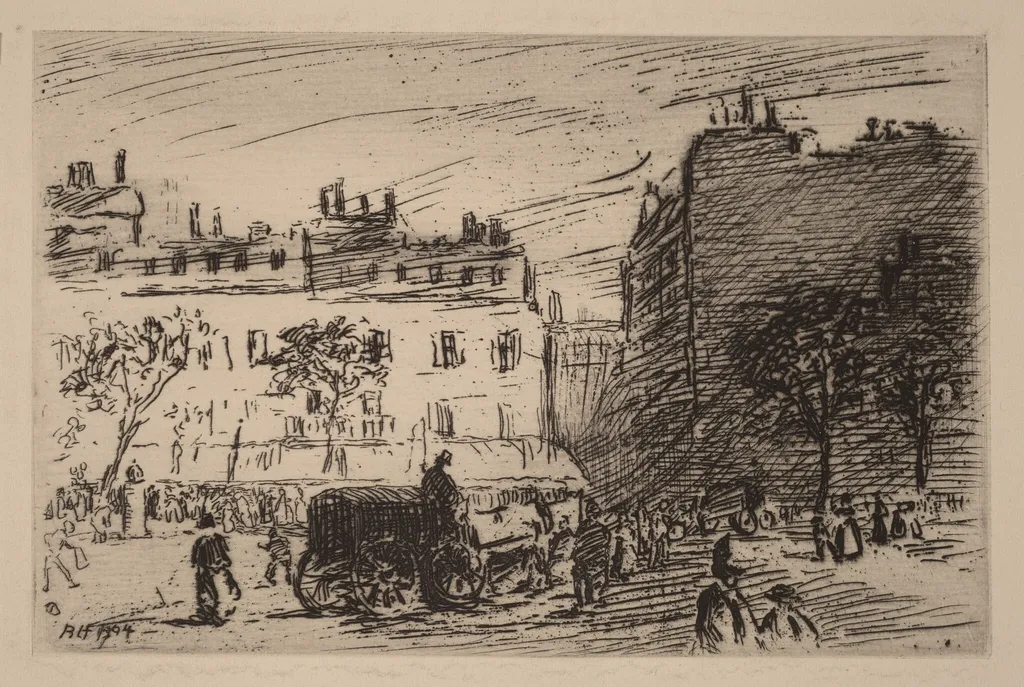
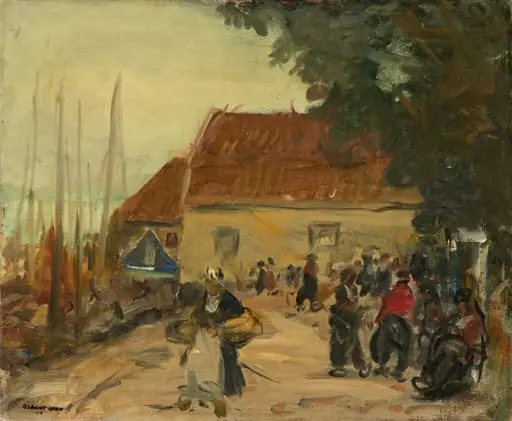
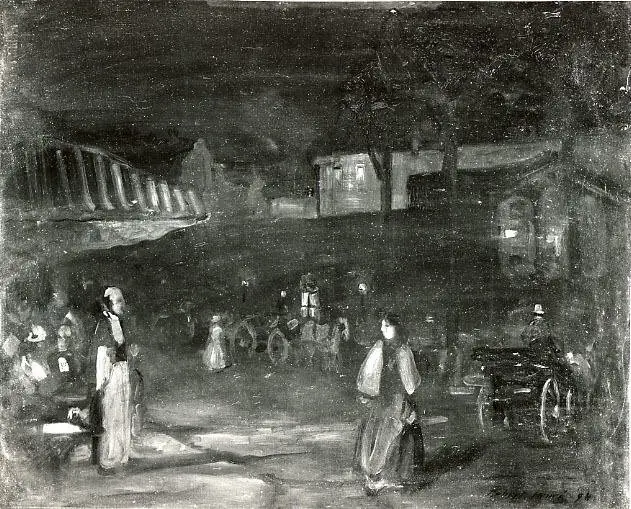
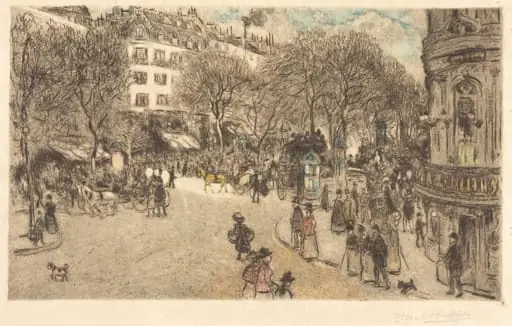
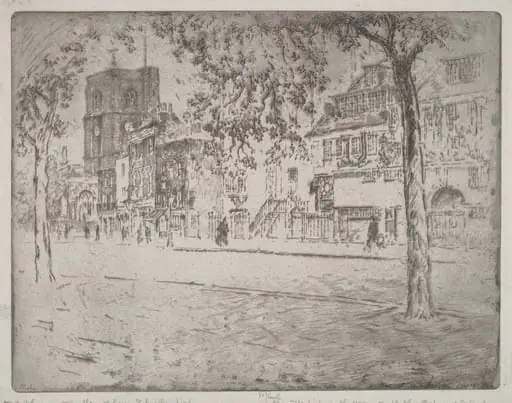
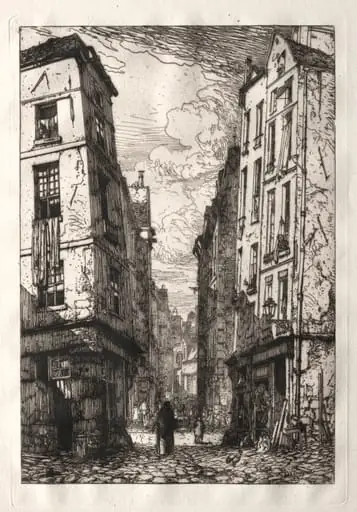
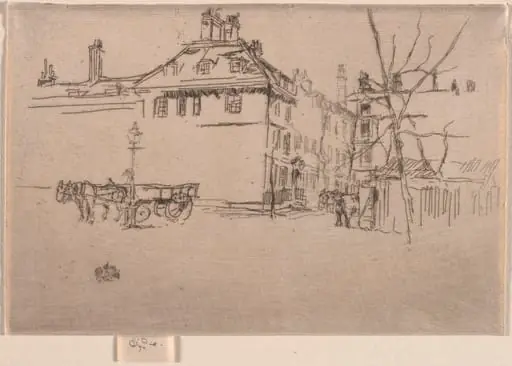
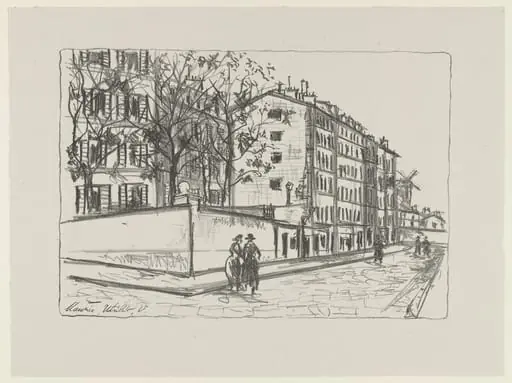
Paris Street Scene is an ink print by Robert Henri. It dates from 1904 and is held in the collection of the National Gallery of Art.
About this work
Overview
Created during a formative period in Paris, the piece reflects his shift away from academic traditions toward a more immediate observation of urban life.
Henri Robert’s 1904 etching captures a bustling Parisian street, rendered in the direct, spontaneous manner characteristic of his early work. Created during a formative period in Paris, the piece reflects his shift away from academic traditions toward a more immediate observation of urban life. The medium of etching allowed for rapid, expressive line work that suited his interest in transient, everyday moments.
Subject & Meaning
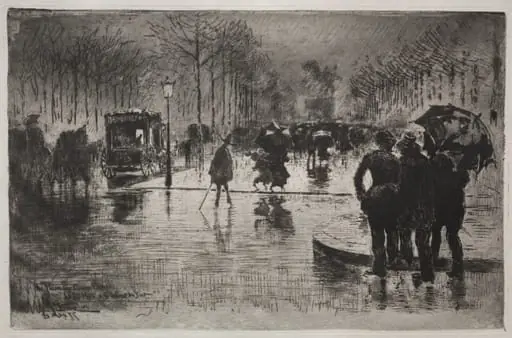
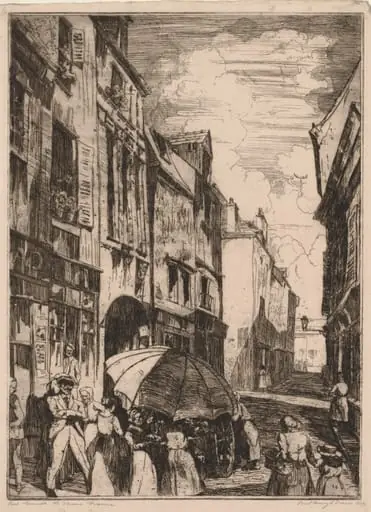
The scene portrays ordinary city life: a horse-drawn carriage moves along a narrow street, flanked by pedestrians in motion. Figures are simplified, their gestures suggesting haste rather than individual identity. The composition avoids romanticization, instead emphasizing the rhythm and anonymity of urban existence. The focus is on movement and atmosphere, not narrative or idealized beauty.
Technique & Style
Robert employed etching to achieve a dynamic, sketch-like quality. Sharp, overlapping lines and textured strokes mimic the energy of the street, with buildings rendered in dense, angular marks and figures reduced to swift, gestural forms. The contrast between solid architectural masses and fleeting human forms creates visual tension, reinforcing the sense of a city in constant flux.
History & Provenance
Created during Robert’s time in Paris, the etching predates his association with the Ashcan School but anticipates its aesthetic priorities. Though he later became known for American urban scenes, this early work reveals his foundational engagement with European city life. The print remains a rare example of his pre-American output, documented in a few institutional collections.
Context
In early 20th-century Paris, etching experienced a revival among artists seeking alternatives to academic painting. Robert’s work aligns with this trend, sharing affinities with contemporaries who favored direct observation over studio idealism. While not part of a formal group, his approach resonated with broader movements rejecting polished finishes in favor of raw, lived experience.
Legacy
This etching stands as an early indicator of Robert’s enduring commitment to unvarnished urban realism. Though he gained greater recognition for his American subjects, this Parisian work laid the groundwork for his later Ashcan style. It remains a quiet but significant link between European printmaking traditions and the emerging American realist movement.
Artist & collection
Artist
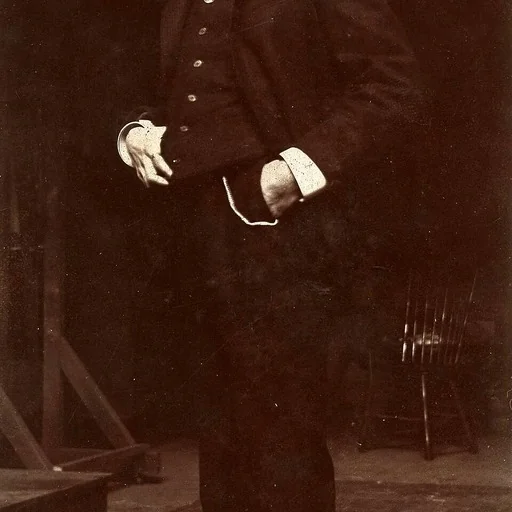
Robert Henri (; June 24, 1865 – July 12, 1929) was an American painter and teacher.