Artwork
Boats at Anchor
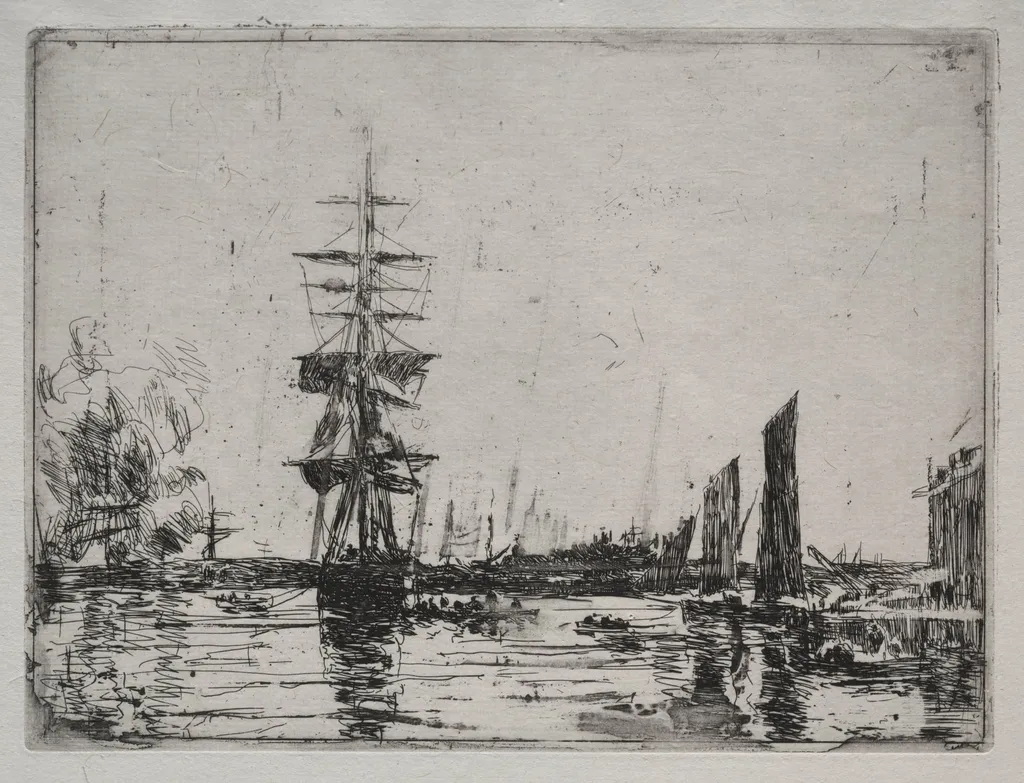
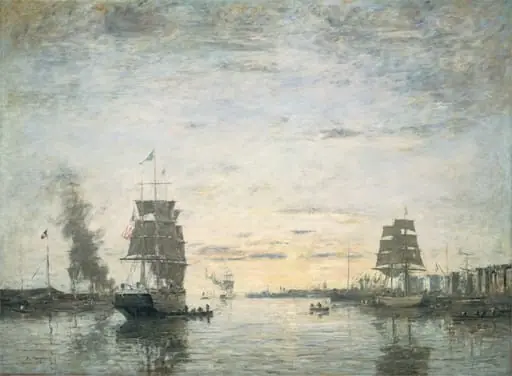
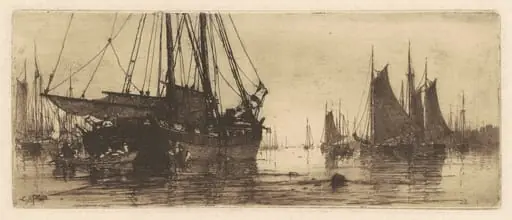
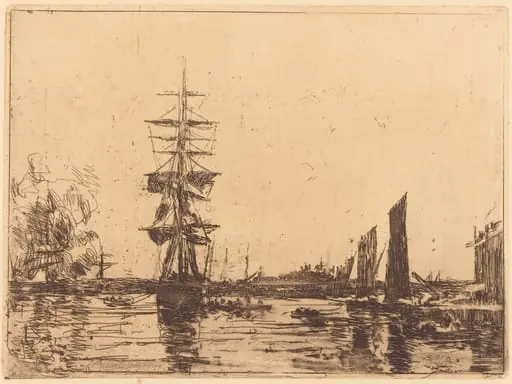
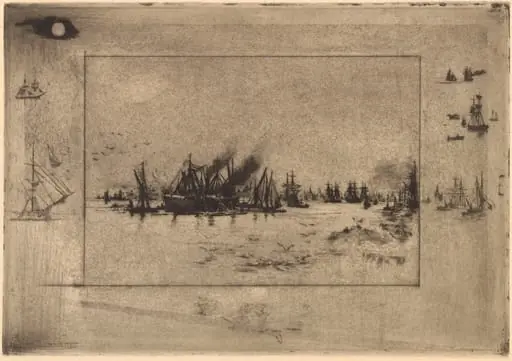
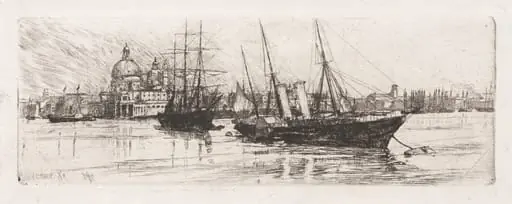
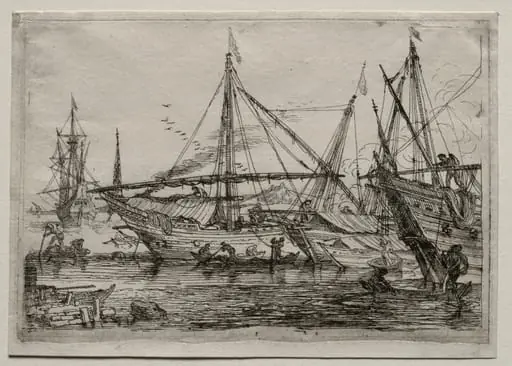
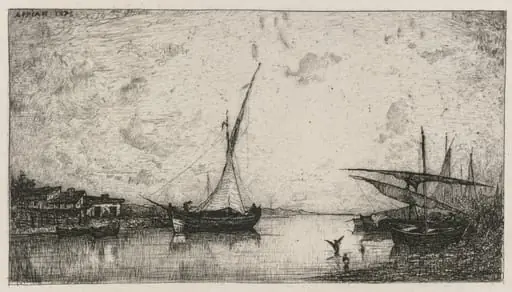
Boats at Anchor is a print by the Impressionist artist Eugène Boudin. It dates from 1804 and is held in the collection of the Cleveland Museum of Art.
About this work
Overview
A French artist devoted to coastal scenes, he worked predominantly in pastel and oil, capturing the transient qualities of light over water.
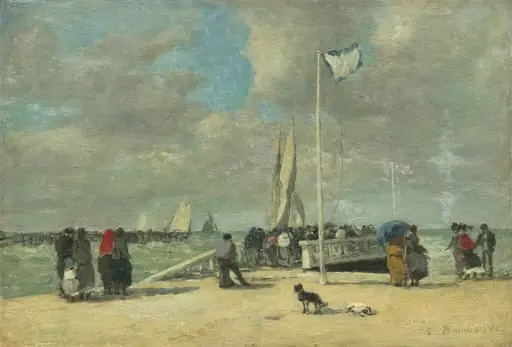
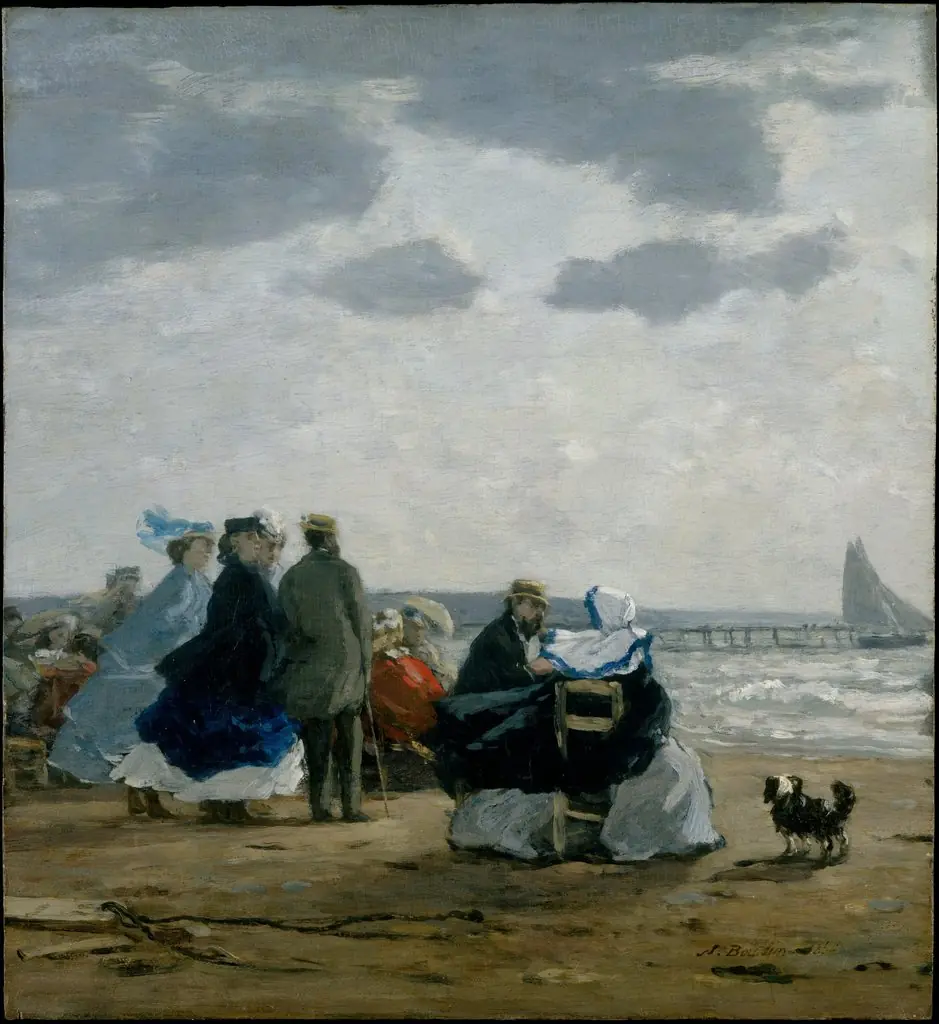
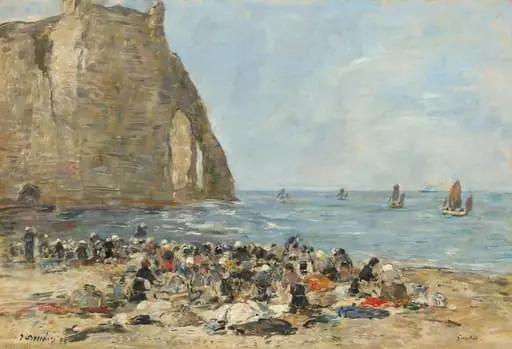
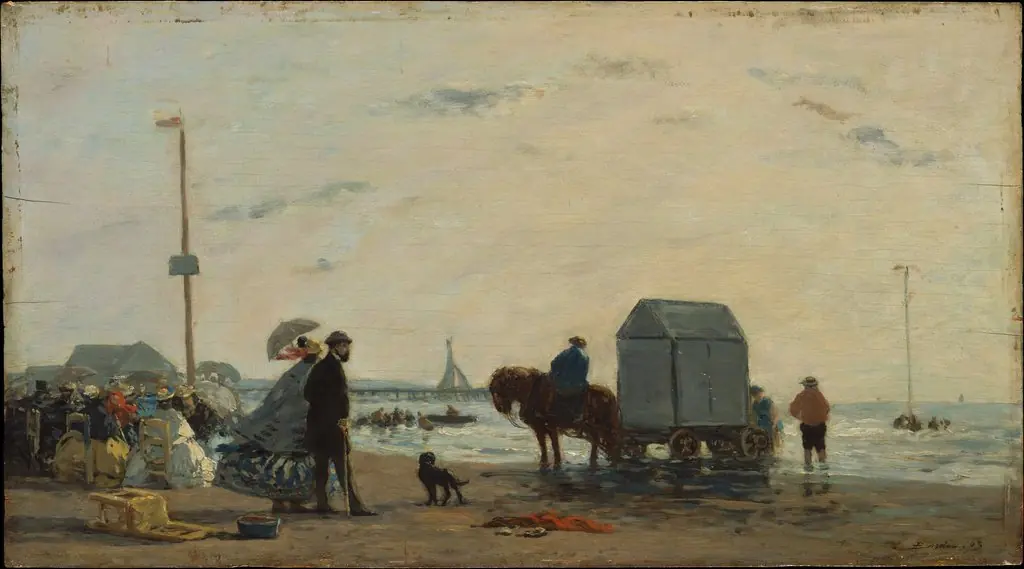
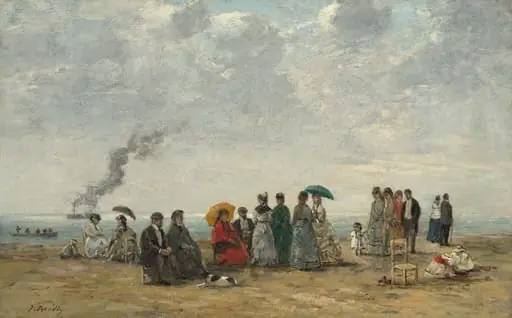
Eugène Boudin created *Boats at Anchor* in the early 1860s, not 1804 as sometimes misstated. A French artist devoted to coastal scenes, he worked predominantly in pastel and oil, capturing the transient qualities of light over water. This work exemplifies his commitment to painting en plein air, observing the sea and sky with direct, unidealized attention. His focus on everyday maritime life distinguished him from historical or romanticized marine painting of the era.
Subject & Meaning
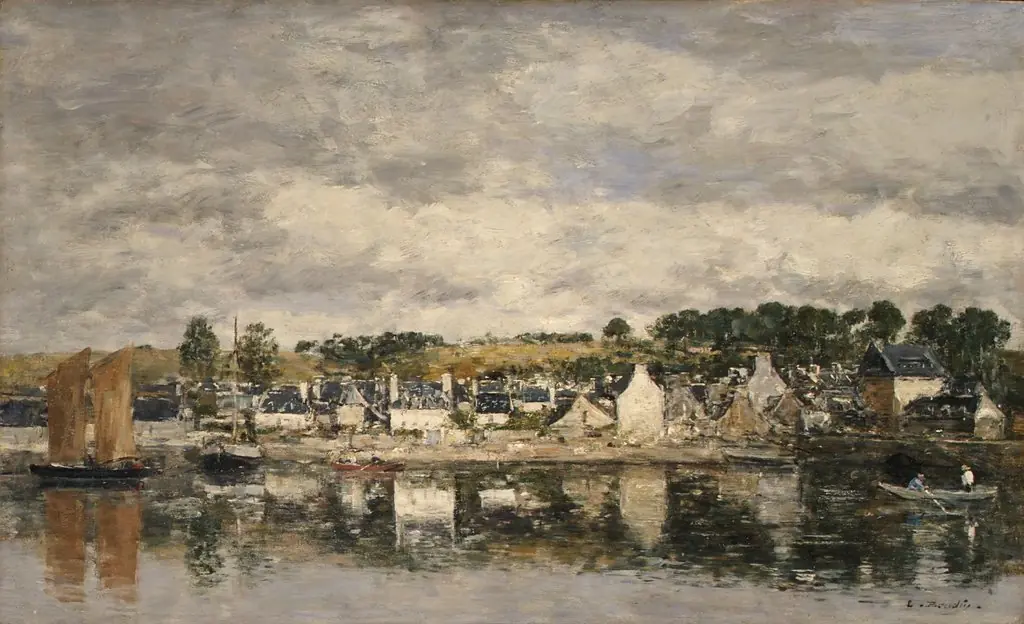
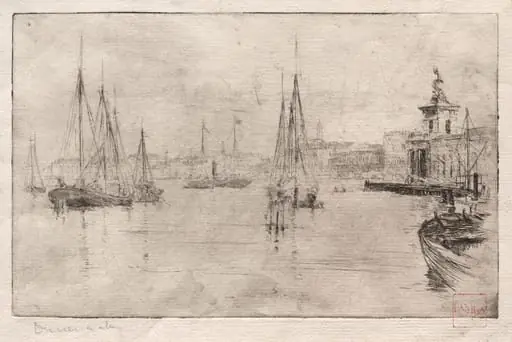
The print depicts a group of sailing vessels at rest near a shoreline, their masts and rigging rendered with loose, economical strokes. In the background, distant rooftops and church spires suggest a coastal town, subtly integrated into the landscape. The scene conveys quietude and routine, emphasizing the rhythm of maritime life rather than drama or narrative. Boudin’s interest lay in the ordinary, the unheroic moments of harbor activity.
Technique & Style
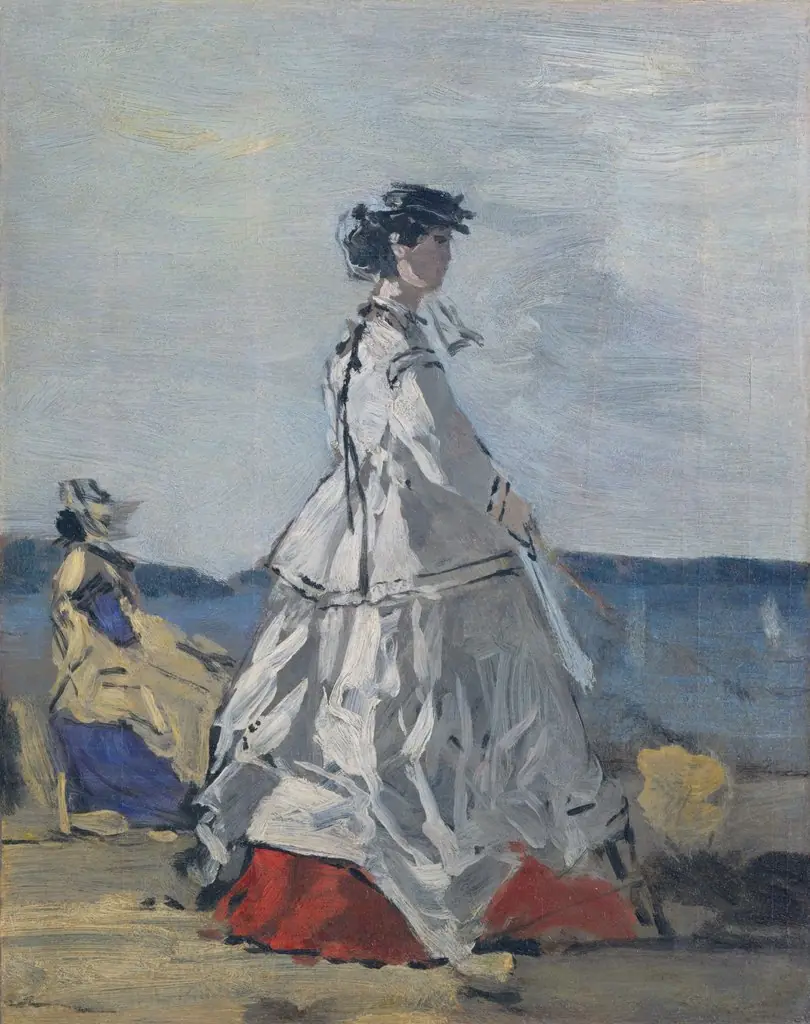
Boudin employed rapid, fluid lines to suggest form without detailed rendering, prioritizing the effect of light over precise definition. The water is hinted at with broken strokes, evoking movement and reflection rather than literal representation. Atmospheric perspective is achieved through tonal gradation, not sharp contours. This approach, emphasizing immediacy and optical sensation, prefigured the methods later adopted by the Impressionists.
History & Provenance
Boudin produced this work during a period when he was gaining recognition among Parisian artists and critics, including Corot and Baudelaire, who admired his truthful depiction of nature. Though not widely exhibited in his lifetime, his sketches and prints circulated among avant-garde circles. *Boats at Anchor* survives as part of a broader body of studies that documented the Normandy coast, later influencing younger painters like Monet.
Context
In mid-19th century France, landscape painting was shifting from idealized compositions toward direct observation. Boudin’s focus on coastal light and weather aligned with emerging interests in naturalism and the effects of atmosphere. His work emerged alongside early photographic experiments and scientific studies of optics, contributing to a broader cultural turn toward perceptual accuracy in visual art.
Legacy
Boudin’s emphasis on transient light and informal composition laid groundwork for Impressionism. His practice of painting outdoors, his rejection of studio conventions, and his sensitivity to sky and sea directly inspired Monet and others. Though less celebrated in his own time, his sketches and prints are now recognized as pivotal in the transition from academic tradition to modern visual language.
Artist & collection
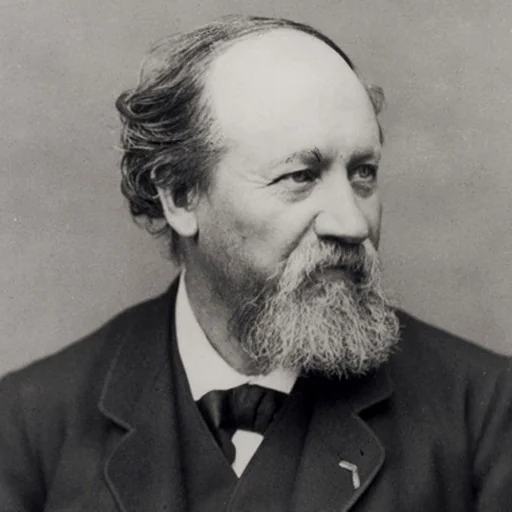
Artist
Eugène Louis Boudin (French: ; 12 July 1824 – 8 August 1898) was one of the first French landscape painters to paint outdoors.