Artwork
Demosthenes on the Seashore
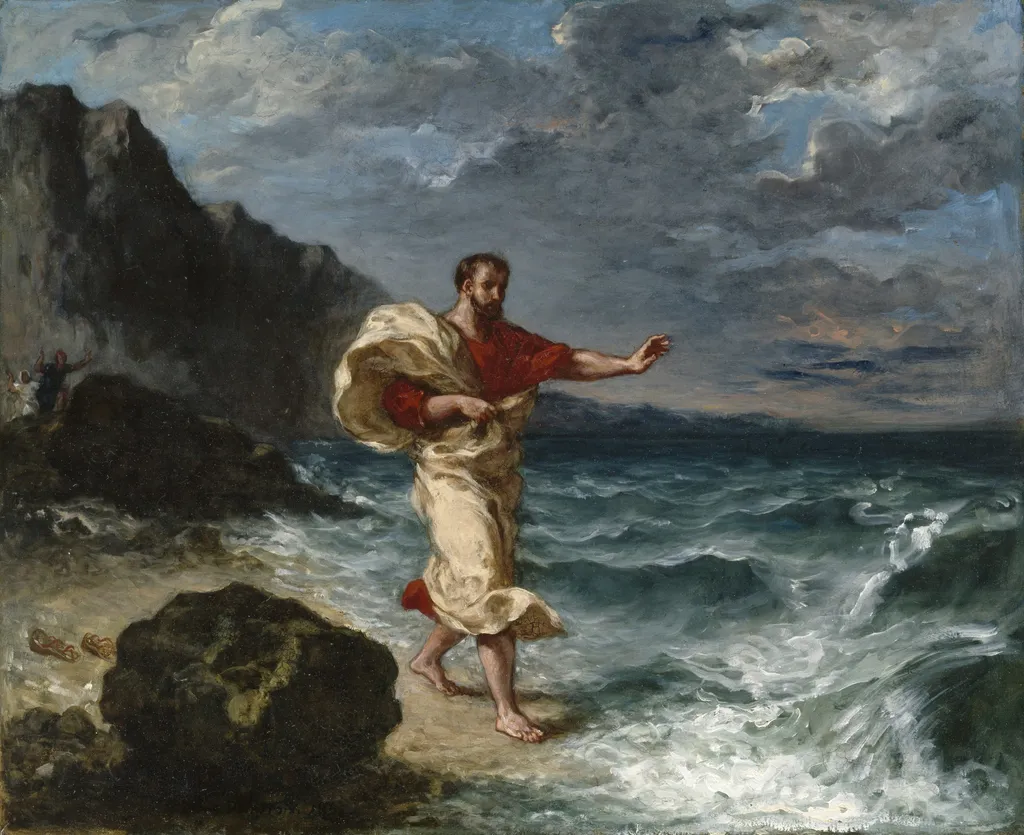
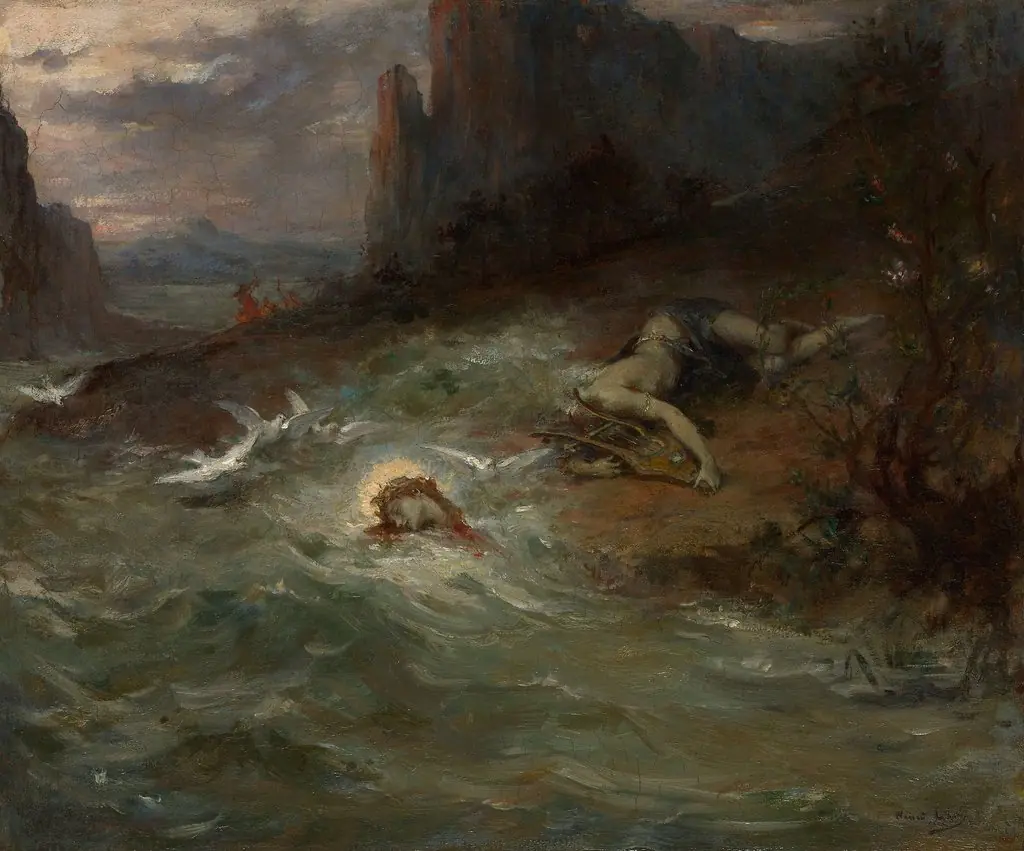
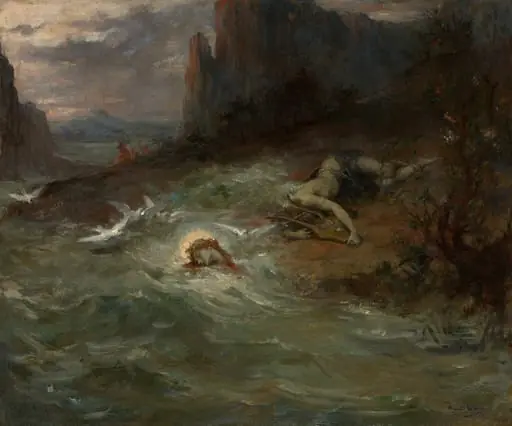
Demosthenes on the Seashore is an unspecified painting by the French Romanticist artist Eugène Delacroix. It dates from 1859 and is held in the collection of the National Gallery of Ireland.
About this work
Overview
A key figure in French Romanticism, Delacroix moved away from Neoclassical rigidity, favoring expressive movement and rich color.
Painted in 1859 by Eugène Delacroix, this work captures the ancient Greek orator Demosthenes on a windswept shore. A key figure in French Romanticism, Delacroix moved away from Neoclassical rigidity, favoring expressive movement and rich color. The scene merges historical subject with emotional intensity, reflecting his admiration for Rubens and Venetian masters. It remains part of the National Gallery of Ireland’s collection.
Subject & Meaning
Demosthenes, renowned for overcoming a speech impediment through rigorous practice, is shown confronting the sea as if rehearsing his orations. The turbulent waves and stormy sky mirror his inner struggle and determination. Rather than depicting a public address, Delacroix isolates the moment of solitary discipline, emphasizing perseverance against overwhelming forces—both natural and personal.
Technique & Style
Delacroix employs loose, energetic brushwork and a vivid palette to convey motion and emotion. The flowing white toga and billowing fabric contrast with the dark, heavy clouds and rocky shore, heightening the sense of drama. Chiaroscuro defines the figure’s form, while the sky’s swirling grays and the sea’s muted blues create a dynamic, almost theatrical atmosphere rooted in Romantic sensibility.
History & Provenance
Commissioned during Delacroix’s later years, the painting was completed shortly before his death in 1863. It entered the National Gallery of Ireland’s collection in the late 19th century, likely through a private acquisition or donation. Its preservation reflects continued interest in Romantic-era interpretations of classical themes during the Victorian period.
Context
In mid-19th century France, Romanticism challenged academic traditions by prioritizing emotion and individual experience. Delacroix’s choice of Demosthenes aligned with contemporary fascination with heroic struggle and intellectual resilience. The painting’s setting—nature as a mirror of inner conflict—echoes broader Romantic ideals that valued passion over reason and the sublime over the orderly.
Legacy
Though less frequently exhibited than Delacroix’s larger historical scenes, this work exemplifies his mature style: emotionally charged, technically fluid, and deeply personal. It influenced later artists exploring psychological depth in historical subjects and remains a quiet testament to the Romantic belief in art as an expression of inner turmoil and resolve.
Own this work as a print
Artist & collection
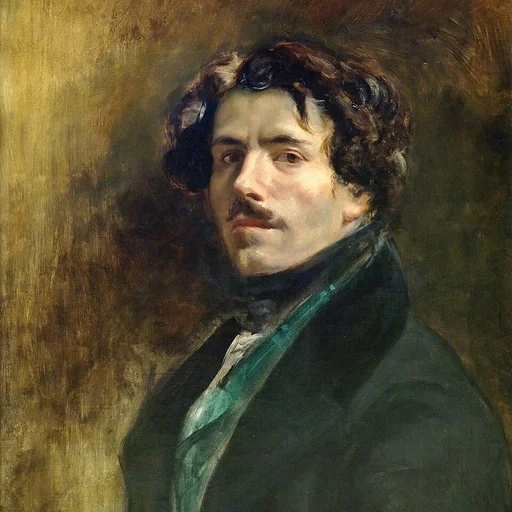
Artist
Ferdinand Victor Eugène Delacroix ( DEL-ə-krwah, -KRWAH; French: ; 26 April 1798 – 13 August 1863) was a French Romantic artist who was regarded as the leader of the French Romantic school.