Artwork
Sheet with Nine Antique Medals
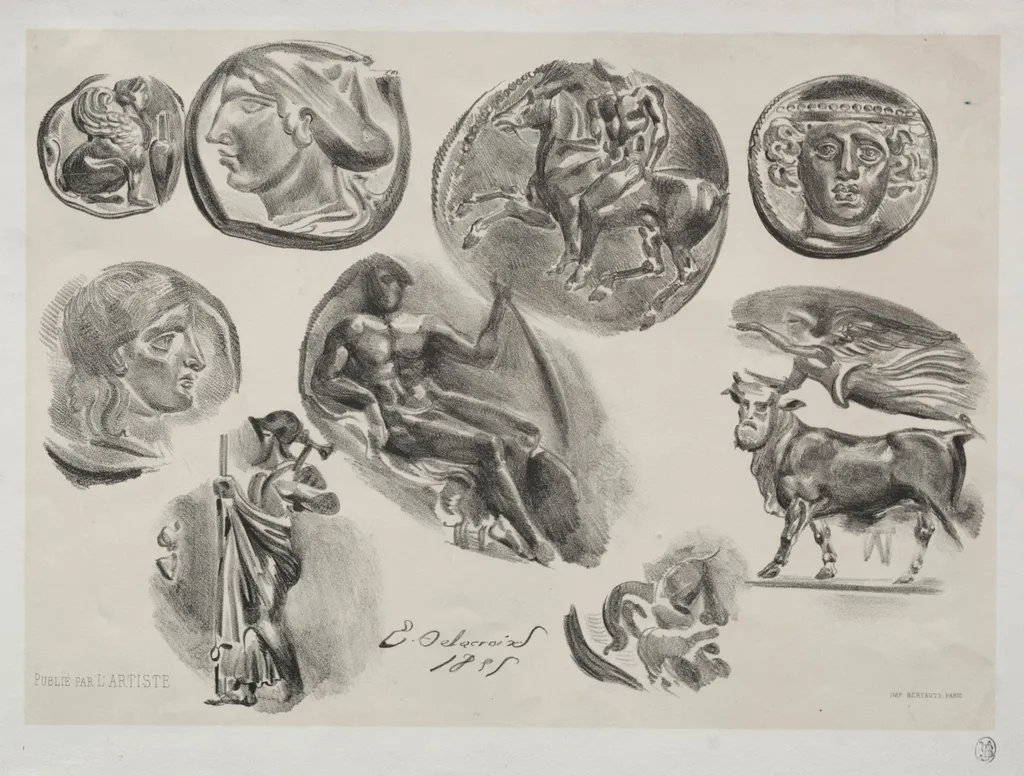
Sheet with Nine Antique Medals is a print by the Romanticist artist Eugène Delacroix. It dates from 1825 and is held in the collection of the Cleveland Museum of Art.
About this work
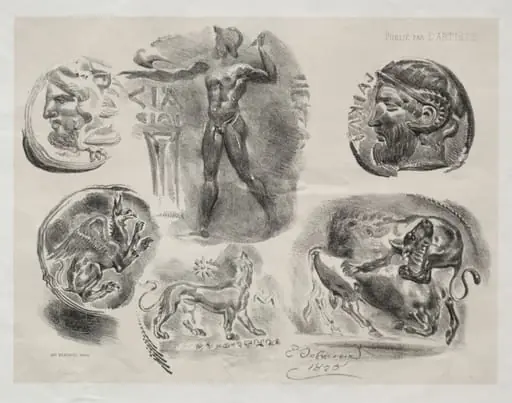
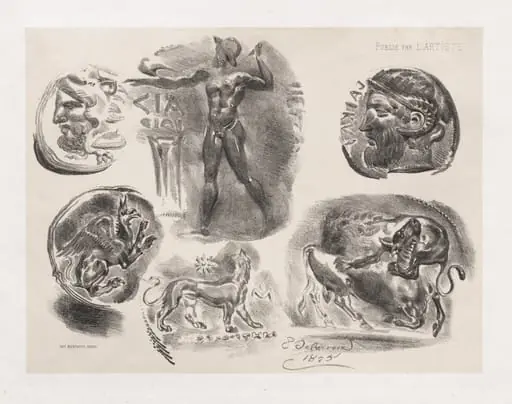
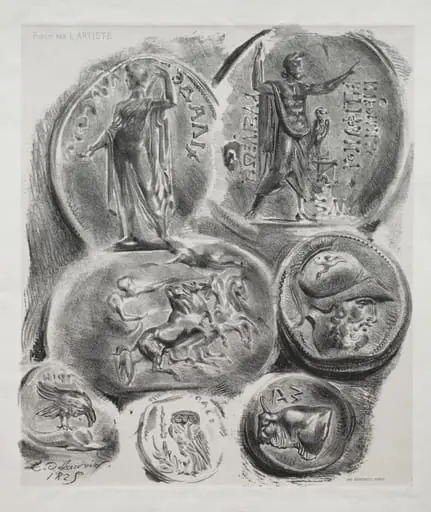
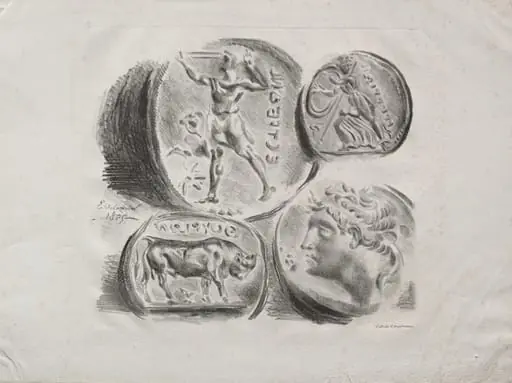
This drawing shows nine round images, like old coins, scattered across a page.
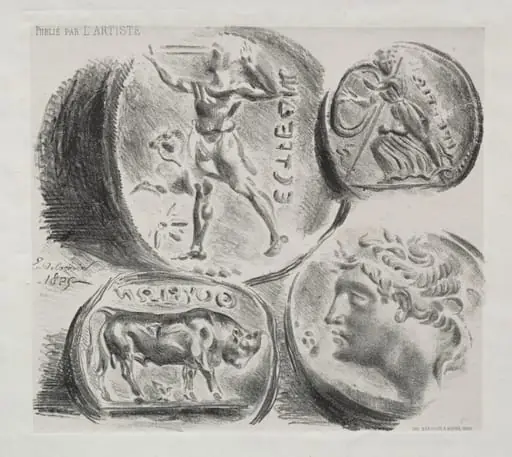
This drawing shows nine round images, like old coins, scattered across a page. Some look like faces—one serious, one with a crown, another with wild hair. Others show animals, a person riding a horse, and a cow. The lines are sketchy, almost like quick studies, with shading to show depth.
Notice how the artist mixed rough sketches with detailed faces. The signature in the corner says "E. Delacroix 1825," meaning this was made early in his career.
If you like this style, look up Romanticism next.
Overview
Created in 1825, this sheet by Eugène Delacroix presents nine antique-style medal designs arranged loosely across the page. Executed in pencil and wash, the work reflects his early engagement with classical imagery and his developing approach to drawing. Unlike formal compositions, the arrangement feels spontaneous, as if gathered from study or imagination. The signature and date confirm it as an early work, made before his major paintings gained recognition.
Subject & Meaning
The medallions depict a range of classical motifs: human heads with varied expressions, a crowned figure, an animal-headed form, a rider on horseback, and a cow. These are not literal portraits but idealized or symbolic representations drawn from ancient numismatic and sculptural sources. Delacroix was drawn to their narrative potential and emotional resonance, using them as visual fragments to explore identity, power, and myth rather than to document specific historical figures.
Technique & Style
Delacroix employed loose, expressive lines and subtle tonal washes to suggest volume and texture. Some faces are rendered with careful detail, while others remain sketchy, almost unfinished. The contrast between refined modeling and rapid notation reveals his interest in capturing essence over precision. This blend of control and spontaneity aligns with Romantic ideals, prioritizing feeling and movement over the rigid clarity favored by Neoclassical draftsmen.
History & Provenance
The drawing entered the collection of the Cleveland Museum of Art through documented acquisition, though its earlier ownership remains unrecorded in public sources. Created in 1825, it predates Delacroix’s major Salon successes and likely served as a personal study or preparatory exercise. Its survival suggests it was valued by the artist or an early collector for its insight into his creative process during a formative period.
Context
In mid-1820s Paris, artists were reevaluating classical sources beyond academic orthodoxy. Delacroix, influenced by Rubens and Venetian colorism, sought emotional dynamism in historical subjects. This sheet reflects his broader practice of collecting visual ideas from antiquity—not to replicate, but to reinterpret. Such studies were common among Romantic artists seeking alternatives to the sterile formalism of official art institutions.
Legacy
Though not a finished work, this sheet offers insight into Delacroix’s method of absorbing and transforming classical imagery. It reveals how he used drawing not merely as preparation, but as a space for experimentation and personal expression. Later artists and scholars have cited such studies as evidence of his intellectual engagement with history, distinguishing his Romanticism from mere sentimentality.
Artist & collection
Artist
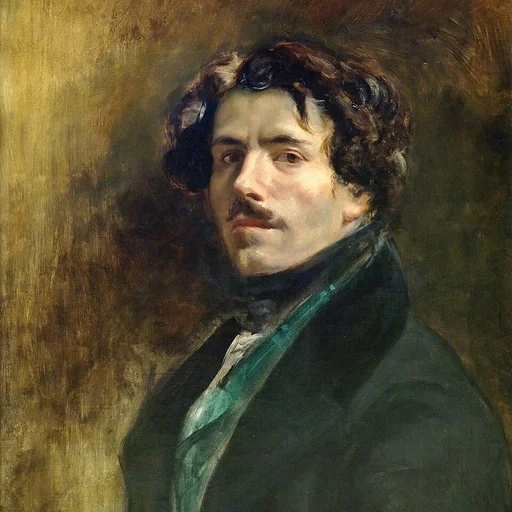
Ferdinand Victor Eugène Delacroix ( DEL-ə-krwah, -KRWAH; French: ; 26 April 1798 – 13 August 1863) was a French Romantic artist who was regarded as the leader of the French Romantic school.