Artwork
7 engraved prints
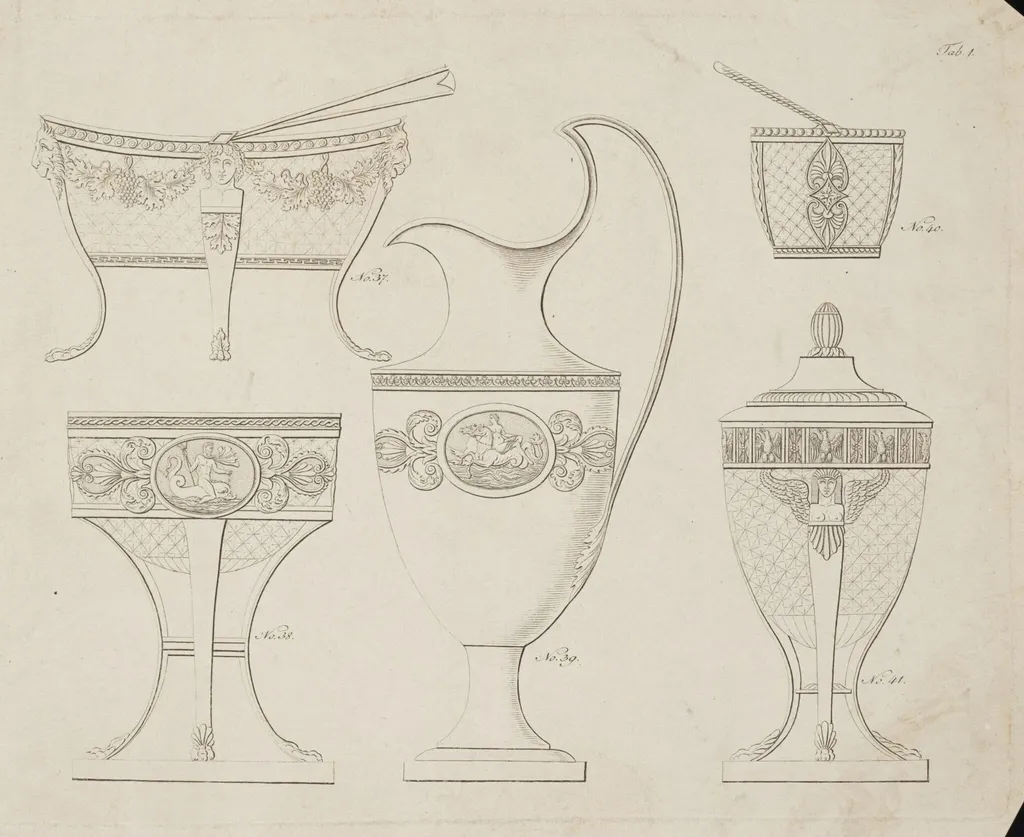
7 engraved prints is a print by the Romanticist artist Johann Carl BOCK. It dates from 1820 and is held in the collection of the Victoria and Albert Museum.
About this work
Some vases have handles or lids, and each one has a round scene or floral design carved into the sides.
This drawing shows four different vase shapes, all decorated with detailed patterns. Some vases have handles or lids, and each one has a round scene or floral design carved into the sides. The lines are precise, and the shading gives a sense of depth to the shapes.
These prints were made around 1820 as part of a study of ancient Greek and Roman pottery styles. The artist copied designs from real vases, but added his own decorative touches.
Check out the Victoria and Albert Museum to see more original objects like these.
Overview
Seven engraved prints by Johann Carl Bock, dated 1820, form a set originally compiled as a reference for silversmiths. Five are bound in a thread-stitched folio, while two others, from a separate source, remain unbound. Each print presents detailed designs for tableware, reflecting contemporary interest in classical antiquity. The plates functioned as technical guides rather than standalone artworks, aiding craftsmen in replicating and adapting historical motifs.
Subject & Meaning
The prints illustrate variations of vases intended for silver replication, featuring handles, lids, and ornamental panels. Central to each design is a circular medallion—either floral or figurative—surrounded by intricate linear patterns. These forms derive from ancient Greek and Roman pottery, reinterpreted through a neoclassical lens. The emphasis on symmetry and restraint signals a deliberate engagement with antiquity, not mere imitation but selective adaptation for contemporary use.
Technique & Style
Bock employed fine-line engraving to achieve sharp, controlled detail, with cross-hatching and stippling creating subtle tonal gradations. The precision of the lines conveys volume and texture without reliance on color, typical of technical illustration of the period. Decorative elements are rendered with consistency, suggesting standardized drafting practices. The style balances archaeological fidelity with decorative embellishment, reflecting the artisan’s role as both observer and interpreter.
History & Provenance
The prints were produced as part of a silversmith’s working archive, likely commissioned by a workshop or guild in early 19th-century Europe. Their separation into bound and unbound groups indicates partial loss or reorganization over time. While Bock’s authorship is documented, the original patron or institution remains unidentified. The set’s survival suggests continued utility in craft education, possibly passed through apprenticeship networks before entering private or public collections.
Context
In the 1820s, European decorative arts were deeply influenced by archaeological discoveries in Italy and Greece. Silversmiths sought to align their work with classical ideals, leading to the proliferation of pattern books like Bock’s. These volumes served as intermediaries between museum collections and workshops, translating ancient forms into functional objects. The prints reflect a broader cultural movement that valued historical precedent as a standard of refinement in applied arts.
Legacy
Bock’s prints contribute to a larger archive of 19th-century design sources that preserved and disseminated classical motifs. Though not widely exhibited, such technical drawings informed generations of metalworkers and remain valuable for understanding the transmission of aesthetic ideas. Their presence in institutions like the Victoria and Albert Museum underscores their role as documentary artifacts, bridging craftsmanship and scholarly interest in antiquity.
Artist & collection
Artist
Johann Carl Bock spent more time counting clouds than painting them. Around 1820, this otherwise obscure German engraver turned a few cloud studies into seven tiny prints that feel like postcards from heaven—each one a…

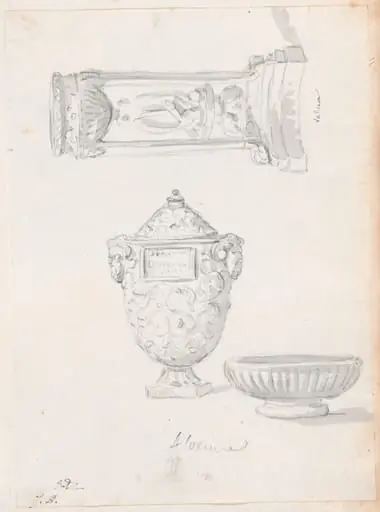 Decorative Details from Florence and the Vatican
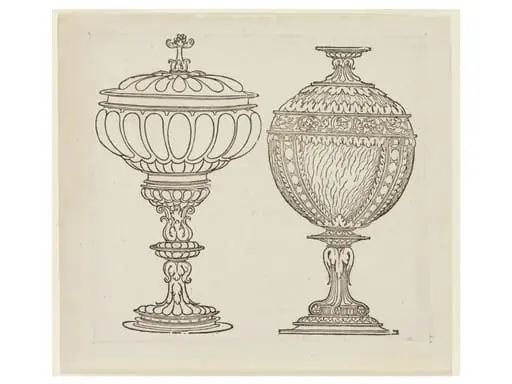 Untitled
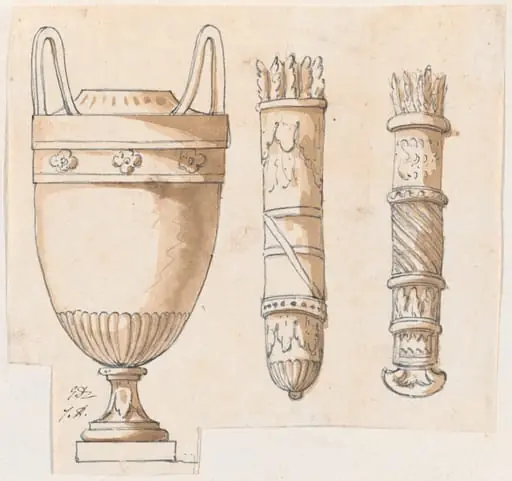 An Urn and Two Quivers
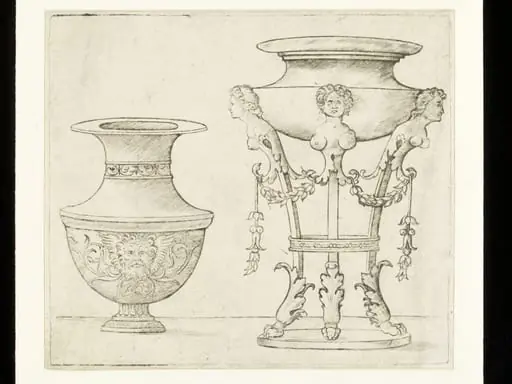 A vase and a tripod
![Sheet of Studies [recto and verso], by John Flaxman](https://artifactworldgallery.com/img/john-flaxman--sheet-of-studies-recto-and-verso--af37285108779a00-w320.webp) Sheet of Studies [recto and verso]
Sheet of Studies [recto and verso]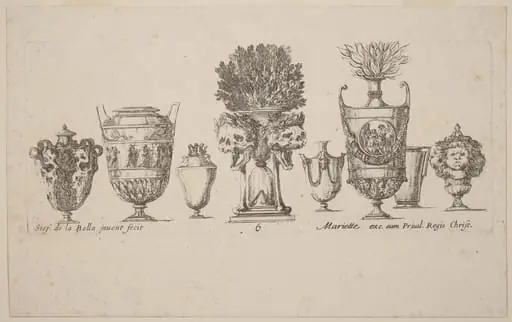 Fantastic Vases
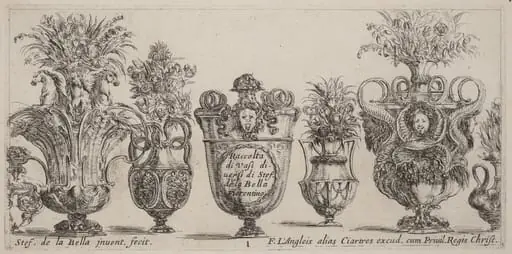 Fantastic Vases
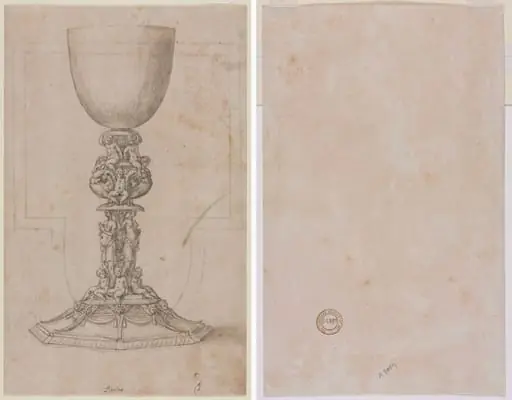 Design for a Chalice (recto) Architectural Plan (verso)
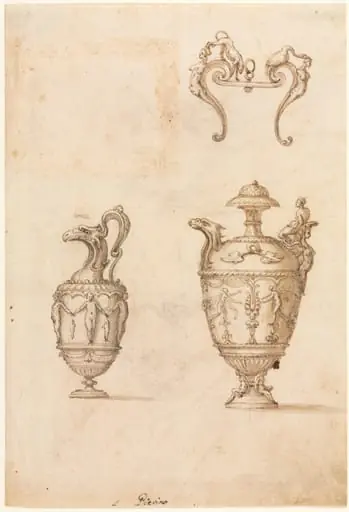 Design for Two Vases and an Ornament (recto)
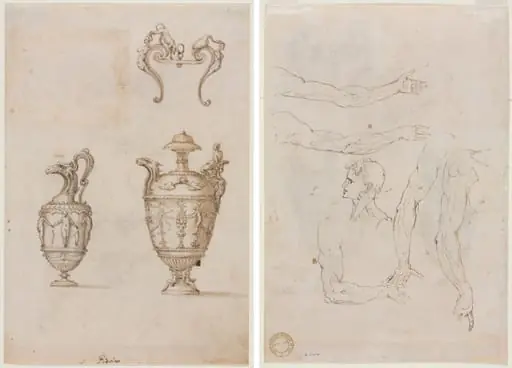 Design for Two Vases and an Ornament (recto); Sketches of Five Arms and a Head (verso)
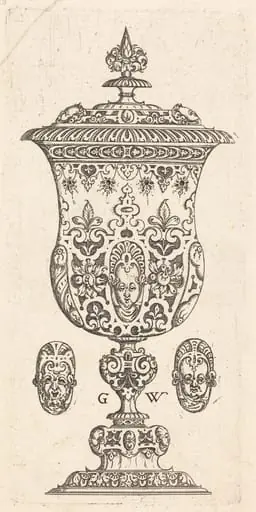 Goblet with two Masques on lid
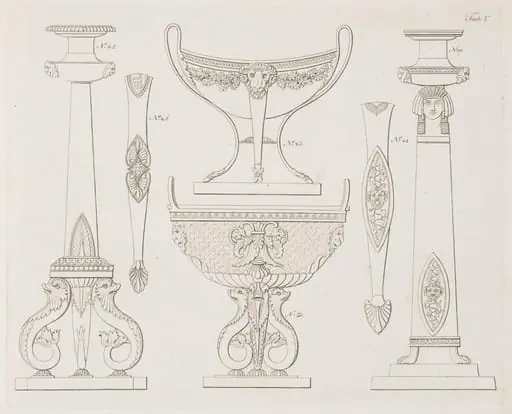 One of 7 engraved prints