Artwork
Sketch for the Battle of Poitiers
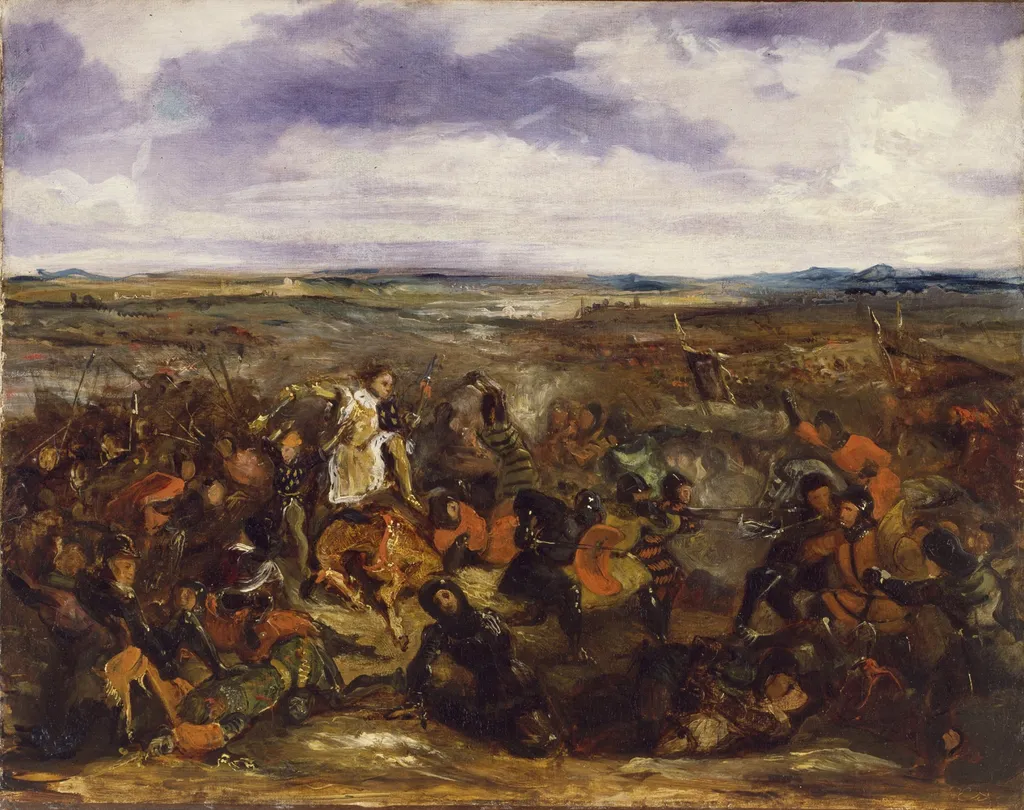
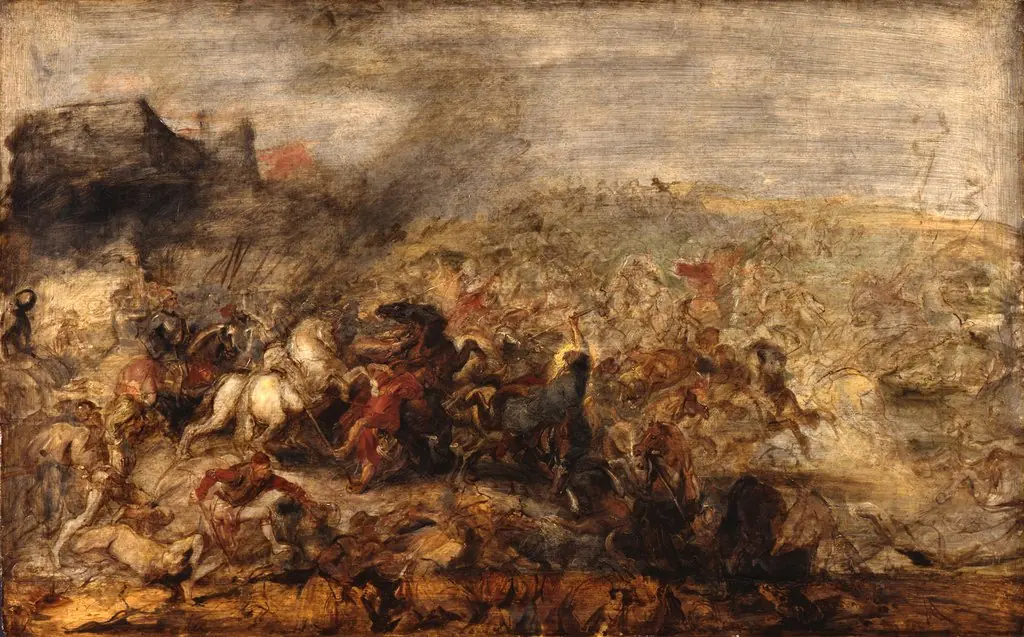
Sketch for the Battle of Poitiers is an oil painting by the French Romanticist artist Eugène Delacroix. It dates from 1829 and is held in the collection of the Walters Art Museum.
About this work
Overview
Created in 1829, this oil sketch by Eugène Delacroix captures a moment from the Battle of Poitiers, a medieval conflict between English and French forces.
Created in 1829, this oil sketch by Eugène Delacroix captures a moment from the Battle of Poitiers, a medieval conflict between English and French forces. Though labeled a sketch, it functions as a fully realized composition, reflecting Delacroix’s interest in historical violence and emotional intensity. Unlike academic history paintings, it prioritizes movement and atmosphere over narrative clarity or idealized forms.
Subject & Meaning
The scene depicts the chaos of medieval warfare, with mounted and foot soldiers entangled in close combat. Fallen figures and struggling horses underscore the brutality of the moment. A distant city under a leaden sky suggests the broader stakes of the battle, though no specific leaders or events are identified. The work conveys the disorder of war rather than its heroism, aligning with Romanticism’s focus on human emotion over political triumph.
Technique & Style
Delacroix employed loose, energetic brushwork to convey motion and tension, avoiding the smooth finish of Neoclassical tradition. His palette is restrained—dominated by browns, grays, and muted greens—enhancing the somber mood. The composition is deliberately unbalanced, with figures spilling toward the viewer, creating a sense of immediacy. These choices reflect his admiration for Rubens and Venetian colorists, who valued expressive force over formal harmony.
History & Provenance
The painting was made during a period when Delacroix was refining his approach to historical subjects, following the success of 'Liberty Leading the People.' It likely served as a preparatory study for a larger, unrealized commission. The work remained in the artist’s possession until his death, later entering a public collection through his estate, where it is now held as an example of his evolving historical vision.
Context
In the late 1820s, French artists were redefining history painting beyond classical antiquity, turning to medieval and Renaissance conflicts for emotional resonance. Delacroix’s interest in the Battle of Poitiers coincided with a broader cultural revival of national history, though his focus remained on visceral experience rather than patriotic narrative. His work stood in contrast to the rigid compositions favored by the Academy.
Legacy
This sketch exemplifies Delacroix’s role in shifting French painting toward emotional immediacy and painterly freedom. Its unfinished quality and dynamic brushwork influenced later generations, including the Impressionists, who valued spontaneity over polished finish. Though not widely exhibited in his lifetime, it now stands as a key document of Romanticism’s break from academic conventions.
Own this work as a print
Artist & collection
Artist
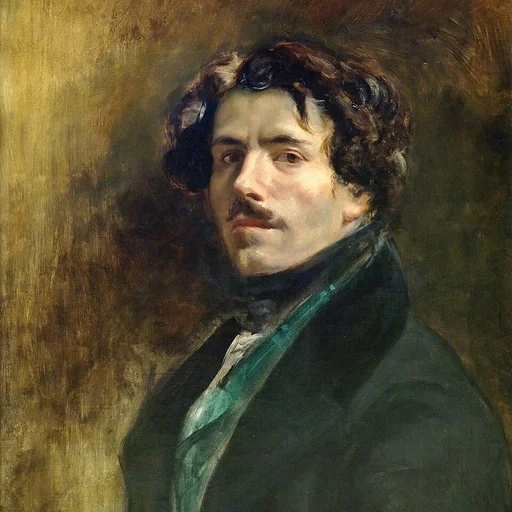
Ferdinand Victor Eugène Delacroix ( DEL-ə-krwah, -KRWAH; French: ; 26 April 1798 – 13 August 1863) was a French Romantic artist who was regarded as the leader of the French Romantic school.

 The Conquest of Tunis by Charles V (1535)
 Battle
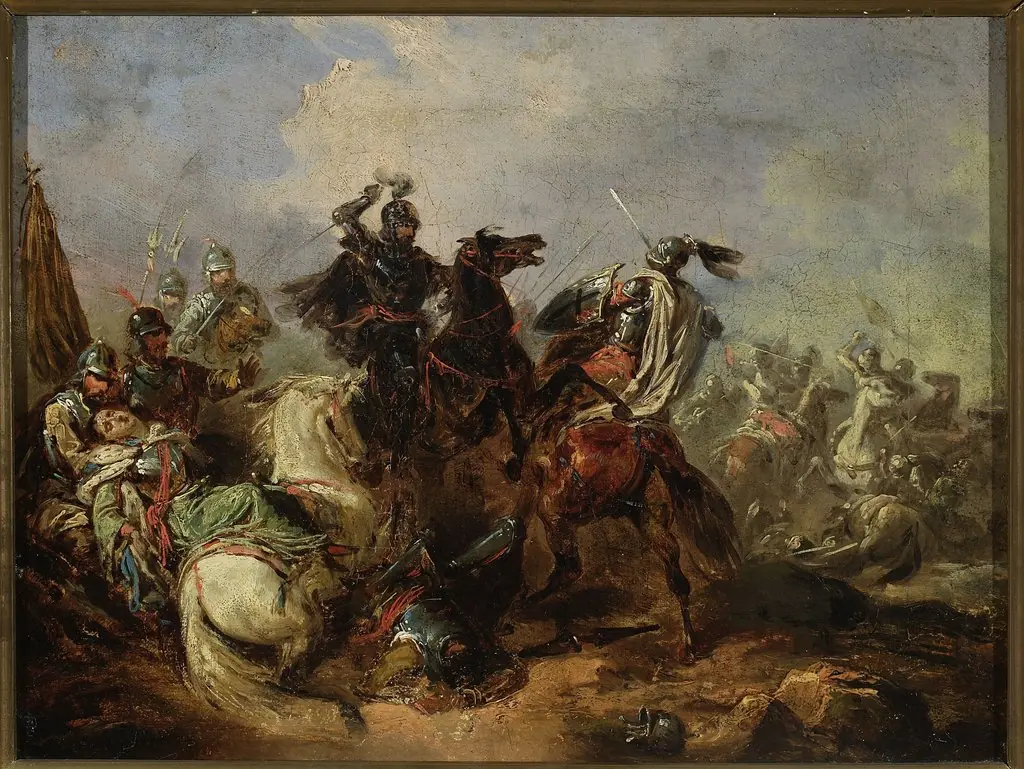 Battle of Lithuanians with the Teutonic knights
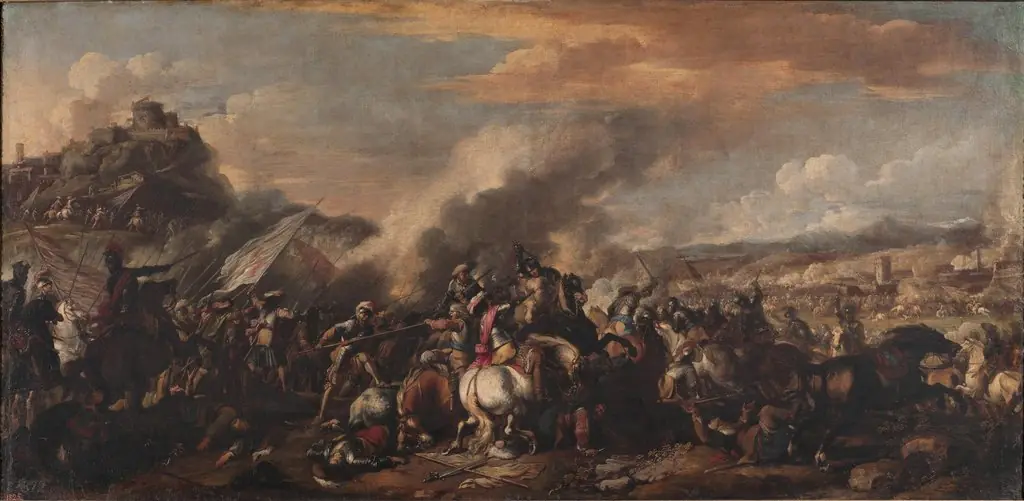 Lucha por la posesión de una fortaleza
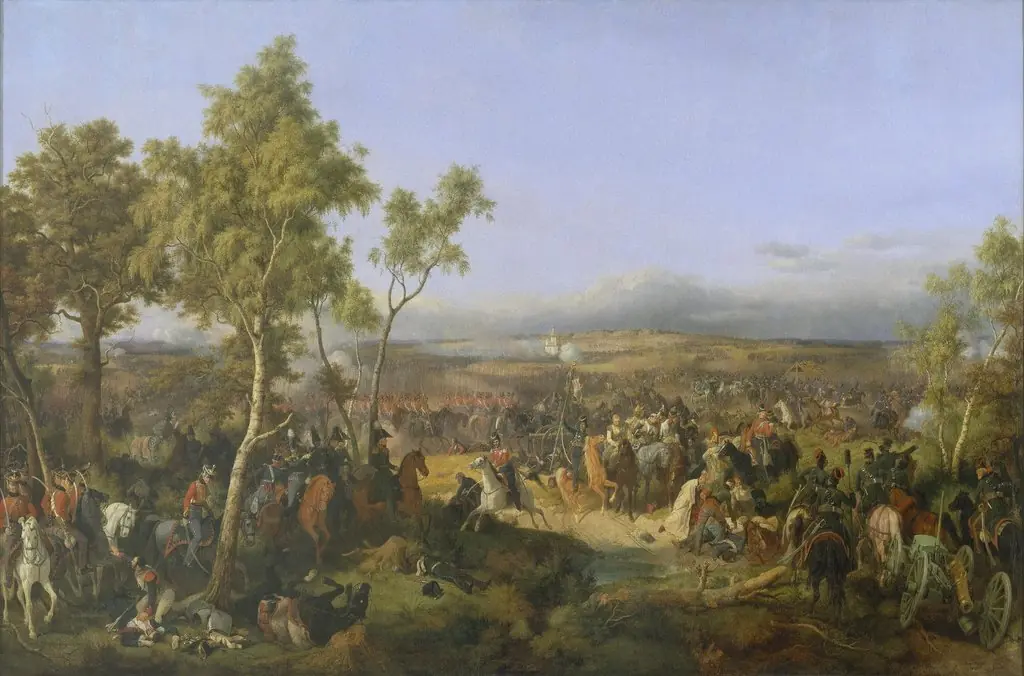 Battle of Tarutino on 6 (18) October 1812
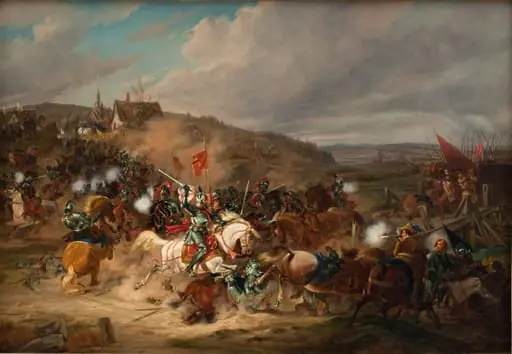 Daniel Rantzau bemægtiger sig Tureby Bro i Skåne under Syvårskrigen 1563-1570
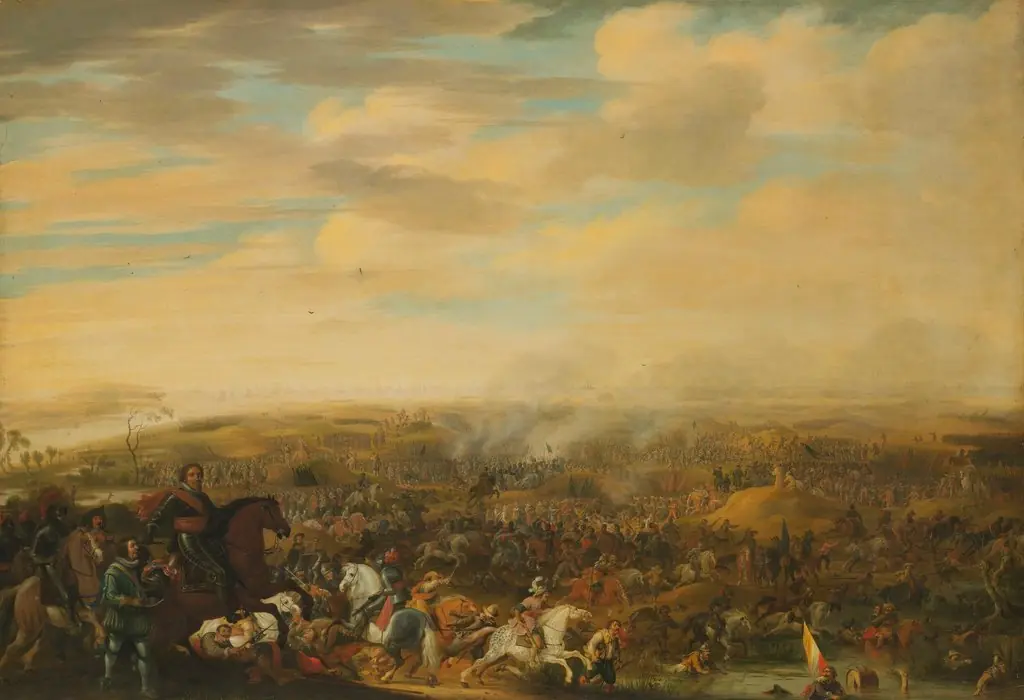 Prince Maurits at the Battle of Nieuwpoort, 2 July 1600
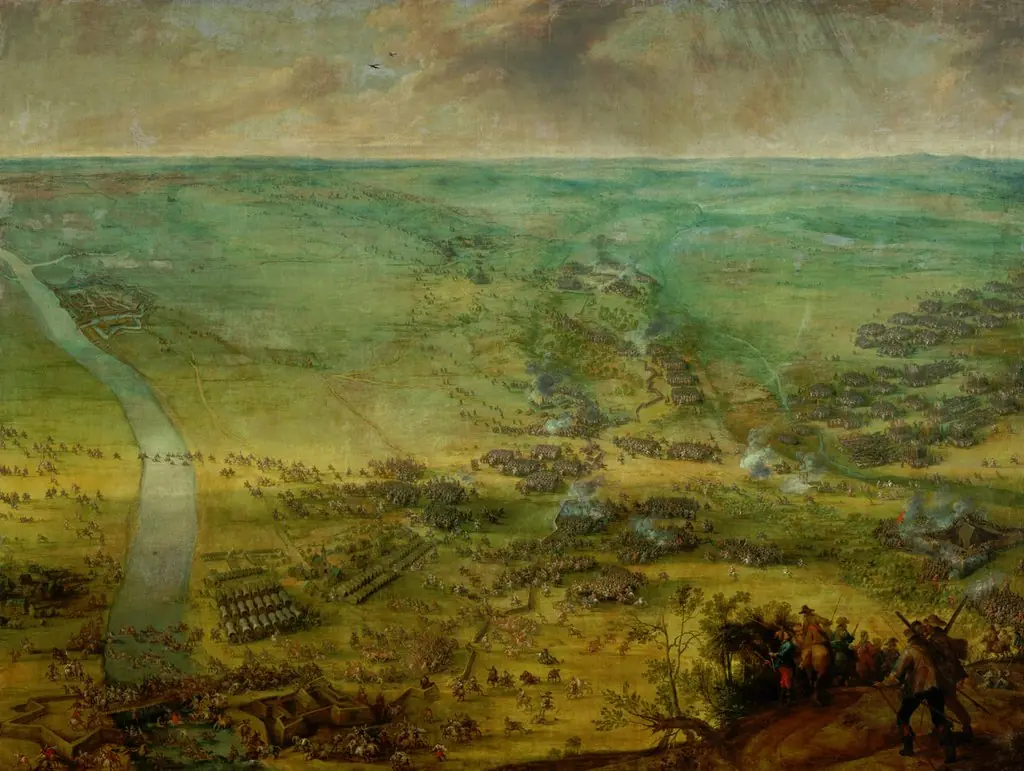 The Battle of Thionville, the Arrival of the Imperial forces under Piccolomini , 19 June 1639