Artwork
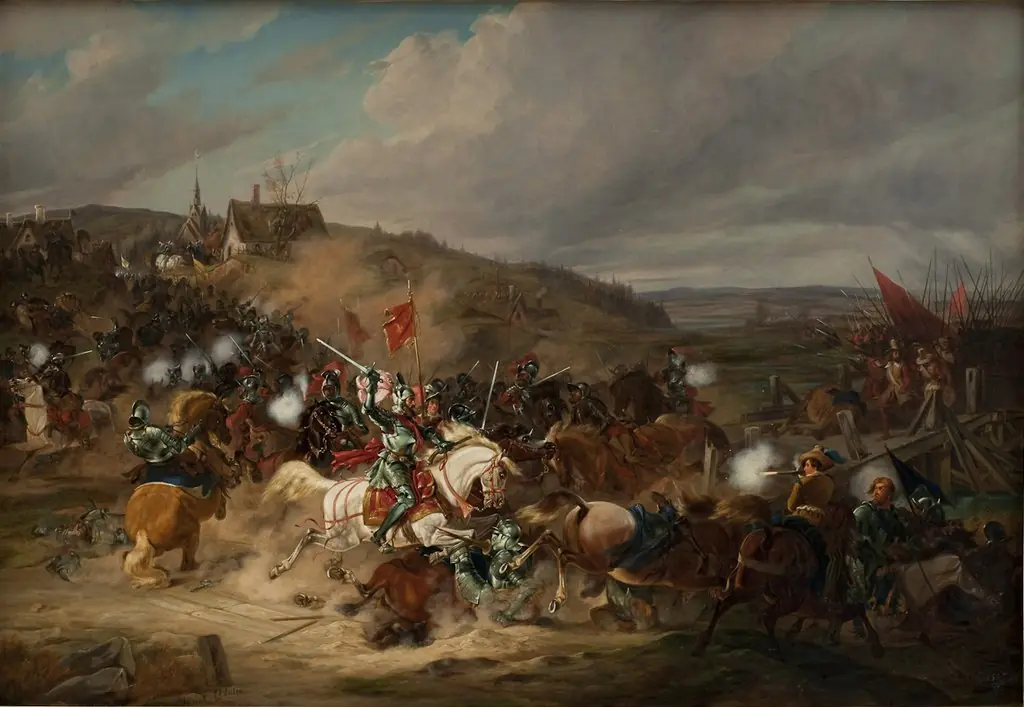
Daniel Rantzau bemægtiger sig Tureby Bro i Skåne under Syvårskrigen 1563-1570
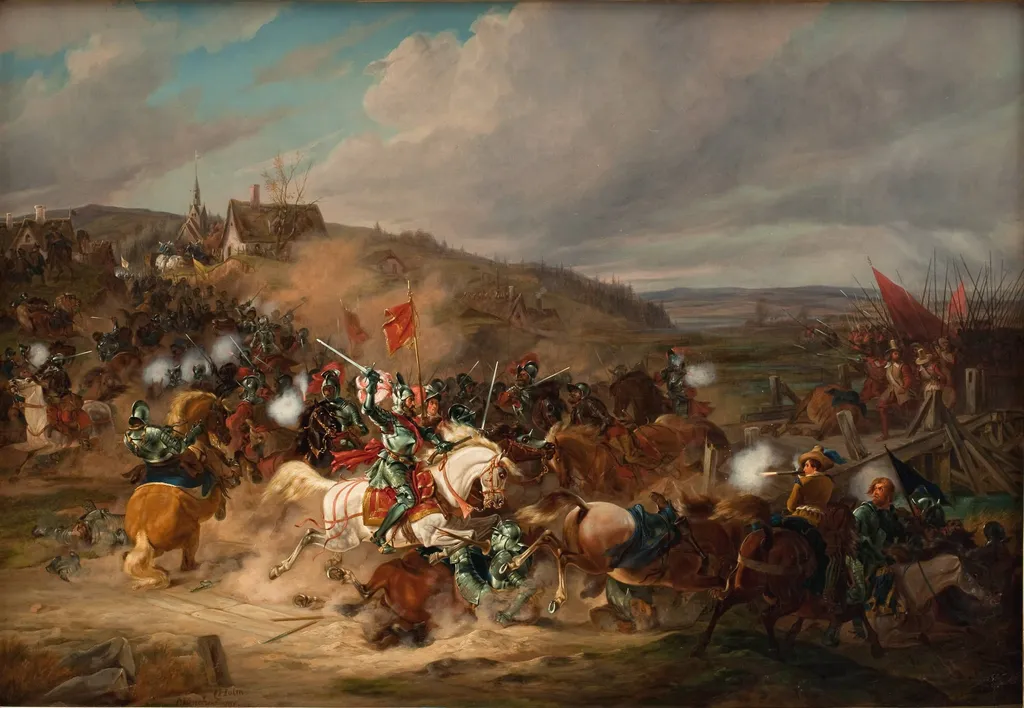
Daniel Rantzau bemægtiger sig Tureby Bro i Skåne under Syvårskrigen 1563-1570 is a photography by Unknown. It dates from 1850 and is held in the collection of the Statens Museum for Kunst. This painting, created around 1850, illustrates a military engagement during the Northern Seven Years' War.
About this work
Overview
It portrays Danish commander Daniel Rantzau’s capture of Tureby Bridge in Scania, a strategic moment in the conflict between Denmark-Norway and Sweden.
This painting, created around 1850, illustrates a military engagement during the Northern Seven Years' War. It portrays Danish commander Daniel Rantzau’s capture of Tureby Bridge in Scania, a strategic moment in the conflict between Denmark-Norway and Sweden. The work is rendered in a detailed, realistic manner and is part of the collection at the Museum of Ethnography, though its historical accuracy reflects 19th-century interpretation rather than contemporary documentation.
Subject & Meaning
The scene depicts the violent takeover of a key crossing point in Scania, emphasizing the chaos of 16th-century warfare. Rantzau, leading Danish forces, is shown amid the fray, though not clearly singled out. The composition conveys the brutality and disarray of medieval-style combat, with fallen soldiers, rearing horses, and dense troop movement. The intent appears to be commemorative, honoring Danish military action in a region contested during the war.
Technique & Style
The artist employs a naturalistic approach with careful rendering of armor, clothing, and horse anatomy. Colors are subdued—dominated by grays, browns, and muted greens—enhancing the somber tone of battle. Brushwork is precise but not idealized, focusing on texture and spatial depth. The background includes distant buildings and water, anchoring the scene in a recognizable landscape of southern Sweden, reinforcing the setting’s authenticity.
History & Provenance
Painted in the mid-19th century, the work was likely commissioned or created as part of a broader wave of historical nationalism in Scandinavia. It was acquired by the Museum of Ethnography, where it resides today. Though based on events from 1563–1570, the depiction is not contemporary; it reflects 19th-century romanticized views of warfare and national identity rather than eyewitness accounts or period sources.
Context
The Northern Seven Years' War involved territorial disputes over Scania, then under Danish control but claimed by Sweden. Rantzau was a prominent Danish general known for his aggressive campaigns. By the 1850s, Scandinavian nations were reexamining their medieval and early modern conflicts as part of nation-building. This painting fits within a trend of visualizing historical battles to reinforce cultural memory, even if liberties were taken with accuracy.
Legacy
The painting contributes to a 19th-century tradition of historical military imagery in Nordic museums. While not widely exhibited beyond its institutional context, it remains a tangible artifact of how later generations interpreted early modern warfare. Its presence in the Museum of Ethnography reflects an era when military history was often grouped with cultural narratives, rather than treated as purely political or military record.
Artist & collection

 Domestic Scene
 Giacomo and Cardinal Marco, investing Andrea, Abbot of San Zeno, with his Benefice
 The Nymph of Fontainebleau
 Portrait of a Woman
 Madonna and Child with Saints in the Enclosed Garden
 Venus and Minerva
 Family Group of Four on Sofa
 Wall painting from Room H of the Villa of P. Fannius Synistor at Boscoreale
 Sobieski at Vienna
 The storming of Schweidnitz in 1761
 Battle Scene
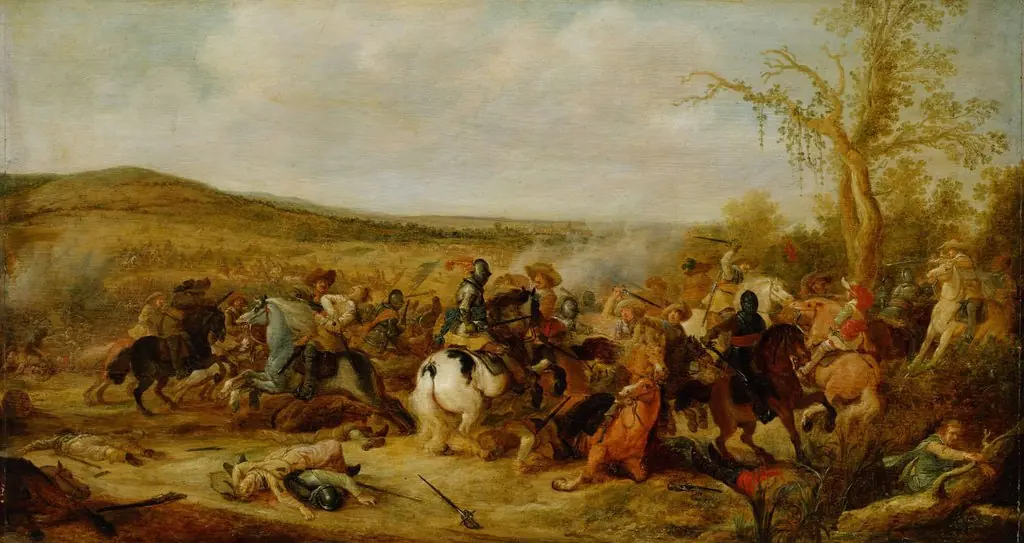 Reitergefecht
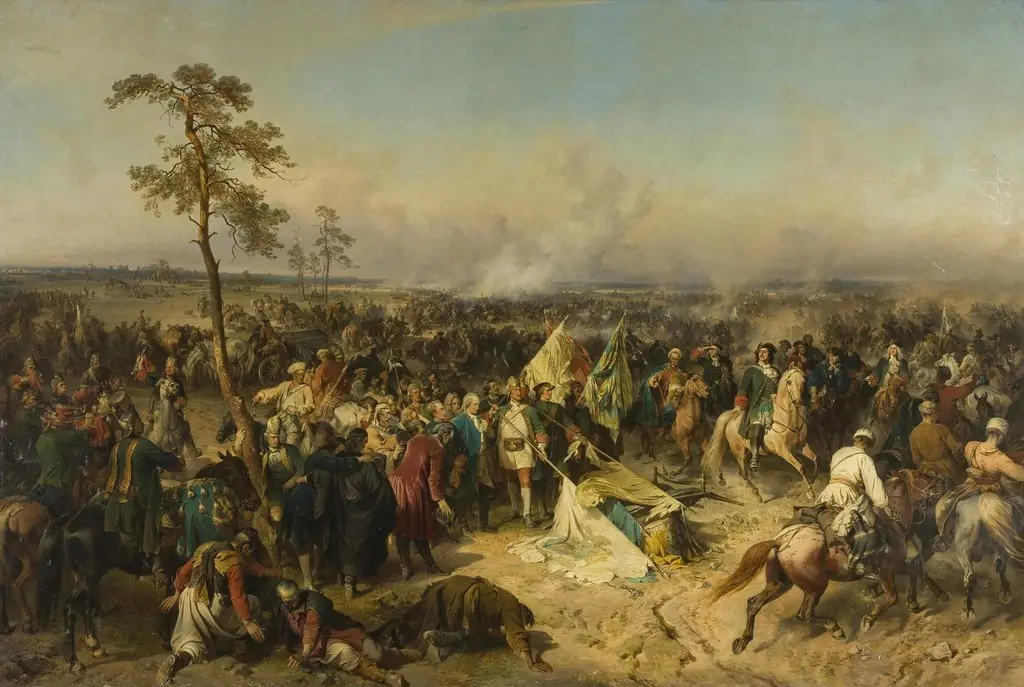 Battle of Poltava
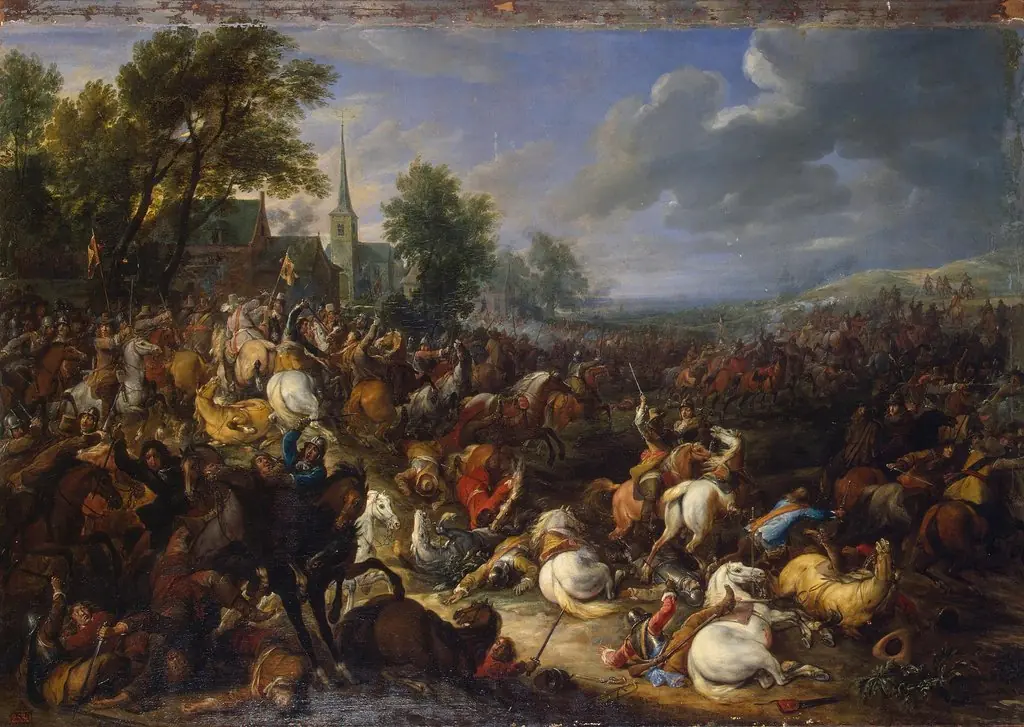 Cavalery in the Battle
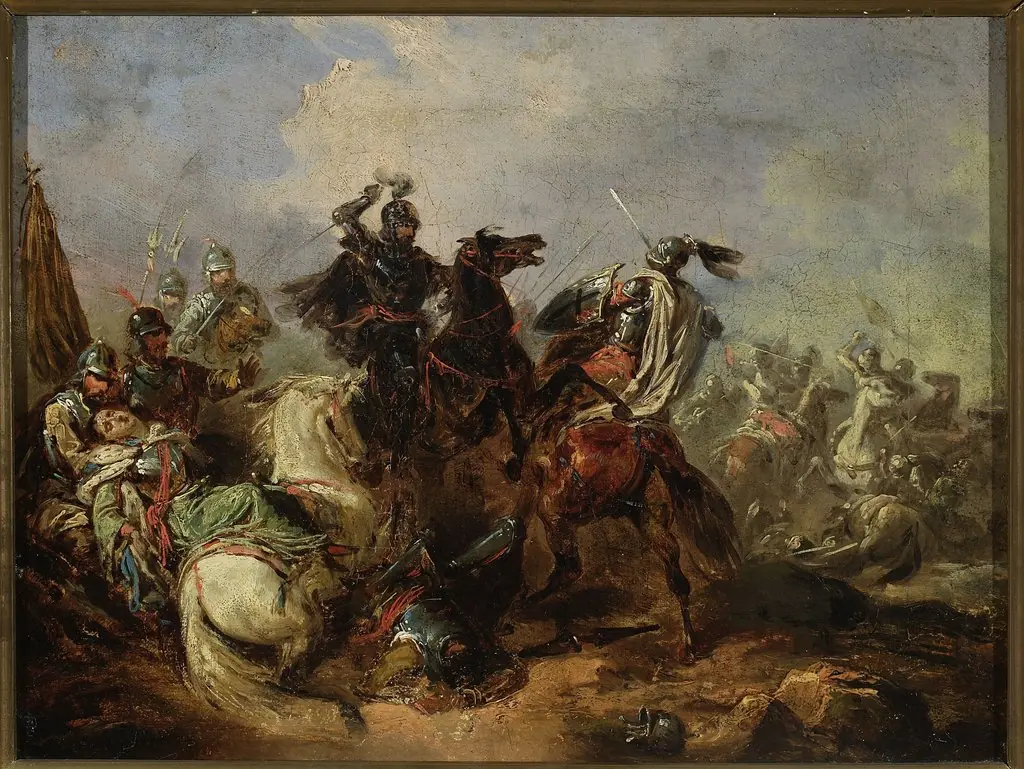 Battle of Lithuanians with the Teutonic knights
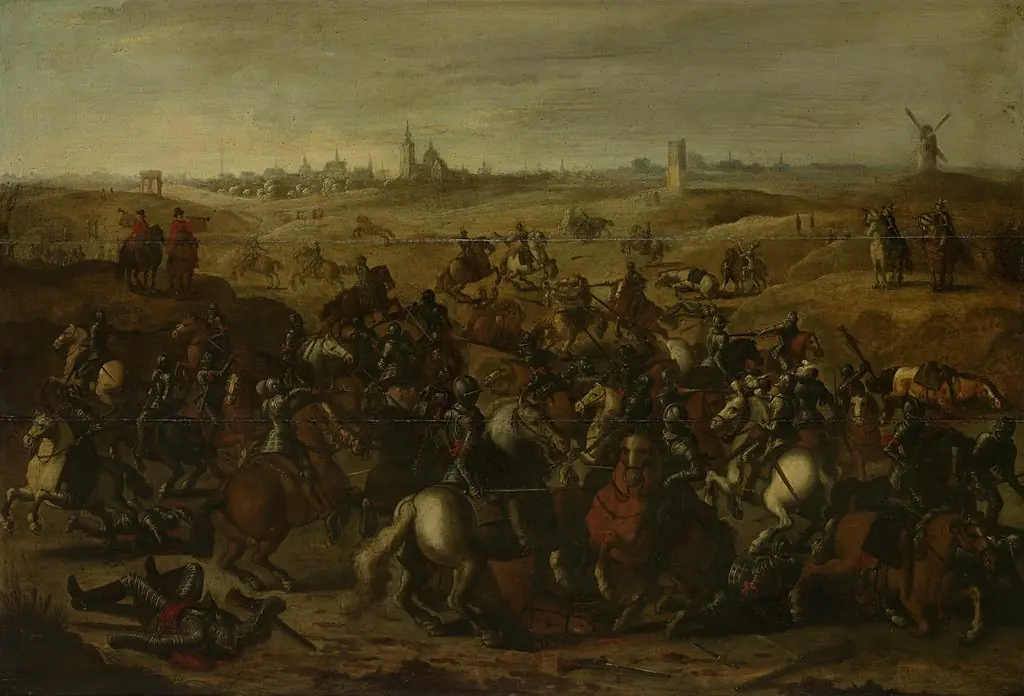 The battle between Bréauté and Leckerbeetje on the heath outside Vught, 5 Februari 1600
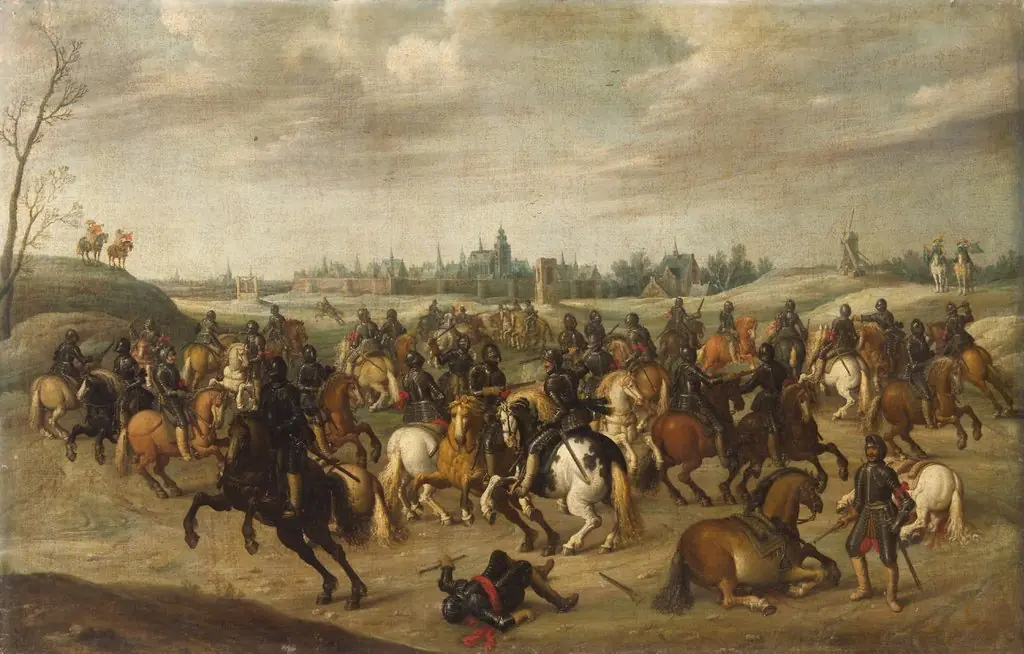 Reitergefecht vor Hertogenbosch
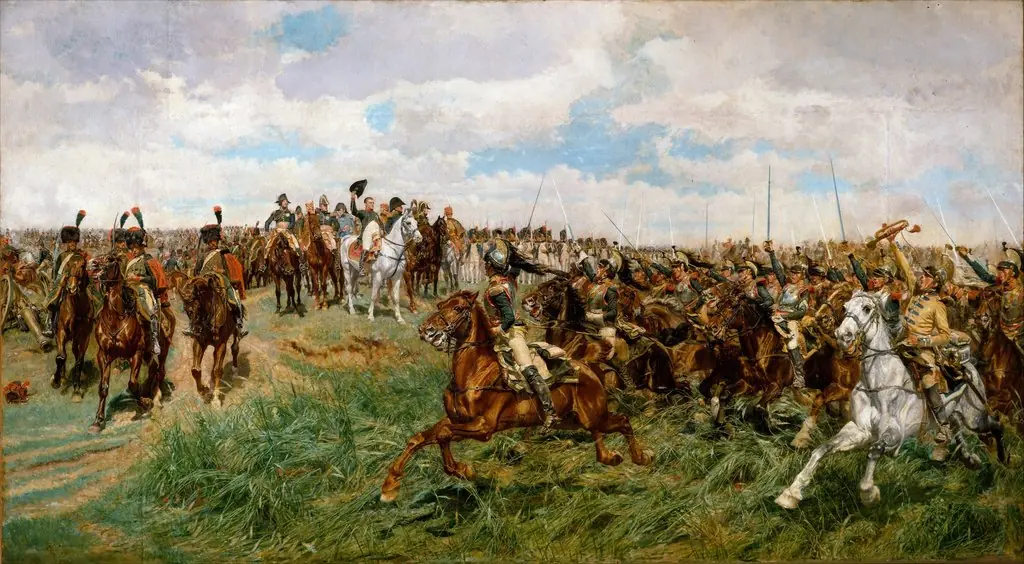 1807, Friedland
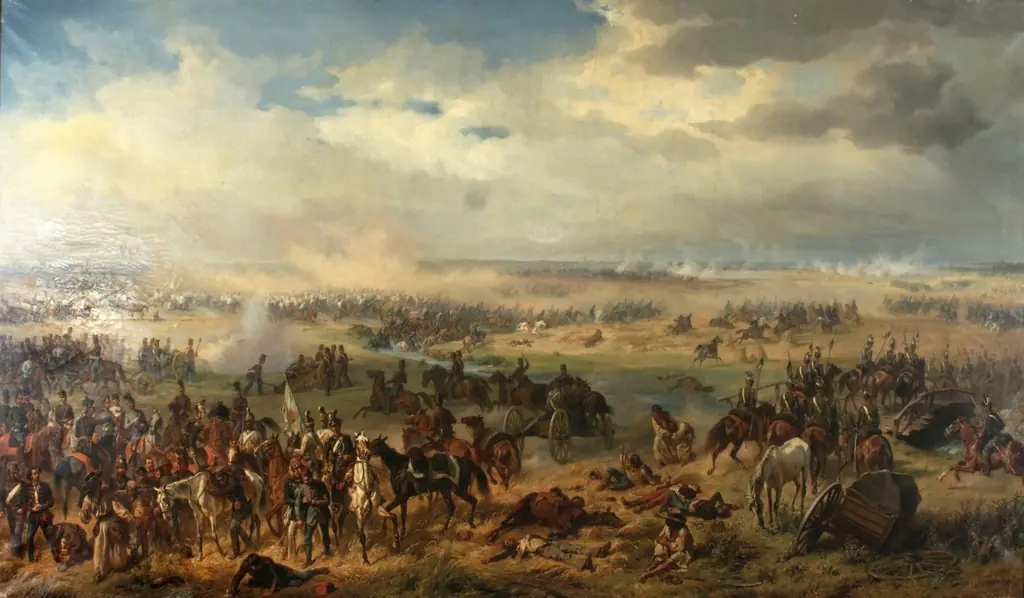 Die Schlacht bei Temesvár
 Daniel Rantzau bemægtiger sig Tureby Bro i Skåne under Syvårskrigen 1563-1570