Artwork
Funérailles d’un officier de marine sous Louis XVI
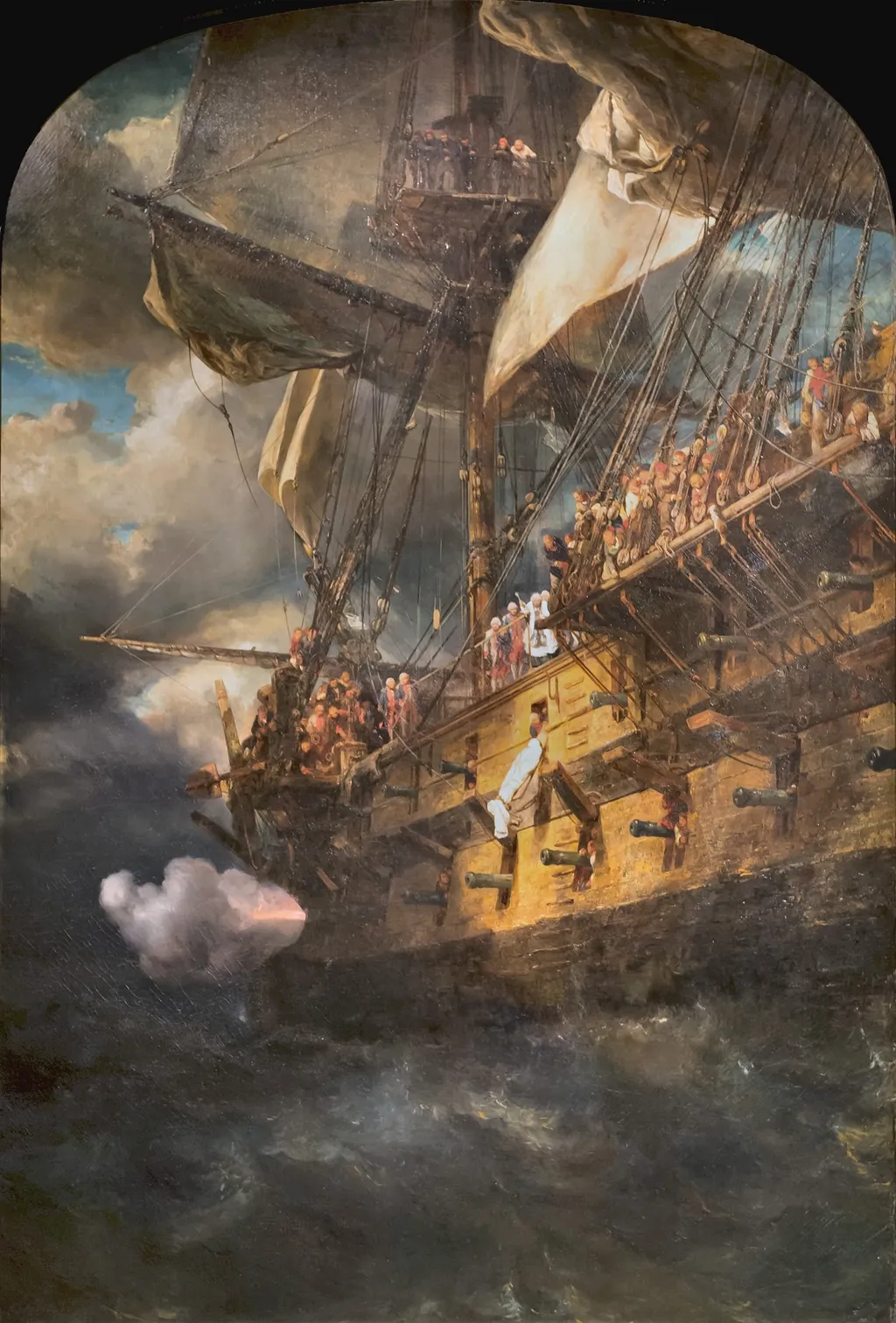
Funérailles d’un officier de marine sous Louis XVI is an oil painting by Eugène Isabey. It dates from 1836 and is held in the collection of the Montreal Museum of Fine Arts.
About this work
Overview
Isabey, active in the early 19th century, was known for maritime subjects and worked across painting, lithography, and watercolor.
Eugène Isabey painted *Funérailles d’un officier de marine sous Louis XVI* in 1836 using oil on canvas. Though the title references a naval funeral during Louis XVI’s reign, the scene depicts a ship in violent storm conditions, suggesting the officer’s death occurred at sea. Isabey, active in the early 19th century, was known for maritime subjects and worked across painting, lithography, and watercolor. The work resides in the Montreal Museum of Fine Arts.
Subject & Meaning
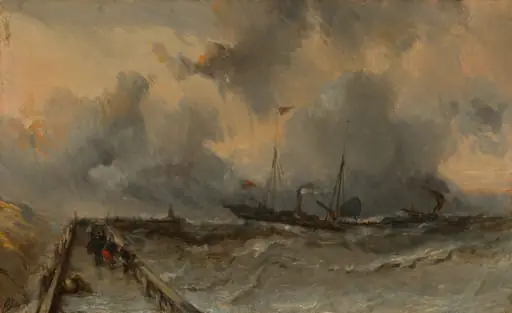
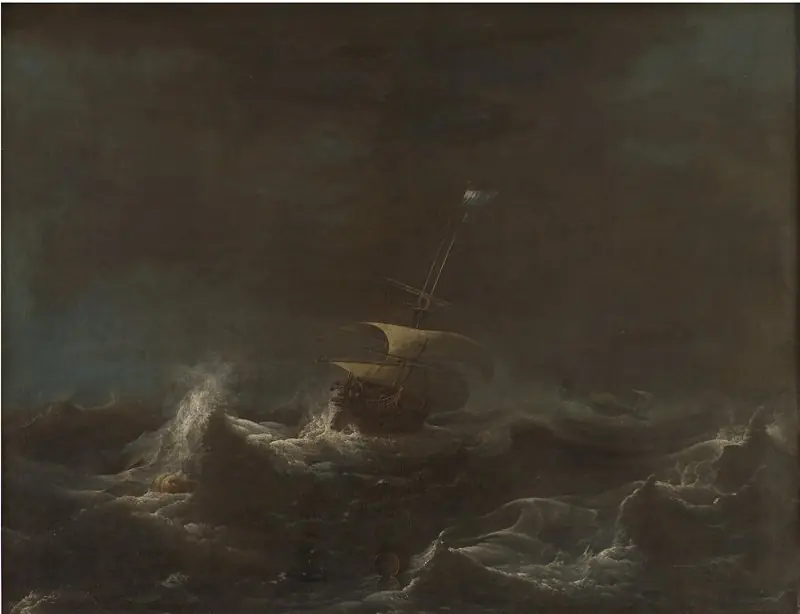
The painting portrays a naval vessel overwhelmed by a tempest, its sails shredded and hull strained by waves. Though titled as a funeral, no burial rites are visible; instead, the storm serves as a metaphor for the officer’s demise. The absence of mourners shifts focus to nature’s power and the perilous life of naval service, evoking solemnity through environmental drama rather than ritual.
Technique & Style
Isabey employed bold, expressive brushwork and strong chiaroscuro to heighten the scene’s intensity. Dark, turbulent skies contrast with fractured light breaking through clouds, illuminating the ship’s rigging and foam-lashed decks. The composition emphasizes vertical motion—waves rising, sails tearing—conveying instability. His handling of paint is dynamic, avoiding idealized detail in favor of emotional immediacy.
History & Provenance
Created in 1836, the painting reflects Isabey’s continued engagement with maritime themes decades after the Bourbon Restoration. While the title references Louis XVI’s era, the work was made during the July Monarchy, when naval heroism remained a cultural touchstone. It entered the Montreal Museum of Fine Arts’ collection in the 20th century, likely through acquisition or donation, and has been exhibited as part of its European painting holdings.
Context
In early 19th-century France, naval service carried symbolic weight after the Revolutionary and Napoleonic wars. Though Louis XVI’s reign ended in 1792, his era was nostalgically recalled in art as a time of order. Isabey’s choice to set a storm-tossed funeral under his rule may have subtly honored tradition amid political change, aligning maritime sacrifice with national memory.
Legacy
The painting exemplifies Isabey’s role in bridging Neoclassical precision and Romantic emotion. While not widely reproduced, it remains a key example of French maritime painting that prioritizes atmosphere over narrative clarity. Its presence in Montreal underscores the international reach of 19th-century French art and its enduring resonance in collections outside Europe.
Artist & collection
Artist
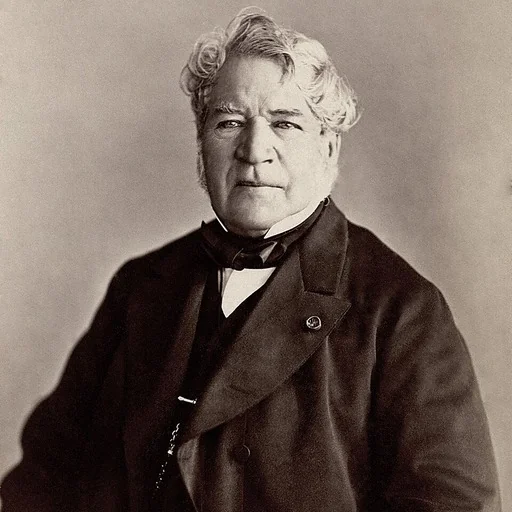
Eugène Louis Gabriel Isabey (French pronunciation: ; 22 July 1803 – 25 April 1886) was a French painter, lithographer and watercolorist in the Romantic style.

 Stormy Sea
 Man-o'-war
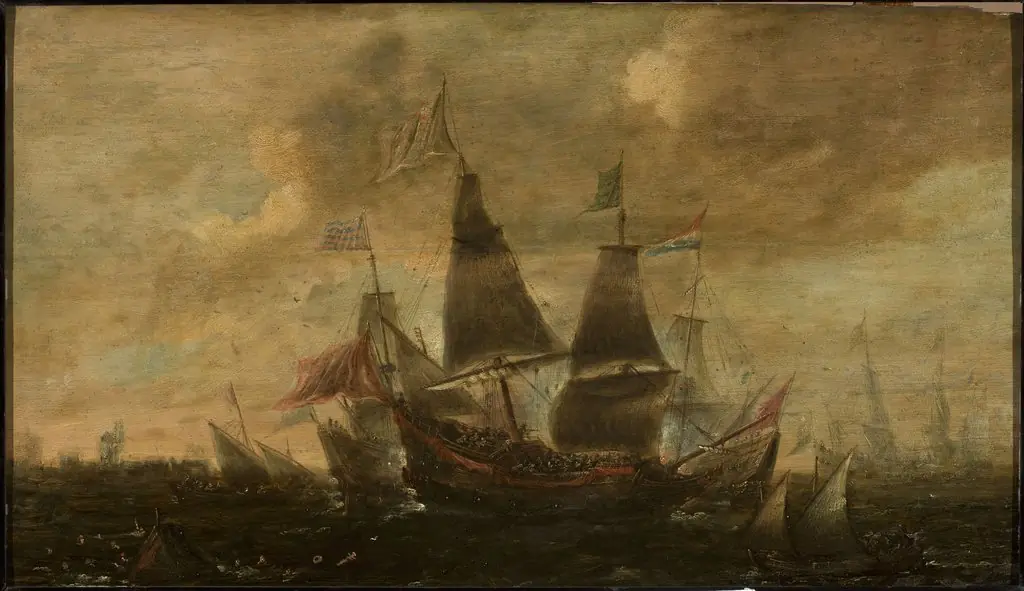 Sea battle
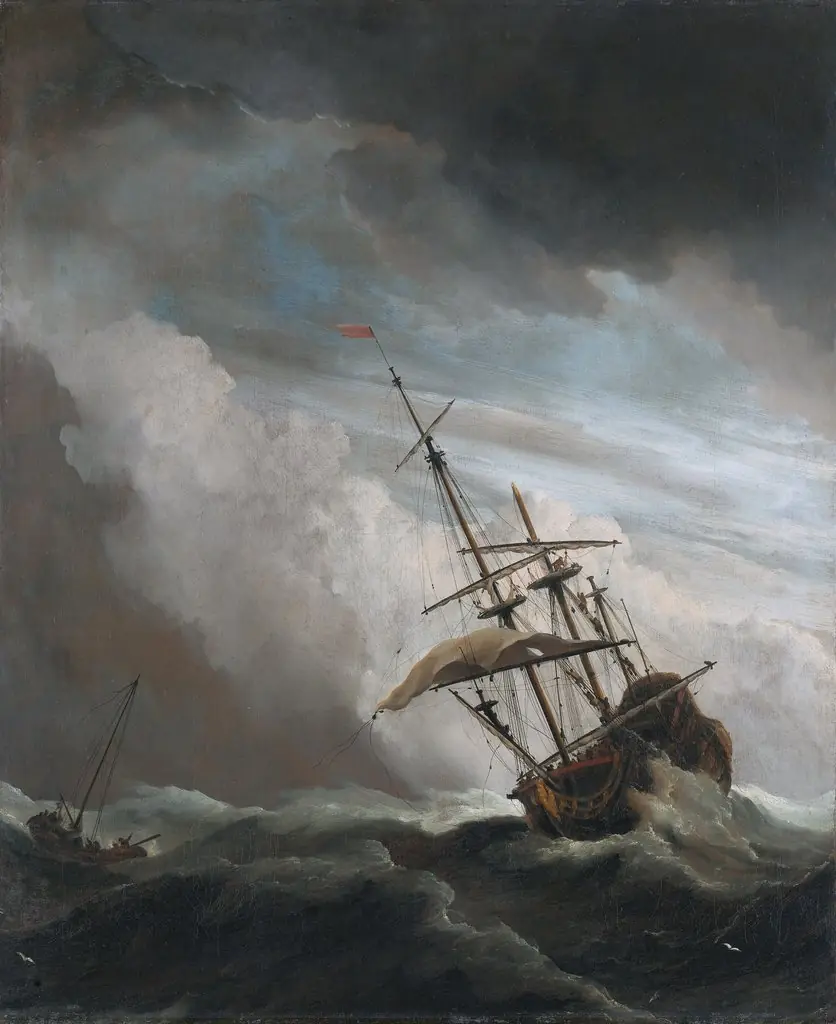 A Ship on the High Seas Caught by a Squall, Known as ‘The Gust’
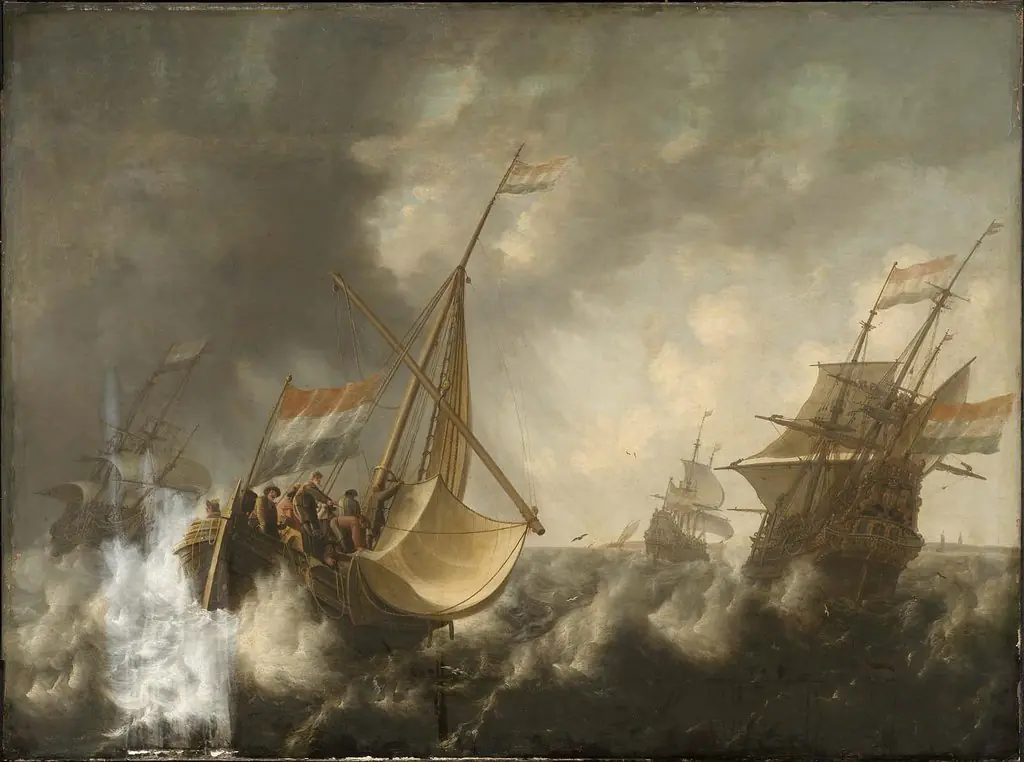 Ships in a Storm
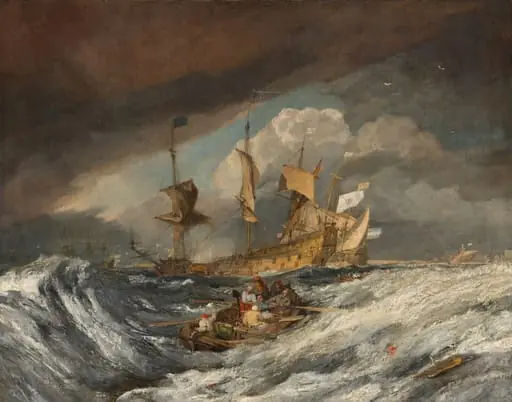 Boats Carrying Out Anchors to the Dutch Men of War
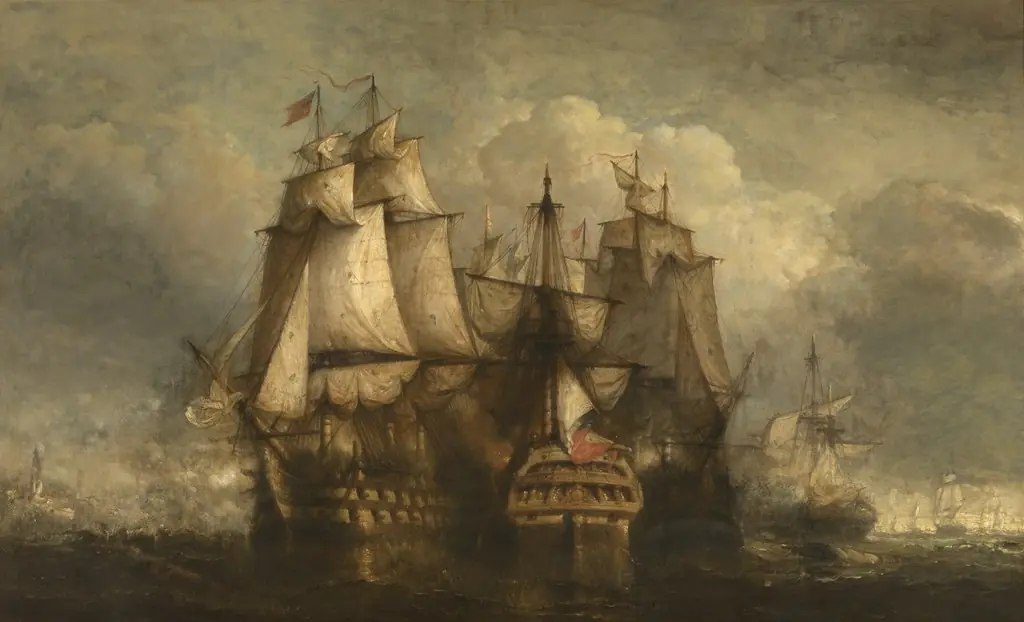 Siege of Vlissingen by an English Squadron
 Marine
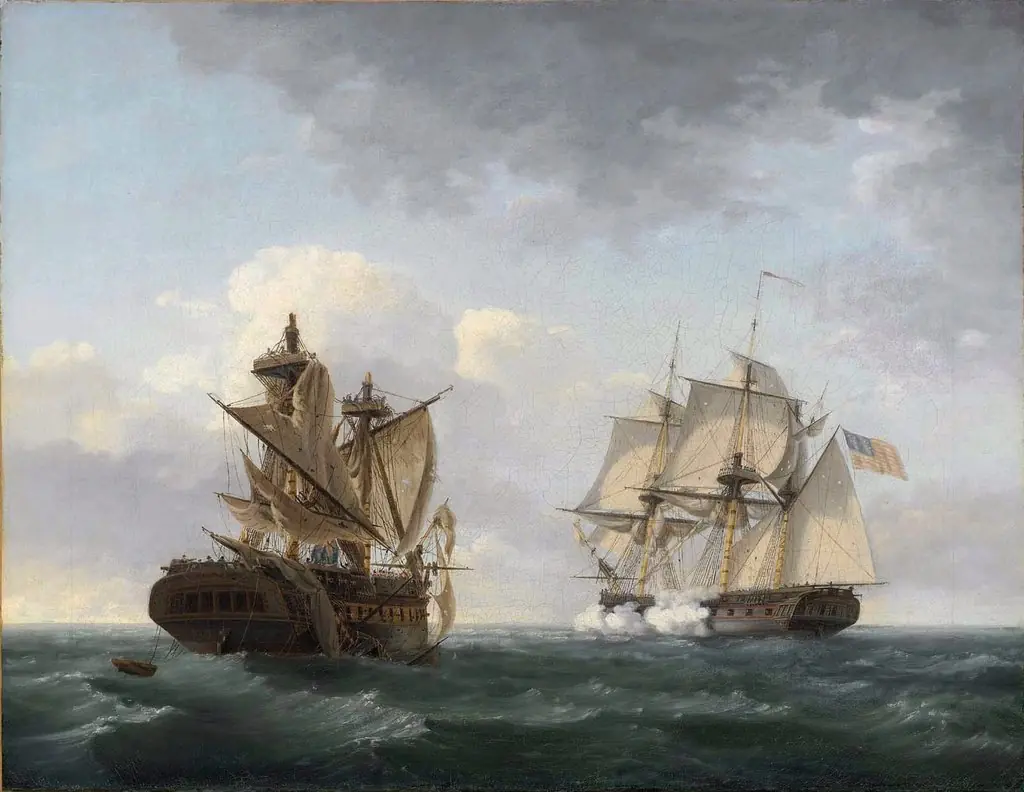 Engagement Between the "United States" and the "Macedonian"
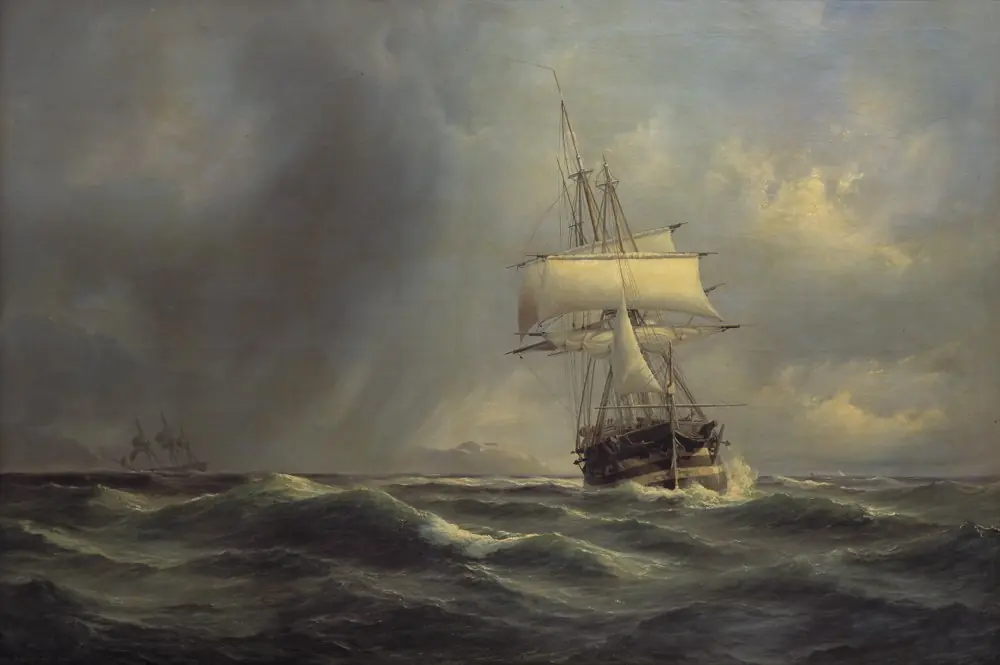 Marine
 A Storm
 The Spanish Armada off the English coast