Artwork
Juan-les-pins, the Bay and the Shore
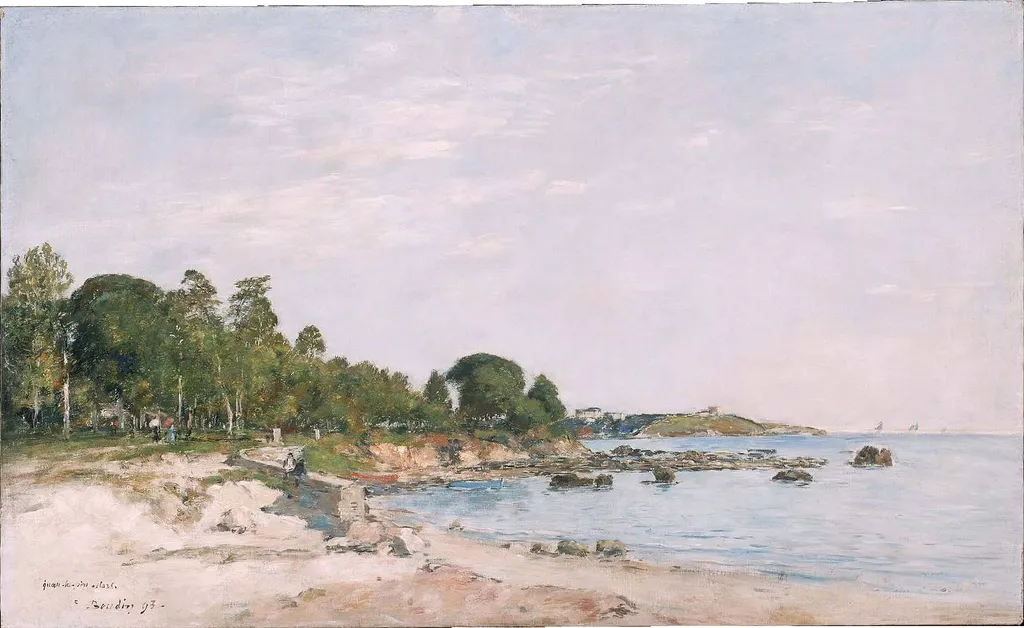
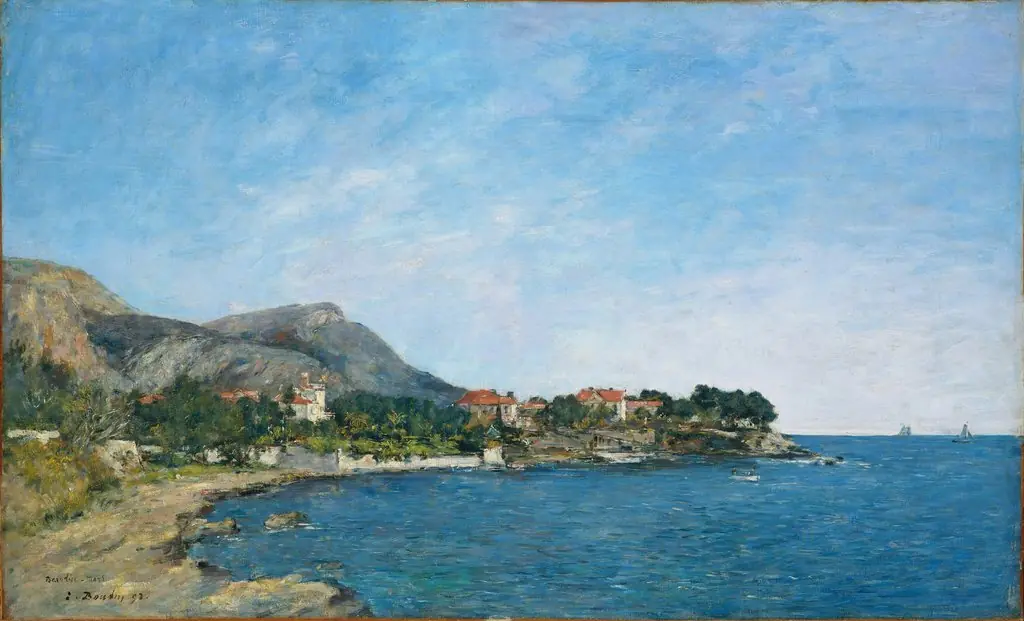
Juan-les-pins, the Bay and the Shore is an oil painting by the Impressionist artist Eugène Boudin. It dates from 1897 and is held in the collection of the Museum of Fine Arts Boston.
About this work
Overview
Painted in 1897, *Juan-les-pins, the Bay and the Shore* is an oil work by French artist Eugène Boudin, capturing a quiet stretch of the Mediterranean coastline.
Painted in 1897, *Juan-les-pins, the Bay and the Shore* is an oil work by French artist Eugène Boudin, capturing a quiet stretch of the Mediterranean coastline. Boudin, known for his dedication to painting en plein air, focused on the subtle shifts of light and atmosphere along shorelines. This piece reflects his lifelong interest in coastal environments and their transient moods, executed with a restrained palette and deliberate brushwork.
Subject & Meaning
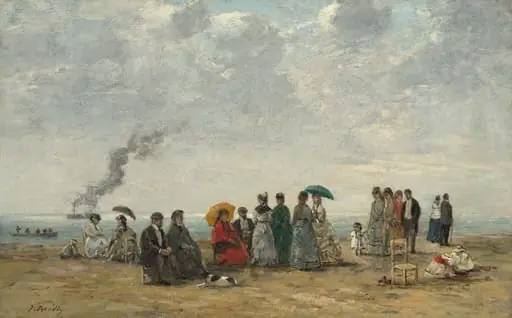
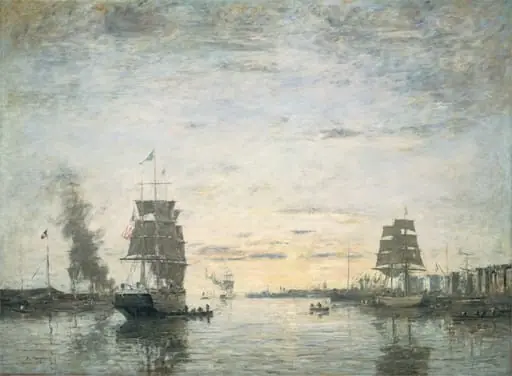
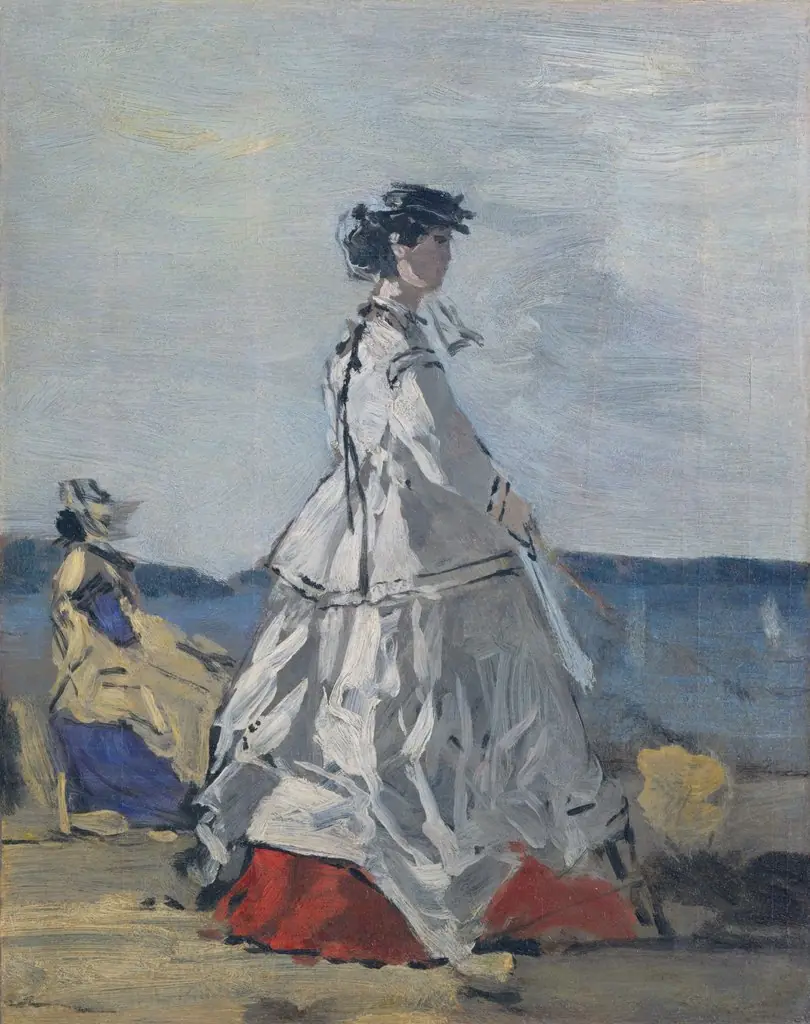
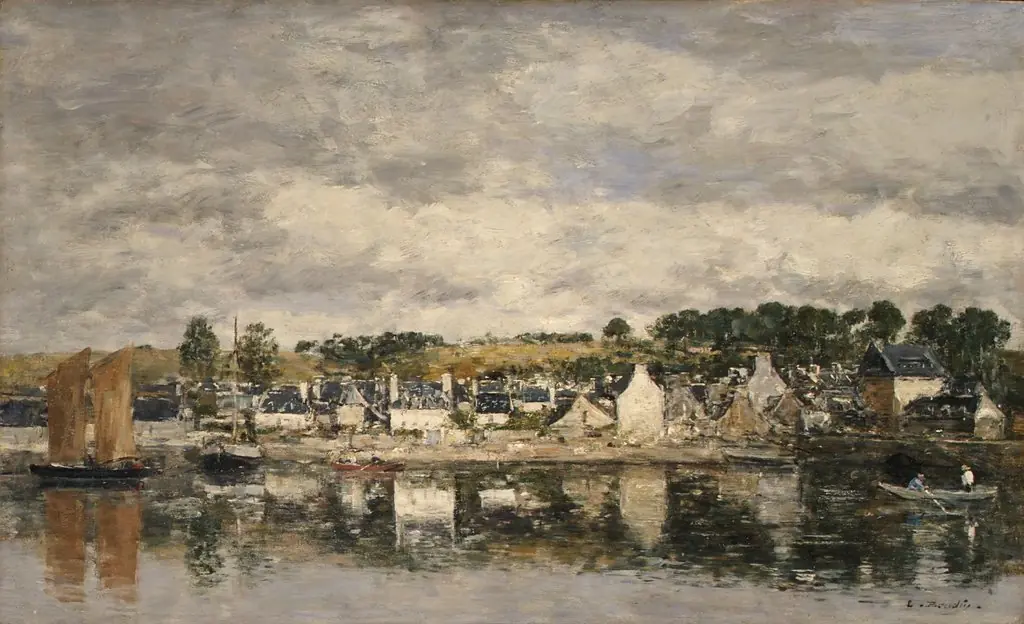
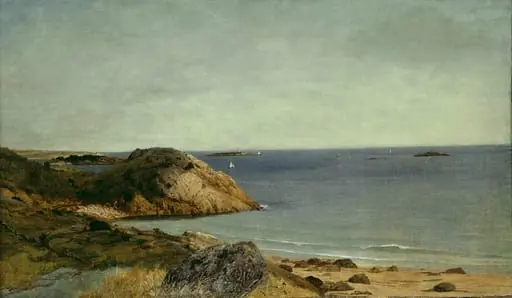
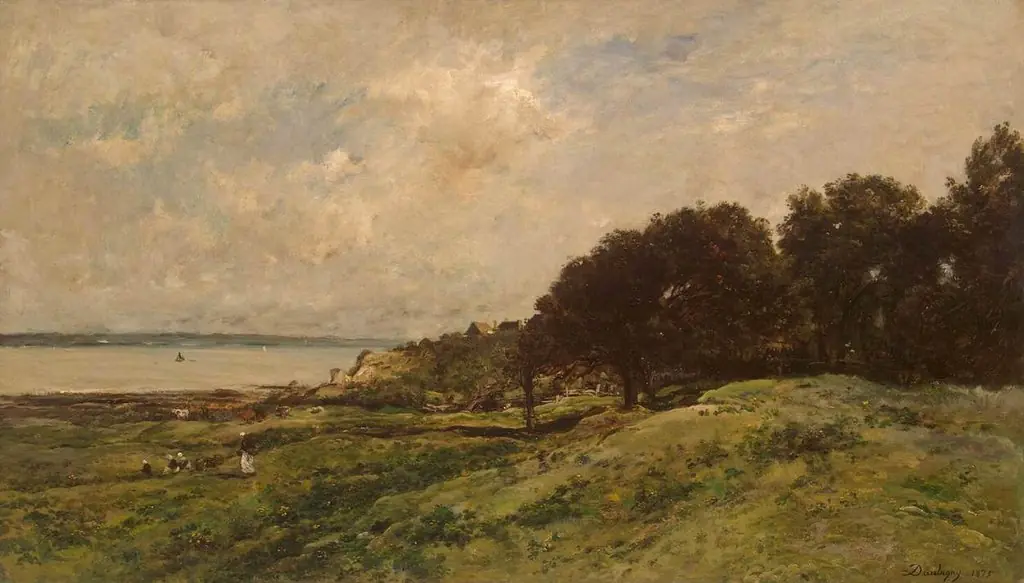
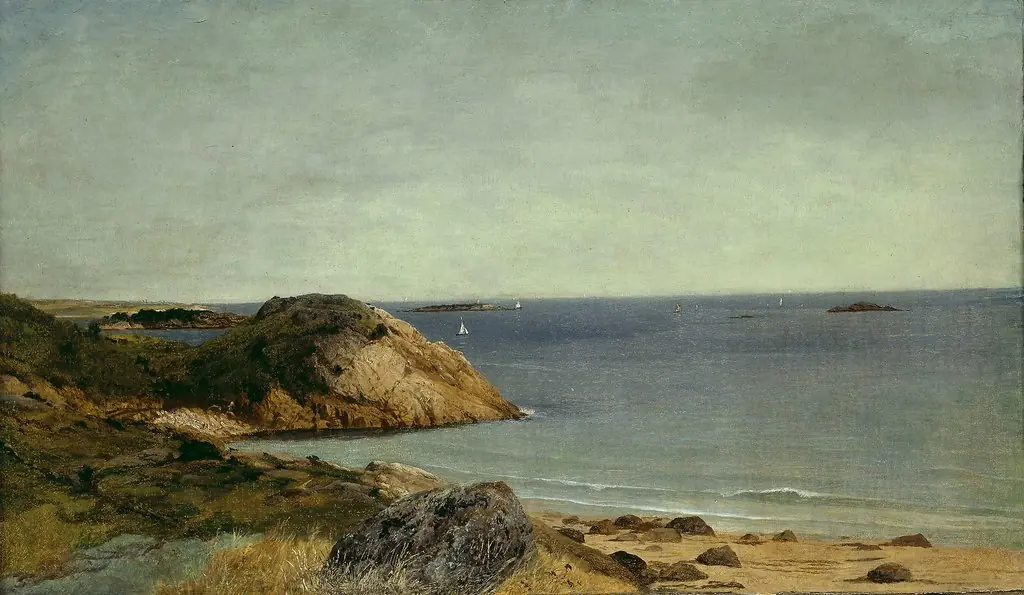
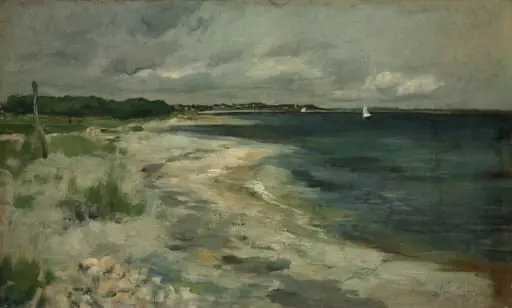
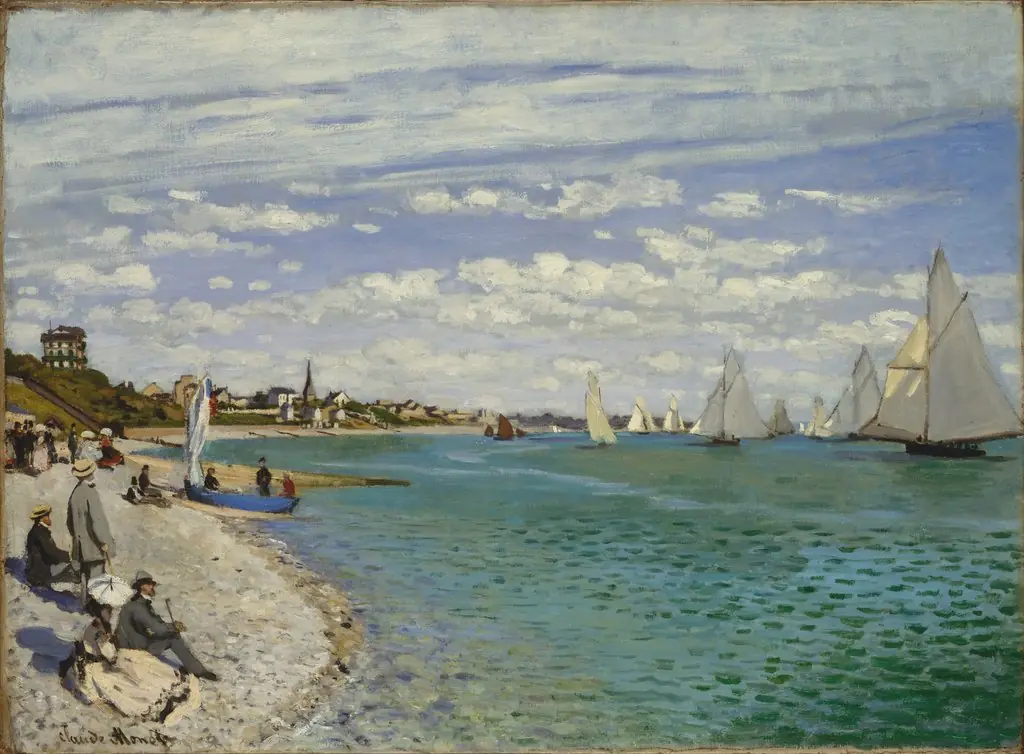
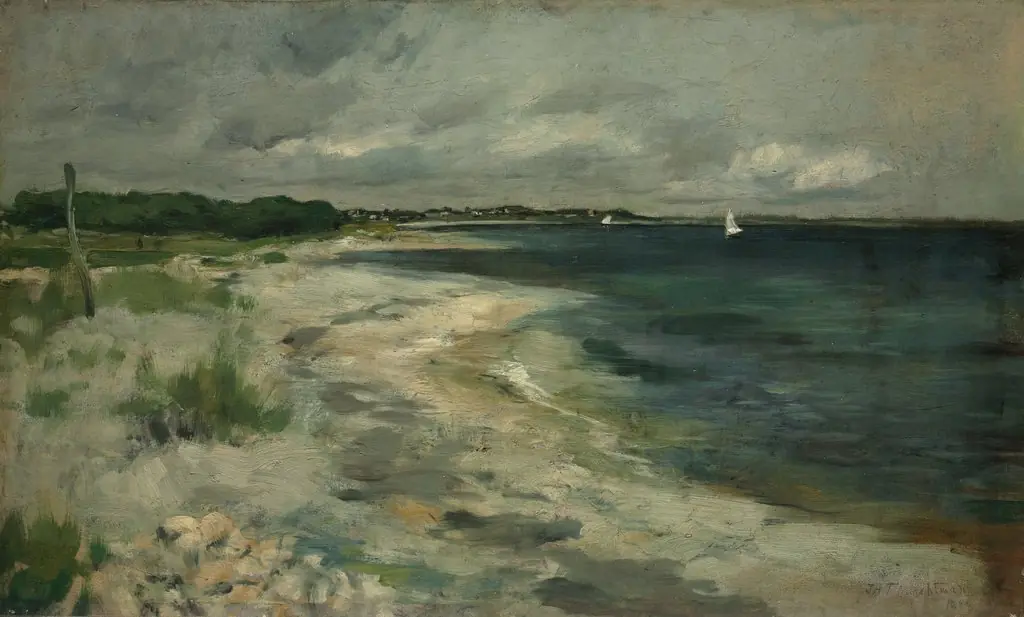
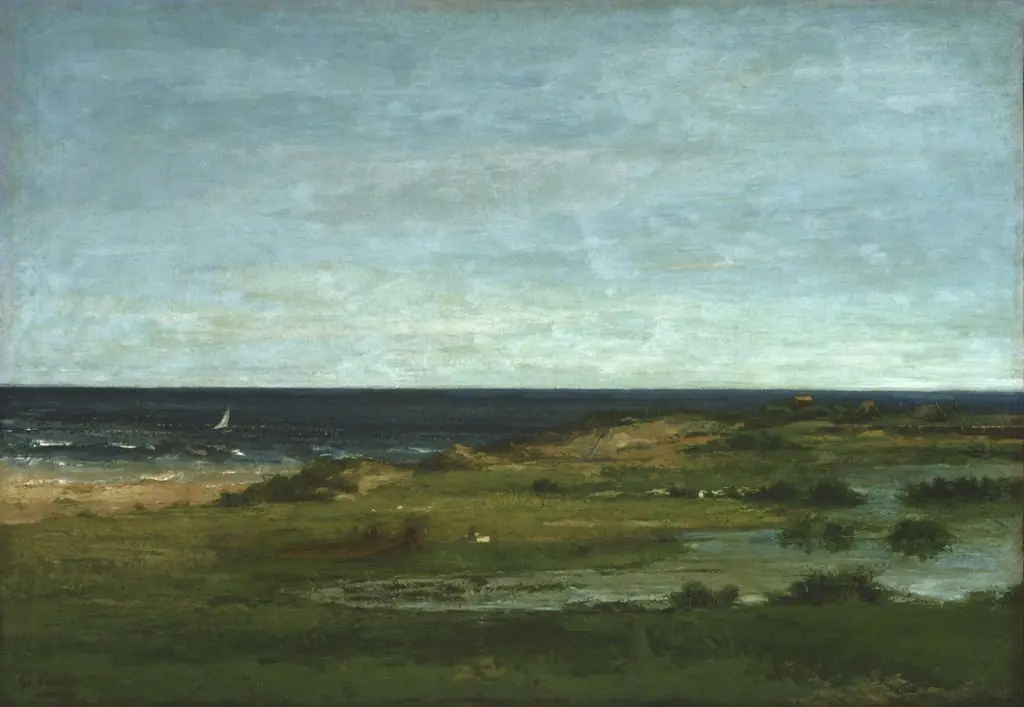
The painting presents a tranquil coastal scene: a rocky shoreline recedes into a calm bay, framed by distant trees and a pale, cloud-dappled sky. A handful of figures move slowly along the shore, their presence adding scale and quiet human activity without disrupting the serenity. The composition invites contemplation rather than narrative, emphasizing harmony between land, sea, and sky as elements of a peaceful, unaltered natural setting.
Technique & Style
Boudin employed loose, fluid brushstrokes to suggest the movement of water and the texture of rock, while maintaining a delicate balance between detail and suggestion. His use of soft, muted tones—pale blues, greys, and earthy ochres—reflects the influence of Impressionism, though his approach remains more measured than that of his contemporaries. Light is rendered not through dramatic contrast but through subtle tonal variations, enhancing the painting’s quiet realism.
History & Provenance
Created during the final decade of Boudin’s career, the painting entered the collection of the Museum of Fine Arts, Boston, where it remains today. While its exact provenance prior to acquisition is not widely documented, its inclusion in the museum’s holdings aligns with its broader commitment to 19th-century French landscape painting. Boudin’s works from this period were often exhibited in Parisian salons and private collections, contributing to his reputation as a precursor to Impressionism.
Context
In the late 19th century, Juan-les-Pins was becoming a favored retreat for artists and the European elite, drawn by its mild climate and unspoiled coastline. Boudin, who had long painted Normandy’s shores, turned to the Mediterranean in his later years, seeking new light and topography. His depictions of this region reflect a broader trend among painters to document changing leisure landscapes, blending natural observation with the emerging culture of seaside tourism.
Legacy
Though less celebrated than some of his Impressionist peers, Boudin’s consistent focus on coastal light and atmosphere influenced a generation of painters, including Monet. *Juan-les-pins, the Bay and the Shore* exemplifies his mature style: restrained, observant, and deeply attuned to the rhythms of nature. The painting endures as a quiet testament to his dedication to capturing the ephemeral qualities of the sea and sky without embellishment.
Artist & collection
Artist
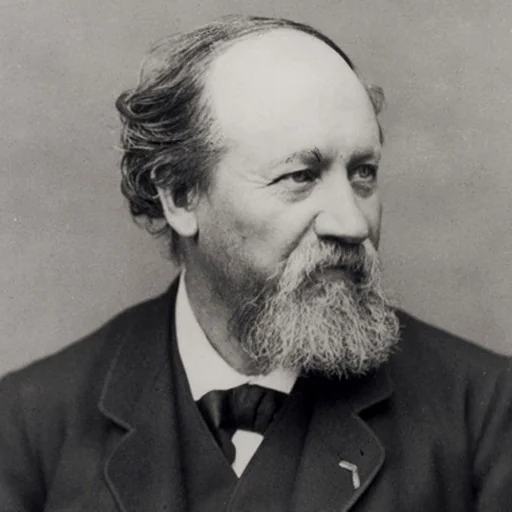
Eugène Louis Boudin (French: ; 12 July 1824 – 8 August 1898) was one of the first French landscape painters to paint outdoors.