Artwork
Storm Clouds
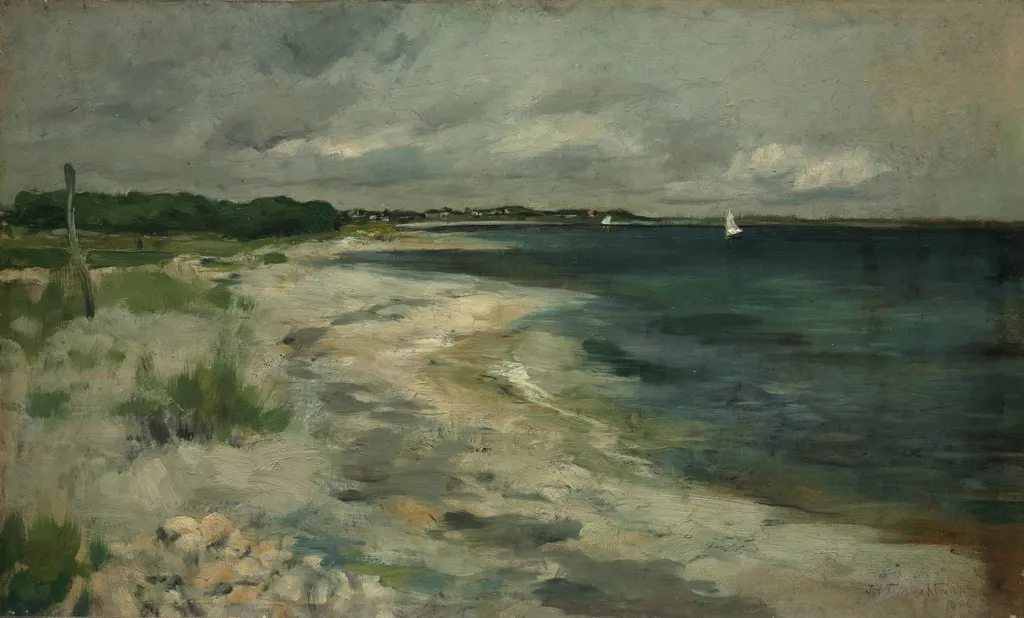
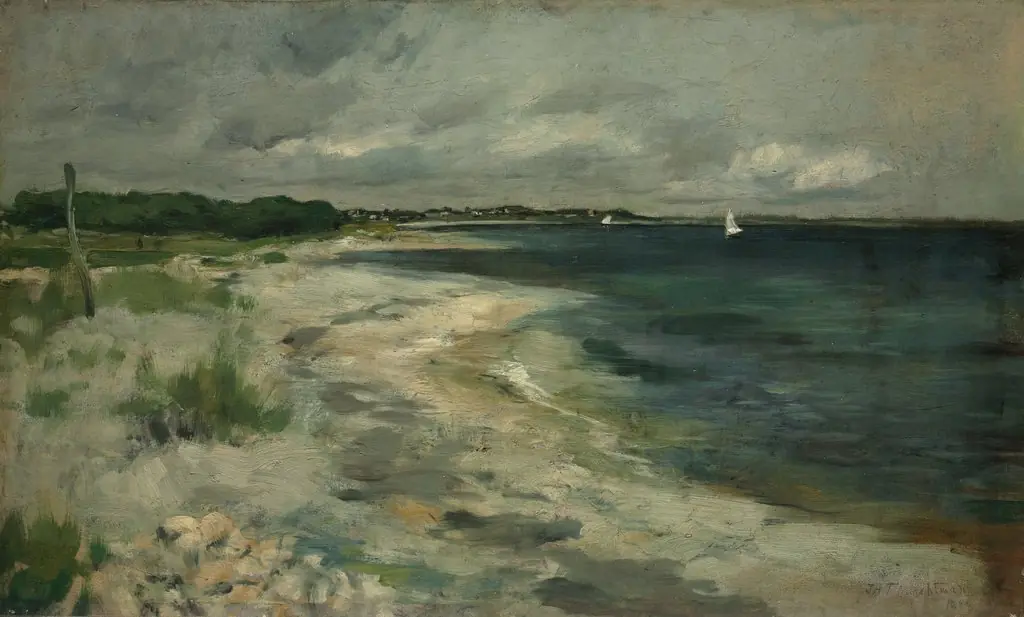
Storm Clouds is an unspecified painting by the American Impressionist artist John Henry Twachtman. It dates from 1880 and is held in the collection of the Cleveland Museum of Art.
About this work
Overview
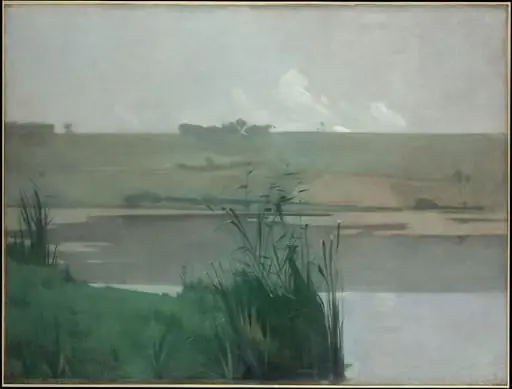
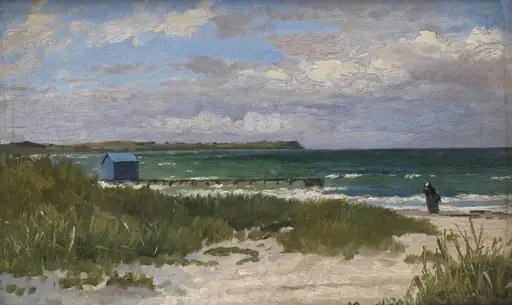
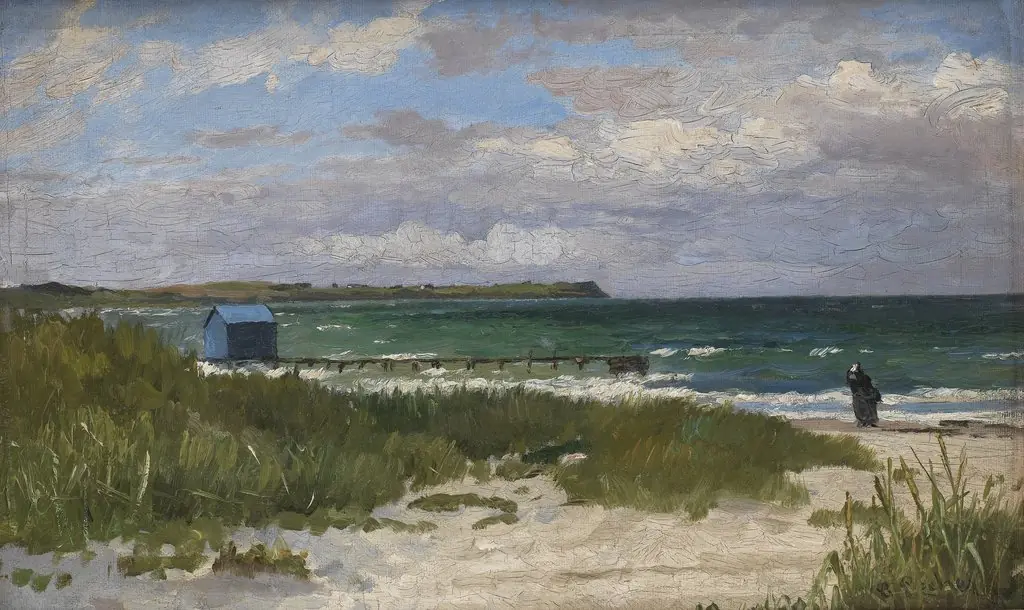
Storm Clouds, painted in 1880 by John Henry Twachtman, is a quiet coastal landscape that captures the subtle tension between stillness and impending weather.
Storm Clouds, painted in 1880 by John Henry Twachtman, is a quiet coastal landscape that captures the subtle tension between stillness and impending weather. The composition centers on a broad expanse of water, flanked by low land and a heavy sky. Its muted palette and restrained detail reflect a contemplative mood, aligning with the aesthetic concerns of American Tonalism rather than the brighter hues of French Impressionism.
Subject & Meaning
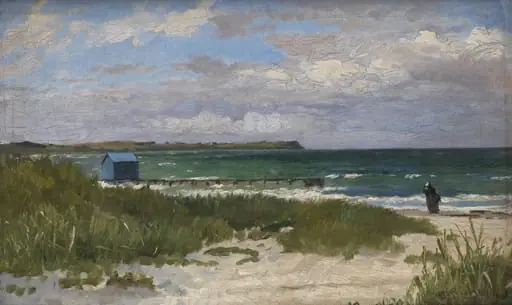
The scene depicts a solitary sailboat adrift on calm, choppy waters beneath an overcast sky. The absence of human figures and the minimal vegetation suggest isolation and transience. The looming clouds imply an approaching storm, yet the atmosphere remains hushed, evoking a sense of quiet anticipation rather than drama. The painting invites reflection on nature’s quiet power and the fragility of human presence within it.
Technique & Style
Twachtman employed loose, rapid brushwork to suggest movement in the water and shifting light beneath the clouds. His application is textured but restrained, avoiding bold outlines or vivid contrasts. Colors are subdued—soft grays, pale blues, and muted greens—creating a unified tonal field. The technique emphasizes atmosphere over detail, using brushstroke rhythm to convey the feeling of wind and changing weather.
History & Provenance
Created during Twachtman’s formative years in Connecticut, Storm Clouds emerged from his engagement with the natural world around his summer studio. It entered The Cleveland Museum of Art’s collection in the early 20th century, where it has remained a key example of American landscape painting from the 1880s. Its preservation reflects its significance in the development of a distinctly American tonal aesthetic.
Context
Painted at a time when American artists were moving away from romanticized wilderness scenes, Storm Clouds reflects a shift toward intimate, mood-driven landscapes. Twachtman was influenced by European tonalism and Japanese prints, both evident in the painting’s flattened space and emphasis on atmospheric harmony. It stands apart from the brighter palette of Impressionism, favoring emotional resonance over optical realism.
Legacy
Storm Clouds helped define the American Tonalist movement, influencing later artists who prioritized mood and subtle color gradations. Its quiet intensity contributed to a broader redefinition of landscape painting in the United States, emphasizing psychological depth over narrative or grandeur. Today, it remains a touchstone for understanding the nuanced relationship between nature and perception in late 19th-century American art.
Own this work as a print
Artist & collection