Artwork
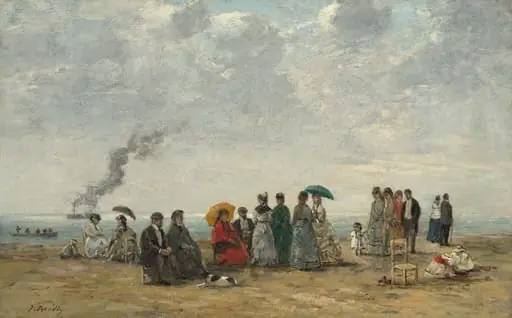
The Beach at Trouville
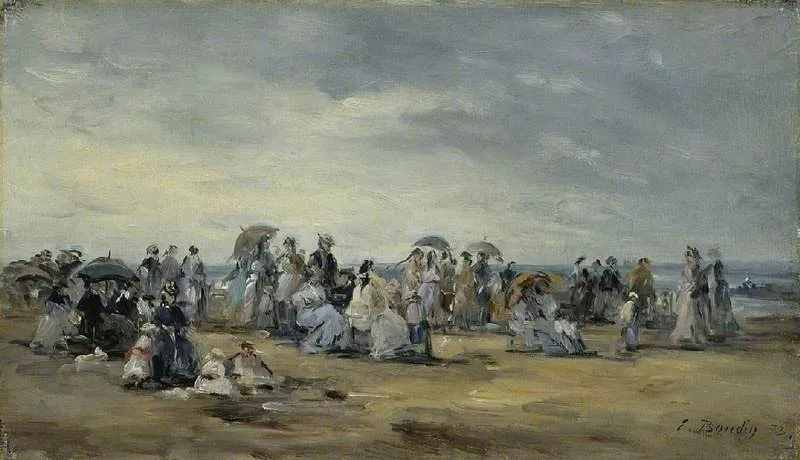
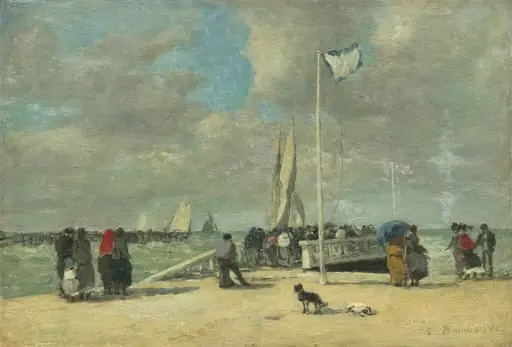
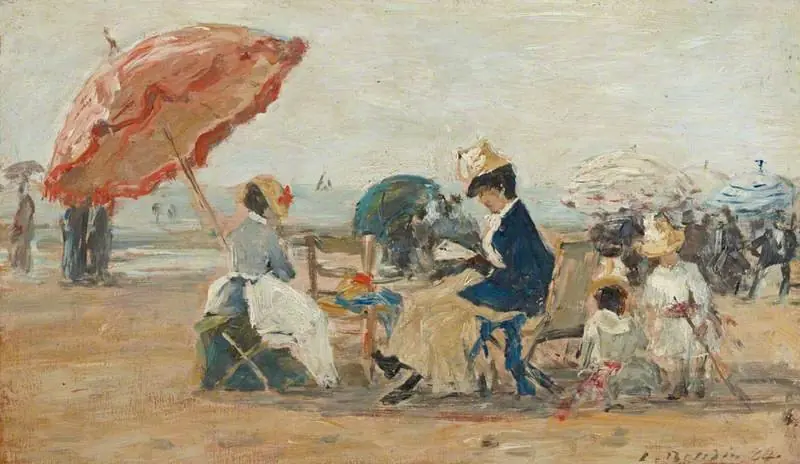
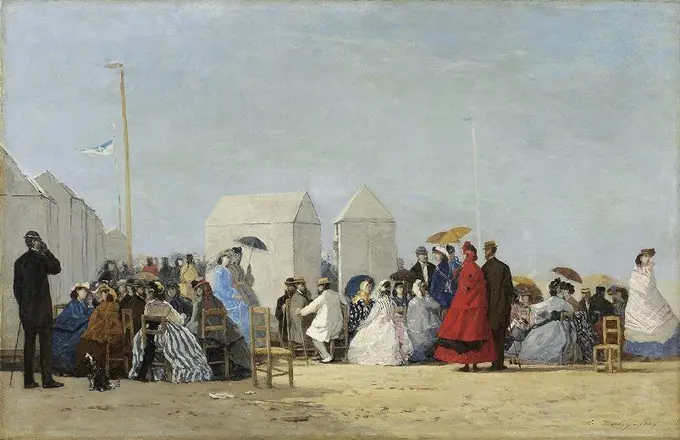
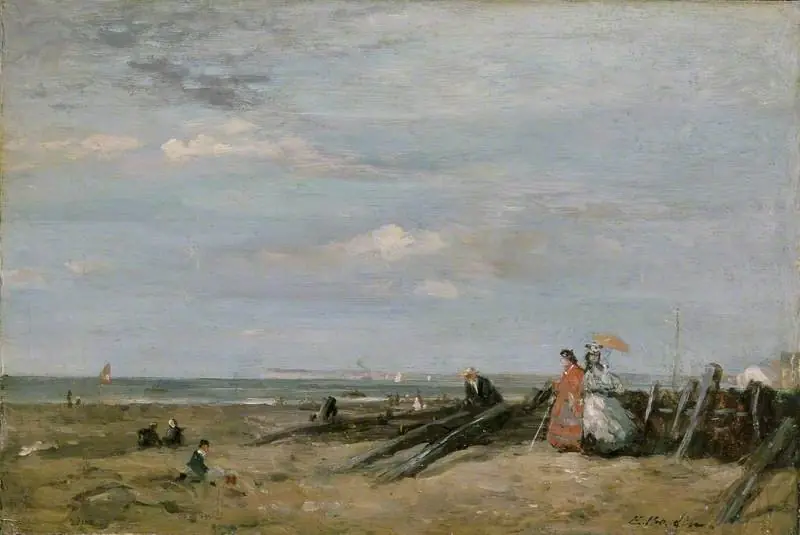
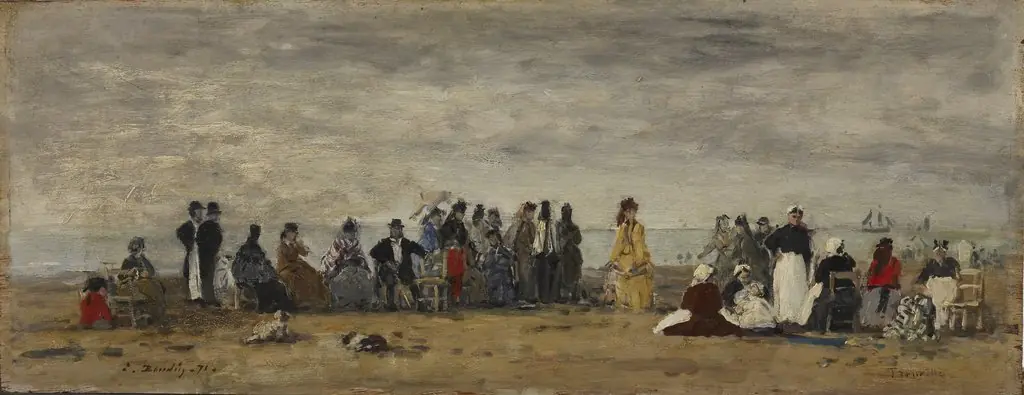
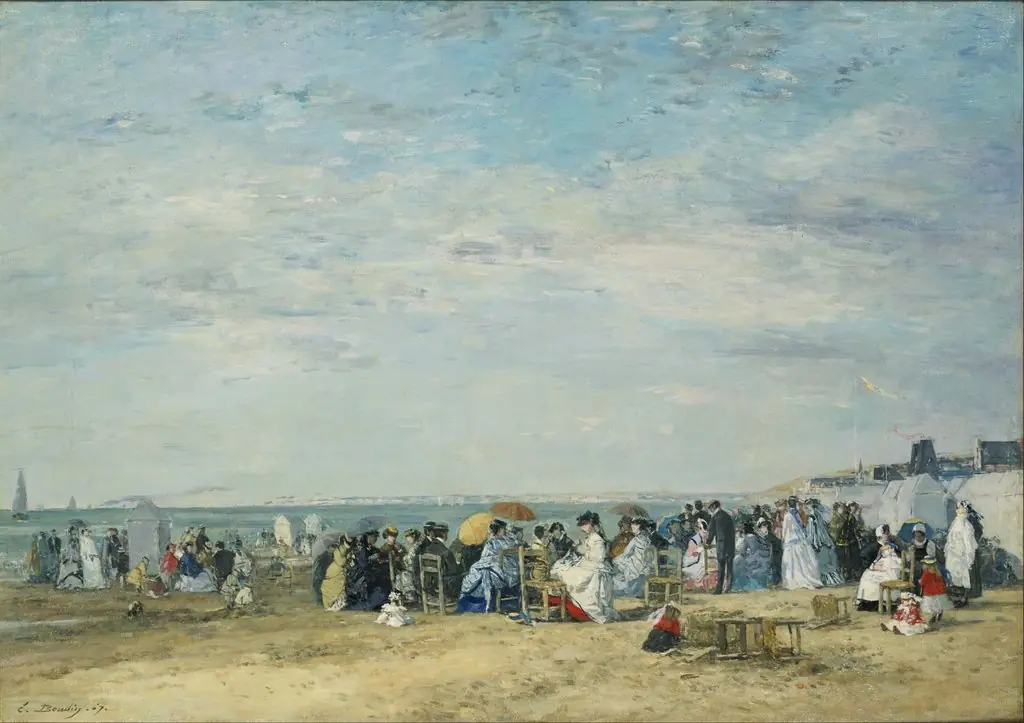
The Beach at Trouville is an oil painting by the Impressionist artist Eugène Boudin. It dates from 1873 and is held in the collection of the Fitzwilliam Museum.
About this work
Overview
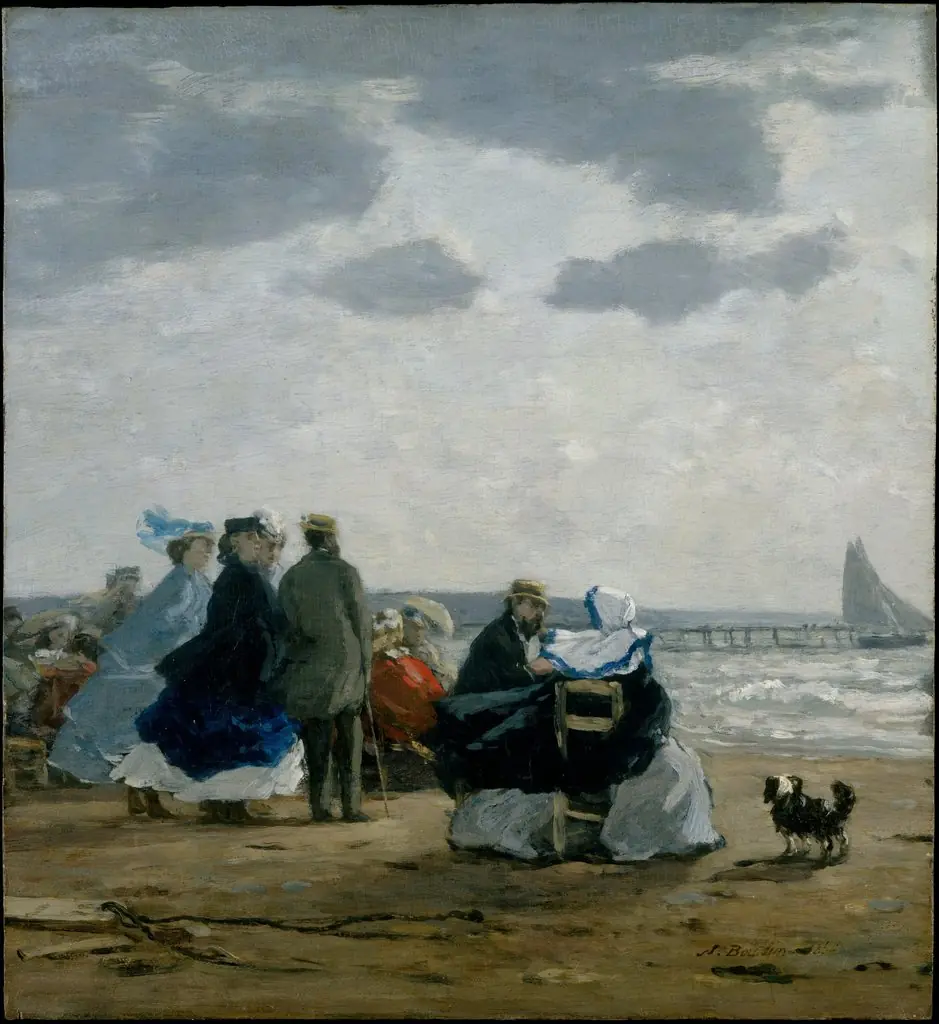
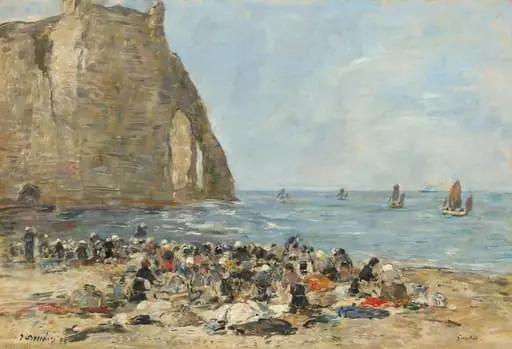
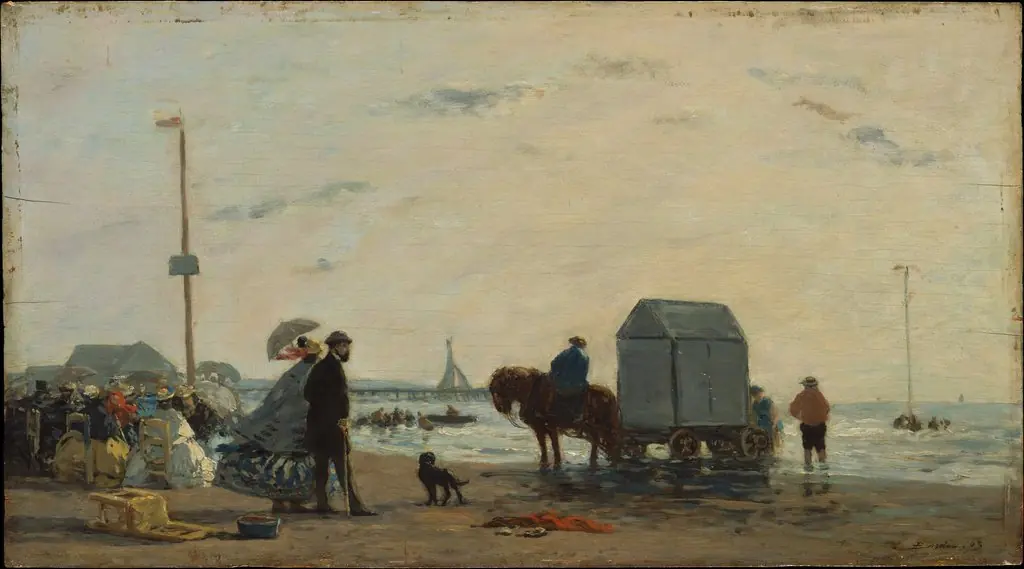
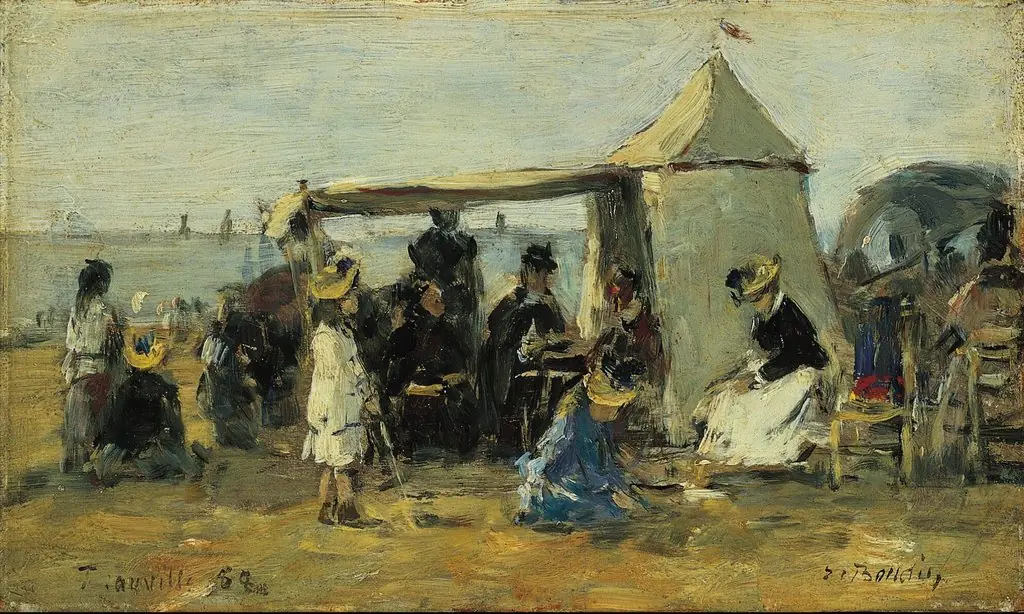
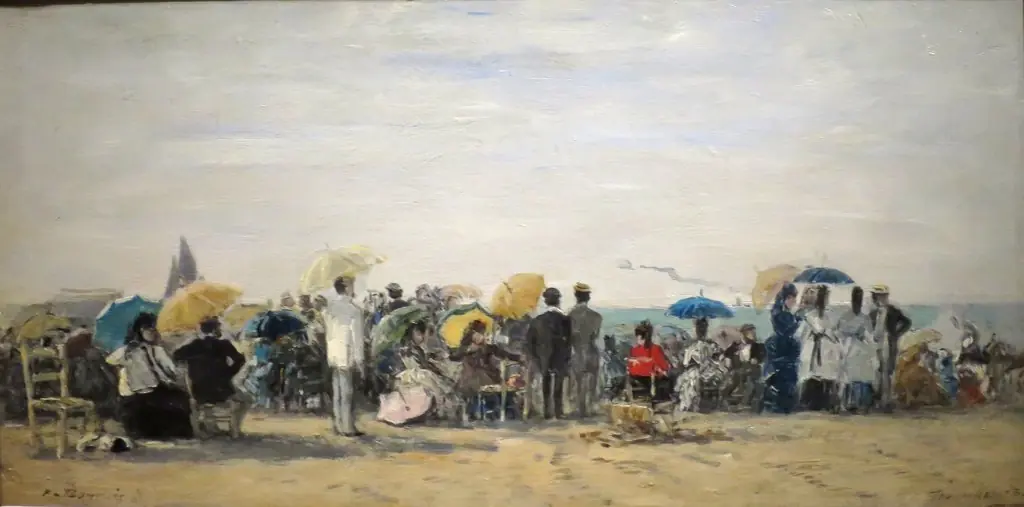
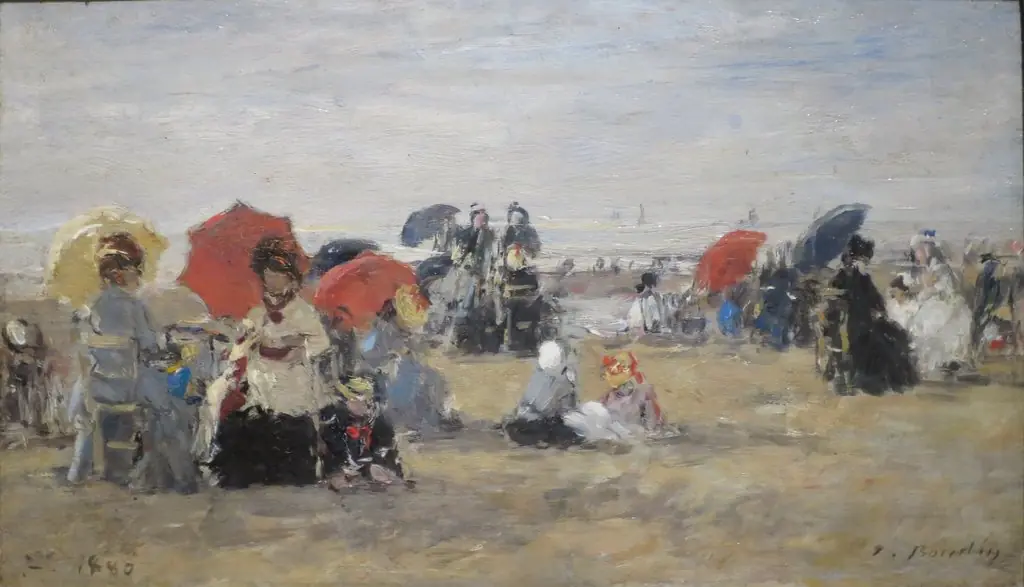
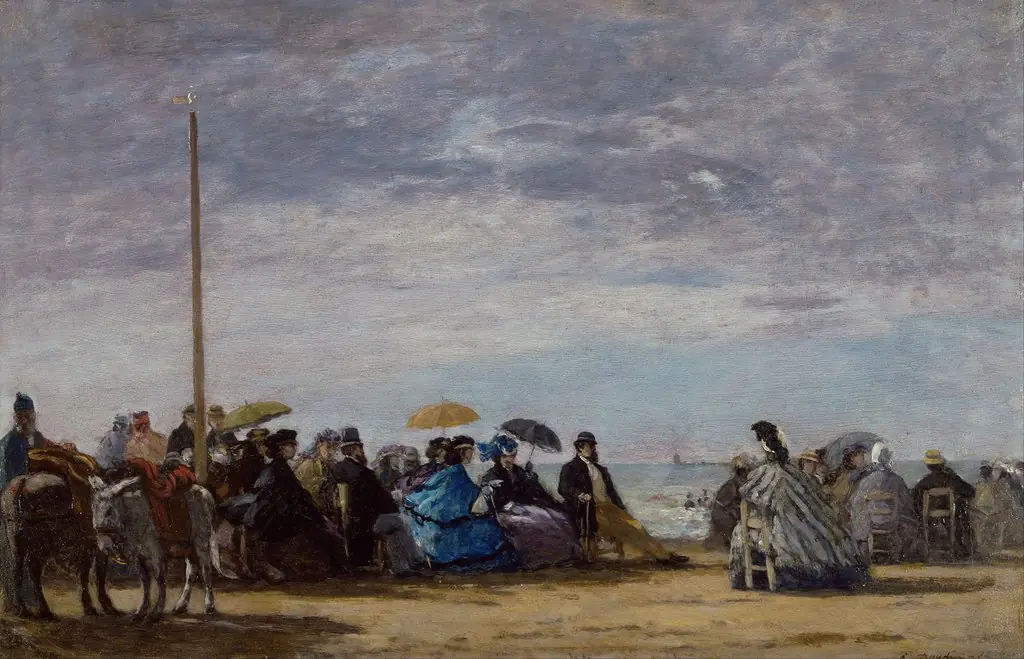
Eugène Louis Boudin painted *The Beach at Trouville* in 1873 using oil on canvas, capturing a coastal scene in northern France. Known for his dedication to painting outdoors, Boudin focused on the transient qualities of light and weather along the Normandy shore. This work exemplifies his commitment to depicting everyday seaside life with quiet observation rather than dramatic narrative.
Subject & Meaning
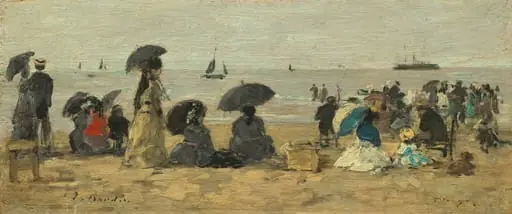
The painting portrays a mid-19th-century beach outing, with figures dressed in formal attire strolling or resting on the sand. The scene reflects the rising popularity of seaside resorts among the French middle and upper classes during the summer months. Boudin presents leisure not as spectacle but as a quiet, communal ritual, emphasizing social presence over individual action.
Technique & Style
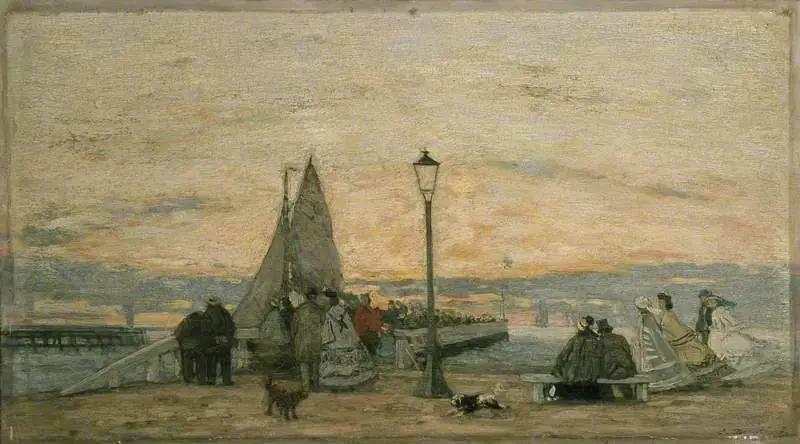
Boudin employed loose, fluid brushwork to suggest the movement of air and water, with soft transitions between sky, sea, and sand. His palette favors muted grays, blues, and earth tones, harmonizing with the overcast conditions. Unlike later Impressionists, he avoided bold color contrasts, instead relying on subtle tonal shifts to convey atmosphere and depth.
History & Provenance
Created during Boudin’s mature period, the painting emerged from his long-standing engagement with Trouville, a fashionable resort he visited regularly.
Created during Boudin’s mature period, the painting emerged from his long-standing engagement with Trouville, a fashionable resort he visited regularly. It was likely painted en plein air, consistent with his practice. The work remained in private collections after its completion, with no public exhibition record until the 20th century, reflecting its quiet reception compared to more radical contemporaries.
Context
In the 1870s, Trouville was becoming a hub for urban elites seeking respite from city life. Boudin’s focus on this social phenomenon aligned with broader cultural shifts toward leisure and tourism. His work, though not formally part of the Impressionist exhibitions, influenced younger artists like Monet, who admired his ability to translate natural light onto canvas with immediacy.
Legacy
Boudin’s coastal scenes laid groundwork for the Impressionist movement’s emphasis on direct observation and transient effects. Though less celebrated in his lifetime than his peers, his dedication to painting the sea and shore with honesty earned later recognition as foundational to modern landscape painting. His influence is evident in the way later artists approached light, atmosphere, and everyday subject matter.
Artist & collection
Artist
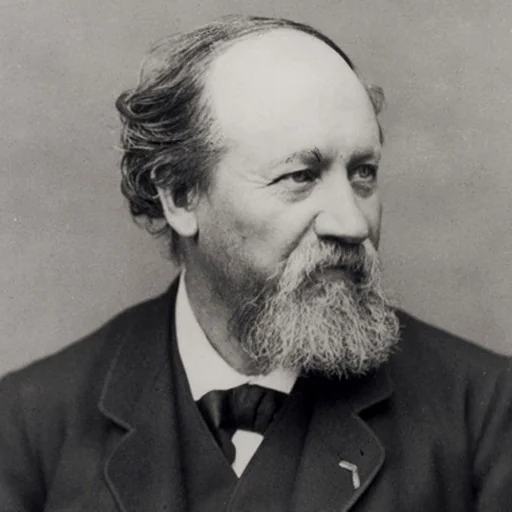
Eugène Louis Boudin (French: ; 12 July 1824 – 8 August 1898) was one of the first French landscape painters to paint outdoors.