Artwork
The Adoration of the Magi
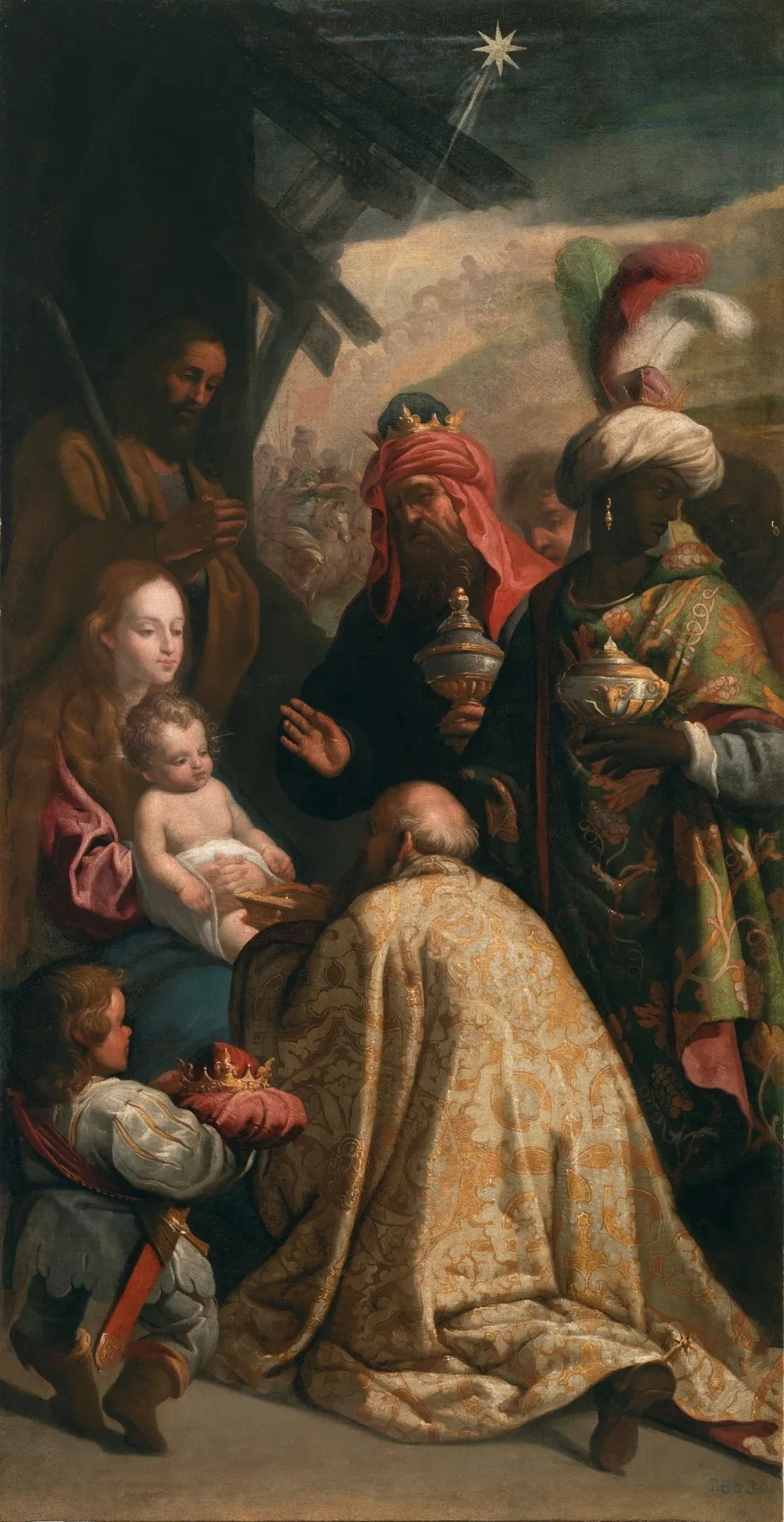
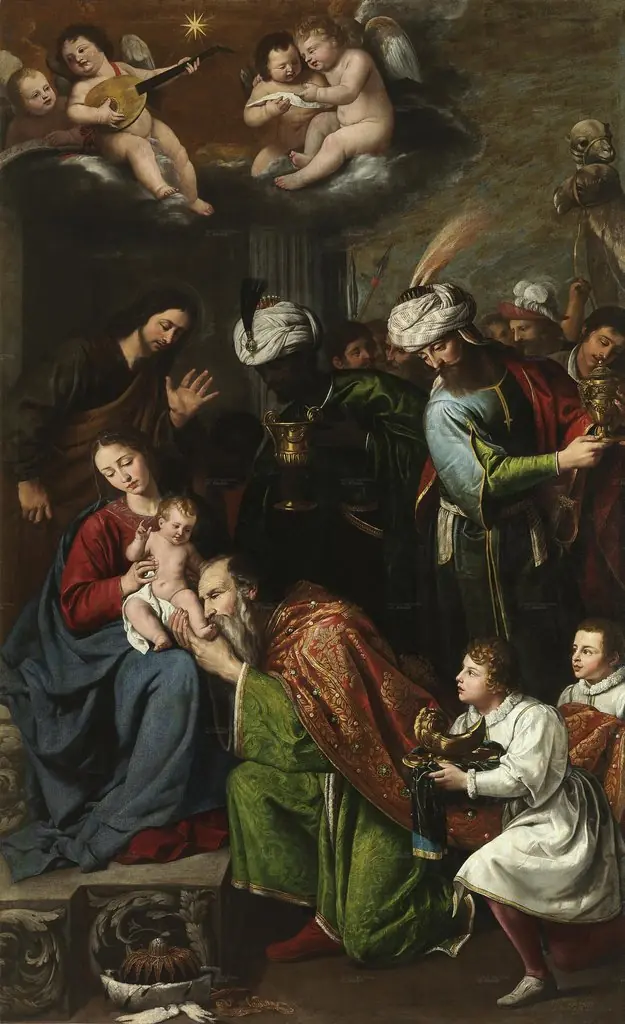
The Adoration of the Magi is an oil painting by the Early Baroque Italian artist Eugenio Caxés. It is held in the collection of the Museo del Prado.
About this work
Overview
The Adoration of the Magi is a 17th-century oil painting by Eugenio Caxés, dated to circa 1650, now in the collection of the Museo del Prado.
Subject & Meaning
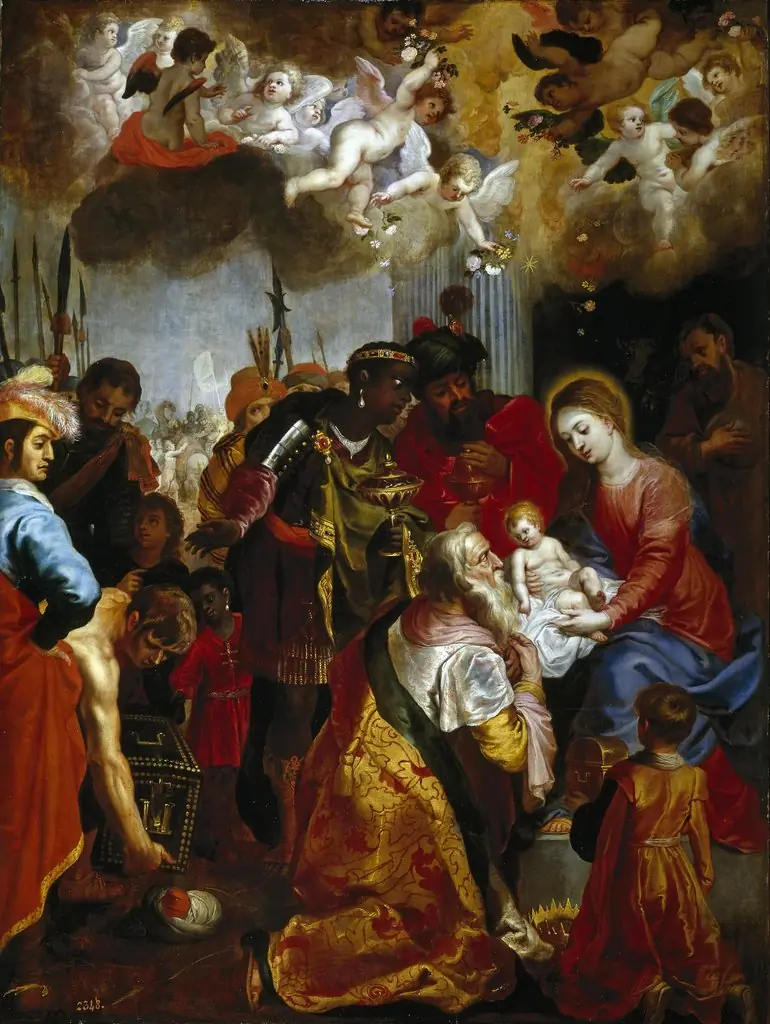
A woman, presumably the Virgin Mary, holds the infant, surrounded by the three kings and attendants, one of whom bears a staff.
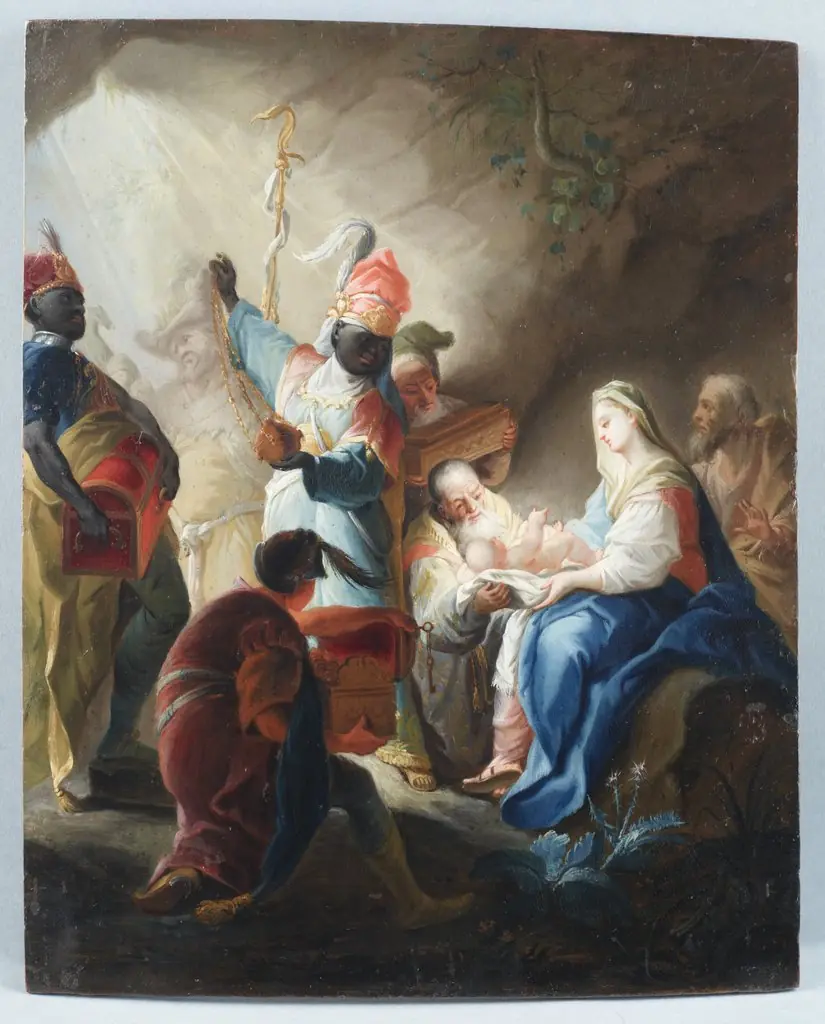
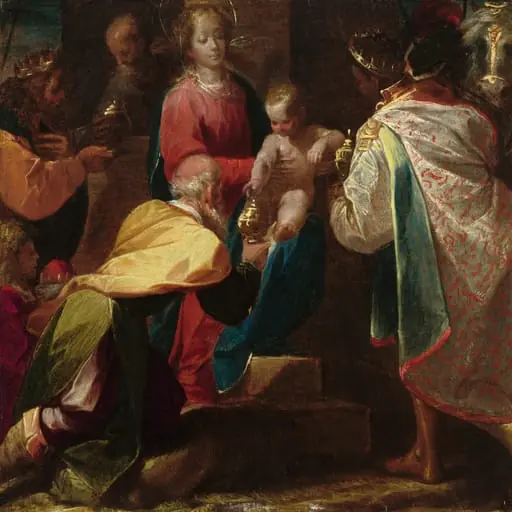
The painting depicts a scene from Christian tradition where the Magi pay homage to the Christ Child. A woman, presumably the Virgin Mary, holds the infant, surrounded by the three kings and attendants, one of whom bears a staff. The gathering is set against a symbolic backdrop of a luminous star and a landscape, conveying themes of reverence, wonder, and the celebration of the Christ Child's birth.
Technique & Style
Caxés employs chiaroscuro to create depth and dramatic effect, focusing attention on the central figures. The elaborate, intricately patterned robes of the Magi add a layer of visual richness, reflecting the artist's attention to detail and use of color.
History & Provenance
Created around 1650, the painting's history prior to its acquisition by the Museo del Prado is not detailed here, indicating a need for further research on its provenance.
Context
Painted during the Baroque period, the work reflects the era's artistic tendencies, including the use of chiaroscuro and emotionally charged scenes, common in religious artworks of the time.
Legacy
As part of the Museo del Prado's collection, The Adoration of the Magi contributes to the museum's extensive holdings of European religious art, offering insights into 17th-century Spanish Baroque painting practices.
Artist & collection