Artwork
The Animals Present Their Charges Against Reynard
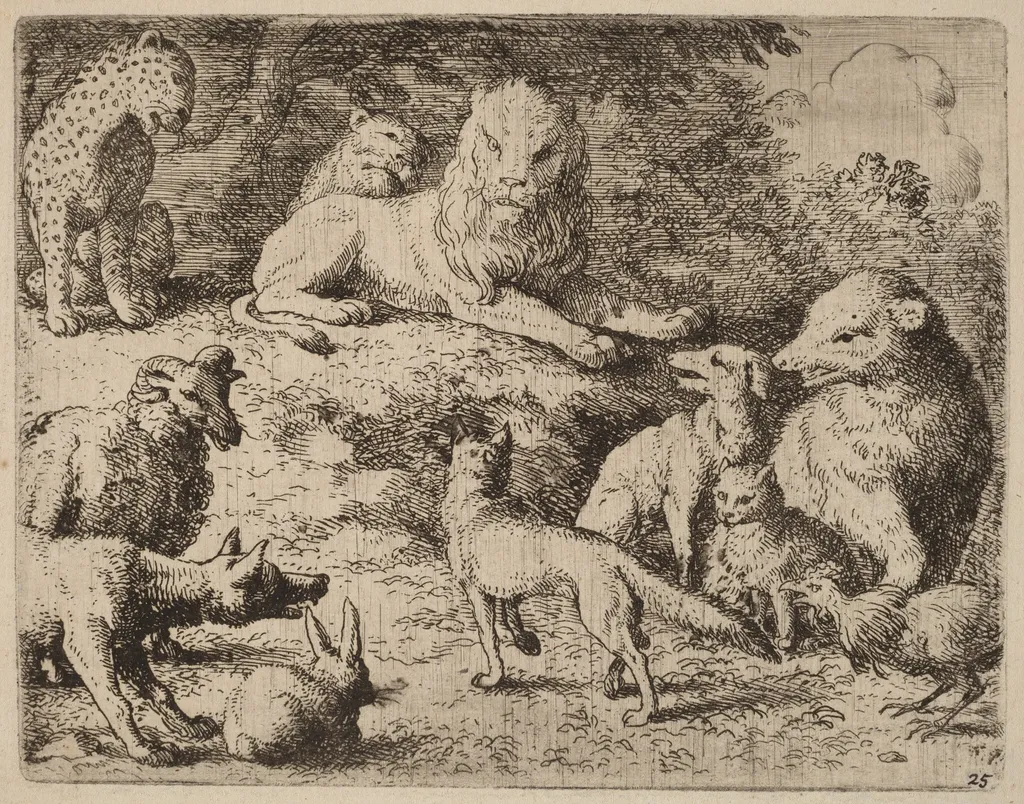
The Animals Present Their Charges Against Reynard is an ink print by the Baroque artist Allart van Everdingen. It dates from 1650 and is held in the collection of the National Gallery of Art.
About this work
Overview
As a Dutch Golden Age printmaker, Everdingen frequently turned to literary sources for his subjects.
Created around 1650 by Allart van Everdingen, this etching illustrates a scene from the medieval Reynard the Fox cycle, a popular allegorical tradition in Northern Europe. As a Dutch Golden Age printmaker, Everdingen frequently turned to literary sources for his subjects. This work belongs to a broader genre of moralizing animal tales, rendered here through the precise, linear technique of etching on metal, allowing for intricate detail and expressive texture.
Subject & Meaning
The image depicts a courtroom-like assembly of forest animals bringing formal charges against Reynard, the fox, who sits at the center as the accused. A rabbit, symbolizing the vulnerable, holds a scroll of grievances, while other creatures—wolf, cat, bird—gesture in accusation. The scene mirrors human judicial proceedings, using animal behavior to critique deceit, corruption, and social injustice, common themes in Renaissance and early modern allegory.
Technique & Style
Everdingen employed etching to achieve fine, varied lines that define both form and atmosphere. The fox and key figures are rendered with controlled, deliberate strokes, while the background foliage is composed of rapid, scratchy marks that suggest dense, untamed woodland. The contrast between detailed figures and loose surroundings enhances the drama, directing focus to the central confrontation without relying on shading or tone.
History & Provenance
The print was produced during Everdingen’s active period in the Netherlands, when interest in illustrated fables and moral allegories was widespread. Though specific early ownership records are sparse, such prints circulated among educated collectors and were often bound in volumes of illustrated stories. Its survival reflects its appeal as both artistic and literary artifact within Dutch domestic and intellectual circles.
Context
In mid-17th century Holland, animal fables like Reynard’s were not merely children’s tales but tools for social commentary. Printed versions of these stories, often accompanied by illustrations, were popular among literate urban classes. Everdingen’s etching aligns with this trend, tapping into a cultural appetite for narratives that used anthropomorphism to reflect on human behavior, authority, and justice.
Legacy
Everdingen’s interpretation of Reynard contributed to the visual vocabulary of animal allegory in Northern European printmaking. While later artists would refine the genre, his work exemplifies how etching could convey narrative complexity with minimal means. The print remains a reference point for understanding how literary traditions were adapted into visual form during the Dutch Golden Age.
Artist & collection
Artist
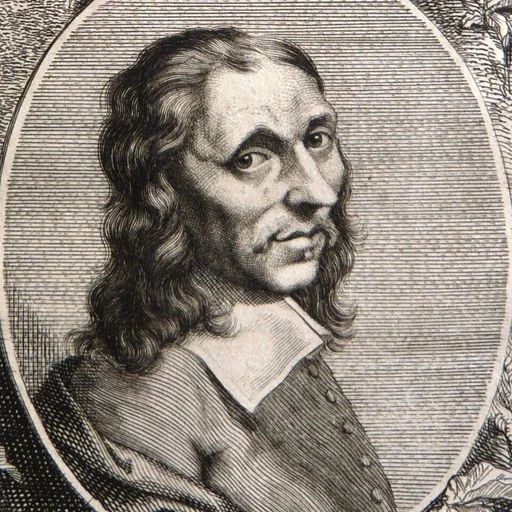
Allaert van Everdingen (Dutch pronunciation: ; bapt. 18 June 1621 – 8 November 1675 (buried)), was a Dutch Golden Age painter and printmaker in etching and mezzotint.


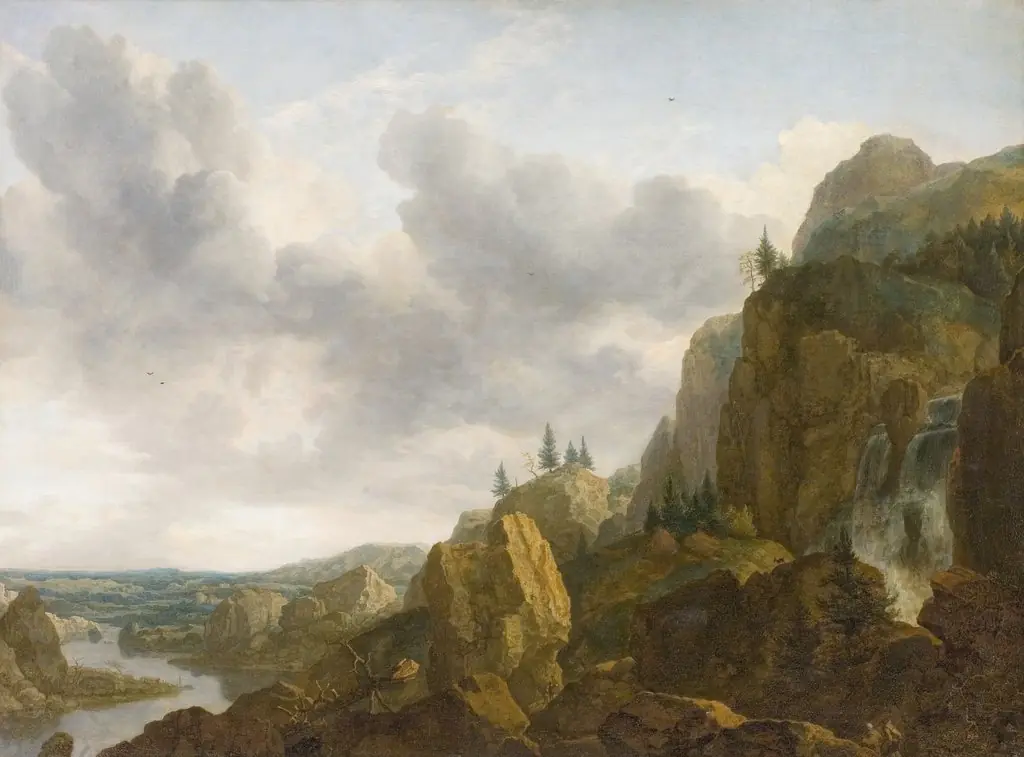
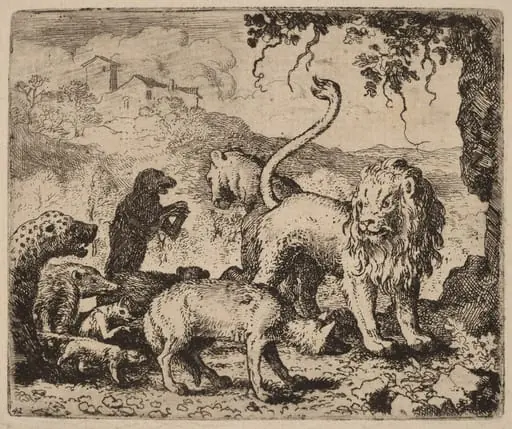 Reynard Accused
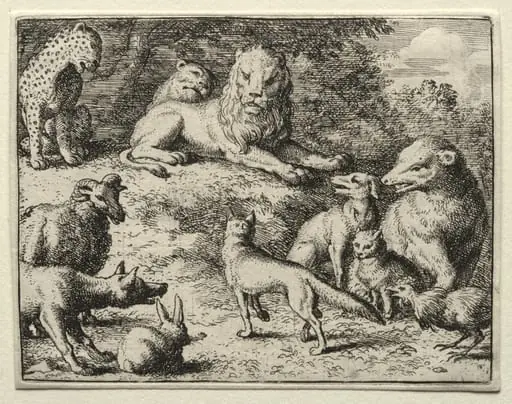 Reynard the Fox: Reynard Appears at Court
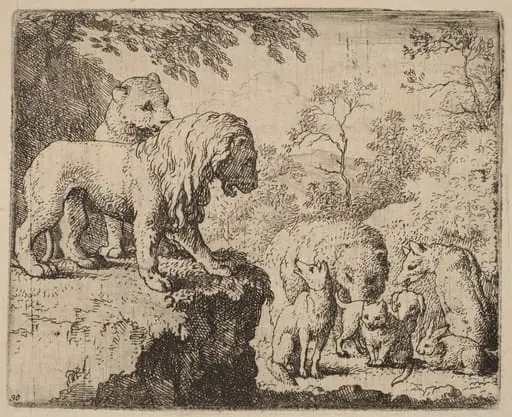 The Lion Pardons Reynard before the Other Animals
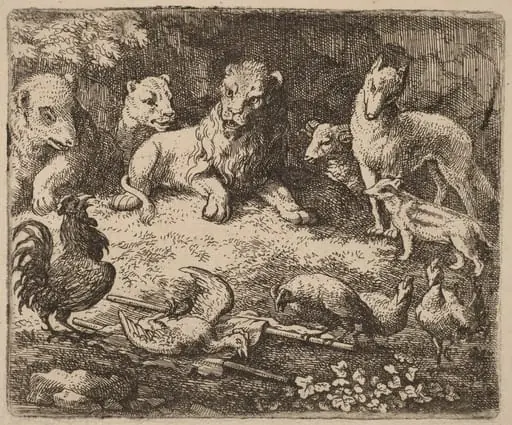 The Rooster Charges Reynard
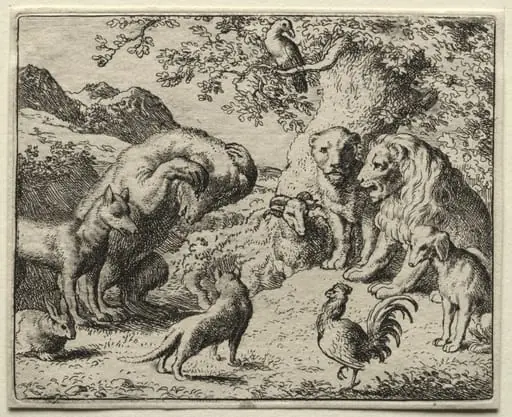 Reynard the Fox: The Complaint of the Bear
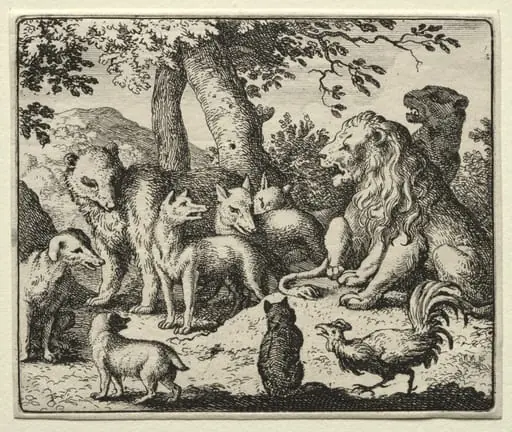 Reynard the Fox: Reynard Exonerates Himself
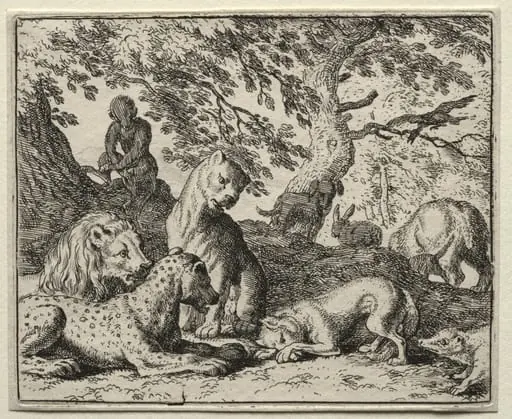 Reynard the Fox: Reynard Describes a False Plot Against the Lion
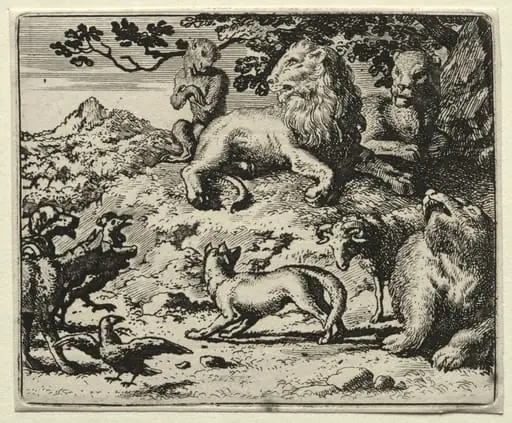 Reynard the Fox: The Animals Complain of Reynard's Pardon
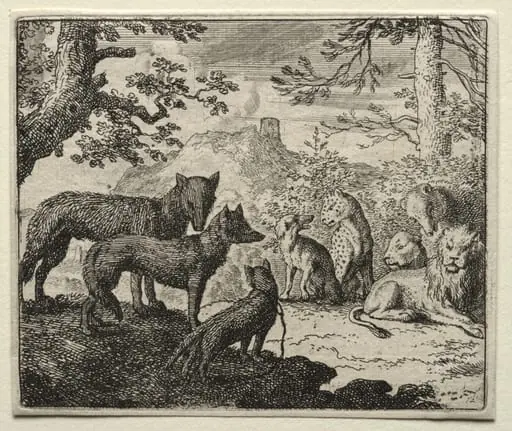 Reynard the Fox: The Relatives of Reynard Leave Court
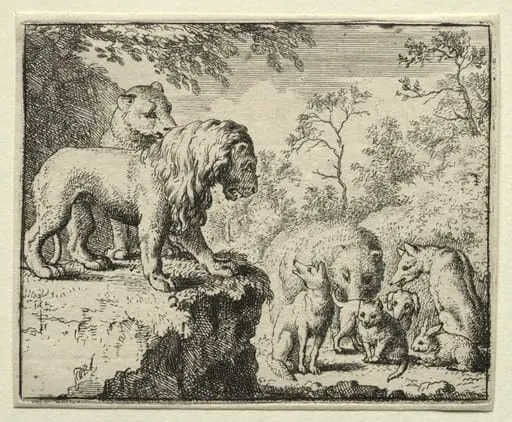 Reynard the Fox: The Pardon of Reynard