Artwork
The Cat Enters the Barn as Reynard Looks On
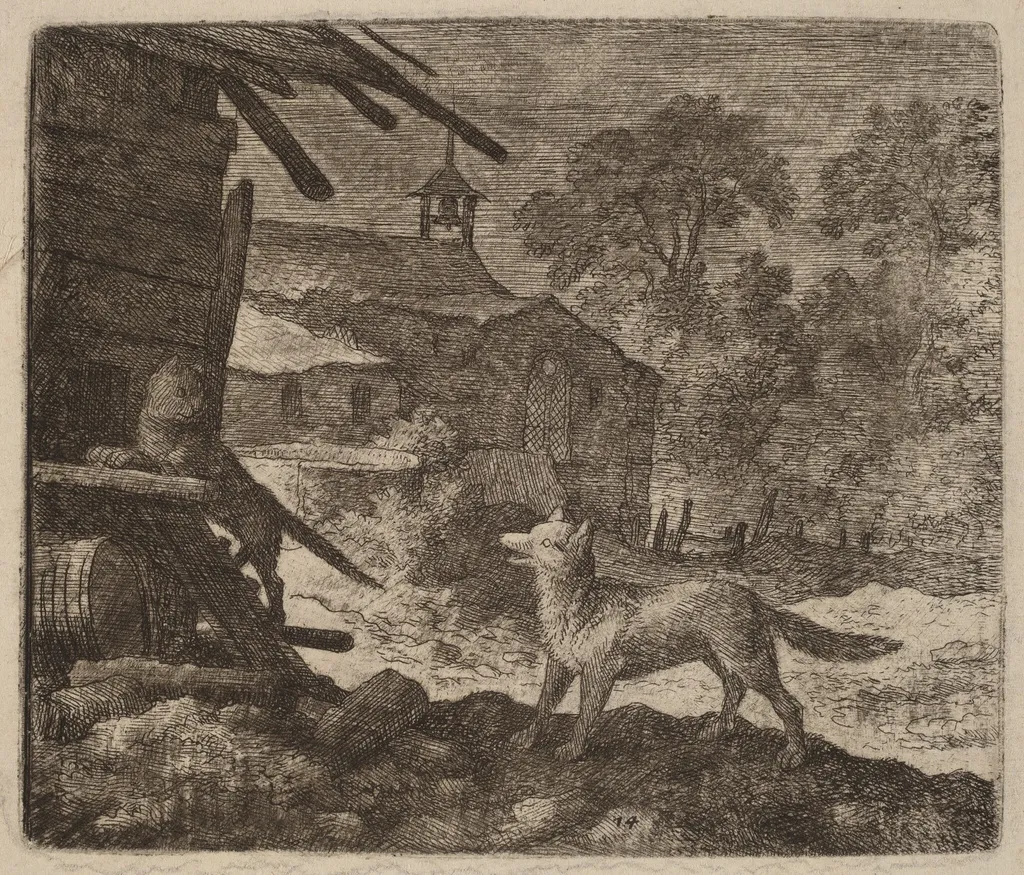
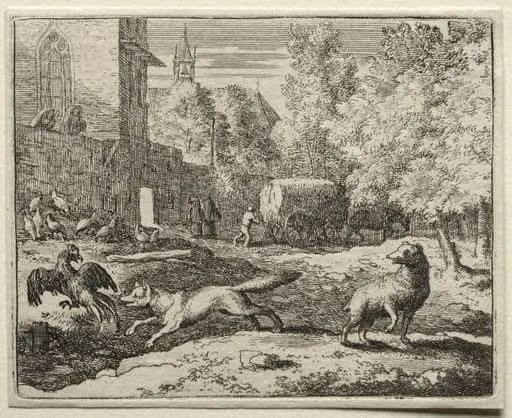
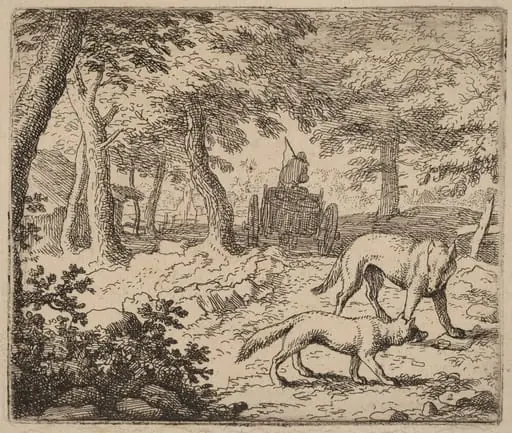
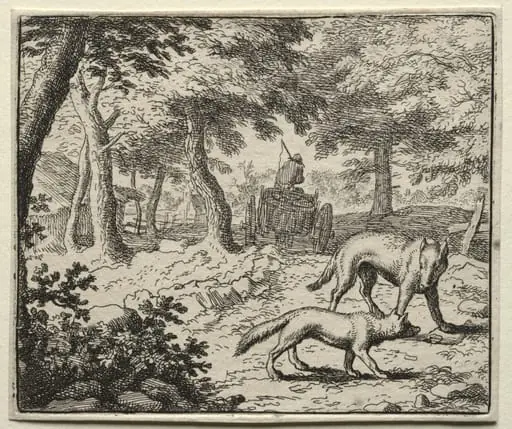
The Cat Enters the Barn as Reynard Looks On is an ink print by the Baroque artist Allart van Everdingen. It dates from 1650 and is held in the collection of the National Gallery of Art.
About this work
Overview
The scene is neither dramatic nor narrative-driven, but instead conveys a stillness characteristic of his later work in the medium.
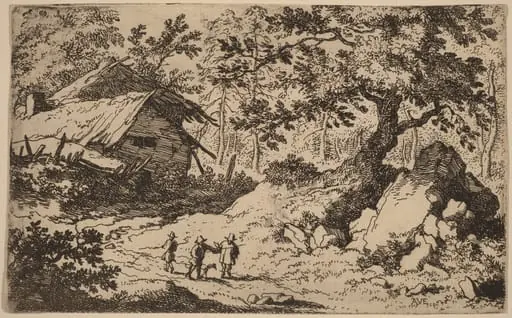
Created around 1650 by Allart van Everdingen, this etching captures a quiet rural moment: a cat entering a barn while a fox, known in folklore as Reynard, watches from a distance. Van Everdingen, primarily recognized for his landscape prints, employed etching to render subtle atmospheric effects. The scene is neither dramatic nor narrative-driven, but instead conveys a stillness characteristic of his later work in the medium.
Subject & Meaning
The cat and fox—figures drawn from European folk traditions—appear without overt action or conflict. Reynard, traditionally a trickster, observes passively, suggesting a moment of suspended tension rather than impending threat. The absence of violence invites interpretation: the scene may reflect natural coexistence, surveillance, or the quiet dynamics of rural life, leaving symbolic meaning open rather than didactic.
Technique & Style
Van Everdingen used fine, controlled etching lines to build texture in the bark, grass, and thatched roof, while soft aquatint tones suggest depth in the distant landscape. The composition places the cat in the foreground, framed by the barn’s entrance, with the fox slightly behind, anchored by the horizon line. The technique emphasizes atmosphere over detail, aligning with his broader interest in naturalistic light and spatial recession.
History & Provenance
The print belongs to a series of etchings Van Everdingen produced in the 1640s and 1650s, often depicting Dutch countryside scenes with animals. Few records exist for this specific impression, but it was likely circulated among collectors of Northern European prints. Its survival in institutional collections suggests early recognition of its technical refinement within the printmaking community.
Context
During the Dutch Golden Age, etching flourished as a medium for landscape and genre scenes. Van Everdingen’s work reflects a broader trend toward intimate, observational imagery, distinct from grand historical or religious themes. His focus on rural tranquility, with animals as quiet participants, aligns with contemporary Dutch interest in nature’s quiet order and the moral resonance of everyday life.
Legacy
Though not among Van Everdingen’s most widely reproduced works, this etching exemplifies his mature approach to tonal nuance and compositional restraint. It influenced later printmakers interested in atmospheric landscape and animal symbolism, contributing to the tradition of Dutch etching as a vehicle for contemplative, rather than narrative, imagery.
Artist & collection
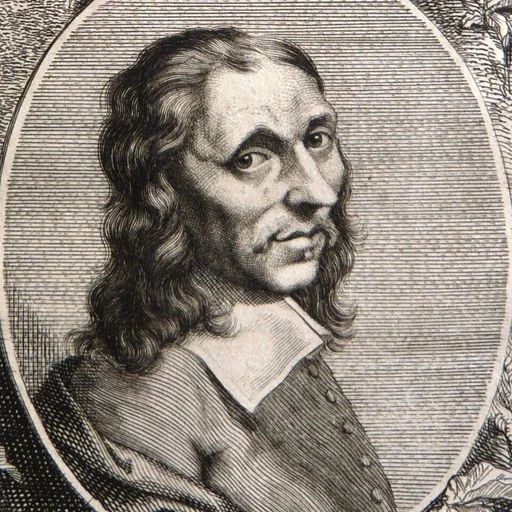
Artist
Allaert van Everdingen (Dutch pronunciation: ; bapt. 18 June 1621 – 8 November 1675 (buried)), was a Dutch Golden Age painter and printmaker in etching and mezzotint.