Artwork
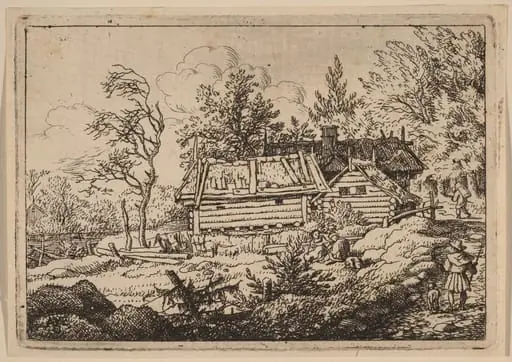
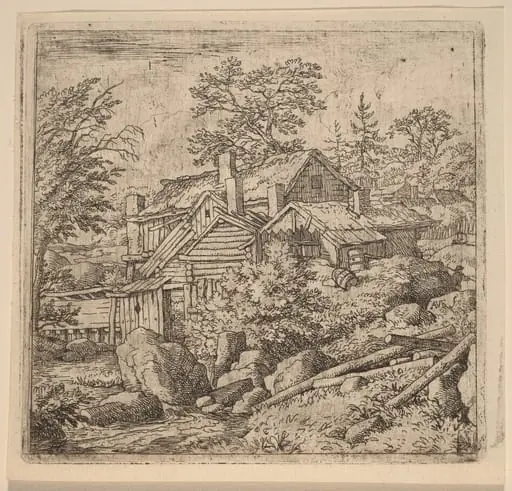
Three Cottages
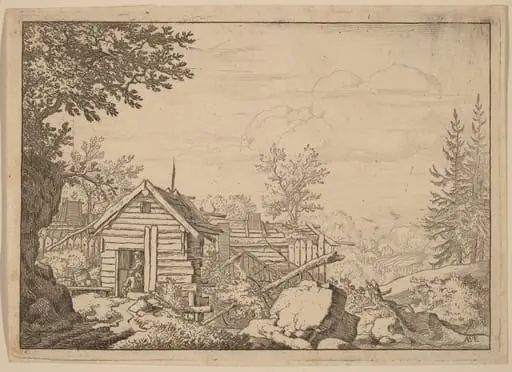
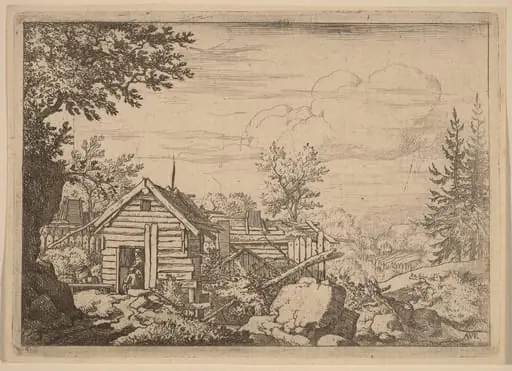
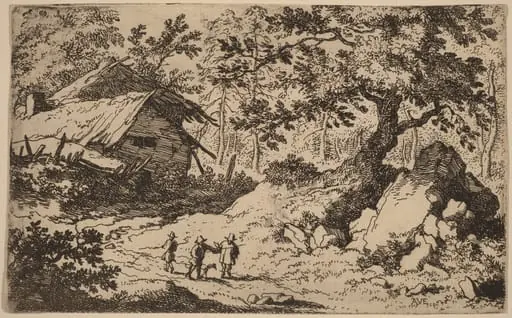
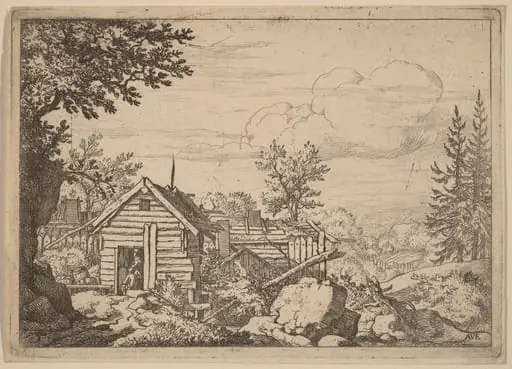
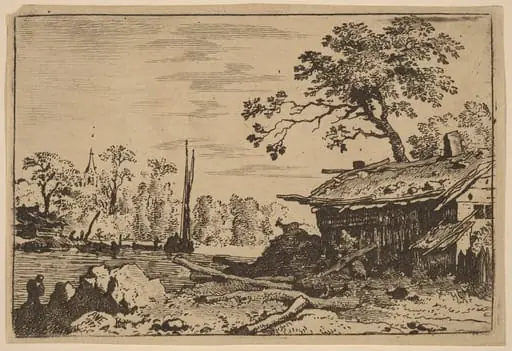
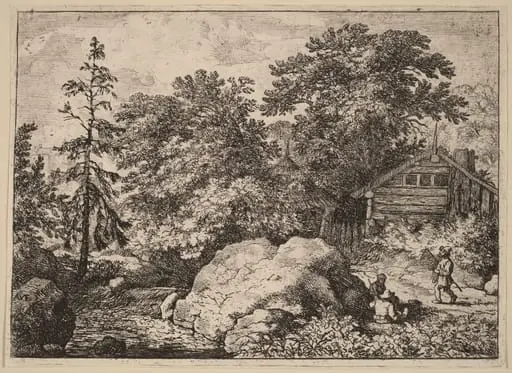
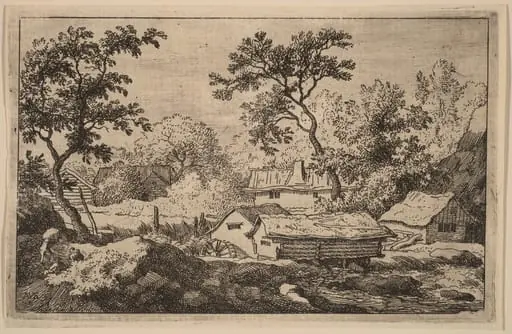
Three Cottages is an ink print by the Baroque artist Allart van Everdingen. It dates from 1650 and is held in the collection of the National Gallery of Art.
About this work
Overview
Three Cottages, created circa 1650 by Dutch Golden Age artist Allart van Everdingen, is an etching with engraving print. It exemplifies the artist's focus on landscape and rural themes during this period.
Subject & Meaning
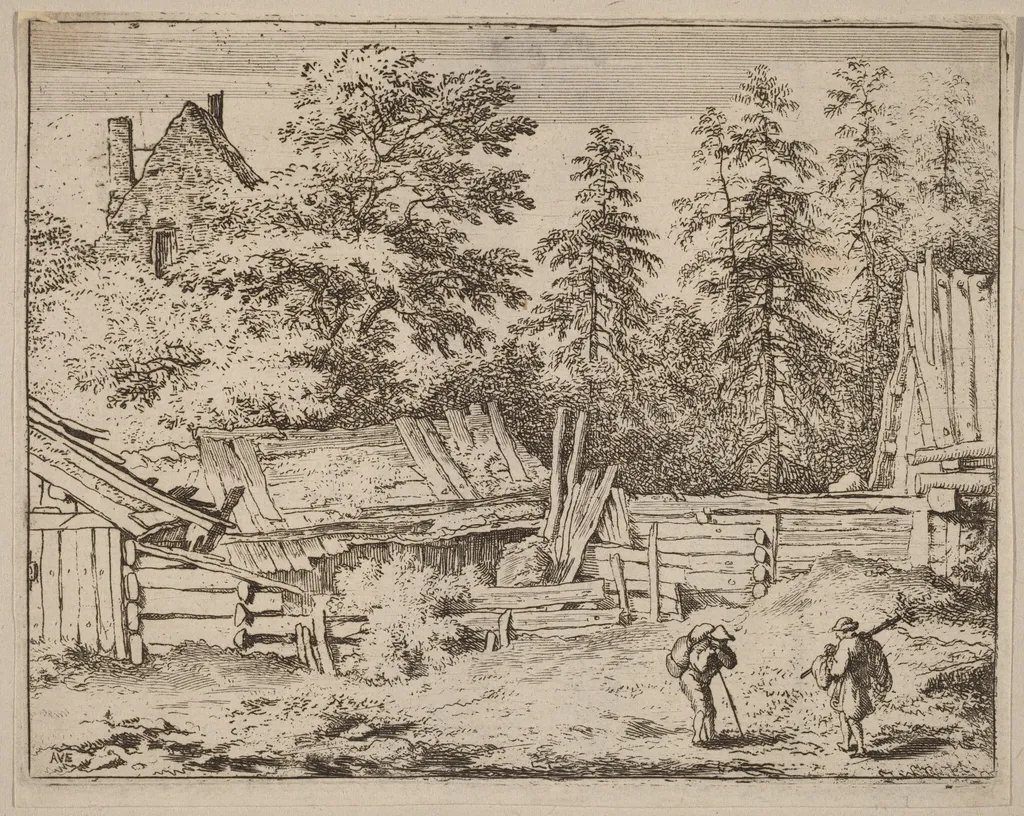
The print portrays a serene rural scene featuring three humble cottages, everyday figures, and natural surroundings. This reflects Everdingen’s propensity for capturing mundane, rustic life.
Technique & Style
The work combines etching and engraving techniques to achieve sharp, precise lines and textured depth. This allowed for detailed renderings of elements like tree bark and thatched roofs.
History & Provenance
Created around 1650, specific provenance details for *Three Cottages* are not provided in the available information.
Context
*Three Cottages* aligns with the Dutch Golden Age’s emphasis on landscape and everyday life. The use of etching and engraving was characteristic of the period’s printmaking innovations.
Legacy
While *Three Cottages* showcases Everdingen’s skill in printmaking and his thematic interests, its broader impact or influence on subsequent art movements is not specified in the given context.
Own this work as a print
Artist & collection
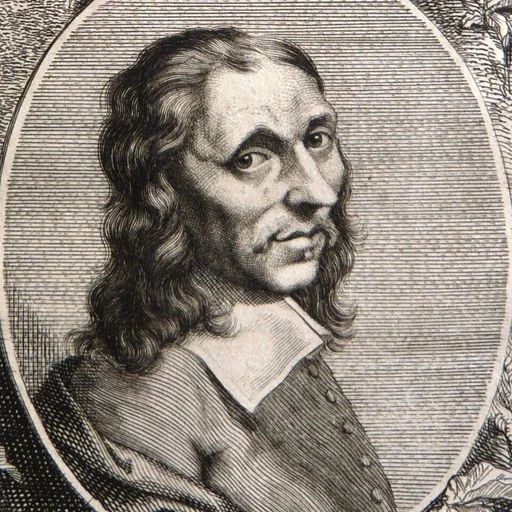
Artist
Allaert van Everdingen (Dutch pronunciation: ; bapt. 18 June 1621 – 8 November 1675 (buried)), was a Dutch Golden Age painter and printmaker in etching and mezzotint.