Artwork
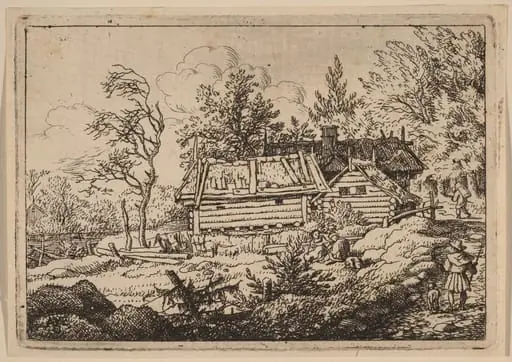
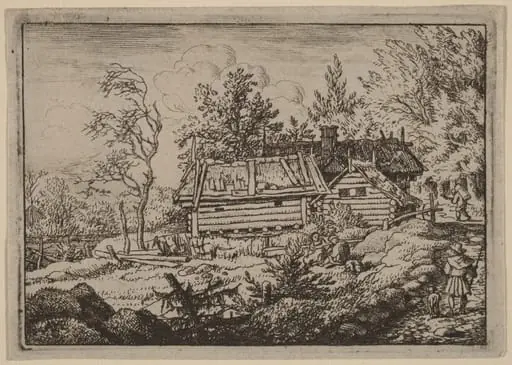
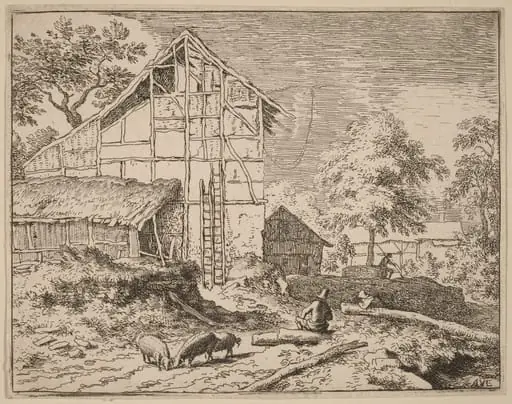
Three Cottages
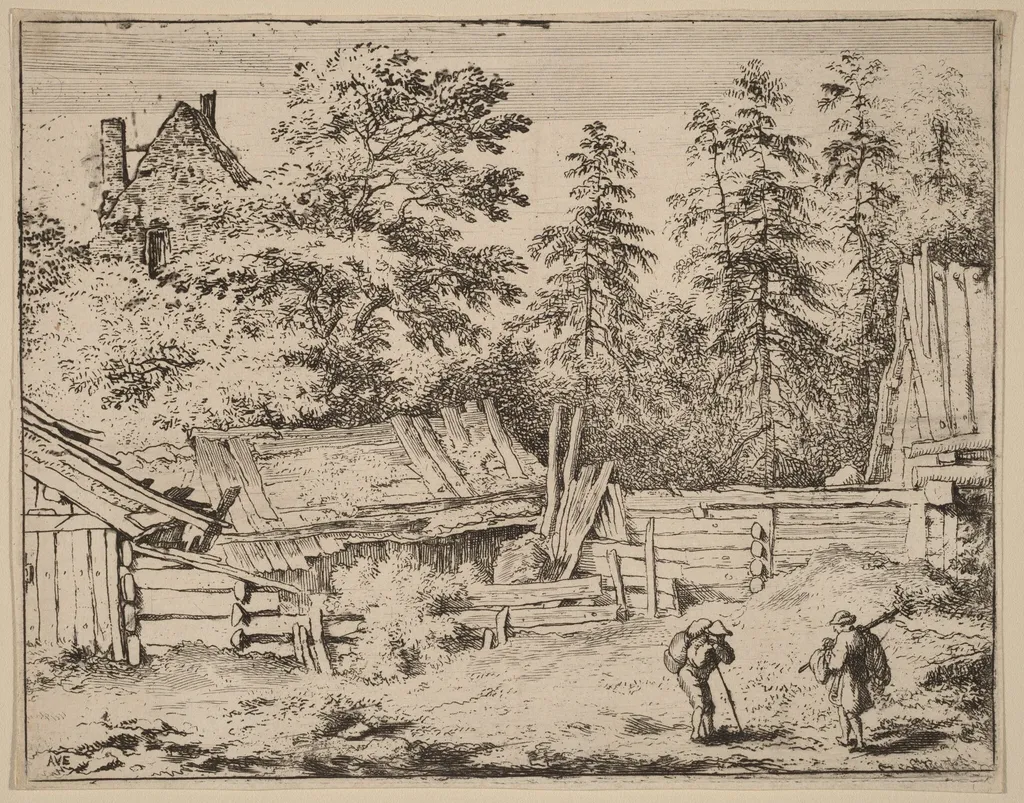
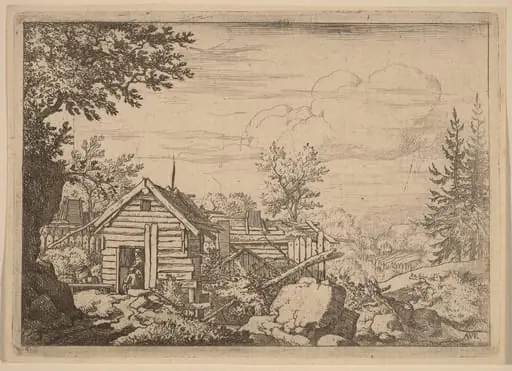
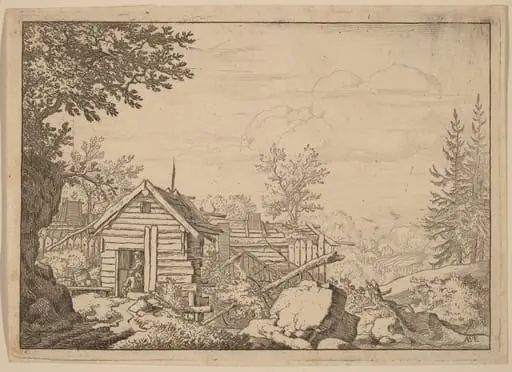
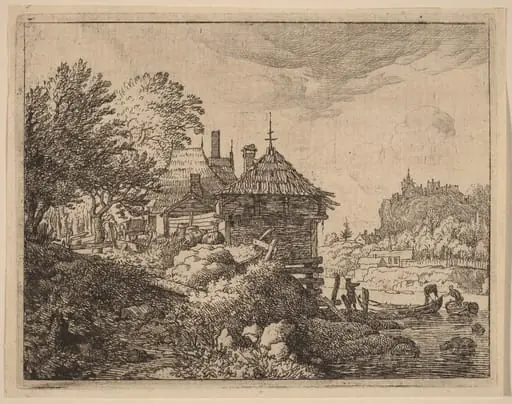
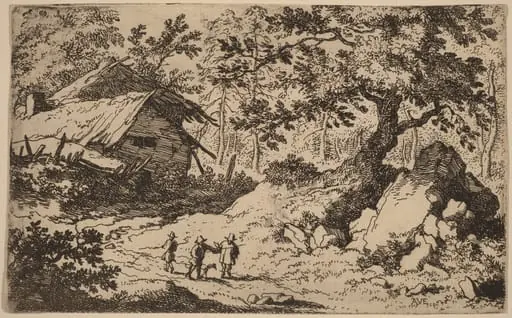
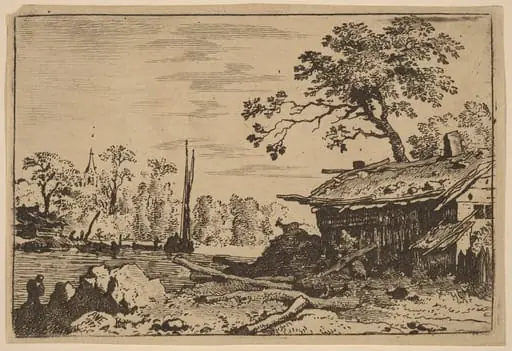
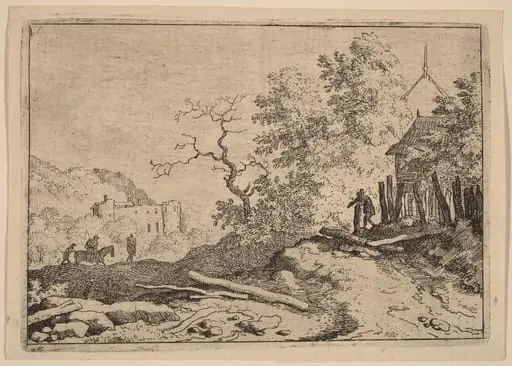
Three Cottages is an ink print by the Baroque artist Allart van Everdingen. It dates from 1650 and is held in the collection of the National Gallery of Art.
About this work
Overview
Three Cottages is an etching with engraving print created by Dutch Golden Age artist Allart van Everdingen around 1650. It exemplifies his focus on landscape during this period.
Subject & Meaning
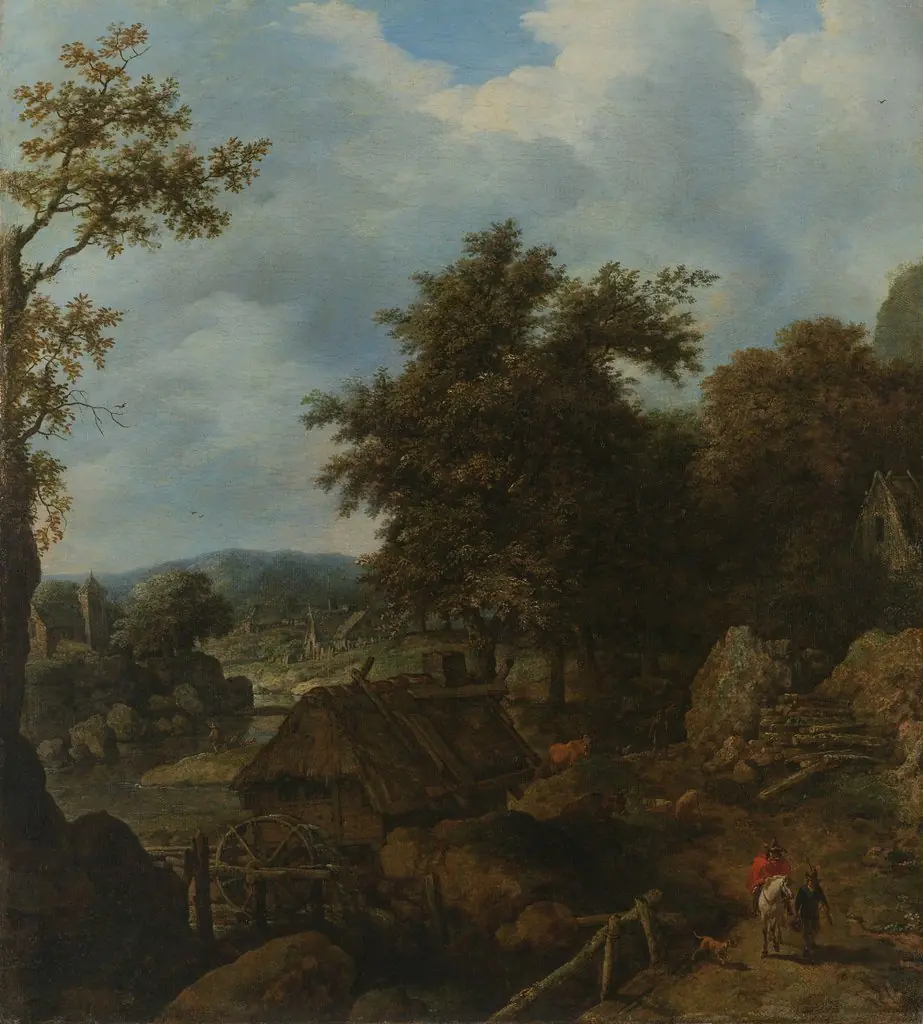
The print captures a serene rural scene with two small thatched-roof cottages nestled among trees, a wooden fence, and a path leading to a bridge over a stream. Two figures, one carrying a basket and the other holding a hat, are shown walking along the path, conveying a sense of everyday countryside life.
Technique & Style
Van Everdingen employed fine lines through etching and engraving to achieve detailed textures, such as the rough tree bark and woven fence, contributing to the work's quiet, observational quality.
History & Provenance
Created circa 1650, specific provenance details are not provided in the available information.
Context
Three Cottages reflects the Dutch Golden Age's appreciation for landscape art, with Van Everdingen's technique aligning with the period's emphasis on detailed, realistic representations of nature and daily life.
Legacy
While specific legacy details of Three Cottages are not provided, it contributes to the broader understanding of Van Everdingen's contribution to Dutch landscape printmaking of the 17th century.
Own this work as a print
Artist & collection
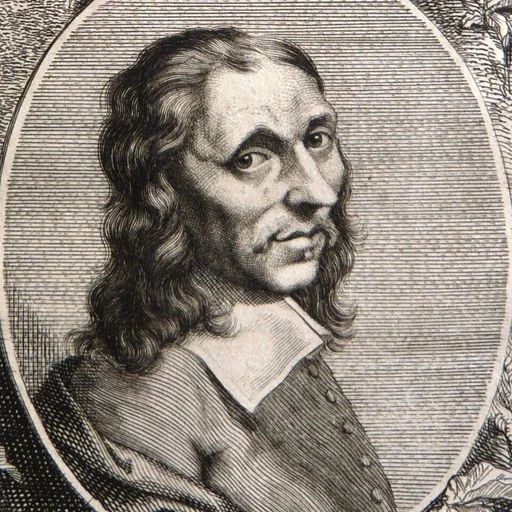
Artist
Allaert van Everdingen (Dutch pronunciation: ; bapt. 18 June 1621 – 8 November 1675 (buried)), was a Dutch Golden Age painter and printmaker in etching and mezzotint.