Artwork
The Top of the Swing-Door
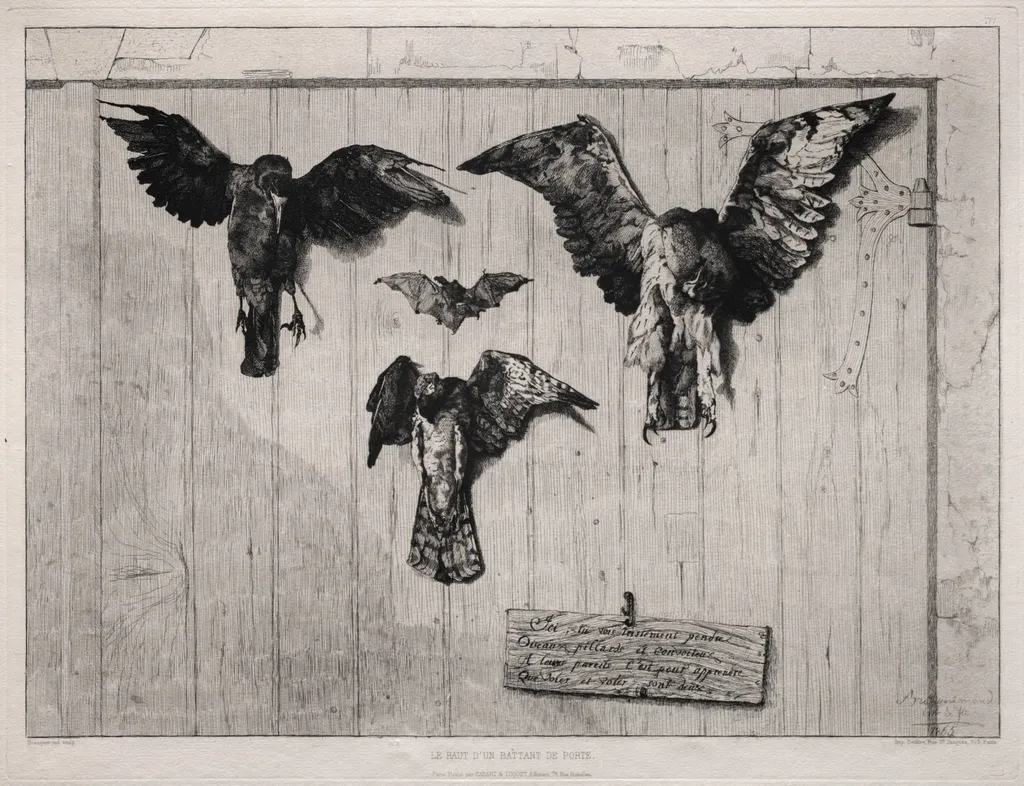
The Top of the Swing-Door is a print by the Impressionist artist Félix Bracquemond. It dates from 1852 and is held in the collection of the Cleveland Museum of Art.
About this work
Overview
Created in 1852 by Félix Bracquemond, this print depicts the upper portion of a wooden swing door, bearing the carcasses of four birds and a bat.
Created in 1852 by Félix Bracquemond, this print depicts the upper portion of a wooden swing door, bearing the carcasses of four birds and a bat. The composition is stark and restrained, focusing on the arrangement of dead animals against the grain of the door’s vertical planks. A handwritten French sign hangs beneath them. The work is held in the collection of The Cleveland Museum of Art and reflects Bracquemond’s early engagement with observational detail before his later association with printmaking reform.
Subject & Meaning
The arrangement of dead birds and a bat suggests a hunting trophy or a preserved specimen, possibly tied to rural or domestic life. The absence of human figures intensifies the quietude, evoking themes of mortality and transience. The handwritten sign, though legible in detail, remains untranslated in known records, leaving its message ambiguous. The stillness and somber tone invite contemplation rather than narrative, aligning with 19th-century interests in the poetic weight of ordinary objects.
Technique & Style
Executed as a print, likely etching or aquatint, the work demonstrates precise line work and tonal gradation to render the texture of feathers, fur, and weathered wood. Shadows are subtly modeled, enhancing the three-dimensionality of the suspended forms. The composition is tightly framed, emphasizing the flat plane of the door while suggesting depth through the hanging sign. Bracquemond’s approach is methodical, prioritizing clarity and observation over expressive brushwork.
History & Provenance
The print was made in 1852, during Bracquemond’s formative years as an artist, before his involvement with the etching revival. It entered the Cleveland Museum of Art’s collection through documented acquisition, though its earlier ownership history remains unrecorded in public sources. Its preservation suggests it was valued early as a study in naturalistic detail, possibly circulated among artists or collectors interested in the aesthetics of the everyday.
Context
In the early 1850s, French artists increasingly turned to unidealized subjects drawn from daily life, anticipating Realism and later Impressionism. While Bracquemond would become known for his etchings and collaborations with the Impressionists, this early work reflects a quieter, more introspective phase. The focus on a mundane architectural element adorned with natural remains aligns with broader European trends in still-life and taxidermy-inspired art, where death and domesticity intersected.
Legacy
Though not widely exhibited, the print contributes to understanding Bracquemond’s evolution from detailed observation to printmaking innovation. It stands as an early example of his interest in elevating ordinary scenes through careful composition. The work’s restrained tone and subject matter influenced later artists exploring the poetic potential of the mundane, though it remains a lesser-known piece within his broader oeuvre.
Artist & collection

Artist
Félix Henri Bracquemond (French pronunciation: ; 22 May 1833 – 29 October 1914) was a French painter, etcher, and printmaker.

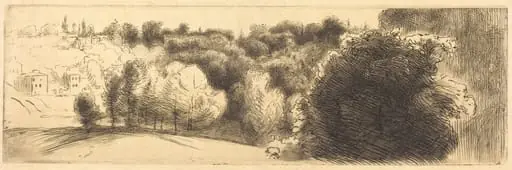
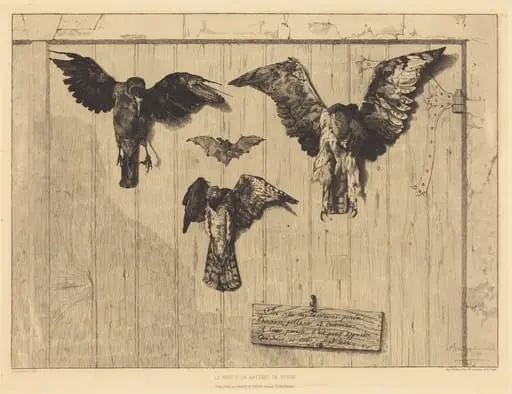 Le Haut d'un battant de porte (Birds Nailed to a Barn Door)
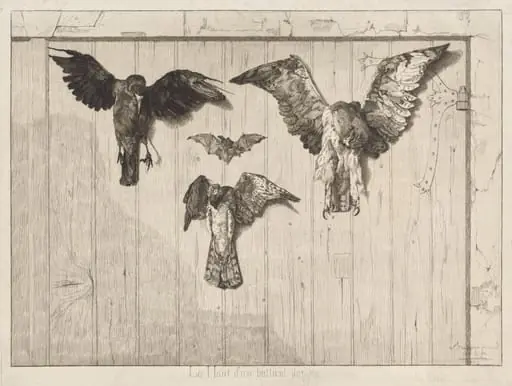 Le haut d'un battant de porte (Birds Nailed to a Barn Door)
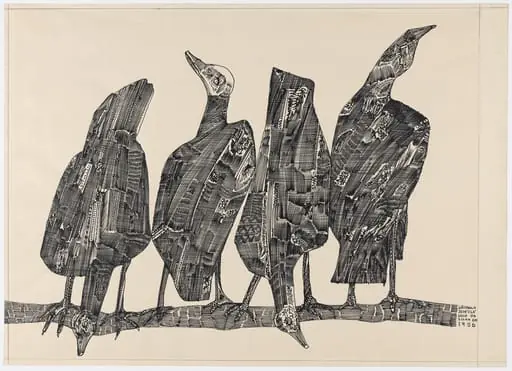 Untitled
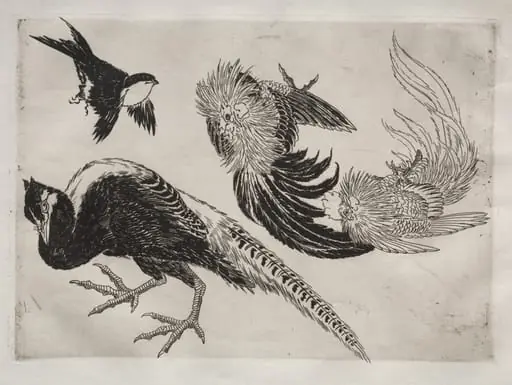 Dinner Service (Rousseau service): Pheasants and bird (no. 18)
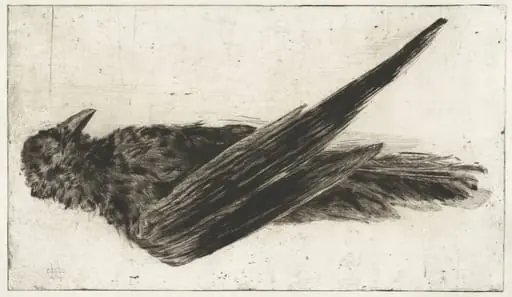 The Large Hanging Raven
 Untitled
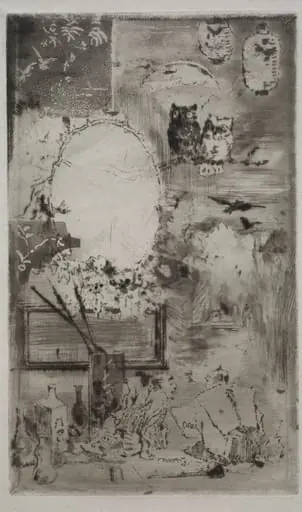 Baptism in the Japanese Style
 Untitled
 Dinner Service (Rousseau service): Roosters, skate, plants, etc. (no. 9)
 Angels of St Petersburg
 Untitled
 Untitled