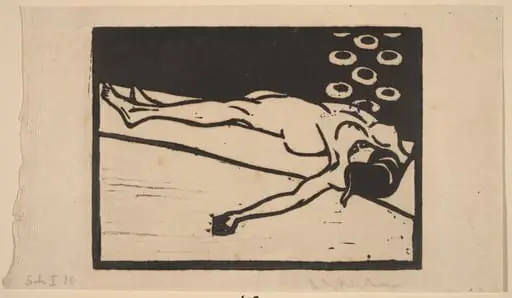
Artwork
Untitled
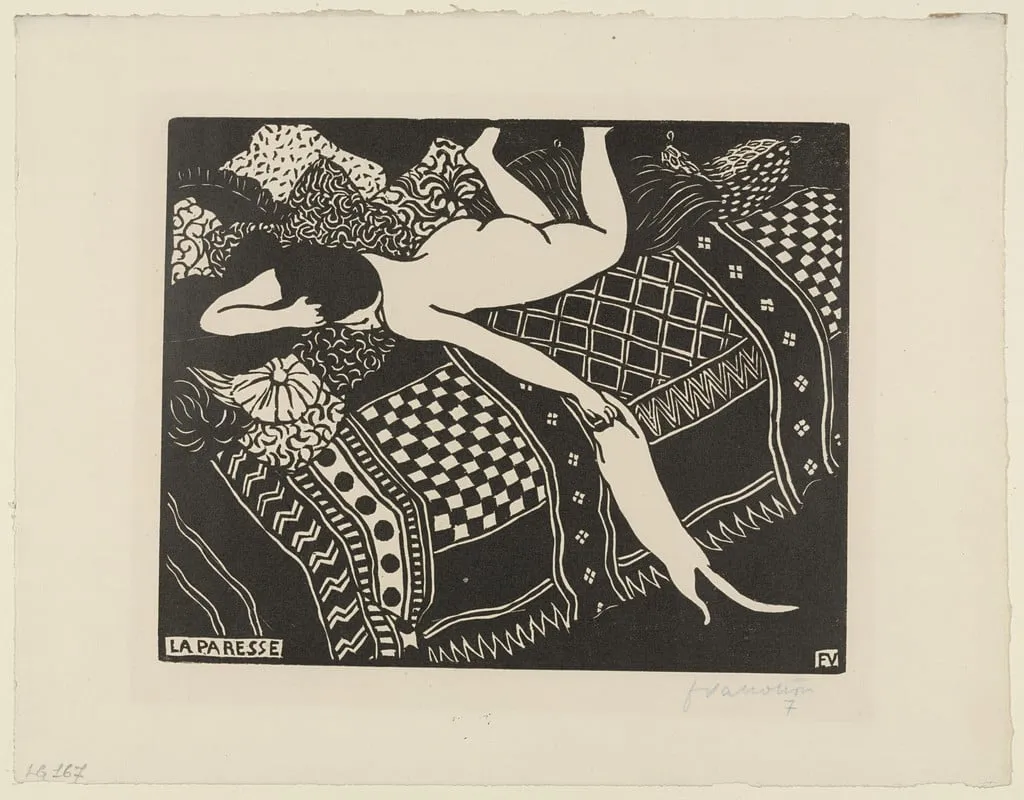
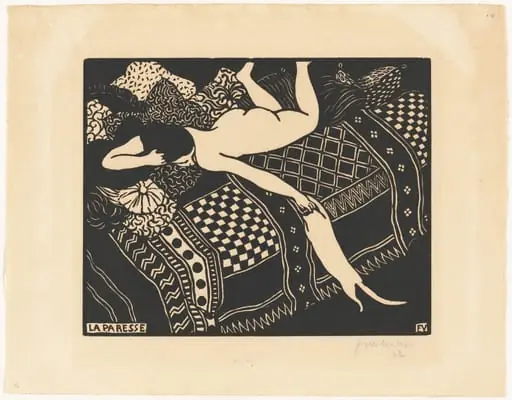
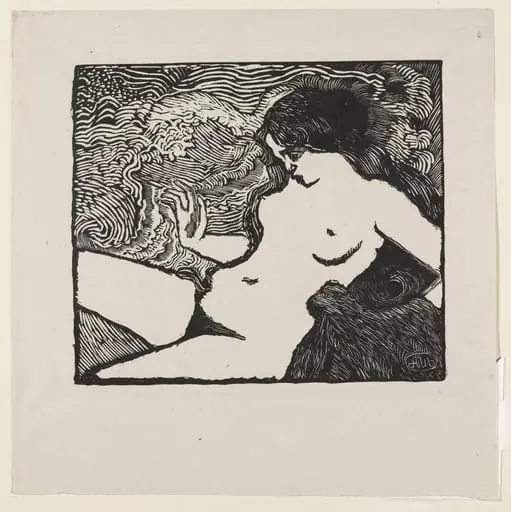
Untitled is an ink print by the Impressionist artist Félix Vallotton. It dates from 1896 and is held in the collection of the Museum of Modern Art.
About this work
Overview
Executed using the woodcut technique, it features a reclining female figure against an intricate, abstract background.
Félix Vallotton's 1896 woodcut, titled Untitled, is a black-and-white print in The Museum of Modern Art’s collection. Executed using the woodcut technique, it features a reclining female figure against an intricate, abstract background. The composition relies on high contrast and geometric repetition to separate the human form from its surroundings, emphasizing flatness and deliberate design over naturalism.
Subject & Meaning
The figure, nude and at ease, lies in a tranquil pose with limbs extended in calm symmetry. Her stillness contrasts with the agitated patterns surrounding her—checkerboards, zigzags, and swirls—that may suggest societal constraints or psychological tension. The absence of facial detail universalizes the form, inviting interpretation of the body as both vulnerable and detached within a structured, almost mechanical environment.
Technique & Style
Vallotton carved directly into a woodblock, removing areas to leave raised lines that would receive ink. The print’s sharp contours and bold contrasts are characteristic of his approach to woodcut, influenced by Japanese ukiyo-e. He avoided gradation, using only solid black and white to define form and pattern, resulting in a graphic, stylized aesthetic that prioritizes clarity and rhythmic composition over tonal nuance.
History & Provenance
Created in 1896, this work emerged during Vallotton’s most active period in printmaking, shortly after his association with the Nabis group. It entered The Museum of Modern Art’s collection in the 20th century, part of a broader institutional interest in modern graphic arts. Its provenance reflects its recognition within early modernist print circles, though specific prior owners are not widely documented.
Context
In the 1890s, European artists increasingly turned to woodcut as a medium for expressive, non-traditional imagery. Vallotton’s work aligned with contemporaries like Edvard Munch and the Nabis, who rejected academic realism. The emphasis on pattern and flatness responded to both Japanese prints and the rise of graphic design, positioning the woodcut as a vehicle for modernist experimentation beyond painting.
Legacy
Vallotton’s Untitled exemplifies how woodcut evolved into a tool for modernist abstraction. Its influence can be seen in later 20th-century printmakers who embraced stark contrasts and symbolic form. The work remains a reference point for discussions on the intersection of figuration and pattern, demonstrating how technical simplicity could convey psychological depth without reliance on realism.
Artist & collection
Artist
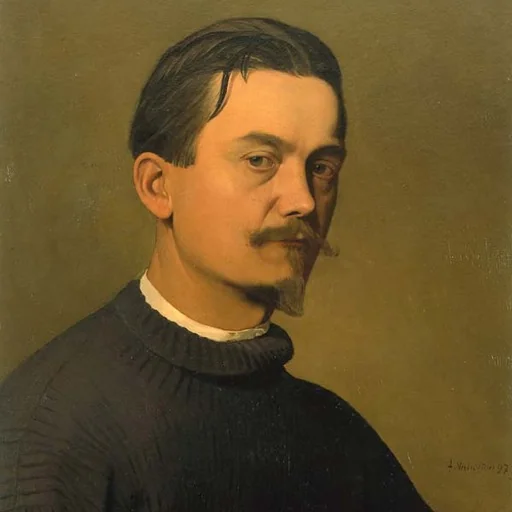
Félix Édouard Vallotton (French: ; December 28, 1865 – December 29, 1925) was a Swiss and French painter and printmaker associated with the group of artists known as Les Nabis.