Artwork
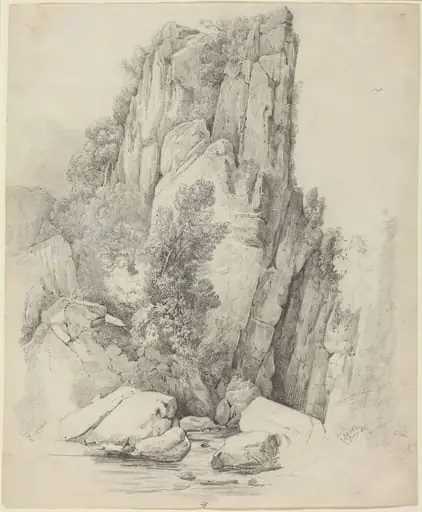
Cliffs Overhanging a River Gorge near Sorrento (recto)
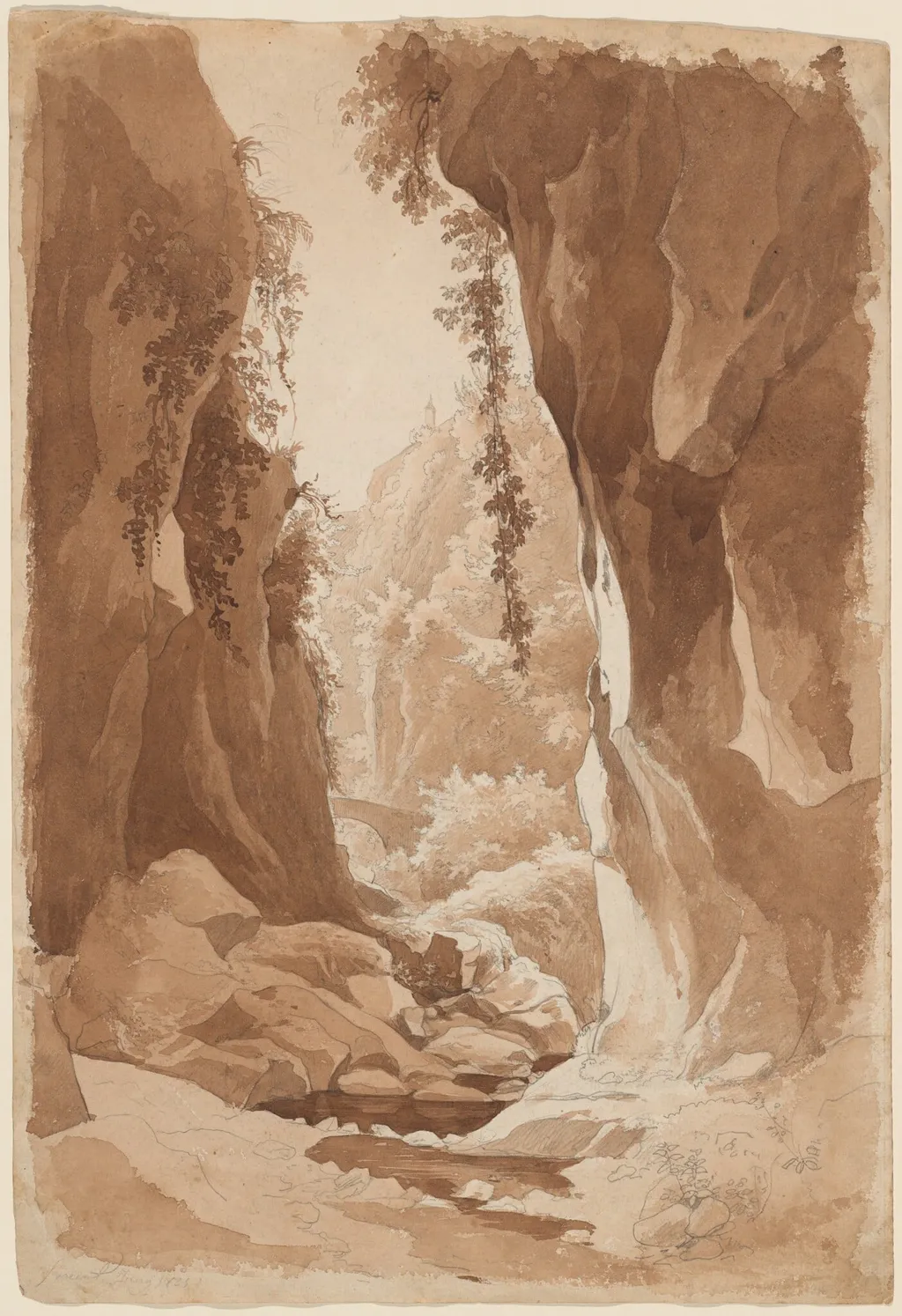
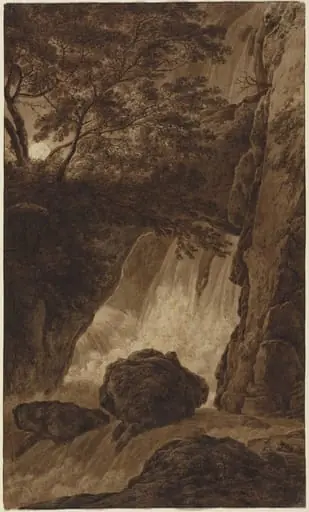
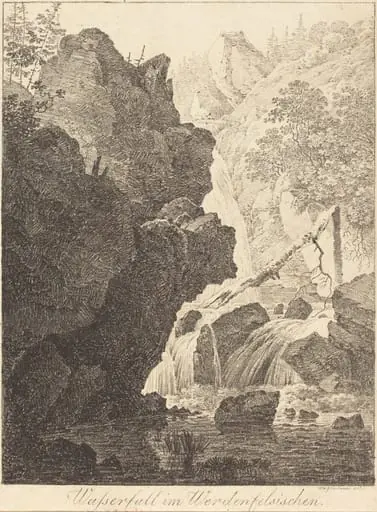
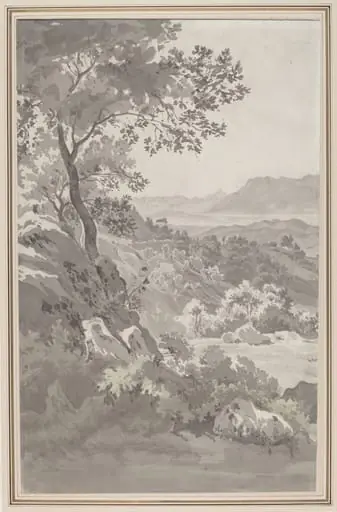
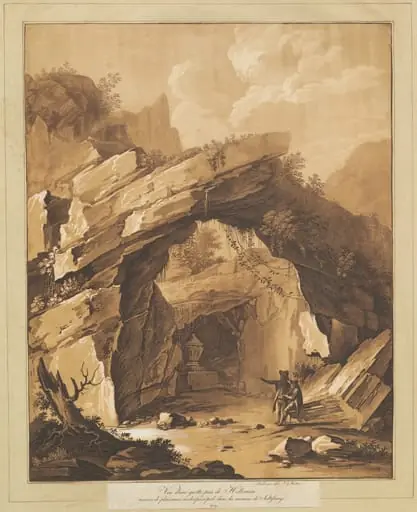
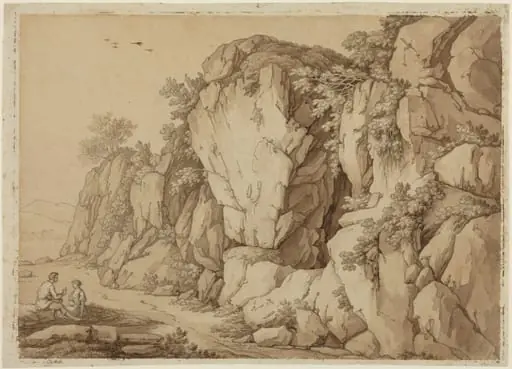
Cliffs Overhanging a River Gorge near Sorrento (recto) is a graphite drawing by the Romanticist artist Johann Joachim Faber. It dates from 1823 and is held in the collection of the National Gallery of Art.
About this work
Overview
Created in 1823, this drawing by Johann Joachim Faber captures a rugged stretch of coastline near Sorrento using graphite and brown wash on wove paper.
Created in 1823, this drawing by Johann Joachim Faber captures a rugged stretch of coastline near Sorrento using graphite and brown wash on wove paper. Though trained in historical painting, Faber turned to landscape after traveling through Italy with fellow artists. The work reflects his shift toward observing natural forms with quiet precision, avoiding idealization in favor of measured observation.
Subject & Meaning
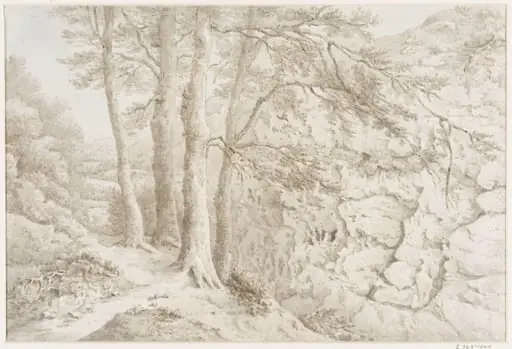
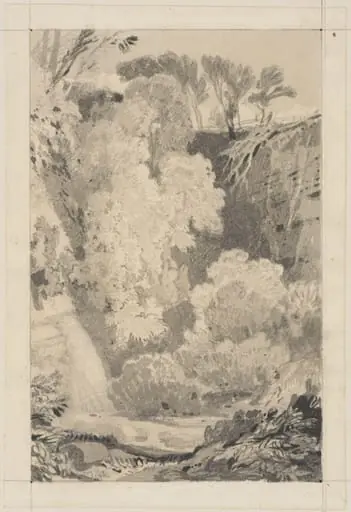
The scene portrays steep, weathered cliffs descending to a narrow river gorge, with sparse vegetation clinging to rocky ledges. A faint ribbon of water winds at the base, suggesting quiet movement beneath the towering stone. The composition emphasizes scale and stillness, inviting contemplation rather than narrative. There is no human presence, reinforcing the solitude of the landscape.
Technique & Style
Faber employed fine graphite lines to define the cliffs’ texture and tree forms, layered with translucent brown wash to suggest shadow and atmospheric depth. The wash softens distant elements, creating a sense of spatial recession, while the sharper graphite details anchor the foreground. This controlled contrast between precision and diffusion reflects a topographical sensibility rooted in observation, not romantic embellishment.
History & Provenance
Faber, born in Hamburg in 1778, began his career painting religious subjects, including an altar piece for St. Catharine’s Church. His move toward landscape emerged during a formative trip to Italy with artists J. A. Koch and Reinhardt. This drawing dates from that period of transition. He returned to Hamburg in 1825 and continued working until his death in 1846, leaving behind a body of topographical drawings largely unpublicized in his lifetime.
Context
In the early 19th century, German artists increasingly sought inspiration in southern European landscapes, drawn by classical ruins and dramatic geology. Faber’s work aligns with this trend, though his approach remained restrained compared to contemporaries who favored emotional intensity. His focus on geological structure and subtle tonal variation reflects a scientific curiosity common among travelers documenting Italy’s terrain.
Legacy
Faber’s drawings, including this one, were not widely exhibited or collected during his lifetime. They survive primarily as private studies, valued later for their quiet accuracy and technical discipline. Today, they offer insight into the transition from academic painting to direct landscape observation in German art, representing a quiet but significant strand in the development of 19th-century drawing practices.
Own this work as a print
Artist & collection

Artist
Johann Joachim Faber (12 April 1778 – 2 August 1846) was a landscape painter who was born in Hamburg.