Artwork
Valley in the Italian Campagna
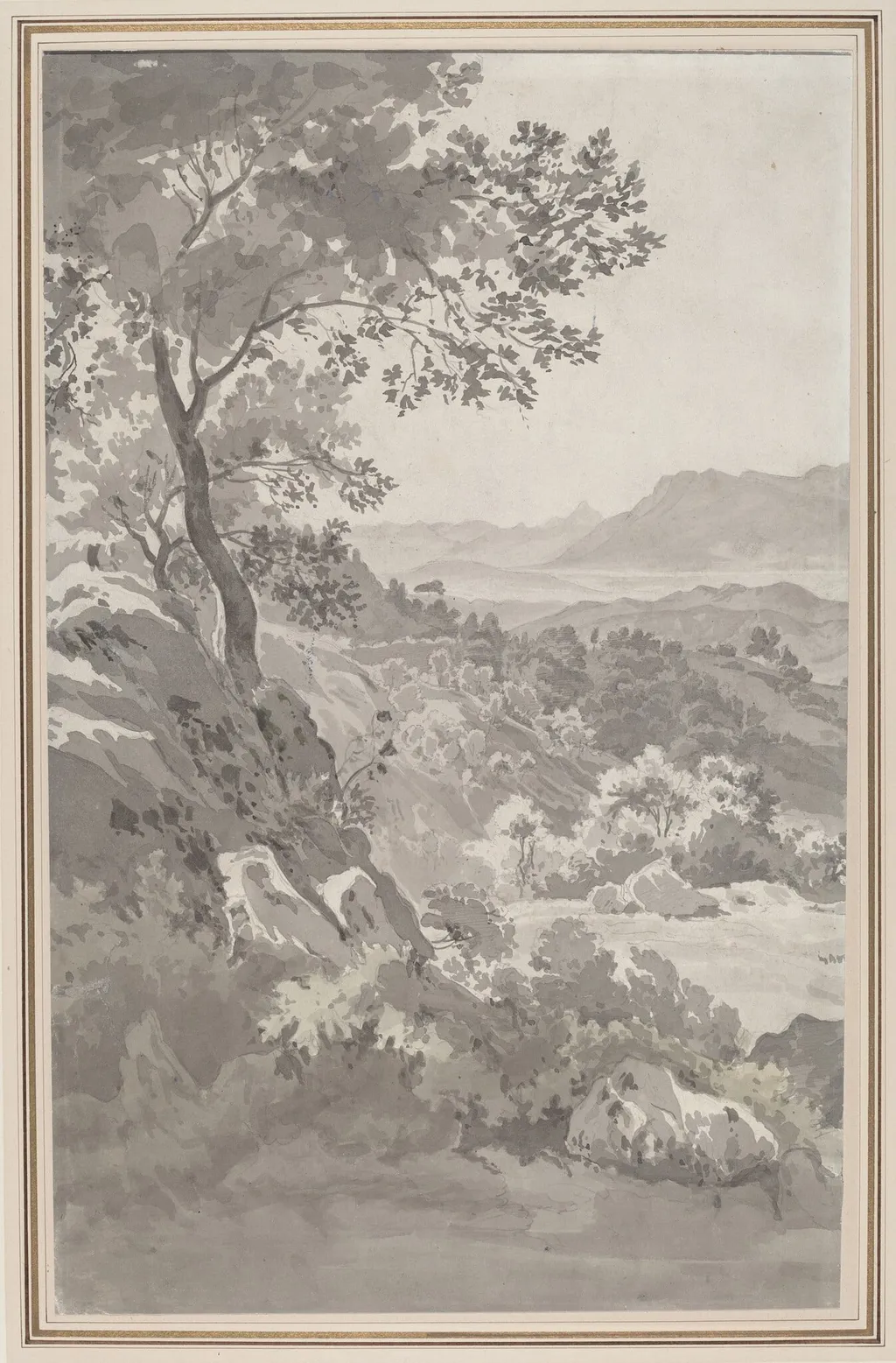
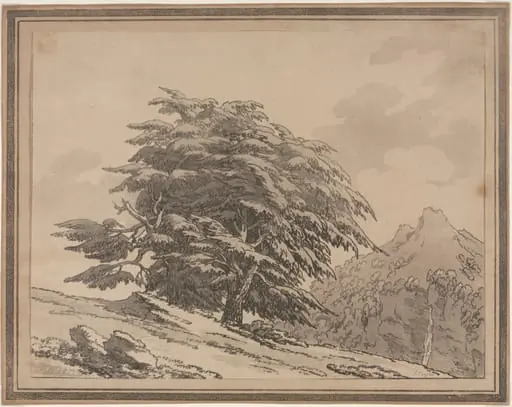
Valley in the Italian Campagna is a graphite drawing by the Romanticist artist Dutch 19th Century. It dates from 1824 and is held in the collection of the National Gallery of Art. The work is a drawing executed on wove paper, employing a gray and greenish wash applied over graphite.
About this work
Overview
The work is a drawing executed on wove paper, employing a gray and greenish wash applied over graphite. The composition presents a gently undulating countryside scene, dominated by a solitary tree positioned on a rocky slope. Beyond the tree, a series of softened hills recede into the distance, rendered in muted tonal values that convey a tranquil atmosphere.
Subject & Meaning
At the foreground, the lone tree displays a contrast of bare branches on one side and fresh foliage on the other, suggesting a moment of seasonal transition. The surrounding landscape, with its subdued hills and sparse vegetation, evokes a sense of quiet solitude and the timeless character of the Italian countryside.
Technique & Style
The artist combined precise graphite drawing with light washes of gray and green, allowing the pigment to blend seamlessly into the pencil lines. This approach creates a hazy, atmospheric effect reminiscent of sfumato, where edges soften and color transitions become almost imperceptible, while still preserving fine details in the rock and leaf textures.
History & Provenance
The drawing is catalogued under the title "Valley in the Italian Campagna" and is identified as a work on paper. Its provenance, exhibition history, and previous ownership remain undocumented in the available records, limiting knowledge of its original creation date and the artist responsible.
Artist & collection

Artist
This 19th-century Dutch artist sketched landscapes in graphite with soft, green-tinted washes.

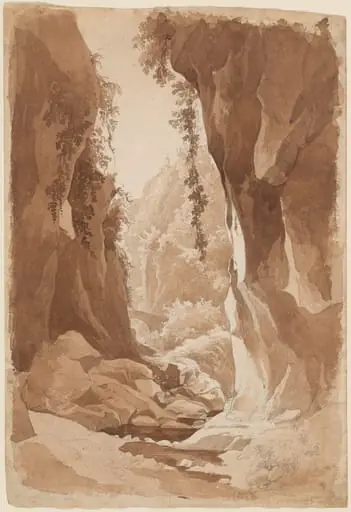 Cliffs Overhanging a River Gorge near Sorrento (recto)
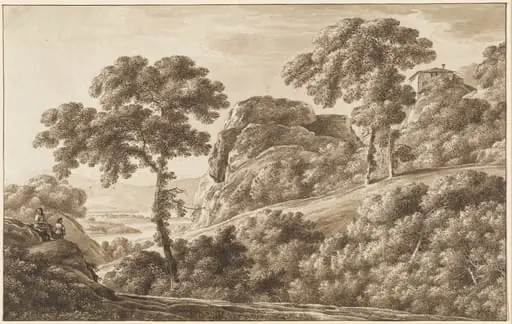 The Isar with Boulders on the Isarhohe
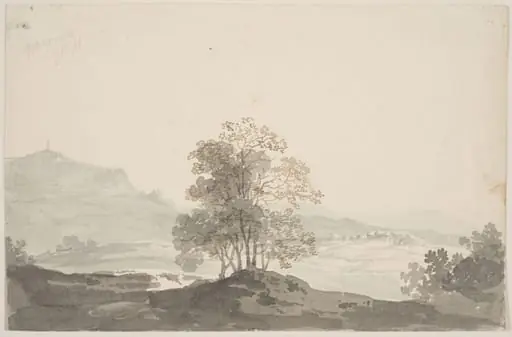 Appuldurcombe, Isle of Wight
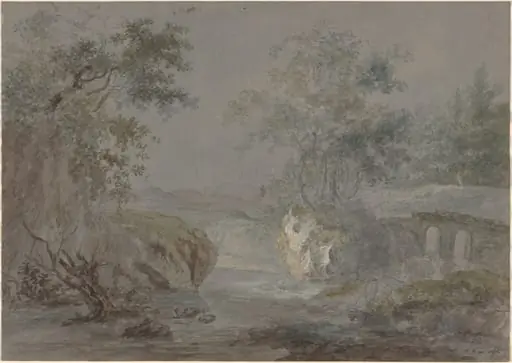 Wooded Cliffs along a Riverbank
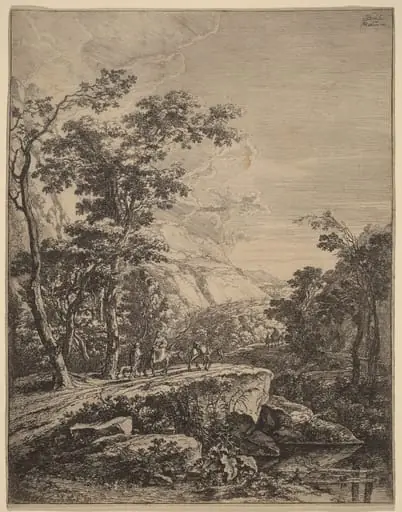 The Woman on the Hinny
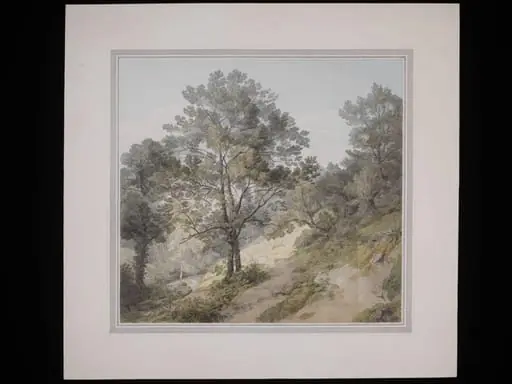 View near Canonteign, Devon
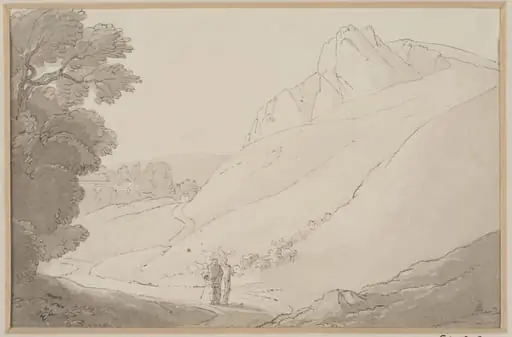 Untitled
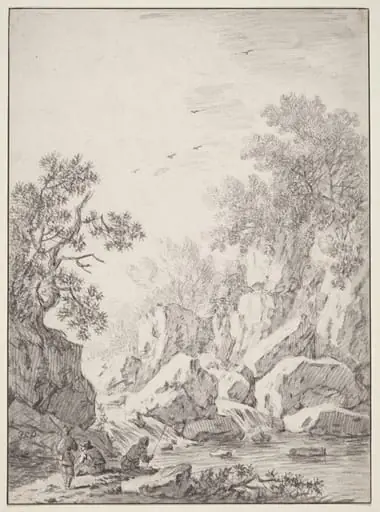 A Waterfall by Rock Cliffs
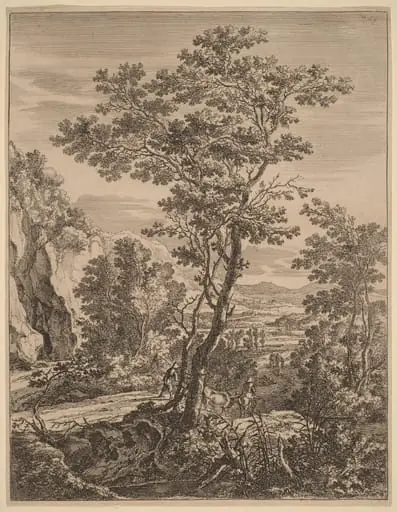 The Large Tree
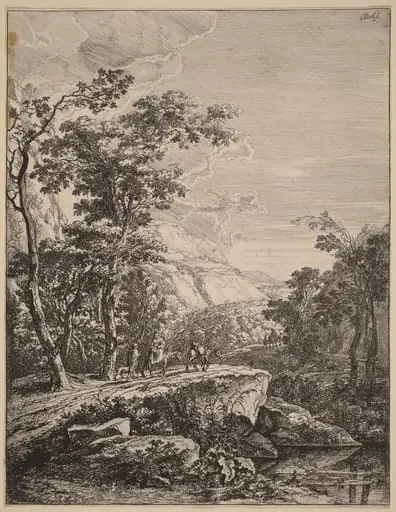 The Woman on the Hinny
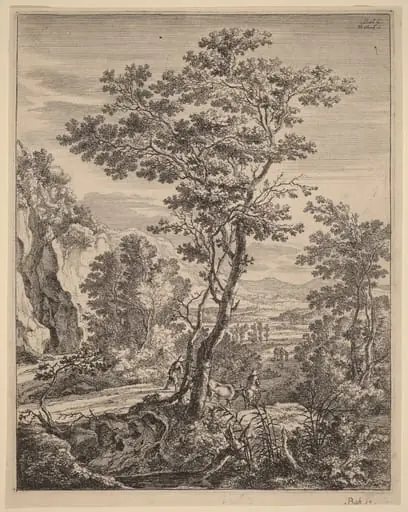 The Large Tree
 Delineations of the General Character Ramifications and Foliage of Forest Trees: Cedar