Artwork
H Beard Print Collection
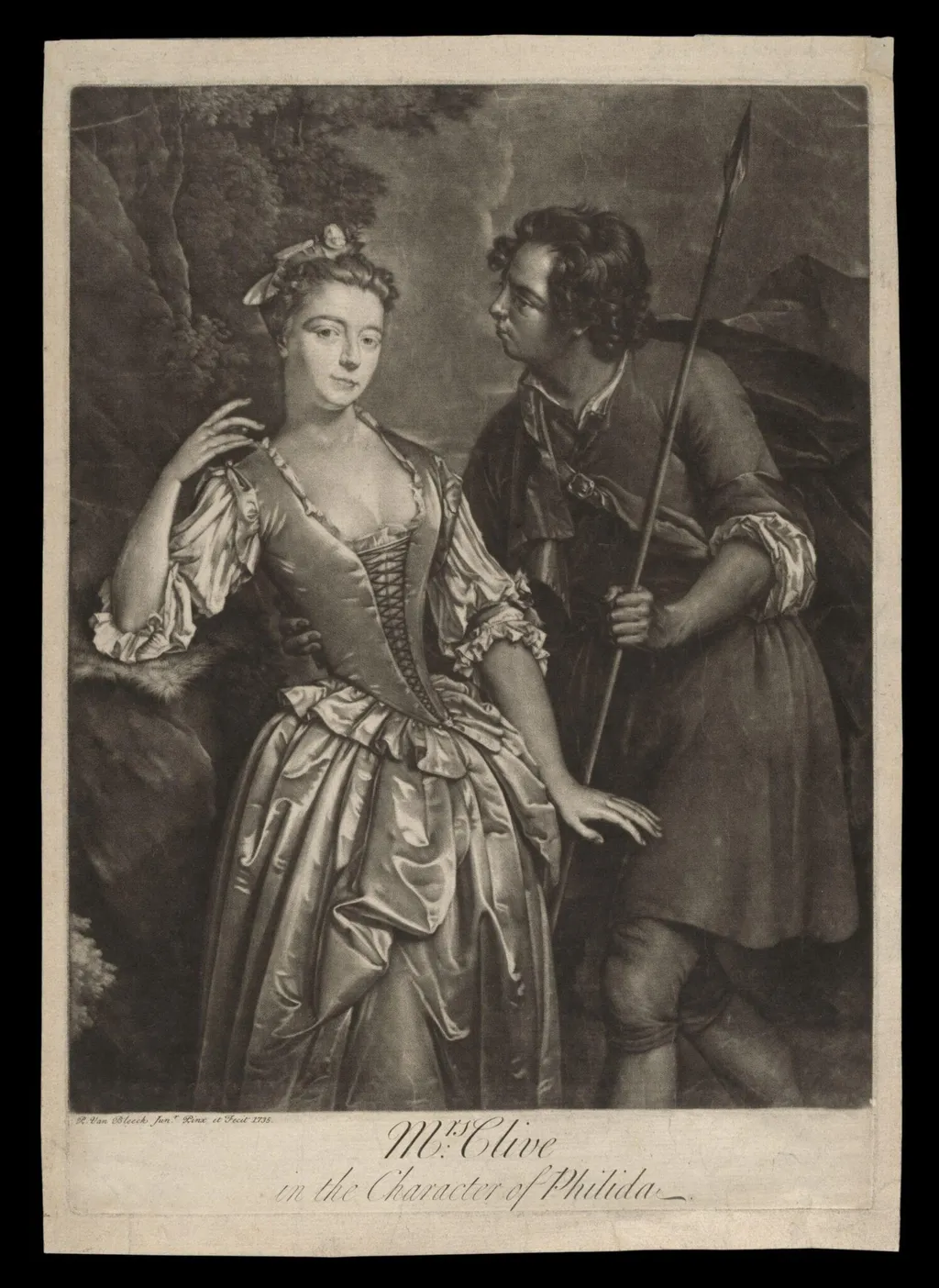
H Beard Print Collection is a print by the Baroque artist John Faber. It dates from 1734 and is held in the collection of the Victoria and Albert Museum. This 1734 engraved portrait depicts the actress Mrs.
About this work
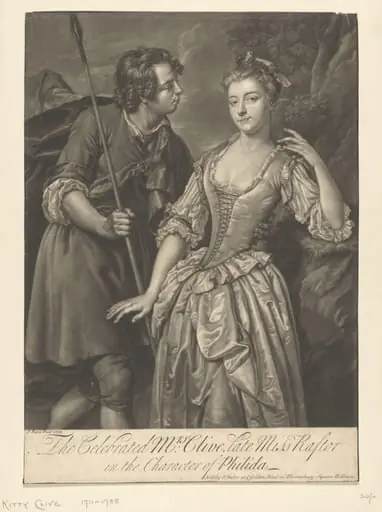
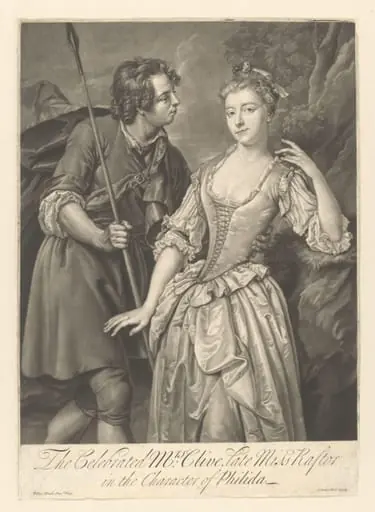
This 1734 print shows a woman dressed as Philida, a character from a comic play of the time. It’s an allegory, a portrait that stands for an idea or role. John Faber the Younger made it in London.
The print was sold in London by the same artist who made it. It’s part of a larger collection of prints called the H Beard Print Collection.
Look up the Victoria and Albert Museum next.
Overview
Produced by John Faber the Younger and distributed in London, the print belongs to the H Beard Print Collection, a curated group of theatrical portraits.
This 1734 engraved portrait depicts the actress Mrs. Clive in the role of Philida, a character from a popular comic play. Produced by John Faber the Younger and distributed in London, the print belongs to the H Beard Print Collection, a curated group of theatrical portraits. It functions as both a likeness and a symbolic representation, capturing a performer’s public persona through the lens of theatrical character.
Subject & Meaning
Mrs. Clive, portrayed as Philida, embodies a witty, spirited female figure from contemporary comedy. The image is not merely a record of costume but an allegorical statement, linking the actress’s fame to the character’s social wit. Philida’s role reflected ideals of cleverness and charm in 18th-century theater, and the print reinforces her cultural resonance beyond the stage.
Technique & Style
Executed in fine line engraving, the print emphasizes delicate contours and subtle tonal gradations. Faber’s technique captures the texture of fabric and the softness of skin with precision, typical of British portraiture of the period. The composition is formal yet intimate, focusing on the sitter’s face and upper body, with minimal background to direct attention to her expression and attire.
History & Provenance
Created and sold by John Faber the Younger in London, the print was part of a commercial effort to capitalize on theatrical fame. It entered the H Beard Print Collection, assembled over decades by the 19th-century collector Henry Beard. The collection, now held by the Victoria and Albert Museum, preserves a broad spectrum of British theatrical imagery from the 17th to 19th centuries.
Context
In the 1730s, London’s theater scene thrived as a center of public entertainment and social commentary. Printmakers like Faber met demand for images of popular actors, turning stage personas into widely circulated visual commodities. This print reflects the growing intersection of performance, celebrity, and print culture in early Georgian England.
Legacy
As part of the H Beard Collection, this print contributes to the historical documentation of British theatrical identity. It remains a key example of how performance and portraiture converged in the 18th century, offering insight into the public’s fascination with actors as cultural figures. Its preservation ensures continued study of early modern visual culture and gendered performance.
Artist & collection
Artist
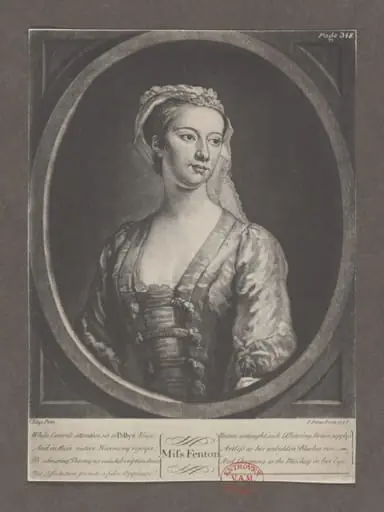
John Faber made small, finely detailed prints of people in the early 1700s. His engravings capture sitters like Miss Fenton in crisp lines and subtle shading. These portraits belong to the same era as Hogarth’s moral…