Artwork
Shakespeare and His Contemporaries
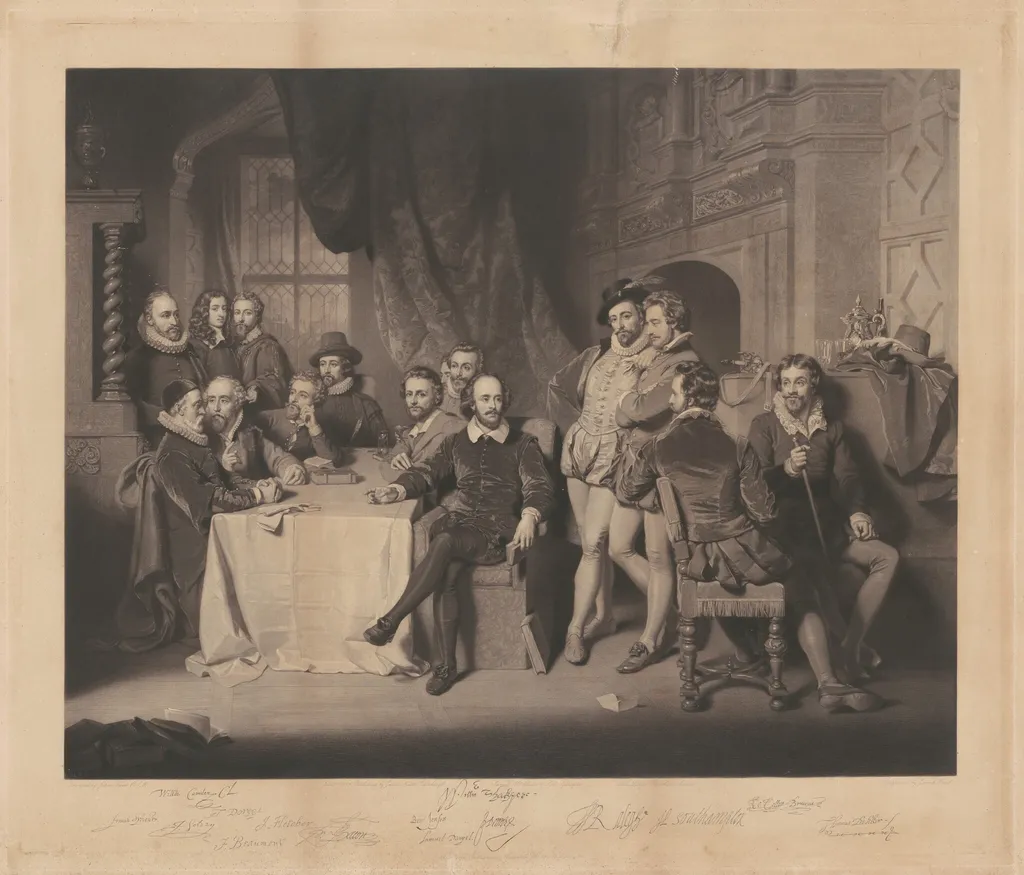
Shakespeare and His Contemporaries is an ink print by the Impressionist artist James Faed. It dates from 1859 and is held in the collection of the National Gallery of Art.
About this work
Overview
James Faed’s 1859 print titled *Shakespeare and His Contemporaries* is an engraving with chine collé on board. The work resides in the National Gallery of Art in Washington, D.C. It presents a monochrome interior scene populated by several men in period dress, arranged around a fireplace and a table, conveying a sense of scholarly gathering.
Subject & Meaning
The composition depicts a group of gentlemen, likely representing Shakespeare and his literary peers, assembled in a richly paneled room.
The composition depicts a group of gentlemen, likely representing Shakespeare and his literary peers, assembled in a richly paneled room. Their attire—ruffled collars, hats, and formal coats—evokes the late‑16th to early‑17th century. The relaxed figure seated apart suggests contemplation, while the surrounding figures engage in conversation, hinting at the collaborative and social nature of early modern literary culture.
Technique & Style
Faed employed traditional engraving, incising fine lines into a metal plate to achieve precise detail and tonal variation. The addition of chine collé—paper adhered to the board—provides a smooth, stable surface that enhances the crispness of the black‑and‑white imagery. The result is a sharply rendered scene where texture, light, and depth are conveyed solely through line work.
History & Provenance
Created in 1859, the print reflects the Victorian era’s renewed interest in Shakespeare and his milieu. It entered the collection of the National Gallery of Art, where it has been conserved as part of the museum’s holdings of 19th‑century British prints, illustrating the period’s fascination with historical literary figures.
Context
During the mid‑19th century, British artists frequently revisited Renaissance subjects, aligning them with contemporary values of scholarship and national heritage. Faed’s choice of engraving—a medium prized for its reproducibility—allowed wider dissemination of an idealized image of Shakespeare’s circle, reinforcing the cultural narrative of England’s literary lineage.
Artist & collection

 Print Collection
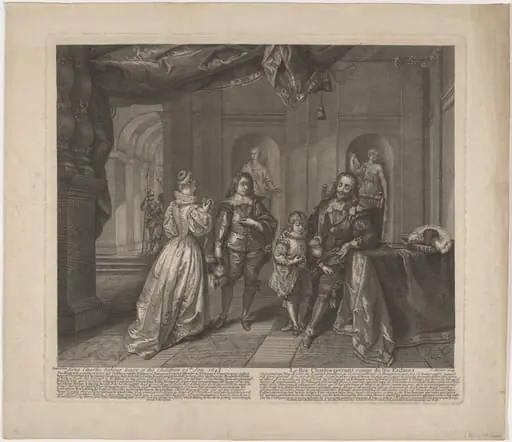 King Charles Taking Leave of His Children
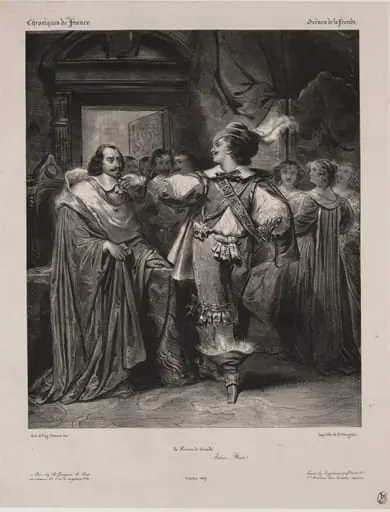 Chronicles of France: Scene of the Fronde - The Prince of Condé
 H Beard Print Collection
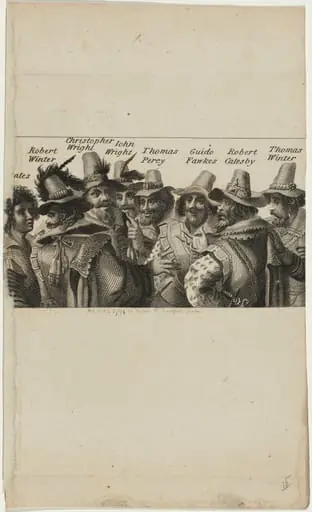 Figures in Gunpowder Plot
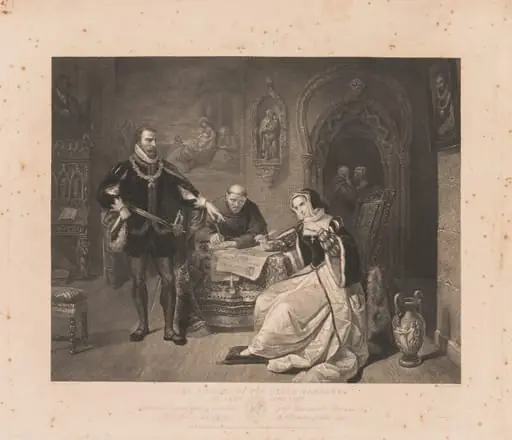 Signing of the Death Warrant of Lady Jane Grey
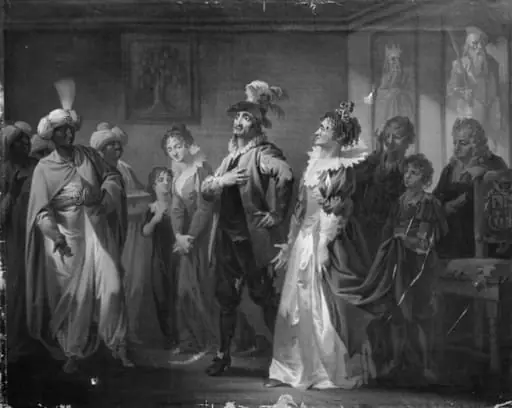 Don Ranudo de Colibrados, V. akt, 4. scene
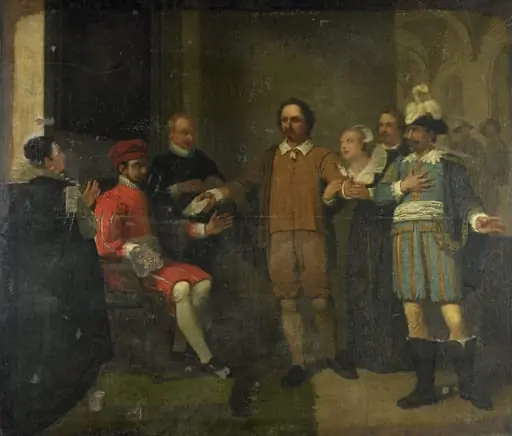 Jacob Simonsz de Rijk getting the Spanish Governor-General Requesens to Release Marnix van Sint Aldegonde, 1575
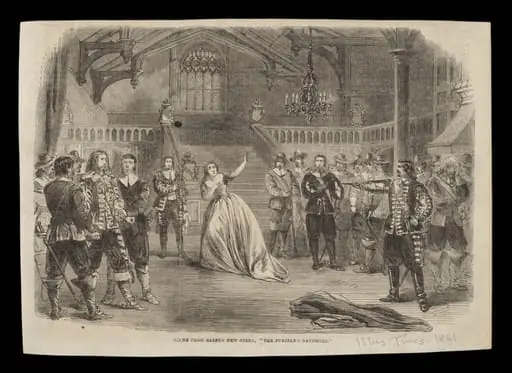 H Beard Print Collection
 Print Collection
 H Beard Print Collection
 Don Ranudo de Colibrados, V. akt, 4. scene