Artwork
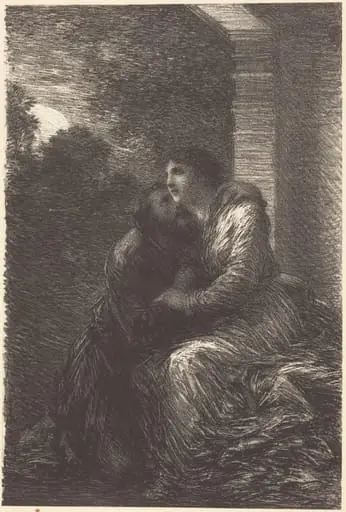
Duet from "The Trojans" (6th plate)
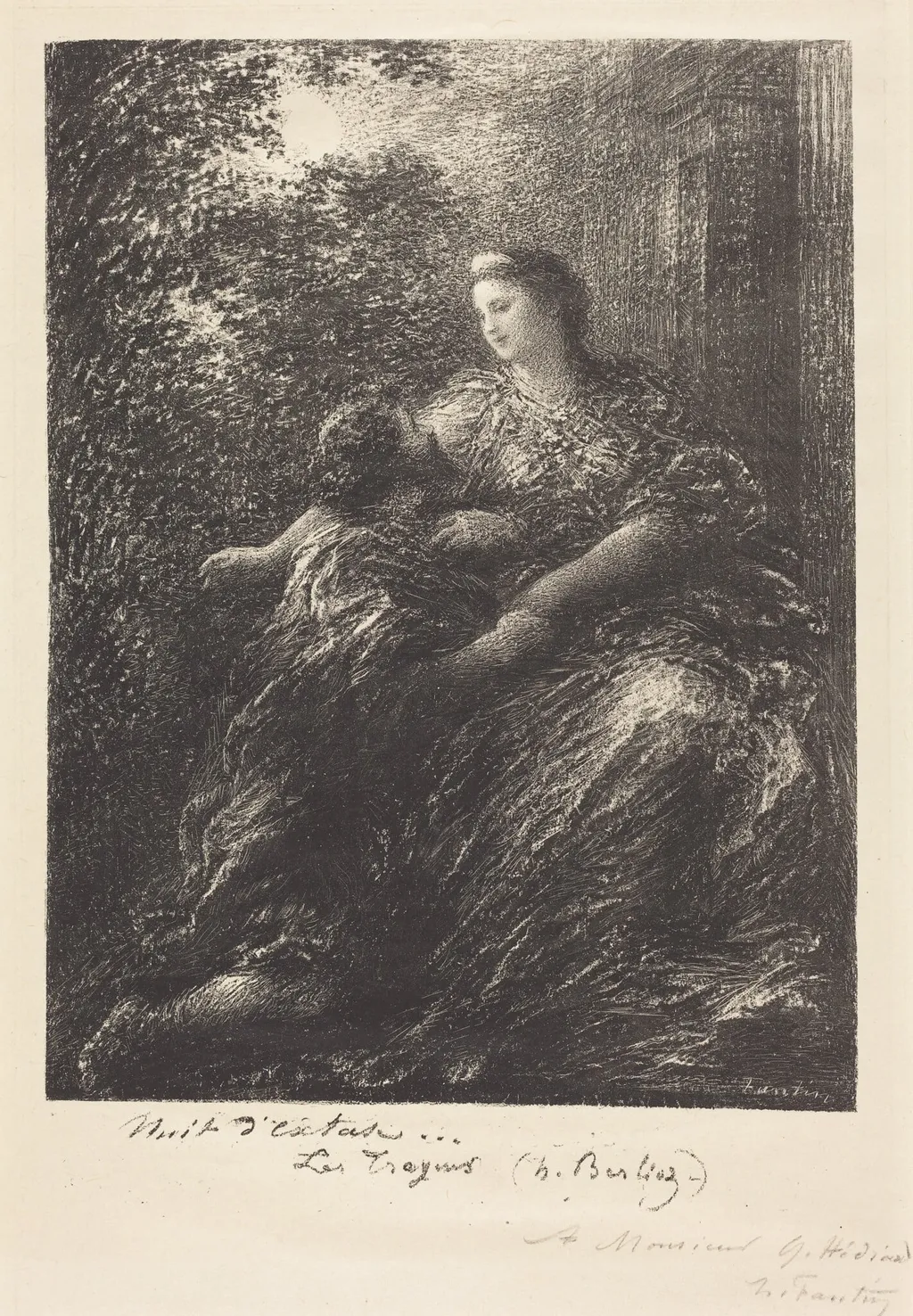
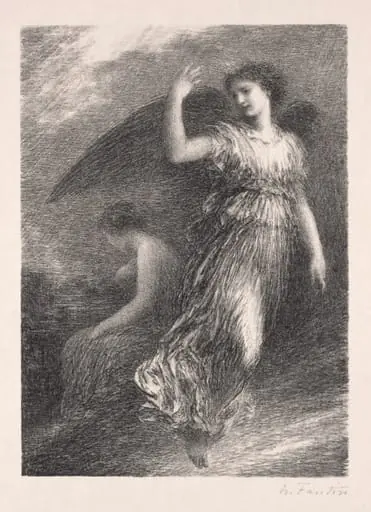
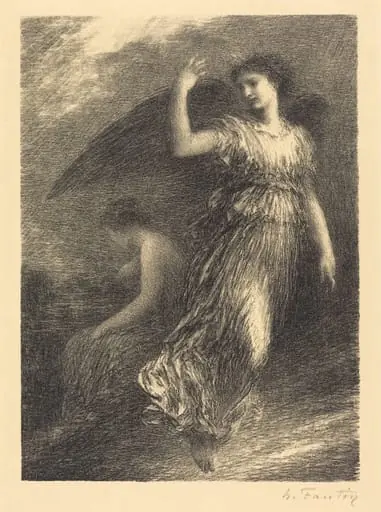
Duet from "The Trojans" (6th plate) is an ink print by the Impressionist artist Henri Fantin-Latour. It dates from 1894 and is held in the collection of the National Gallery of Art.
About this work
Overview
Executed on thin Chinese paper, the work diverges from his better-known still lifes and portraits, revealing his engagement with contemporary opera.
Created in 1894, this lithograph by Henri Fantin-Latour is part of a series translating musical narratives into visual form. Executed on thin Chinese paper, the work diverges from his better-known still lifes and portraits, revealing his engagement with contemporary opera. The plate is the sixth in a sequence inspired by Hector Berlioz’s epic opera *Les Troyens*, marking a rare foray into dramatic subject matter within his print oeuvre.
Subject & Meaning
The image captures a solitary female figure seated in an ambiguous, shadowed space, her features softened and indistinct. Rather than illustrating a specific moment from Berlioz’s opera, the composition evokes emotional resonance—suggesting introspection, loss, or quiet lament. The lack of narrative clarity shifts focus from plot to mood, aligning the image with the lyrical, atmospheric qualities of the music that inspired it.
Technique & Style
Fantin-Latour employed lithography on a smooth stone, allowing ink to be drawn with a greasy medium and transferred to delicate Chinese paper. The resulting surface is grainy and uneven, with loose, rapid lines that mimic sketchbook studies. The blurred contours and textured background, resembling storm clouds or frayed fabric, enhance the sense of impermanence and emotional ambiguity, prioritizing atmospheric effect over detail.
History & Provenance
This print emerged during a period when Fantin-Latour was increasingly focused on graphic work, though he remained primarily recognized for his paintings. The series of lithographs based on *Les Troyens* was produced privately and circulated among collectors and musicians rather than widely published. Its survival in limited numbers reflects its niche appeal and the artist’s preference for intimate, non-commercial printmaking.
Context
In the 1890s, French artists frequently drew connections between music and visual art, seeking to translate auditory emotion into visual form. Fantin-Latour’s engagement with Berlioz’s opera aligned with broader Symbolist interests in suggestion over literalism. While his contemporaries explored myth or allegory, he chose a recent, complex work of musical theater, signaling his personal resonance with its themes of fate and mourning.
Legacy
Though not widely exhibited in his lifetime, this lithograph contributes to understanding Fantin-Latour’s expanded artistic concerns beyond portraiture. It stands as a quiet testament to his interest in cross-disciplinary expression and the potential of printmaking to convey mood through minimal means. Later scholars have noted its significance as a bridge between his figurative work and the emerging aesthetic of expressive line in late 19th-century print culture.
Artist & collection
Artist
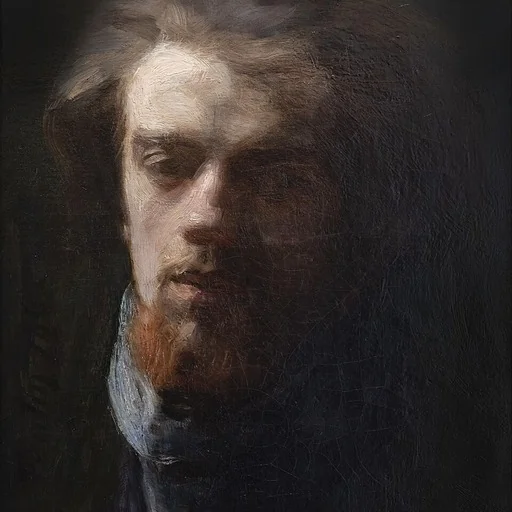
Ignace Henri Jean Theodore Fantin-Latour (French pronunciation: ; 14 January 1836 – 25 August 1904) was a French painter and lithographer best known for his flower paintings and group portraits of Parisian artists and writers.