Artwork
a) Artillery on Mission (recto); b) Artillery on Mission (verso) (Artiglieria da campagna)
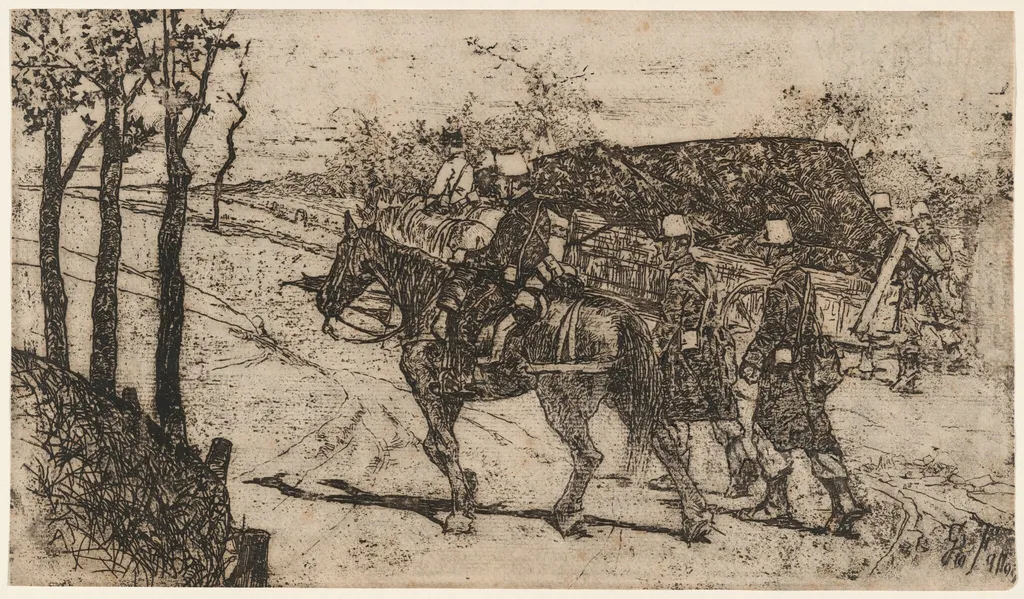
a) Artillery on Mission (recto); b) Artillery on Mission (verso) (Artiglieria da campagna) is an ink print by the Impressionist artist Giovanni Fattori. It is held in the collection of the National Gallery of Art.
About this work
Overview
Giovanni Fattori created two complementary etchings on a single sheet of laid paper in 1896, each depicting the same military scene but on opposite sides. One side shows the front view of a horse-drawn artillery cart, the other the rear. These are artist’s proof impressions, indicating they were pulled before the final edition and likely used for personal review or experimentation.
Subject & Meaning
The scene portrays a field artillery unit in motion along a rural road. Uniformed soldiers ride atop a cannon carriage, their postures and gestures suggesting readiness and routine. The absence of battle or dramatic tension shifts focus to the quiet discipline of military logistics, emphasizing the everyday movement of troops rather than combat heroism.
Technique & Style
Fattori employed loose, energetic etching lines to convey movement and texture. The sketchy handling of forms, with varied hatching and minimal detail, reflects an impressionistic approach to light and motion. The paper’s laid texture enhances the tactile quality of the scene, reinforcing the sense of a moment captured in transit rather than a polished composition.
History & Provenance
The work entered the National Gallery of Art’s collection in Washington, D.C., as part of a broader acquisition of Fattori’s graphic works. Its survival as a double-sided artist’s proof is rare, offering insight into Fattori’s process. The piece was likely retained by the artist for study or private circulation before entering institutional hands.
Context
Created late in Fattori’s career, this print aligns with his lifelong interest in military subjects, rooted in his service during Italy’s unification wars. By the 1890s, he had moved away from grand historical narratives toward intimate, observational scenes of soldiers in transit, reflecting a quieter, more reflective engagement with military life.
Legacy
Fattori’s etchings, including this dual-sided work, contributed to the recognition of printmaking as a serious medium for modern Italian artists. His emphasis on movement and everyday military routine influenced later generations who sought to depict modern life with honesty rather than idealization, bridging realism and early modernism.
Artist & collection


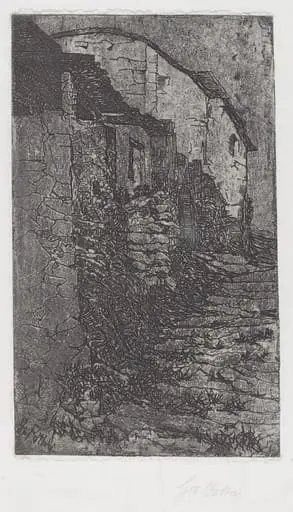 Bauco near Rome (Bauco presso Roma)
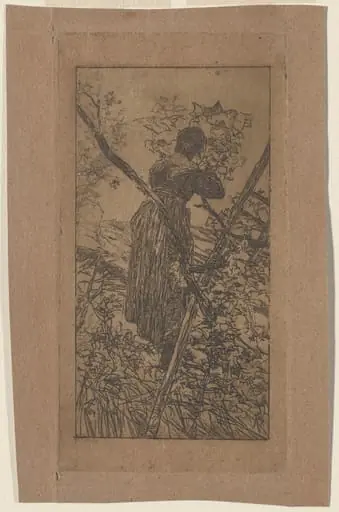 Gathering Leaves (Raccoglitrice di foglie)
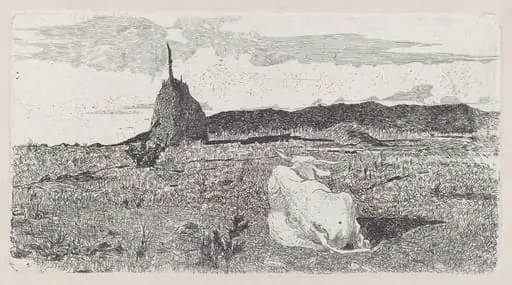 Holy Cow (Pio bove)
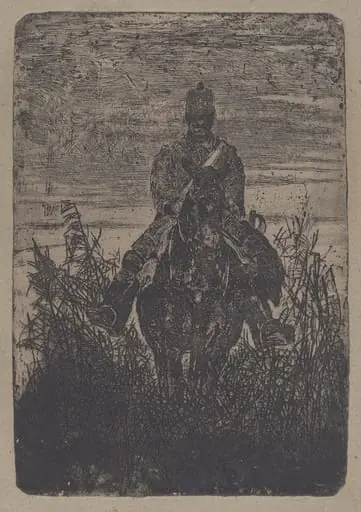 Patrol (Esplorazione)
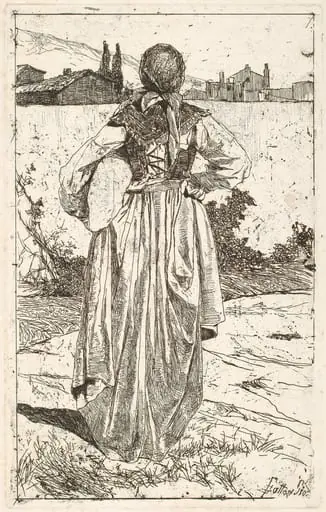 Woman of the Gabbro (Donna al gabbro)
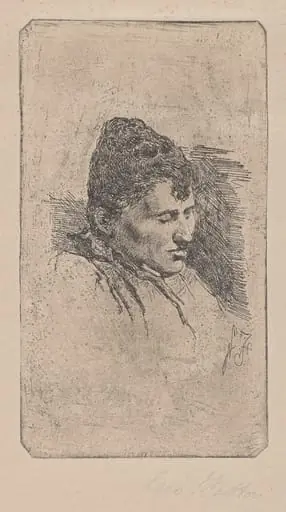 Portrait of the Artist's Second Wife (Ritratto della seconda moglie)
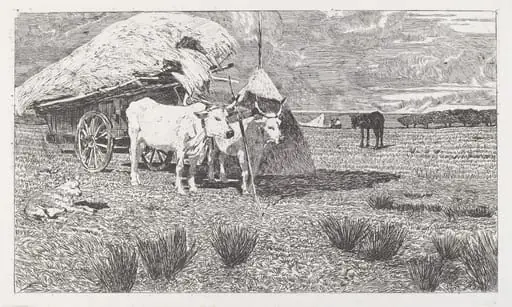 Oxen Yoked to a Cart (Maremma) (Bovi al carro (Maremma))
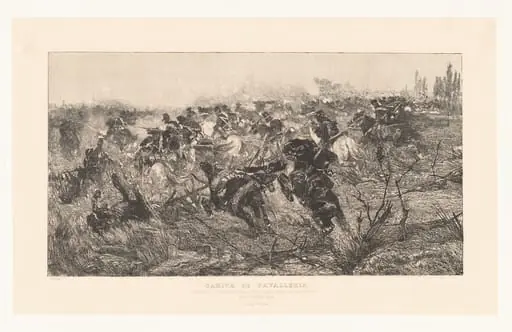 Carica di cavalleria (Calvary Charge)
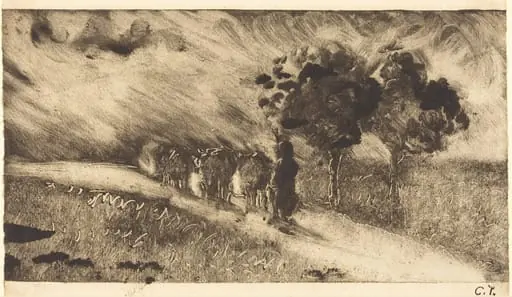 Herding the Cows at Dusk (Vachère le soir)
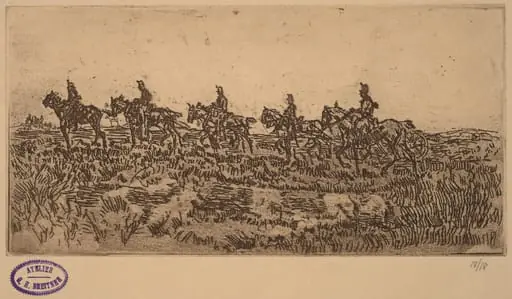 Hussars Riding Single File
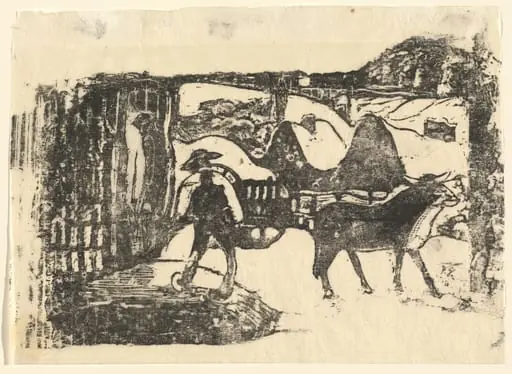 The Ox Cart (Le char a boeufs)
 Feuilles d'Anes du Midi
 The Burrow Train, New Mexico
 Cavalry Soldier (Soldato di cavalleria)
 Cavalry Scene
 Horse at Midday (Cavallo a meriggio)
 Feuilles d'Anes du Midi (Sheet of Donkeys from the South)
 Our Hill from Dumstown, Ohio