Artwork
Untitled
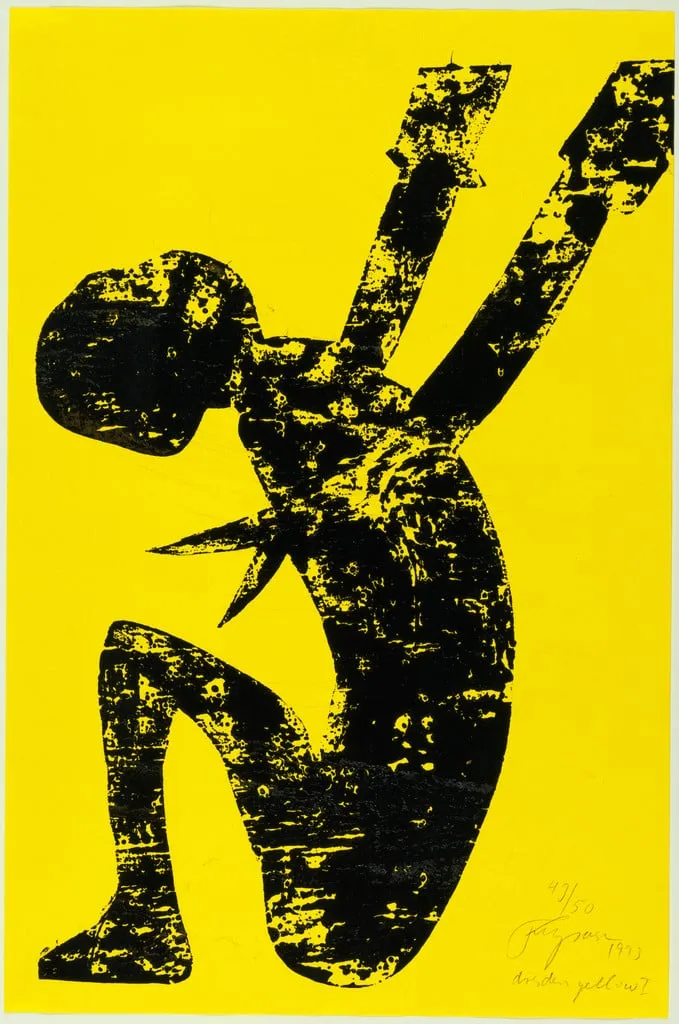
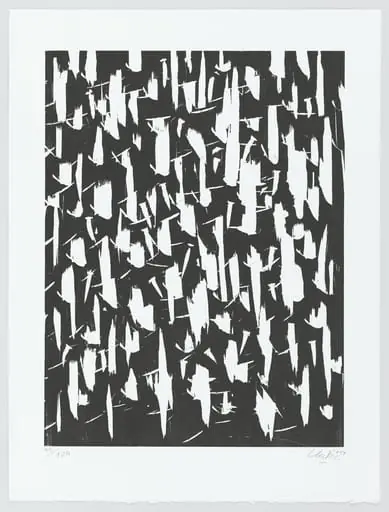
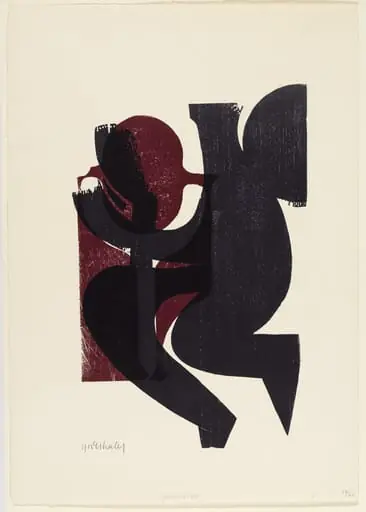
Untitled is an ink print by Felix Droese. It dates from 1993 and is held in the collection of the Museum of Modern Art.
About this work
Overview
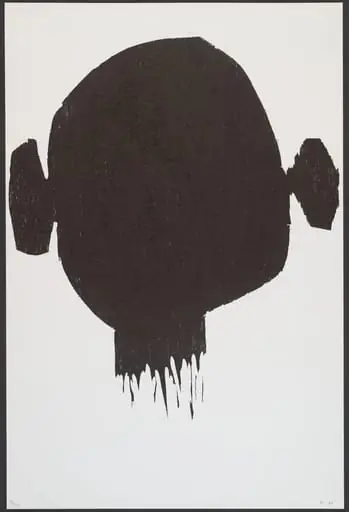
Felix Droese created this woodcut in 1993, using the traditional method of carving an image into a wooden block, inking the raised surfaces, and pressing it onto paper. The work is part of The Museum of Modern Art’s collection. Its stark contrast and simplified forms reflect a deliberate engagement with printmaking’s physicality, emphasizing texture and gesture over detail.
Subject & Meaning
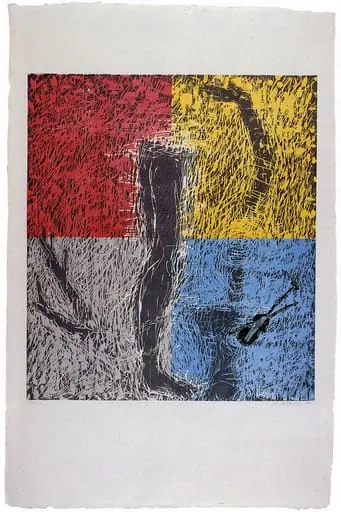
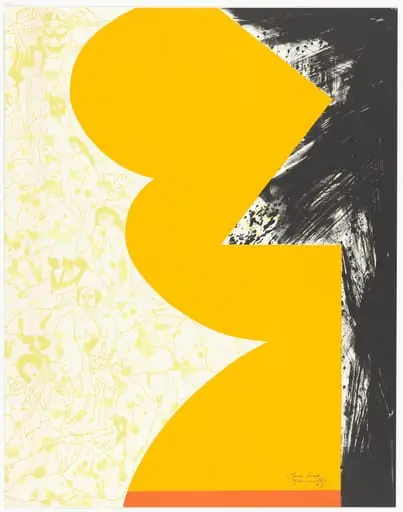
A dark, angular figure crouches against a vivid yellow field, arms raised as if holding a guitar. The form is abstracted, lacking facial features or precise anatomy, suggesting a symbolic presence rather than a portrait. The posture and implied instrument evoke musical expression, possibly hinting at cultural or emotional resonance without narrative clarity.
Technique & Style
The print was made using woodcut, a relief process where the artist carved away areas not meant to print. The resulting lines are uneven and hand-carved, revealing the tool’s mark and the wood’s grain. The bold yellow background, left unprinted, intensifies the figure’s silhouette, creating a strong visual tension through minimal means.
History & Provenance
Created in 1993, the work entered The Museum of Modern Art’s collection shortly after its making. No earlier exhibition or ownership history is publicly documented. Its acquisition reflects the museum’s interest in contemporary printmaking that prioritizes material process and expressive abstraction over representational fidelity.
Context
Droese worked within a late 20th-century German art scene that often revisited printmaking as a medium for raw, unpolished expression. This piece aligns with broader trends favoring direct, tactile methods over digital or highly refined techniques. The absence of text or title invites open interpretation, consistent with postmodern approaches to imagery.
Legacy
The work contributes to a lineage of woodcuts that emphasize process over polish, using the medium’s inherent roughness to convey emotional weight. While not widely reproduced, its presence in MoMA’s collection ensures its role as an example of how contemporary artists continue to explore traditional techniques for non-traditional ends.
Artist & collection