Artwork
Village Scene with Dutch Colonial Figures (from Hosack Album)
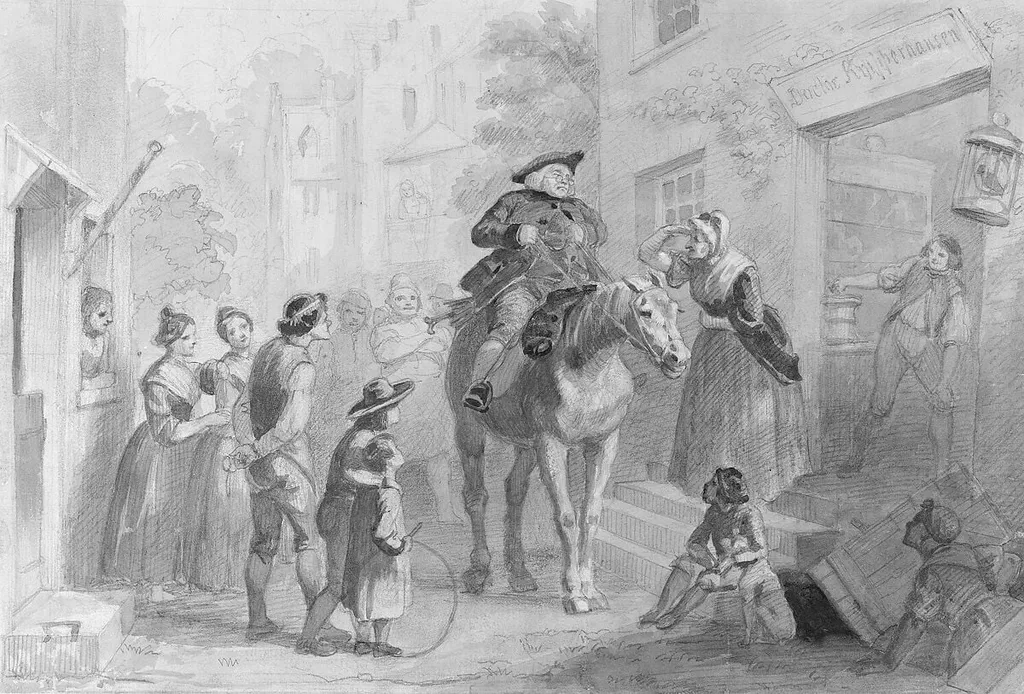
Village Scene with Dutch Colonial Figures (from Hosack Album) is a watercolor work on paper by the American Folk Art artist Felix Octavius Carr Darley. It dates from 1855 and is held in the collection of the Metropolitan Museum of Art. Created in 1855, this watercolor on laid paper presents a bustling village street populated by figures in period dress.
About this work
Overview
Created in 1855, this watercolor on laid paper presents a bustling village street populated by figures in period dress. A man in a top hat and a woman in a long skirt stand amid children at play and horse‑drawn carts, evoking the atmosphere of a modest American settlement in the mid‑nineteenth century.
Subject & Meaning
The composition captures a slice of everyday life, focusing on ordinary activities rather than heroic narratives. By placing the central couple within a lively communal setting, the work reflects the social rhythms of a small town, suggesting themes of domesticity, local commerce, and the interdependence of residents in a pre‑industrial landscape.
Technique & Style
The artist employed rapid watercolor washes combined with graphite outlines and touches of gouache, allowing light and shadow to be rendered with a fleeting, almost photographic quality. Transparent layers build subtle depth, while the loose handling of pigment conveys movement and atmosphere, characteristic of American folk‑influenced genre scenes of the period.
History & Provenance
Felix Octavius Carr Darley, known for illustrating the works of Washington Irving and Harriet Beecher Stowe, produced this piece as part of a travel sketchbook. The drawing later entered the American Wing collection, where it remains documented as an example of Darley’s field studies and his contribution to nineteenth‑century visual culture.
Artist & collection

Artist
Felix Octavius Carr Darley (June 23, 1822 – March 27, 1888), often credited as F.
