Artwork
Bust of Hippocrates
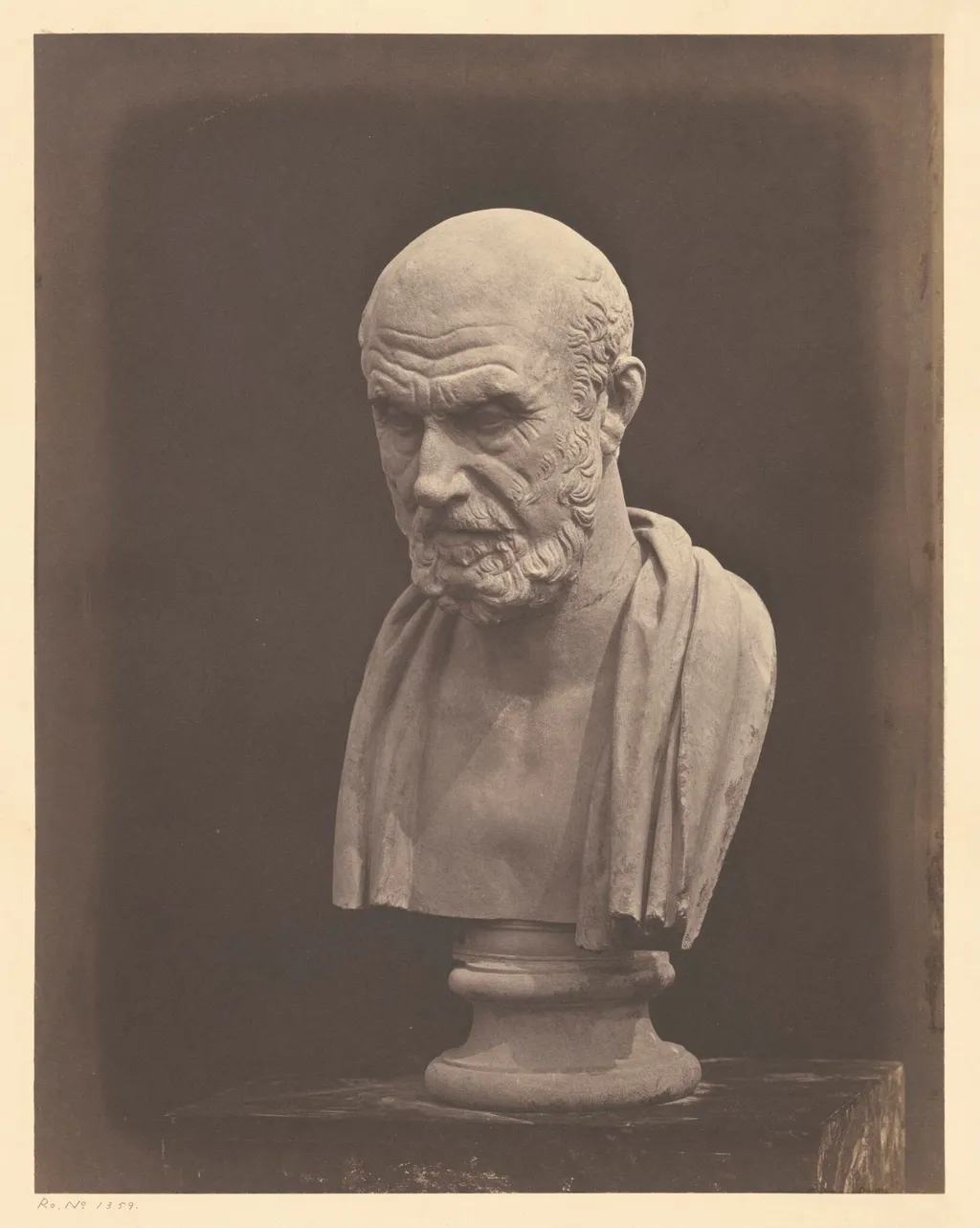
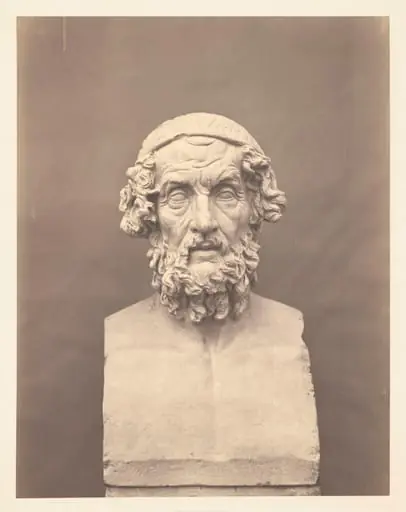
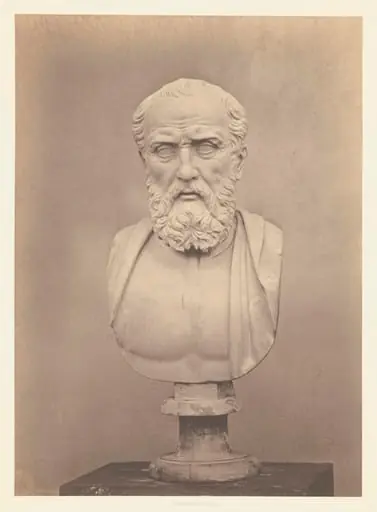
Bust of Hippocrates is a photographic photography by the Impressionist artist Roger Fenton. It dates from 1855 and is held in the collection of the Victoria and Albert Museum.
About this work
The photo was made in 1855, showing how artists used early cameras to document sculptures.
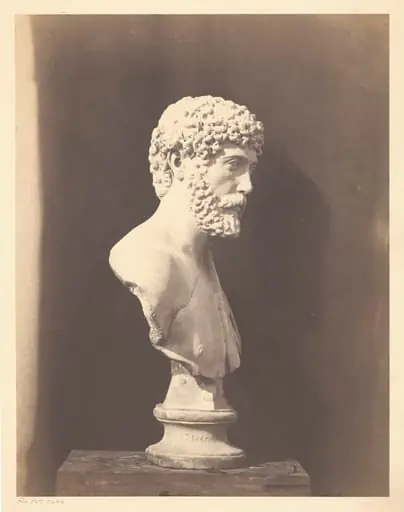
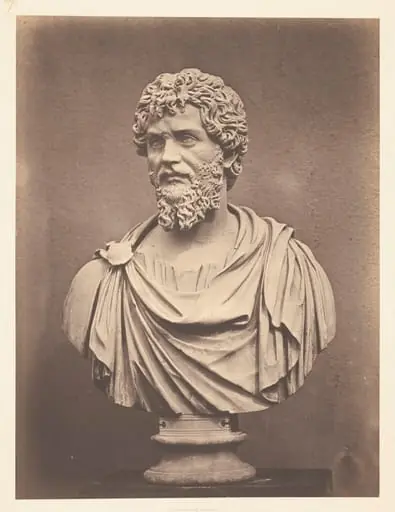
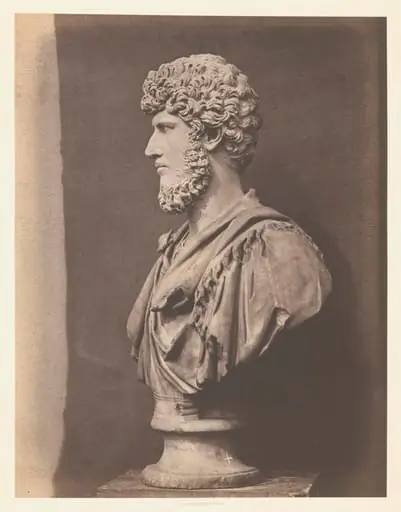
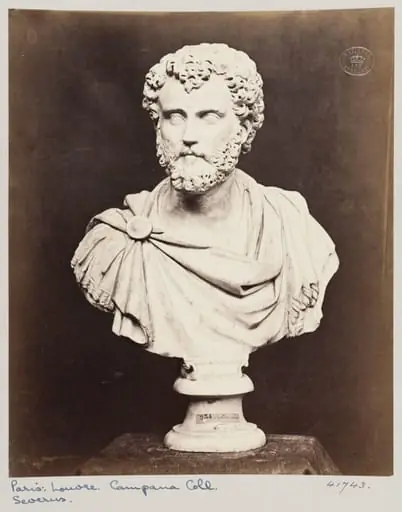
This is a black-and-white photo of a stone bust. The man has a bald head, a thick beard, and a serious expression. He’s wearing a draped cloth over his shoulders, sitting on a small pedestal.
The photo was made in 1855, showing how artists used early cameras to document sculptures. The lighting is simple, focusing on the shape of the face and cloth.
Check out the Victoria and Albert Museum to see more objects like this.
Overview
A black-and-white photograph taken in 1855 by Roger Fenton captures a marble bust of Hippocrates, the ancient Greek physician. The image is a straightforward documentary record, emphasizing form and texture without embellishment. The bust rests on a low pedestal, its surface rendered in tonal gradations typical of early photographic processes. Fenton’s approach reflects the period’s interest in preserving classical sculpture through the new medium of photography.
Subject & Meaning
The bust depicts Hippocrates, revered as the father of medicine, identified by his aged features and full beard—traditional visual markers of wisdom in classical portraiture. The draped garment suggests dignity and scholarly status, aligning with his historical role as a foundational medical thinker. The photograph does not interpret the subject symbolically but preserves the bust’s physical presence as a cultural artifact tied to medical tradition.
Technique & Style
Fenton employed the wet collodion process, which required precise exposure and chemical handling. The lighting is even and directional, highlighting the contours of the marble and the folds of the drapery without casting deep shadows. The composition is centered and static, prioritizing clarity over drama. The monochrome palette enhances the sculptural volume, reducing the bust to essential forms suitable for study and reproduction.
History & Provenance
The photograph was made during Fenton’s early career, when he was actively documenting art collections for institutions and private patrons. The bust itself likely originated from a European collection of classical antiquities, possibly in England. Fenton’s images of such works were used to disseminate knowledge of sculpture before widespread museum access, making this photograph part of a broader effort to archive cultural heritage.
Context
In the mid-19th century, photography emerged as a tool for art documentation, particularly in Britain, where institutions sought to catalog their holdings. Fenton’s work aligned with this trend, capturing sculptures in controlled settings to aid scholarly study. The choice of Hippocrates reflects the era’s reverence for classical antiquity as a source of intellectual authority, especially in medicine and philosophy.
Legacy
Fenton’s photograph stands as an early example of using photography to preserve and circulate classical art. It contributed to the standardization of visual records in museums and academic circles. While the original bust’s current location is uncertain, the photograph remains a reference point for understanding how 19th-century practitioners engaged with antiquity through emerging technologies.
Artist & collection