Artwork
Aratus
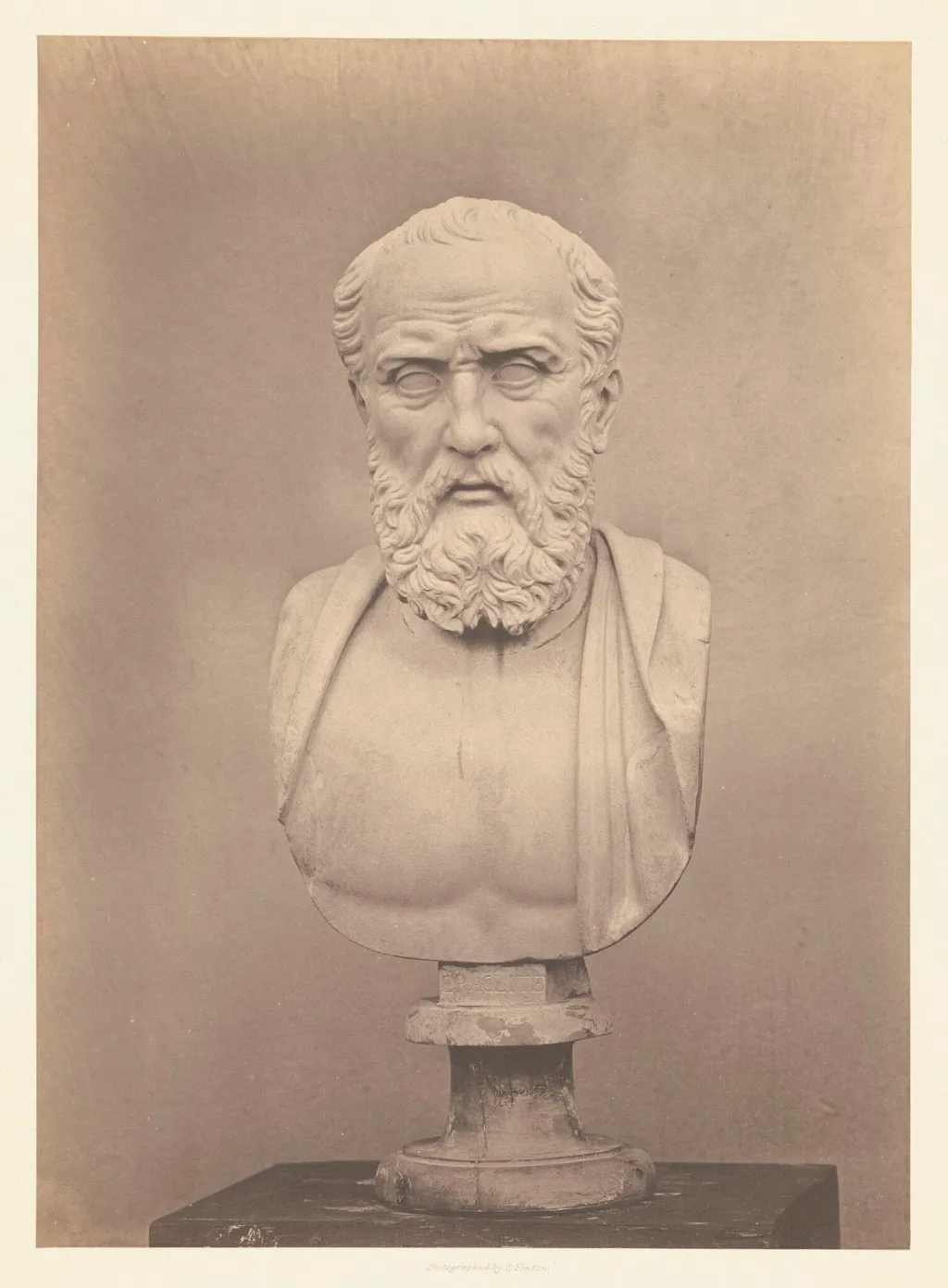
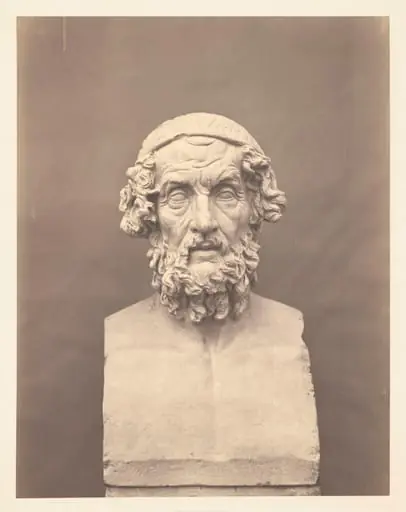
Aratus is a photographic photography by the Impressionist artist Roger Fenton. It dates from 1855 and is held in the collection of the Victoria and Albert Museum.
About this work
Overview
The image reflects Fenton’s early interest in documenting sculpture as part of a broader cultural archive, rather than as a portrait of a specific individual.
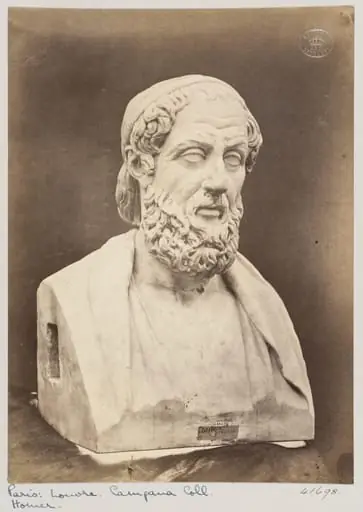
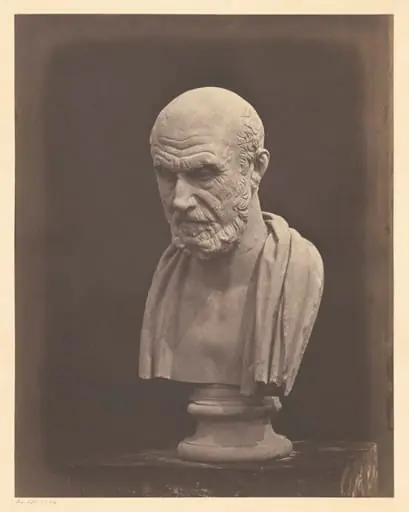
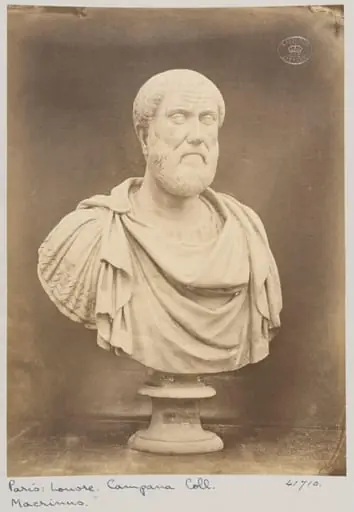
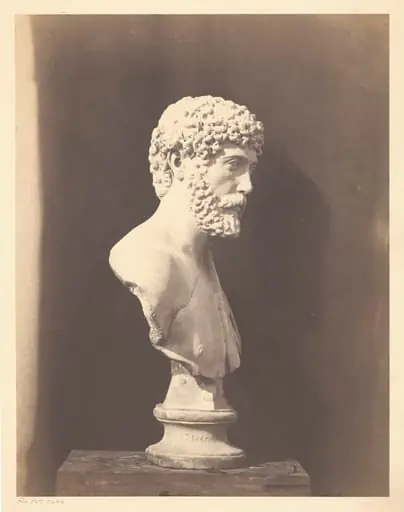
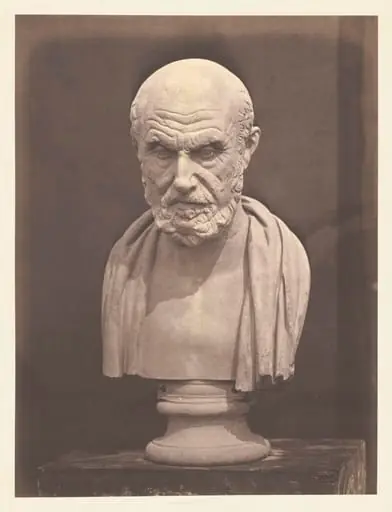
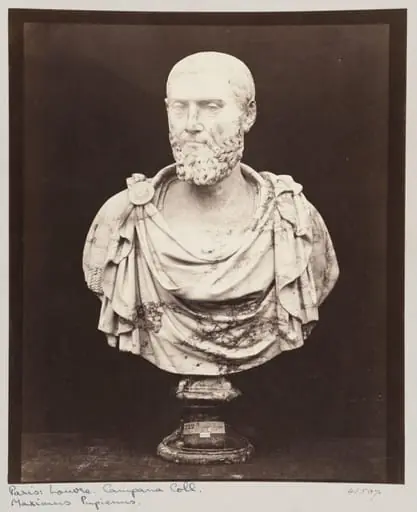
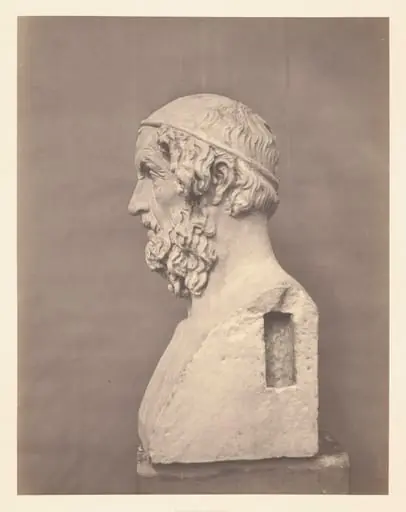
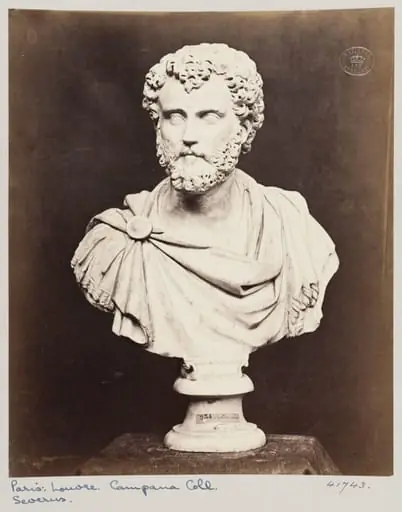
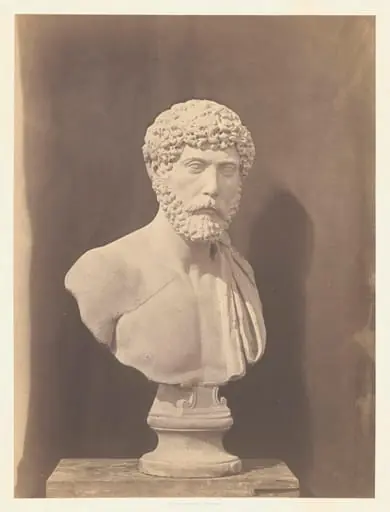
This 1855 photograph by Roger Fenton captures a classical stone bust of an elderly male figure, rendered in sepia tones. The subject is posed on a modest pedestal against a neutral backdrop, with lighting that emphasizes the texture and form of the carved stone. The image reflects Fenton’s early interest in documenting sculpture as part of a broader cultural archive, rather than as a portrait of a specific individual.
Subject & Meaning
The bust depicts an idealized male figure, likely representing a philosopher or statesman from antiquity, identified by the beard, draped garment, and solemn expression. The absence of identifying inscriptions or contextual details suggests the intent was not to honor a named historical person, but to preserve the aesthetic and formal qualities of classical sculpture as a cultural artifact.
Technique & Style
Fenton employed a large-format camera and long exposure to capture fine surface details of the stone, using natural light to render subtle gradations in tone. The composition is frontal and centered, avoiding dramatic shadows or decorative elements. The sepia toning, typical of mid-19th-century photographic processes, enhances the sense of historical distance and material permanence.
History & Provenance
Created during Fenton’s early career, this photograph likely originated from his efforts to document sculptures in British collections. It may have been part of a series commissioned to support educational or institutional efforts in art history. The work entered the Victoria and Albert Museum’s collection as part of its foundational holdings in photographic documentation of decorative arts.
Context
In the 1850s, photography was increasingly used to record and disseminate images of classical sculpture, aiding academic study and public access. Fenton’s work aligned with broader Victorian interests in antiquity and the standardization of visual knowledge. This image reflects a shift from hand-drawn copies to mechanical reproduction as a tool for cultural preservation.
Legacy
Fenton’s photograph contributed to the growing practice of using photography to archive sculpture, influencing later museum documentation methods. While the bust itself remains unidentified, the image endures as an early example of how photography mediated classical ideals for modern audiences, bridging art history and technological innovation.
Artist & collection