Artwork
Heroic Head
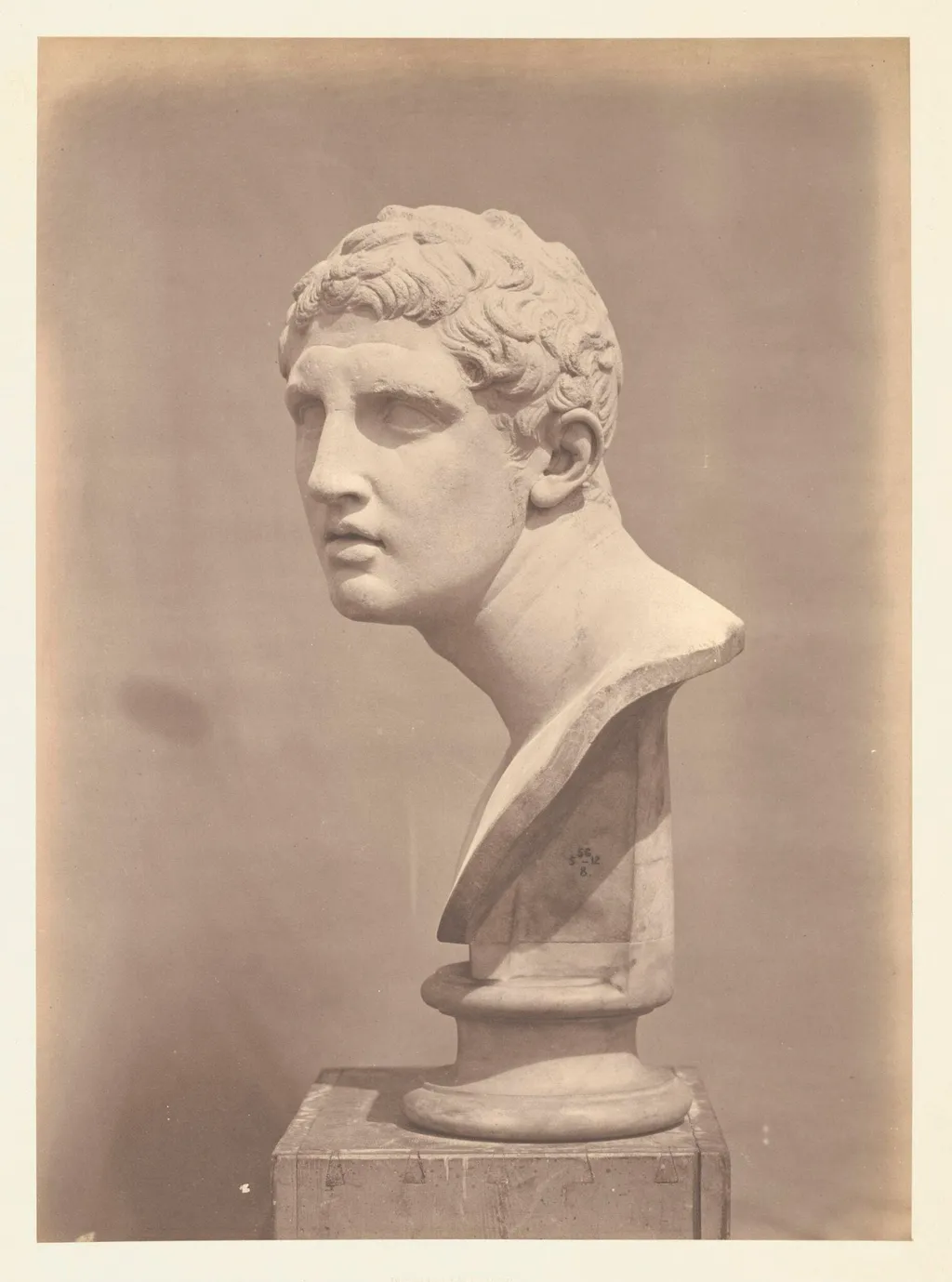
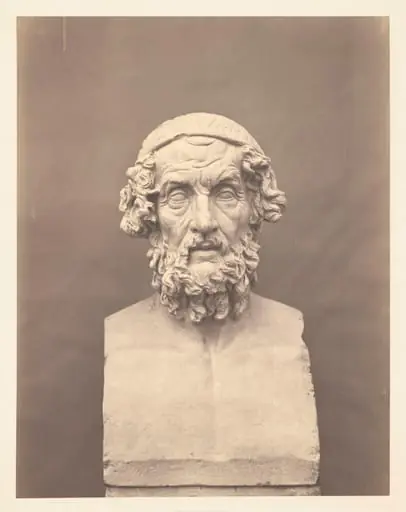
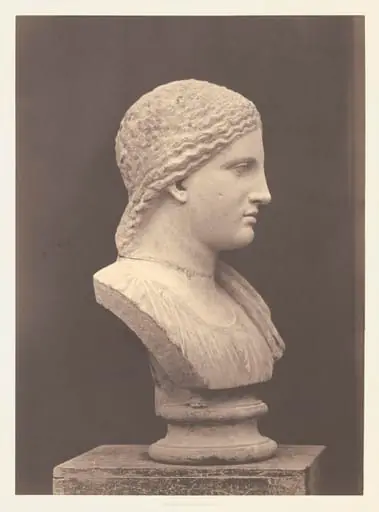
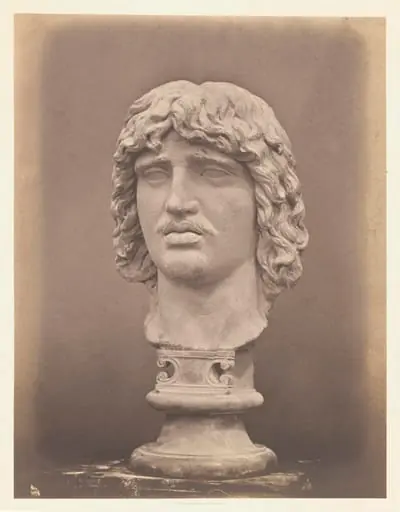
Heroic Head is a photographic photography by the Impressionist artist Roger Fenton. It dates from 1855 and is held in the collection of the Victoria and Albert Museum. A sepia-toned photograph from 1855 depicts a stone bust of a man, captured in profile against a neutral backdrop.
About this work
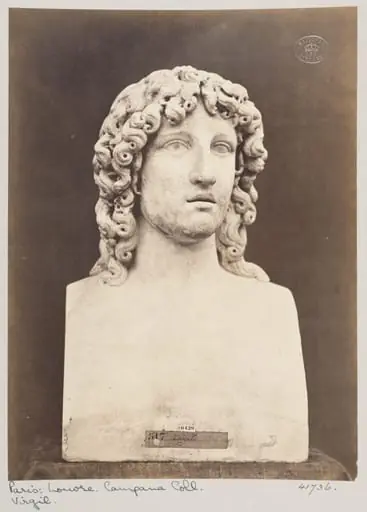
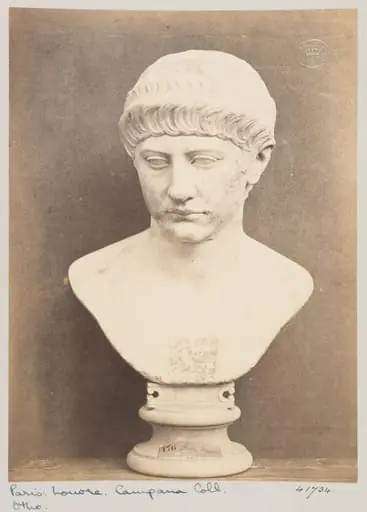
This is a photo of a stone bust on a pedestal. The bust shows a man’s head turned slightly to the side, with wavy hair and a calm face. The stone looks smooth, and the neck flares out just below the head.
The photo itself is grainy, like an old black-and-white snapshot. That’s because it’s from 1855, when cameras were new.
Next, check out the Victoria and Albert Museum to see this bust in person.
Overview
A sepia-toned photograph from 1855 depicts a stone bust of a man, captured in profile against a neutral backdrop. The image is rendered with the soft grain typical of early photographic processes, reflecting the technical limitations of mid-19th-century camera equipment. The bust rests on a simple rectangular base, its form isolated to emphasize sculptural detail over environmental context.
Subject & Meaning
The bust portrays a male figure with wavy hair and a composed, serene expression, suggesting an idealized or classical representation rather than a specific historical individual. The calm demeanor and smooth modeling of the face align with 19th-century conventions of heroic or philosophical portraiture, evoking timeless qualities of dignity and introspection rather than individual identity.
Technique & Style
The photograph employs natural light and a shallow depth of field to highlight the bust’s contours, with subtle tonal gradations enhancing the stone’s smooth texture. The grainy surface and muted palette are characteristic of early salted paper prints, where long exposures and low sensitivity film resulted in soft, atmospheric images that prioritized form over sharp detail.
History & Provenance
Created in 1855, the photograph documents a sculptural work likely produced during a period of renewed interest in classical antiquity. Its existence as a photographic record suggests it was made for study, collection, or dissemination among artists and institutions. The original bust is held by the Victoria and Albert Museum, indicating its significance in 19th-century artistic circles.
Context
In the mid-1800s, photography emerged as a tool for documenting sculpture, enabling wider access to artworks beyond their physical locations. This image reflects a broader trend in which museums and collectors used photographs to archive and circulate classical-inspired statuary, bridging the gap between academic art and emerging visual technologies.
Legacy
The photograph preserves a moment in the transmission of classical ideals through both sculpture and new media. As one of the earliest photographic records of such a bust, it illustrates how technology reshaped the study and appreciation of art, laying groundwork for modern museum documentation practices and the archival role of photography in art history.
Artist & collection