Artwork
Interior of an Inn, with Figures in Seventeenth-Century Costume
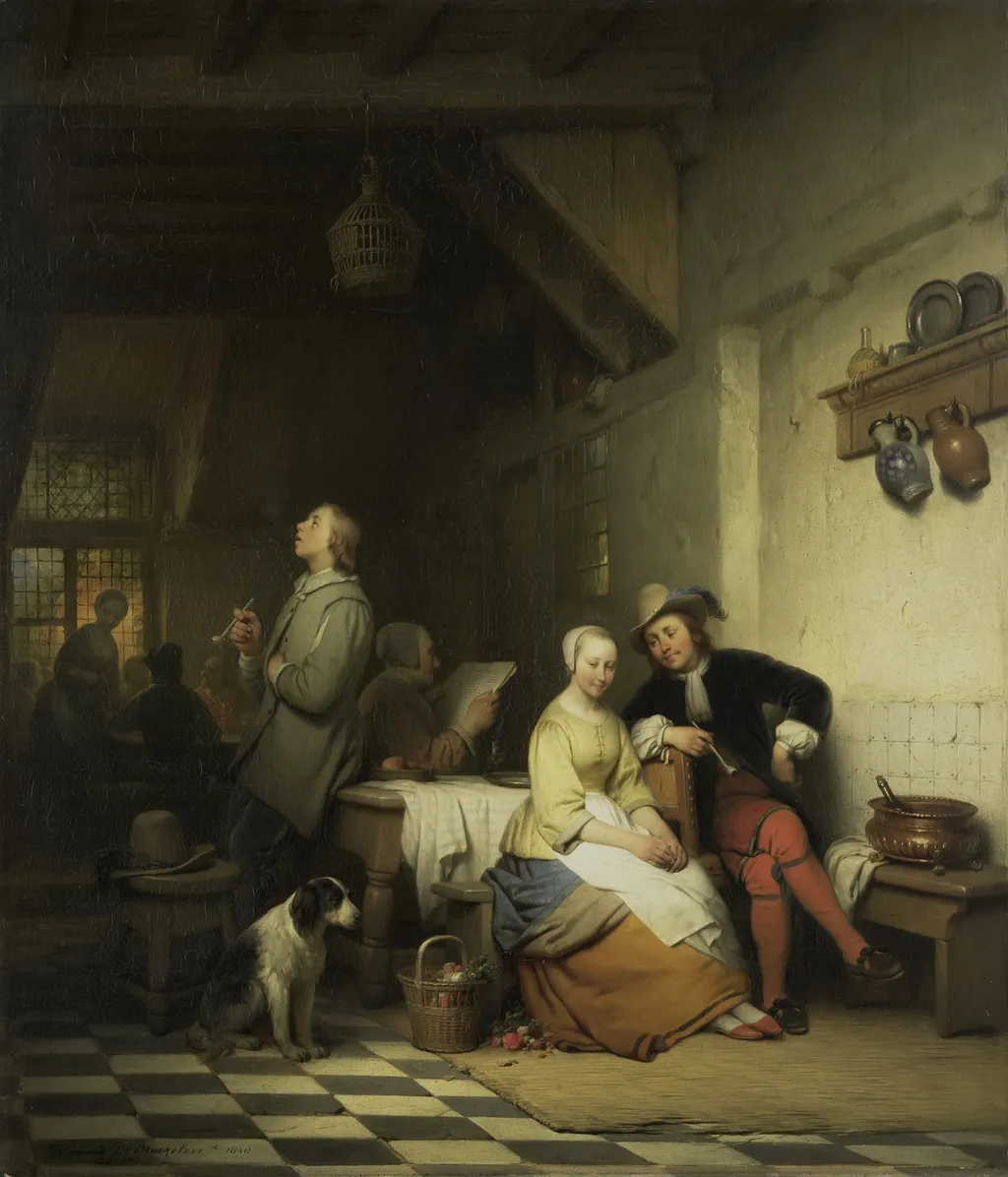
Interior of an Inn, with Figures in Seventeenth-Century Costume is an oil painting by Ferdinand de Braekeleer the Elder. It dates from 1848 and is held in the collection of the Rijksmuseum.
About this work
Overview
Painted in 1848 by Ferdinand de Braekeleer the Elder, this oil-on-canvas work depicts a quiet interior scene set in a 17th-century Flemish inn.
Painted in 1848 by Ferdinand de Braekeleer the Elder, this oil-on-canvas work depicts a quiet interior scene set in a 17th-century Flemish inn. Though created in the 19th century, the painting deliberately evokes an earlier era through costume and setting. De Braekeleer, known for his meticulous genre scenes, uses this work to explore domestic life with historical sensitivity, blending observation with nostalgic reconstruction.
Subject & Meaning
Five figures, dressed in period-appropriate clothing, engage in quiet, routine activities: a woman mends fabric, a man leans toward her in conversation, a youth holds a pipe, and two others tend to chores in the background. A dog rests near the hearth. The scene conveys no dramatic event, instead emphasizing the dignity of ordinary moments. The inclusion of a birdcage and household vessels suggests a lived-in space, reinforcing themes of domestic continuity and quiet labor.
Technique & Style
De Braekeleer employs subtle chiaroscuro to model forms and define spatial depth, with light entering from the left to illuminate faces and textures. The checkered floor and wooden shelves anchor the composition, while careful rendering of fabric folds, fur, and ceramic surfaces adds tactile realism. Brushwork remains controlled, avoiding theatricality; details like the steam from a pot or the glint on a jug are rendered with restrained precision, enhancing the scene’s authenticity.
History & Provenance
The painting entered the Rijksmuseum’s collection in the 19th century, likely acquired during a period of renewed interest in Flemish genre traditions. De Braekeleer’s reputation as a recorder of historical interiors contributed to its institutional recognition. Its preservation reflects 19th-century curatorial priorities that valued historical accuracy and domestic narrative in painting, aligning with broader European trends in genre art.
Context
Created during a time when Romanticism and historicism influenced Belgian art, this work responds to a cultural fascination with the past. While contemporaries painted grand historical events, de Braekeleer turned to intimate, uneventful moments, drawing from earlier Dutch and Flemish traditions. His choice to depict 17th-century attire in a 19th-century studio reflects a deliberate act of historical reimagining, not documentary accuracy.
Legacy
Though not widely known outside Belgium, the painting exemplifies 19th-century Flemish genre painting’s quiet commitment to historical detail and everyday observation. It stands as a testament to artists who sought meaning in the mundane, preserving the rhythms of pre-industrial life through careful composition and restrained technique. Its presence in the Rijksmuseum ensures continued study of how historical identity was visually reconstructed in the modern era.
Own this work as a print
Artist & collection
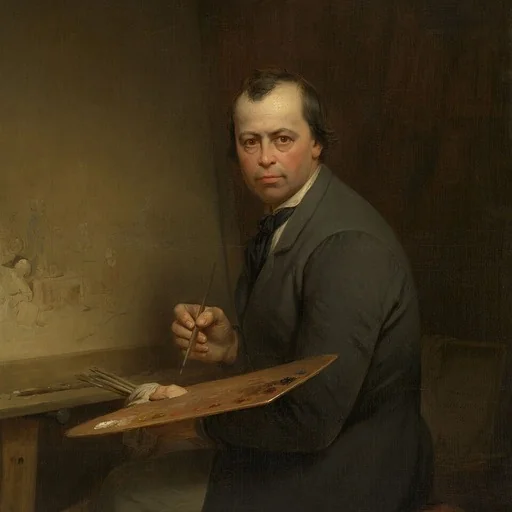
Artist
Ferdinand de Braekeleer the Elder
Ferdinand de Braekeleer (12 February 1792 – 16 May 1883), sometimes spelled as Ferdinand de Braeckeleer, was a Flemish painter and printmaker.

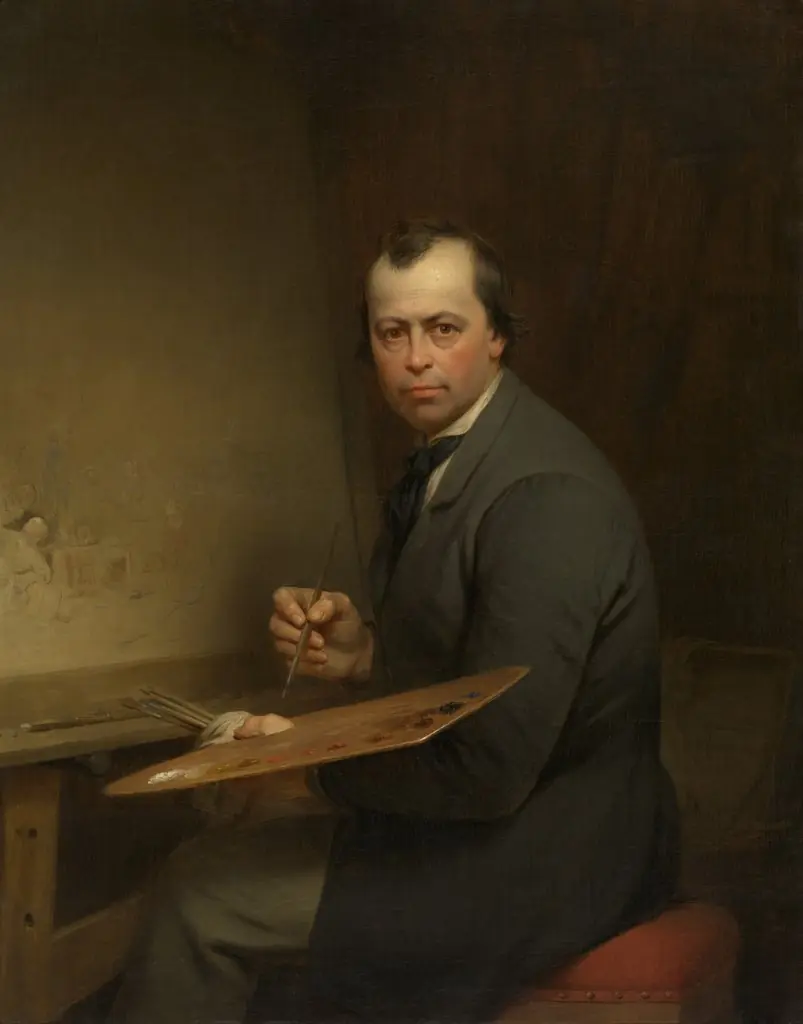 Self Portrait
 Interior of an Inn, with Figures in Seventeenth-Century Costume
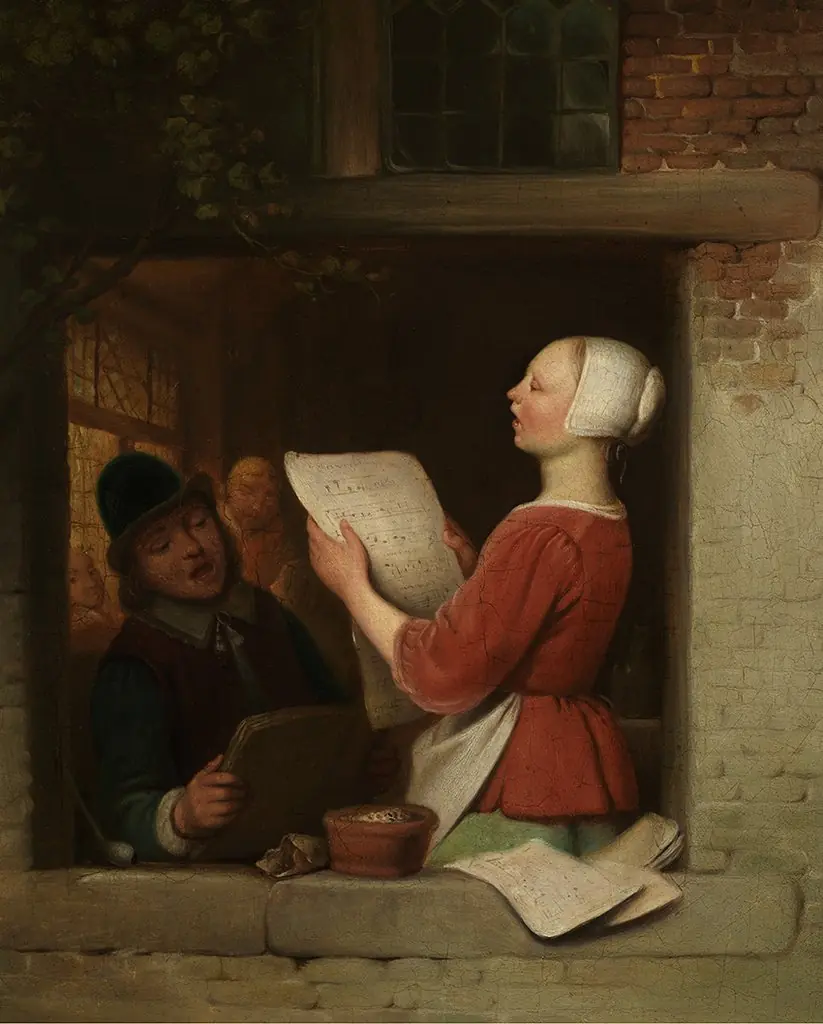 De zangers
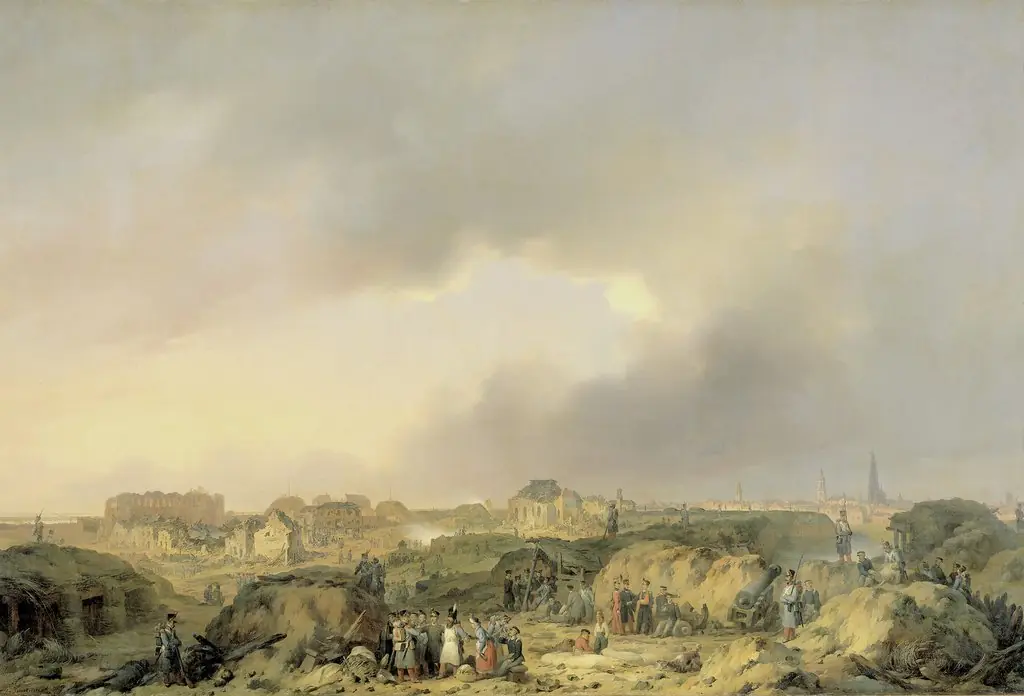 The Citadel of Antwerp shortly after the Siege of 19 November-23 December 1832, and the Surrender of the Dutch Garisson to the French
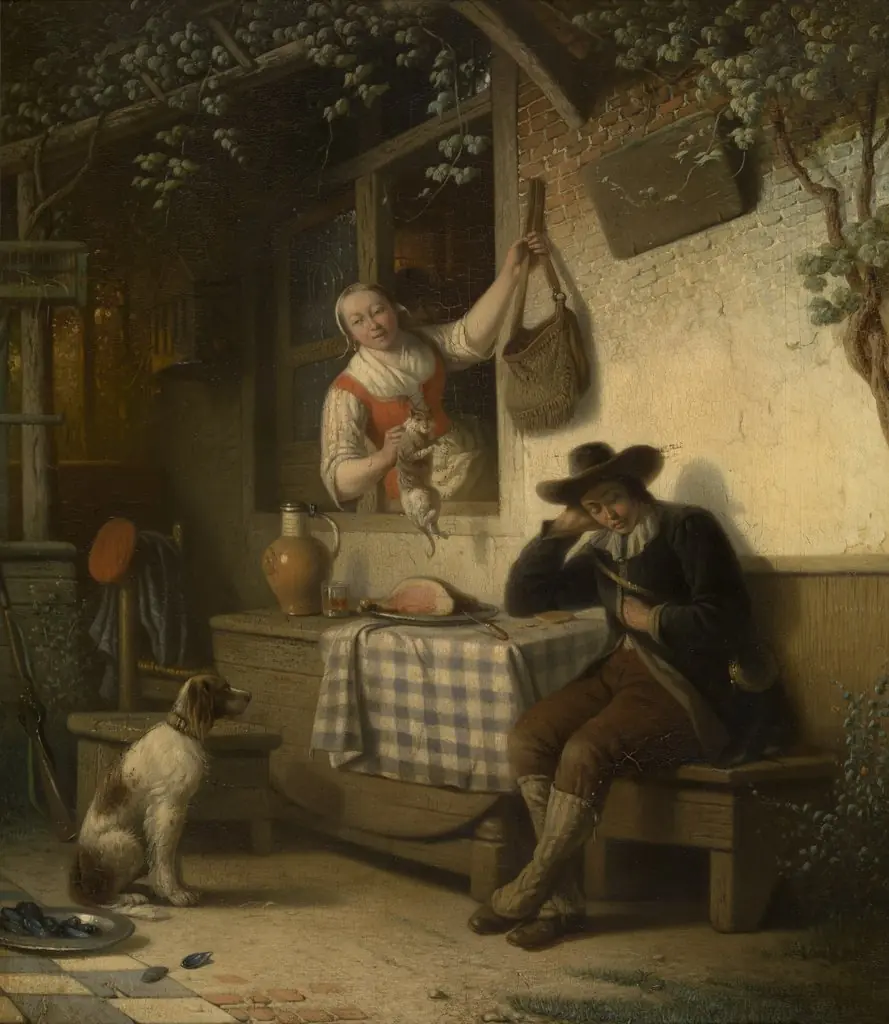 Resting Hunter
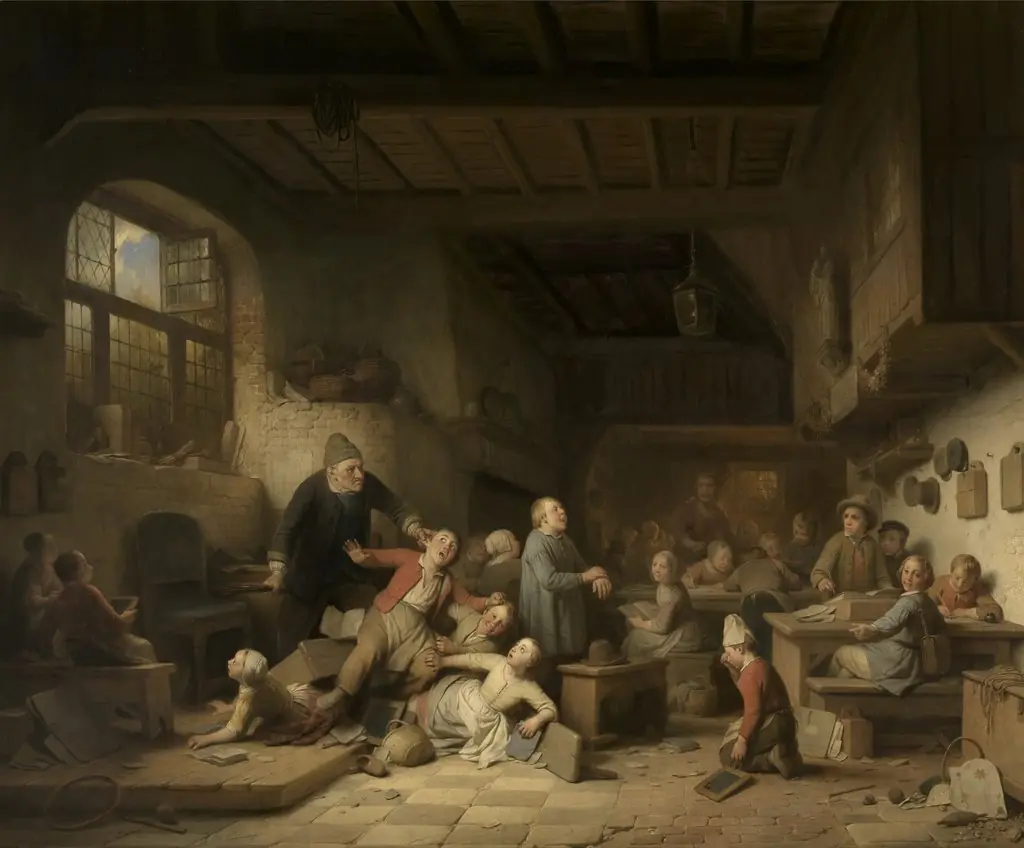 The Village School
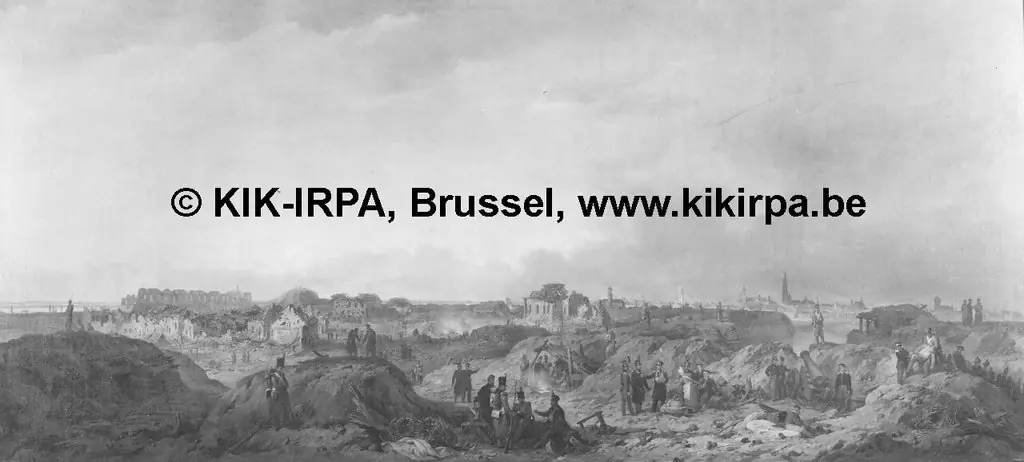 The Antwerp Castle in 1831
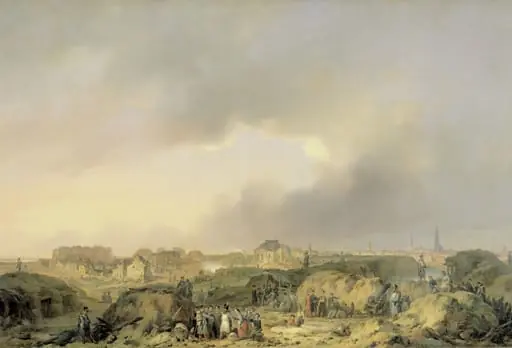 The Citadel of Antwerp shortly after the Siege of 19 November-23 December 1832, and the Surrender of the Dutch Garisson to the French
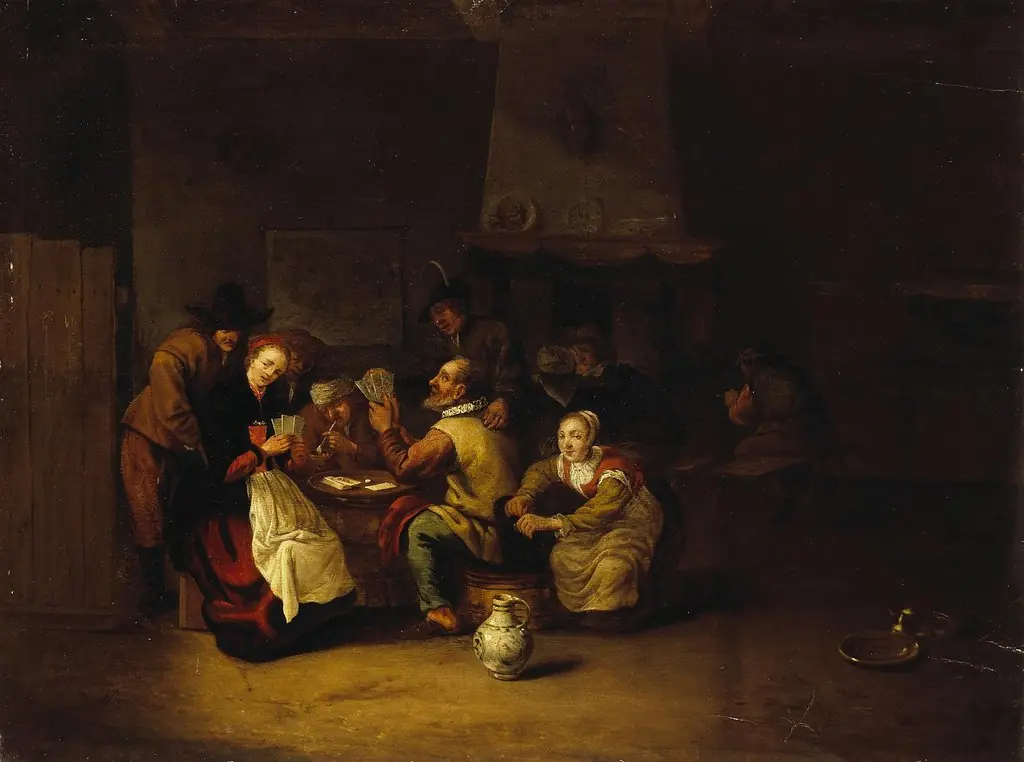 Card-Playing
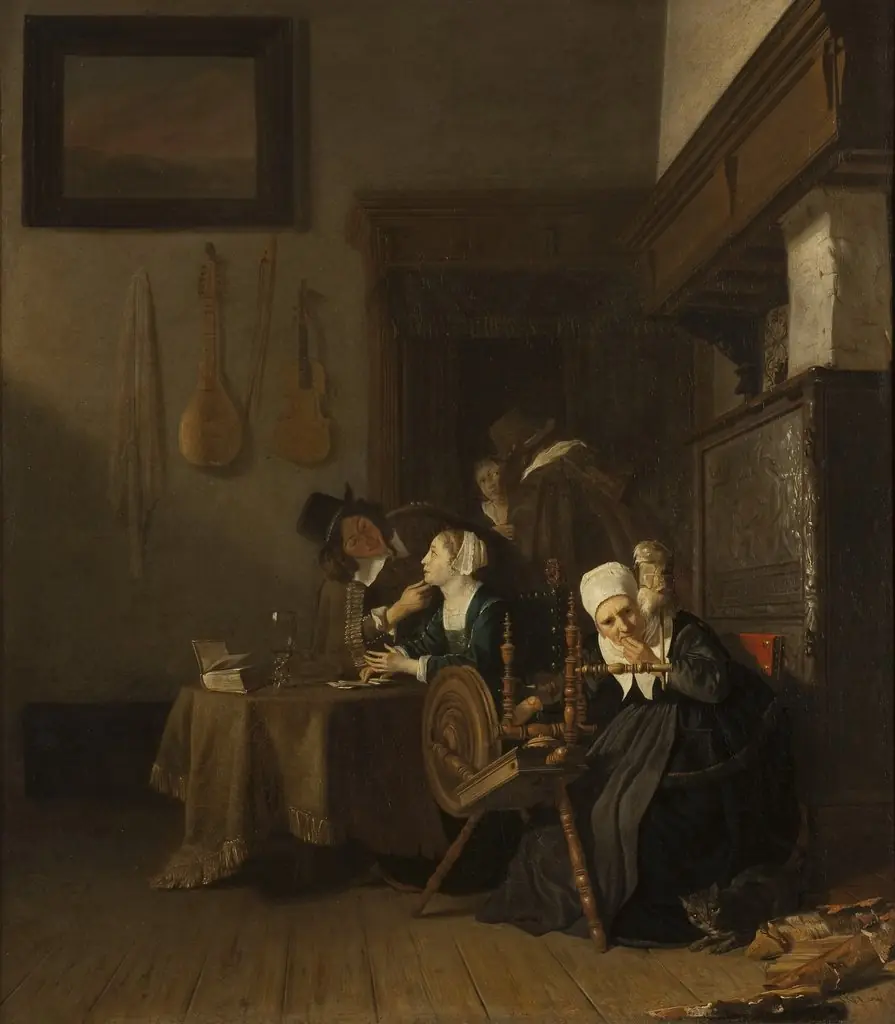 Indulgent Old Lady
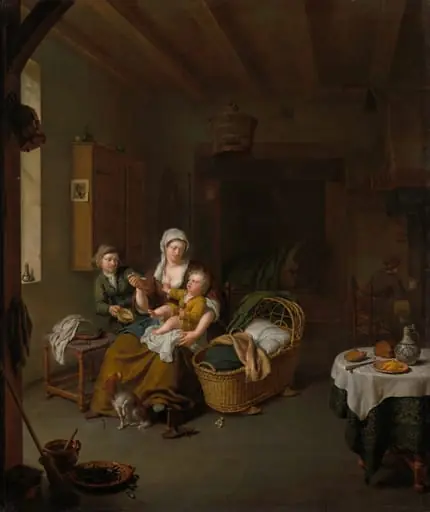 A Mother Feeding her Child (The Happy Mother)
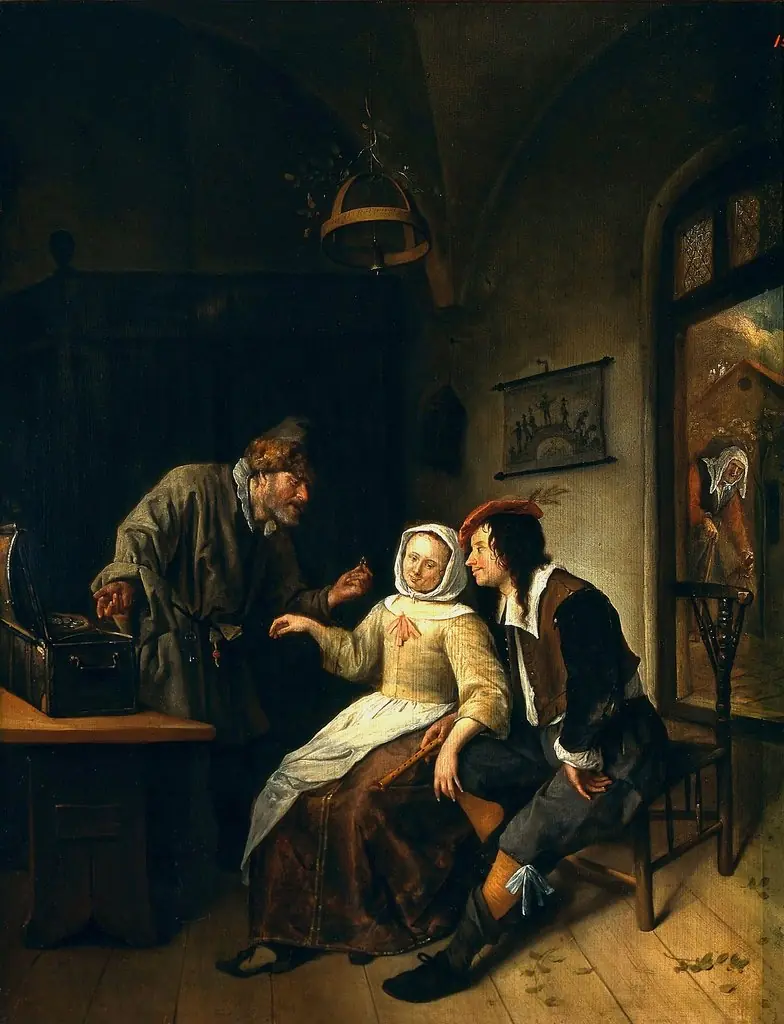 Choice between richness and youth
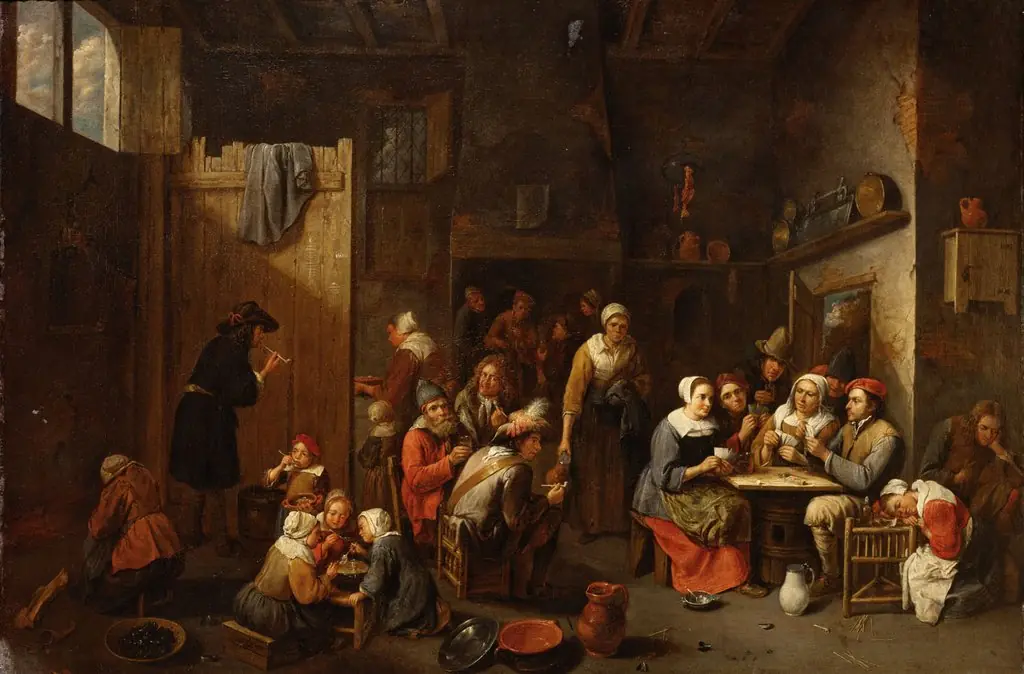 Bauernwirtschaft
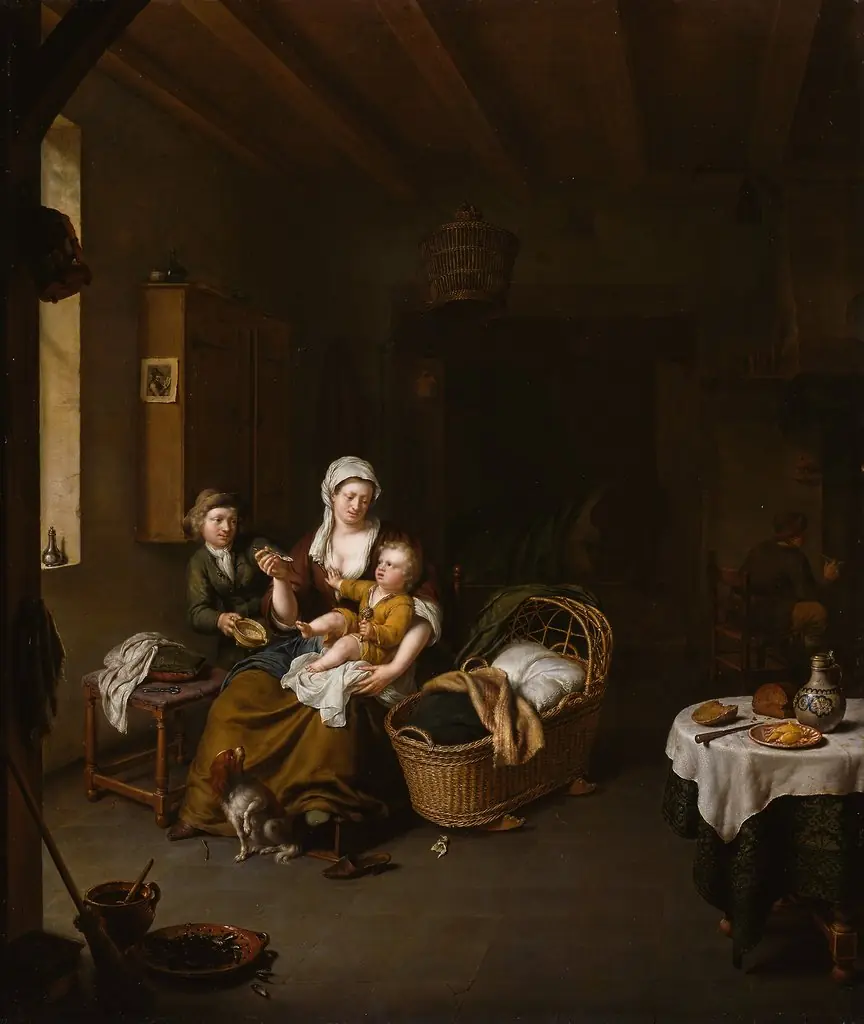 A Mother Feeding her Child (The Happy Mother)
 Rauchende Bauern
 Interior of an inn with an old man amusing himself with the landlady and two men playing backgammon, known as 'Two kinds of games'
 A Couple in an Interior