Artwork
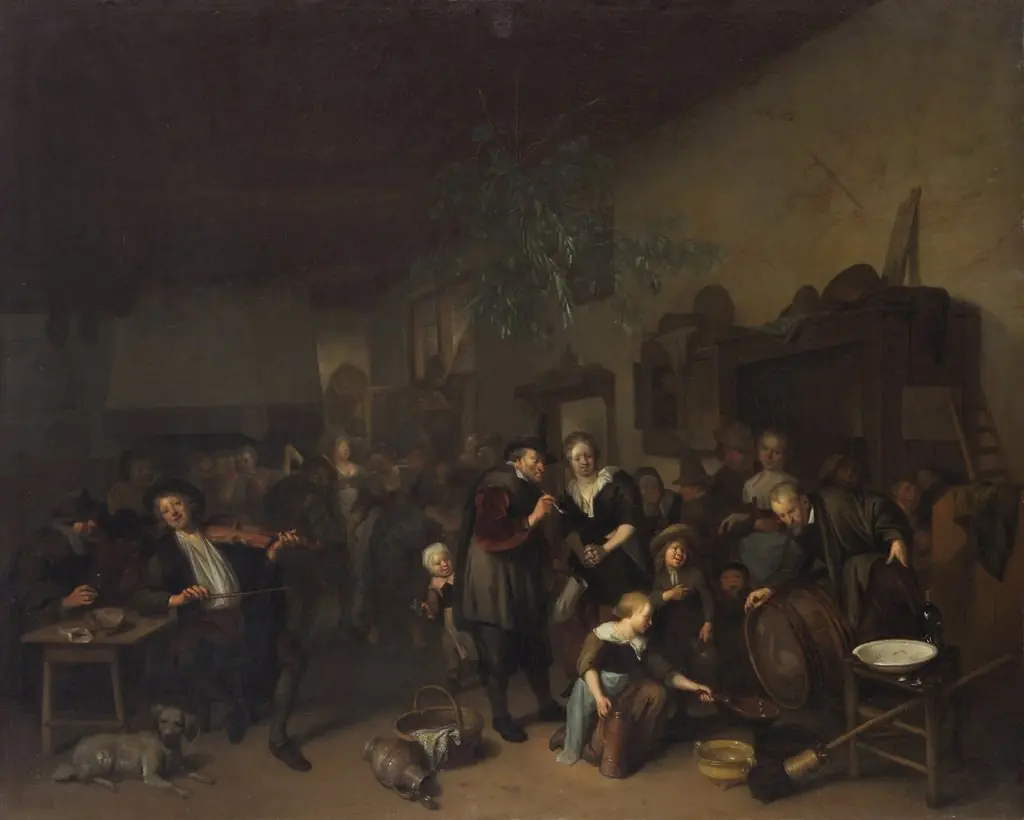
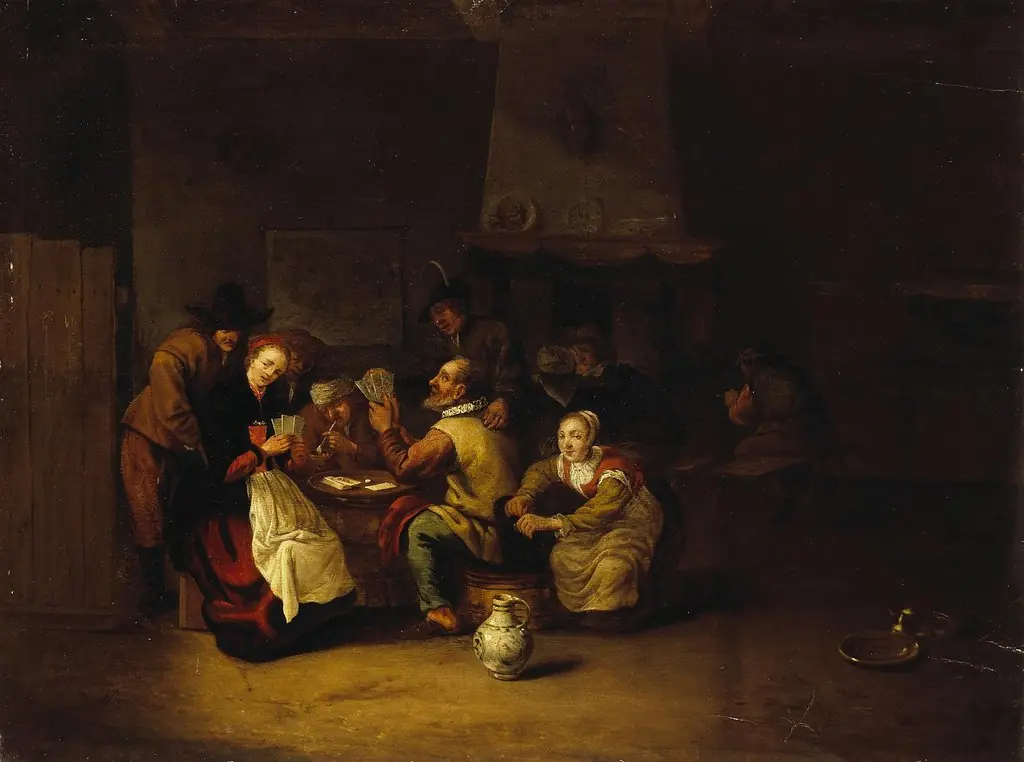
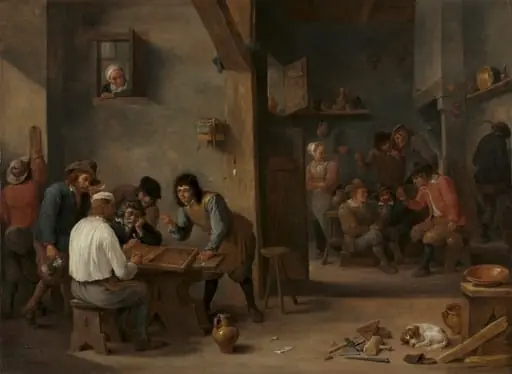
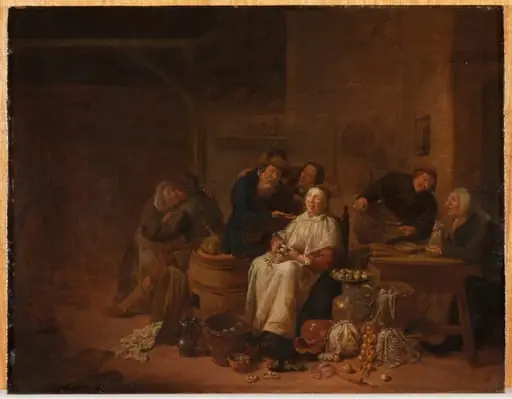
Interior of an inn with an old man amusing himself with the landlady and two men playing backgammon, known as 'Two kinds of games'
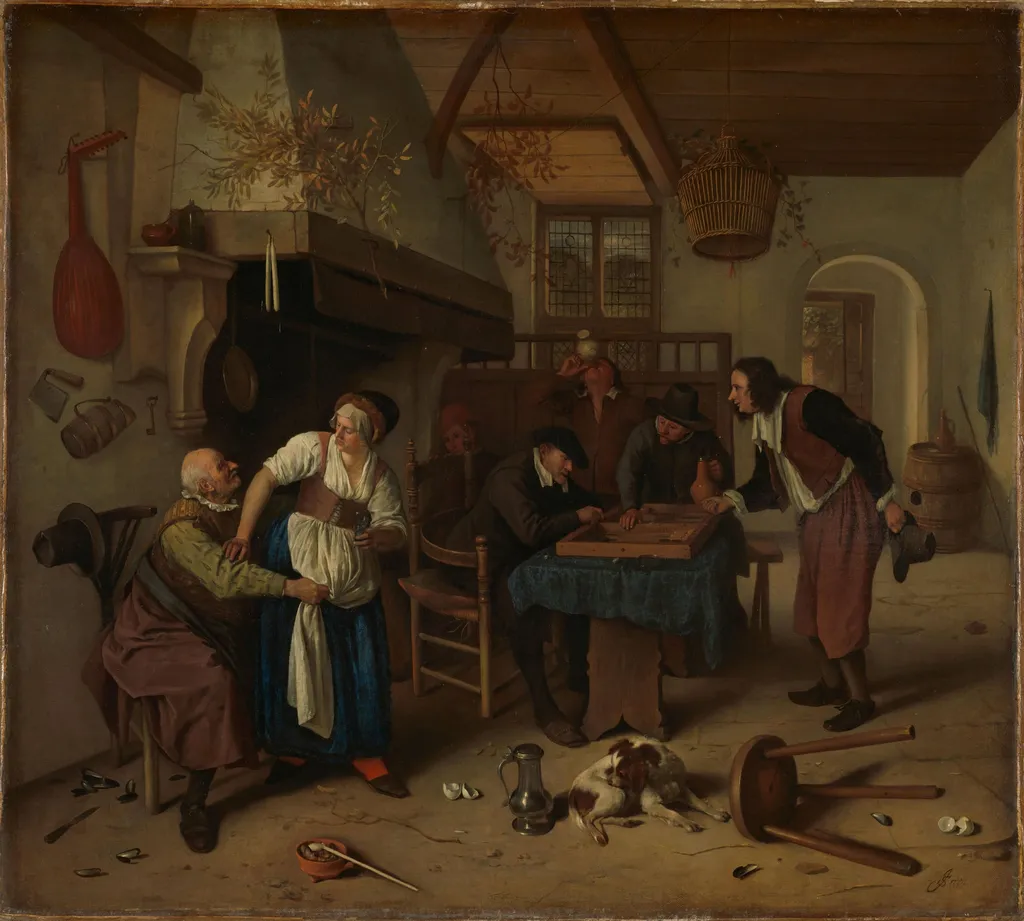
Interior of an inn with an old man amusing himself with the landlady and two men playing backgammon, known as 'Two kinds of games' is an unspecified painting by the Dutch Golden Age artist Unknown. It dates from 1670 and is held in the collection of the Rijksmuseum. This 17th-century Dutch painting depicts a lively interior scene of an inn, capturing the everyday lives of its patrons in a candid manner.
About this work
Overview
This 17th-century Dutch painting depicts a lively interior scene of an inn, capturing the everyday lives of its patrons in a candid manner.
Subject & Meaning
The scene contrasts two forms of 'play': a flirtatious old man engaging with the landlady, and two men immersed in a backgammon game, highlighting the coexistence of social interaction and leisure activities.
Technique & Style
The artist employed a realistic approach, avoiding idealization in favor of portraying the subjects' natural states, including wrinkles and clutter, creating a sense of unposed authenticity.
History & Provenance
While the exact artist and date are not specified, the work is characteristic of 17th-century Dutch Golden Age painting, with the Rijksmuseum housing similar works of this era.
Context
The setting, complete with a hearth, lute, and discarded food shells, evokes a typical Dutch tavern of the time, offering a glimpse into the daily life and ambiance of such establishments.
Artist & collection

 Domestic Scene
 Giacomo and Cardinal Marco, investing Andrea, Abbot of San Zeno, with his Benefice
 The Nymph of Fontainebleau
 Portrait of a Woman
 Madonna and Child with Saints in the Enclosed Garden
 Venus and Minerva
 Family Group of Four on Sofa
 Wall painting from Room H of the Villa of P. Fannius Synistor at Boscoreale