Artwork
Untitled
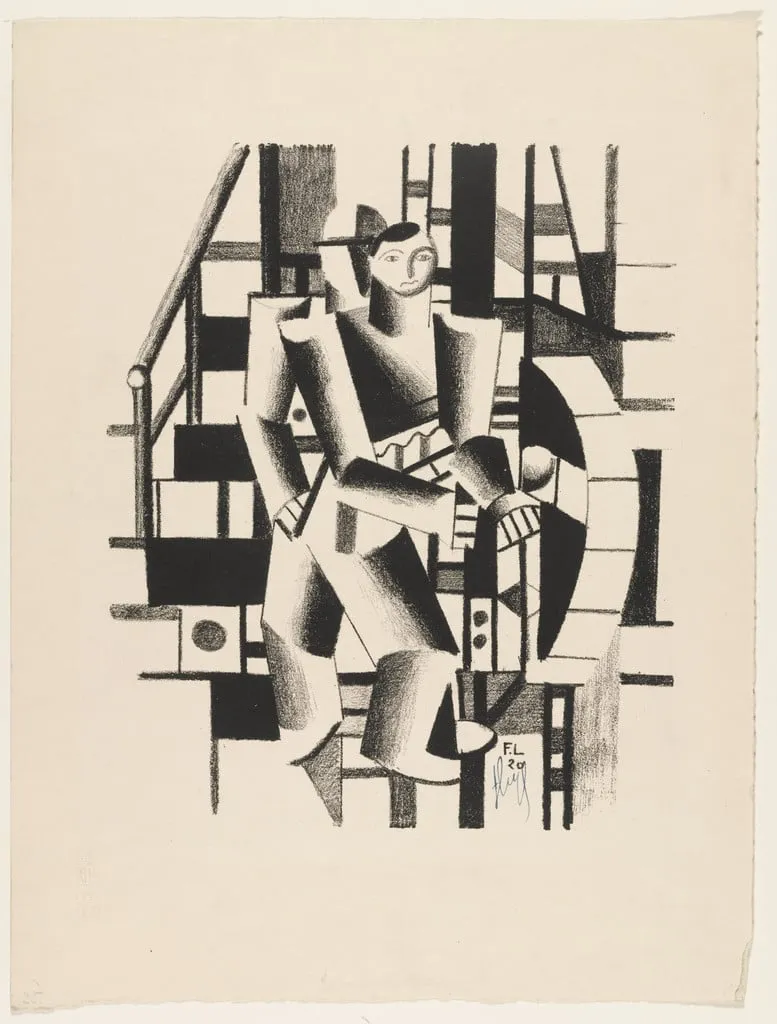
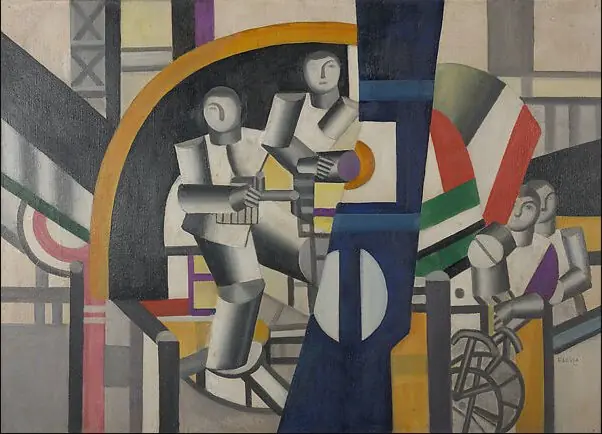
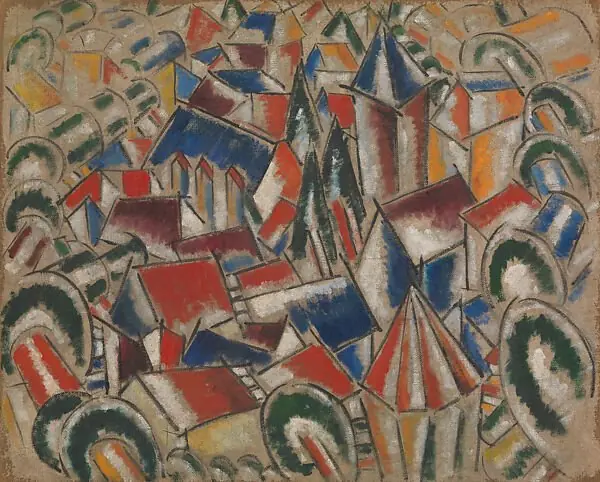
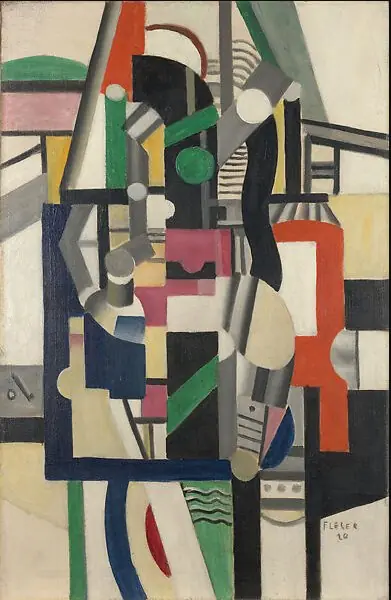
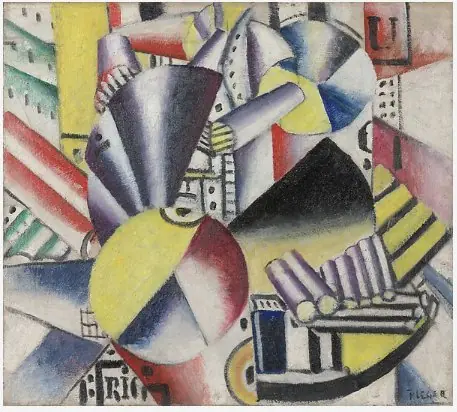
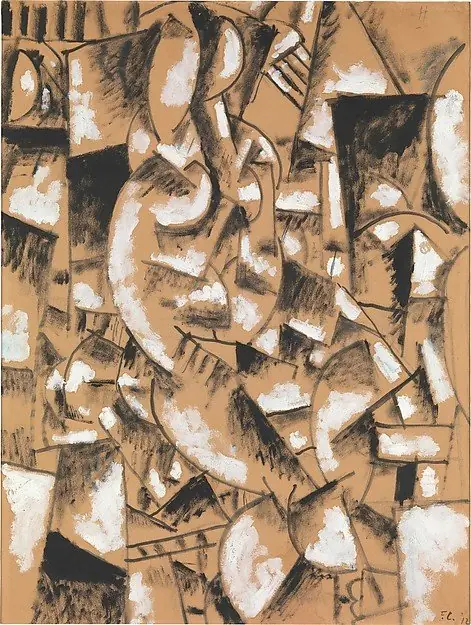
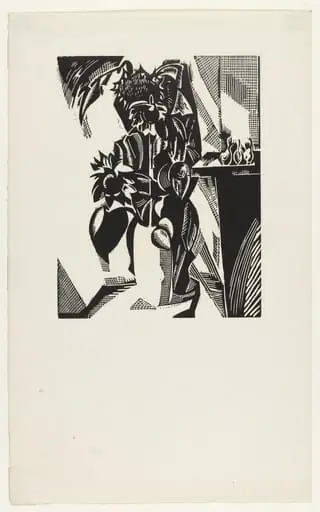
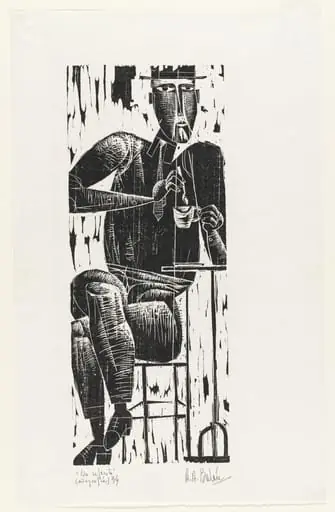
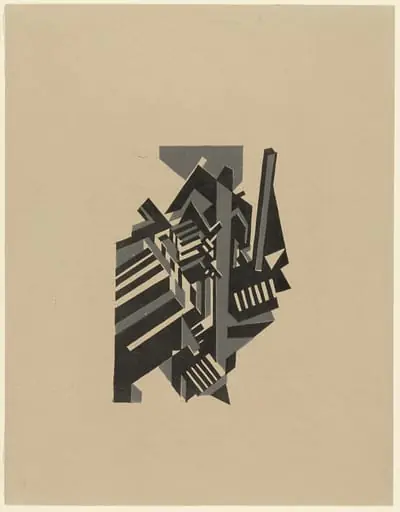
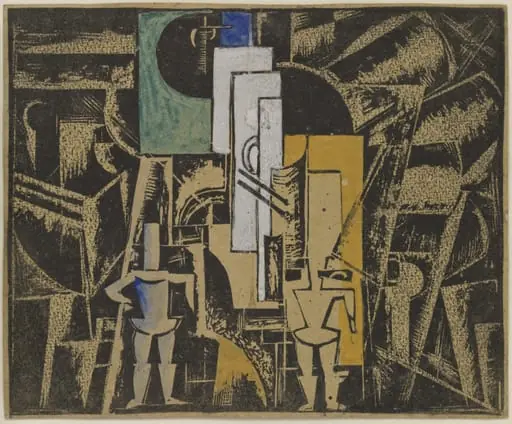
Untitled is an ink print by Fernand Léger. It dates from 1920 and is held in the collection of the Museum of Modern Art.
About this work
Overview
Fernand Léger created this black-and-white lithograph in 1920. It is part of The Museum of Modern Art’s collection. The work exemplifies his interest in mechanical forms and simplified human figures, rendered through the lithographic process. The image is composed of stark contrasts between solid black and white, with no gradations of tone, emphasizing structure over realism.
Subject & Meaning
Surrounding it, a dense network of angular lines suggests architectural elements—stairs, walls, furniture—blending interior space with the figure’s presence.
A seated figure, one leg crossed, occupies the center of the composition. The figure is rendered with minimal detail, reducing the body to essential geometric volumes. Surrounding it, a dense network of angular lines suggests architectural elements—stairs, walls, furniture—blending interior space with the figure’s presence. The scene evokes modern life’s fragmentation, where human form is absorbed into an industrial environment.
Technique & Style
Léger employed lithography, a printmaking method using a stone surface to transfer ink. The image relies on bold outlines and flat planes of black and white, avoiding shading or texture. This approach aligns with his broader stylistic shift toward mechanized forms, where organic curves are replaced by straight lines and right angles, reflecting the influence of industrial aesthetics on early 20th-century art.
History & Provenance
Created in 1920, the work emerged during Léger’s postwar period, when he increasingly focused on printmaking and abstraction. It entered The Museum of Modern Art’s collection through established acquisition channels in the mid-20th century. The piece has remained in the museum’s holdings since, consistently included in exhibitions exploring modernist printmaking and the intersection of art and industry.
Context
This print reflects the broader modernist preoccupation with mechanization and urban life in the aftermath of World War I. Léger, influenced by Cubism and the machine age, sought to depict the human figure within a constructed, geometric world. Other artists of the era, such as Delaunay and Gleizes, pursued similar themes, but Léger’s use of lithography allowed for wider dissemination of these ideas to a public audience.
Legacy
The work contributes to Léger’s reputation as a bridge between Cubist abstraction and modern graphic design. Its clarity and formal discipline influenced later generations of printmakers and illustrators interested in simplifying form. The lithograph’s emphasis on structure over narrative helped redefine the potential of print as a medium for conceptual, rather than purely representational, expression.
Artist & collection
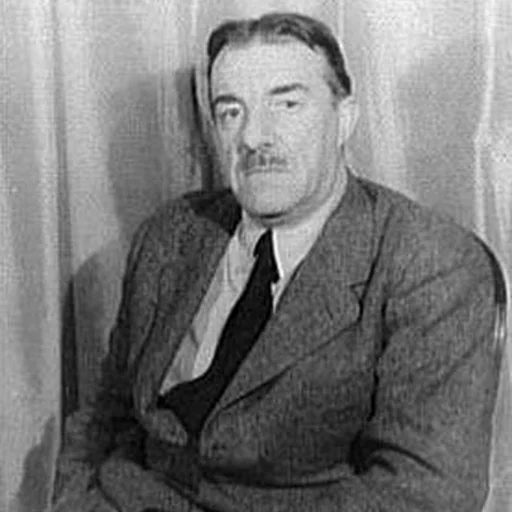
Artist
Joseph Fernand Henri Léger was a French painter, sculptor, and filmmaker. In his early works he created a personal form of cubism which he gradually modified into a more figurative, populist style. His boldly simplified…