Artwork
Untitled
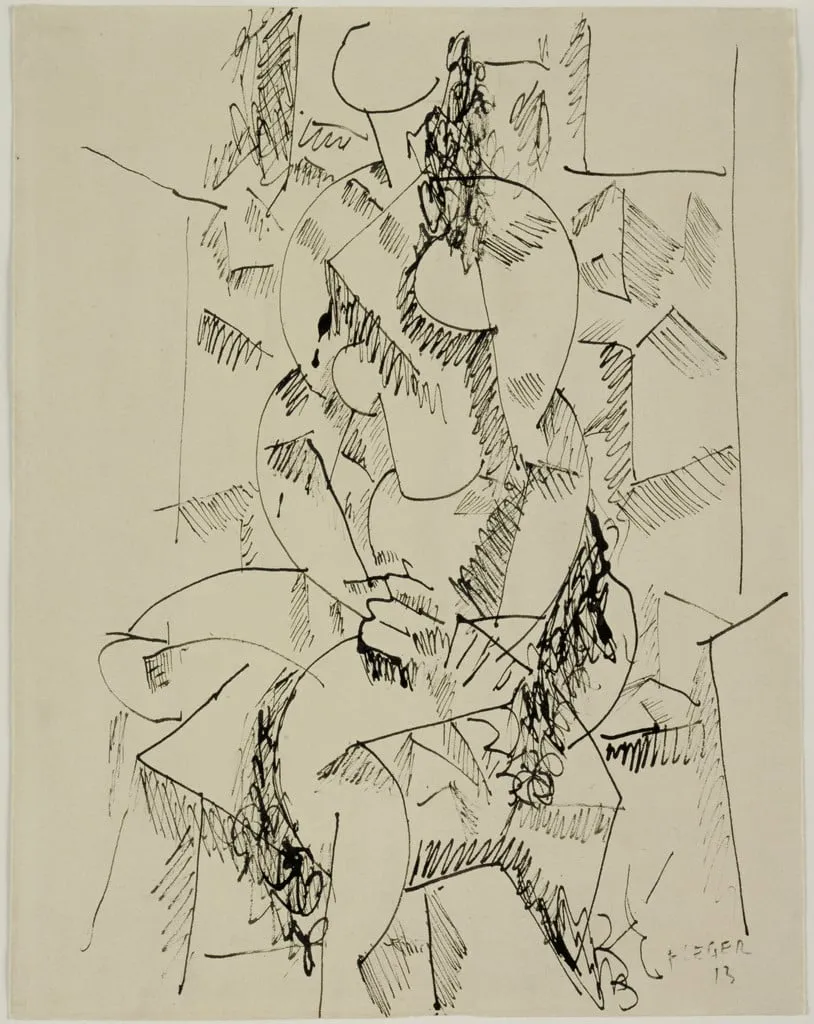
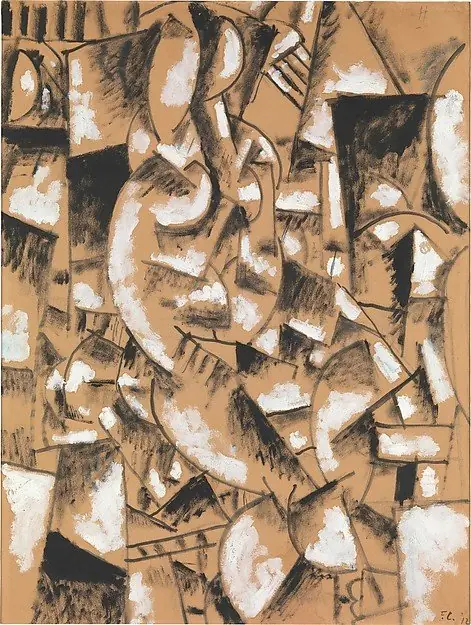
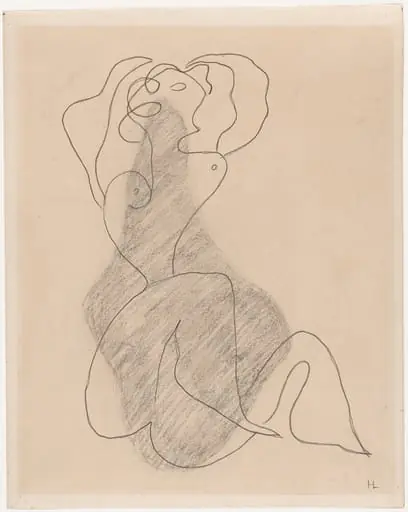
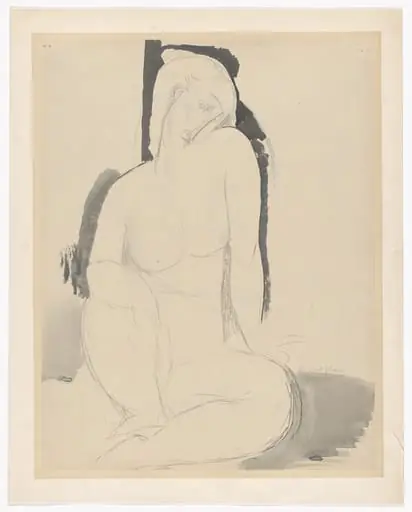
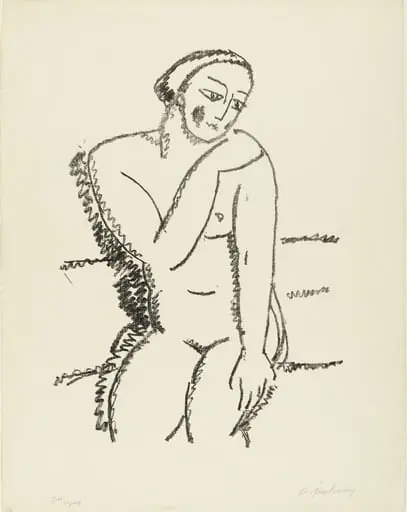
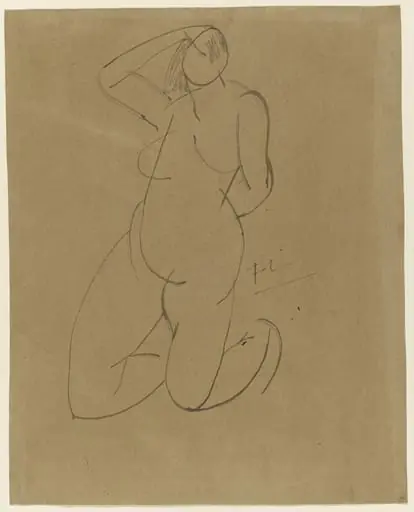
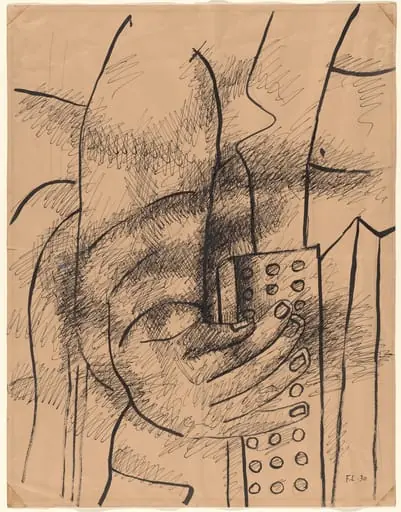
Untitled is an ink drawing by Fernand Léger. It dates from 1913 and is held in the collection of the Museum of Modern Art.
About this work
Overview
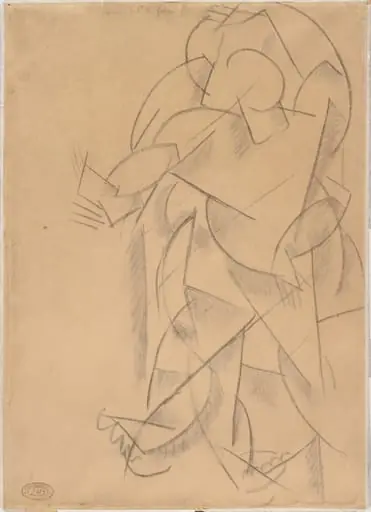
Created in 1913, this ink drawing by Fernand Léger is part of The Museum of Modern Art’s collection. Executed with rapid, energetic strokes, it captures a moment of physical entanglement between two figures. The work’s unfinished quality suggests it was made as a study rather than a finished composition, emphasizing movement and form over detail.
Subject & Meaning
Two figures are locked in close, ambiguous contact, their limbs overlapping and merging through fragmented shapes. The lack of facial features or clear identity shifts focus to the tension and interplay of bodies. The drawing evokes physical strain or intimacy without narrative context, leaving interpretation open to the viewer’s perception of motion and connection.
Technique & Style
Léger employs dense parallel lines and cross-hatching to model volume and shadow, giving the forms a sculptural weight despite their sketchy appearance. Jagged, angular shapes break the human body into geometric fragments, anticipating his later mechanical aesthetics. The background is filled with chaotic scribbles, enhancing the sense of urgency and raw spontaneity.
History & Provenance
The drawing dates from a formative period in Léger’s career, just before his full engagement with Cubism. It remained in private hands until acquired by The Museum of Modern Art, where it has been held since the mid-20th century. Its preservation as a study reflects its value in understanding the artist’s evolving visual language.
Context
Made during the early years of modernist experimentation, the work aligns with contemporaneous explorations of dynamism and fragmentation in European art. Léger was responding to industrialization and new perceptions of the body, moving away from traditional representation toward abstracted, mechanized forms that would define his mature style.
Legacy
This drawing exemplifies Léger’s transition toward a structured yet expressive approach to the human figure. Its emphasis on line, volume, and motion influenced later generations of artists exploring abstraction and the corporeal in modern art, serving as a bridge between early Cubism and his distinctive mechanical aesthetic.
Artist & collection
Artist
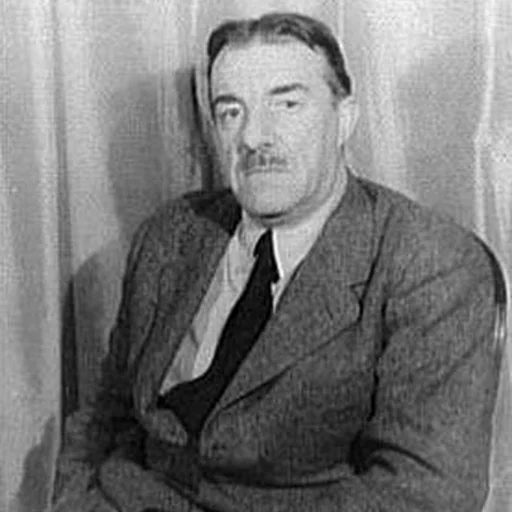
Joseph Fernand Henri Léger was a French painter, sculptor, and filmmaker. In his early works he created a personal form of cubism which he gradually modified into a more figurative, populist style. His boldly simplified…