Artwork
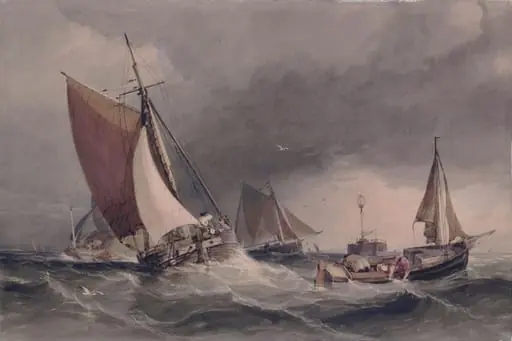
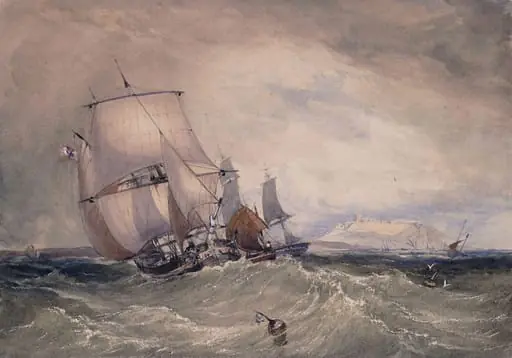
The Coming Storm: A Fishing Boat Making for Home off Whitby
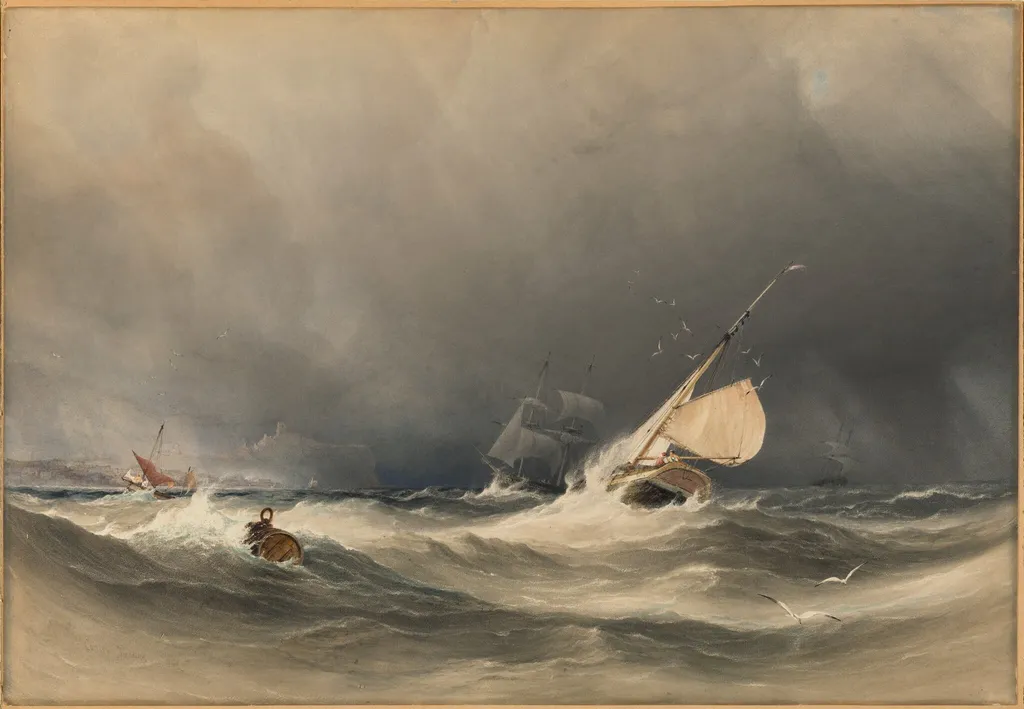
The Coming Storm: A Fishing Boat Making for Home off Whitby is a watercolor drawing by the Romanticist artist Anthony Vandyck Copley Fielding. It dates from 1840 and is held in the collection of the National Gallery of Art.
About this work
Overview
Anthony Vandyck Copley Fielding’s watercolor, The Coming Storm: A Fishing Boat Making for Home off Whitby, was executed in 1840.
Anthony Vandyck Copley Fielding’s watercolor, The Coming Storm: A Fishing Boat Making for Home off Whitby, was executed in 1840. The work is part of the National Gallery of Art’s collection in Washington, D.C. Rendered in watercolor over graphite underdrawings that have been partially scratched away, the piece measures roughly 30 × 45 cm and captures a turbulent seascape as vessels battle an approaching gale.
Subject & Meaning
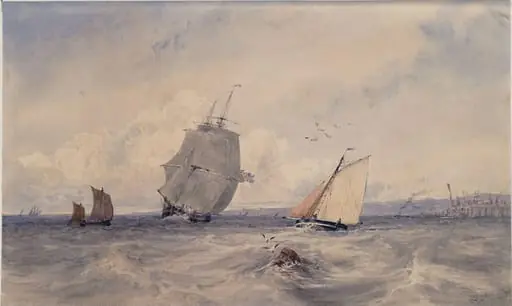
The composition depicts three vessels confronting a darkening sea off the coast of Whitby. A large sailing ship heels dramatically against the wind, a modest rowboat with two figures nears the shoreline, and a distant fishing boat with red sails drifts amid the swell. The threatening sky and churning foam convey the precariousness of maritime life and the ever‑present risk of nature’s sudden fury.
Technique & Style
Fielding employed a wet‑on‑wet watercolor approach, layering translucent glazes to build atmospheric depth. Soft, blended washes render the storm‑clouds and sea‑foam, while the underlying graphite sketch remains faintly visible where the artist has scratched back pigment. This combination of delicate color modulation and deliberate erasure creates a sense of movement and instability, emphasizing the unpredictable character of the storm.
History & Provenance
Created in 1840, the drawing entered the National Gallery of Art’s holdings in the mid‑20th century through a donation from a private collector. Its provenance prior to acquisition is documented only by the artist’s signature and the date inscribed on the work, confirming its authenticity and situating it within Fielding’s mature period of marine subjects.
Own this work as a print
Artist & collection