Artwork
At the Nore
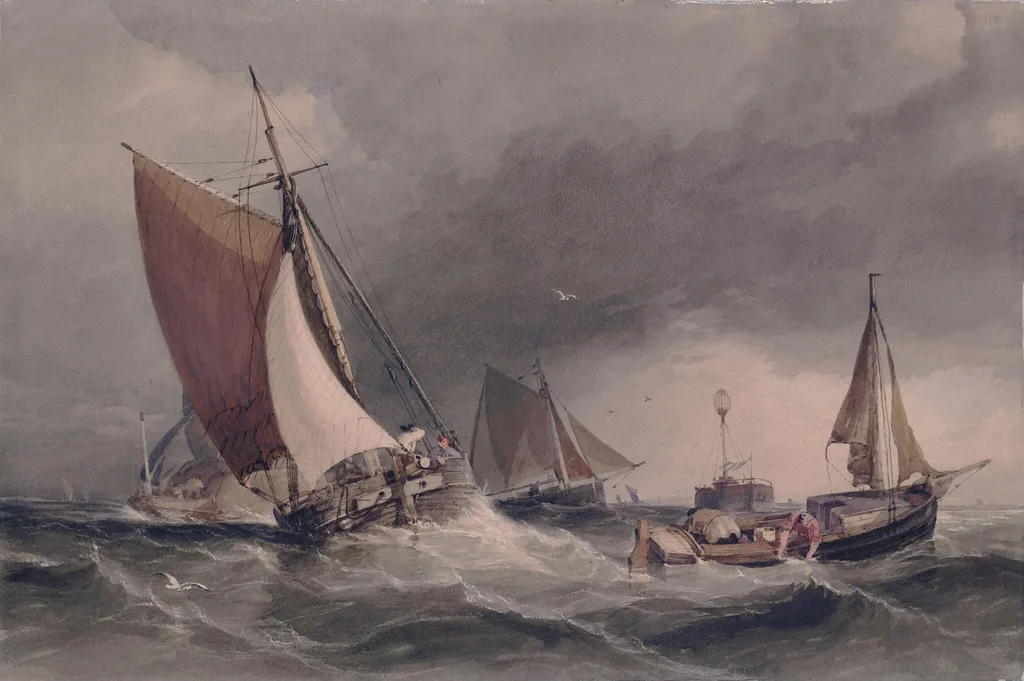
At the Nore is a watercolor work on paper by the British Romanticist artist George Chambers. It dates from 1835 and is held in the collection of the Victoria and Albert Museum.
About this work
Overview
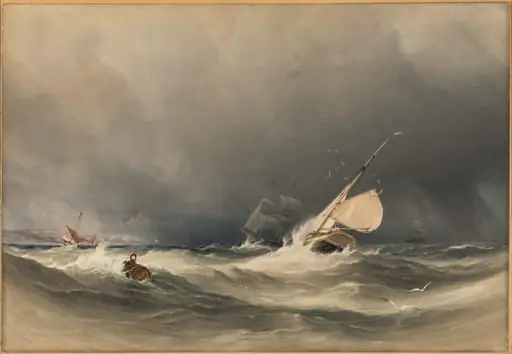
Painted in 1835 by George Chambers, this watercolour depicts a maritime scene at the Nore, a stretch of the River Thames known for its shifting tides and heavy traffic. Five vessels are shown battling turbulent waters beneath an overcast sky. The composition emphasizes movement and tension, with no land in sight, focusing entirely on the sea’s force and the boats’ fragile presence within it.
Subject & Meaning
Their tilted hulls and taut rigging convey struggle rather than triumph, reflecting the perilous reality of 19th-century seafaring.
The painting portrays working vessels caught in a sudden storm, their sails strained by the wind. The lead boat, smaller and manned, suggests a local craft or ferry, while the larger vessels behind may be merchant ships. Their tilted hulls and taut rigging convey struggle rather than triumph, reflecting the perilous reality of 19th-century seafaring. Nature is not idealized but presented as an indifferent, powerful force.
Technique & Style
Chambers employed rapid, fluid brushwork to capture the motion of wind and water. Washes of diluted pigment suggest dark, rolling clouds, while white highlights and quick strokes define breaking waves. The water’s texture is built through layered, uneven strokes rather than detail, creating a sense of immediacy. The medium’s transparency enhances the atmosphere, allowing the grey tones to feel damp and heavy.
History & Provenance
Created during Chambers’s active period as a marine painter, the work aligns with his documented focus on Thames shipping and coastal scenes. It likely originated as a commission or study for a larger piece, given its intimate scale and observational precision. No early ownership records are widely known, but it remained within British collections, reflecting its regional significance rather than public fame.
Context
In the 1830s, British artists increasingly turned to the sea as a subject that evoked both economic vitality and human vulnerability. Chambers’s work fits within a tradition of maritime art that documented real conditions rather than romanticized adventure. The stormy seascape mirrors broader cultural anxieties about industrialization’s impact on traditional seafaring life and the unpredictability of nature.
Legacy
Though not widely exhibited beyond regional galleries, this watercolour exemplifies Chambers’s skill in capturing transient atmospheric effects. It contributes to a lesser-known but vital body of British marine art that prioritized observation over spectacle. Its quiet realism offers a counterpoint to more dramatic Romantic treatments, preserving the everyday gravity of maritime labor in the early Victorian era.
Own this work as a print
Artist & collection

Artist
George Michael Chambers ORTT was the second Prime Minister of Trinidad and Tobago.

 The Coming Storm: A Fishing Boat Making for Home off Whitby
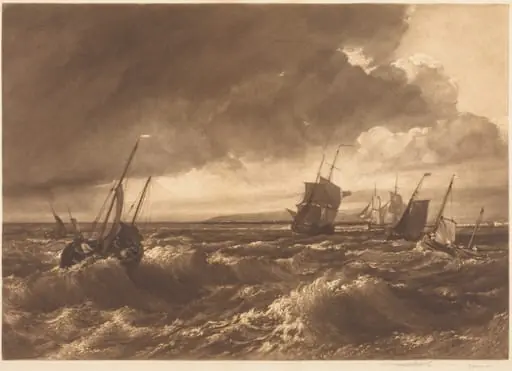 The Mouth of the Thames—Isle of Sheppey in Distance
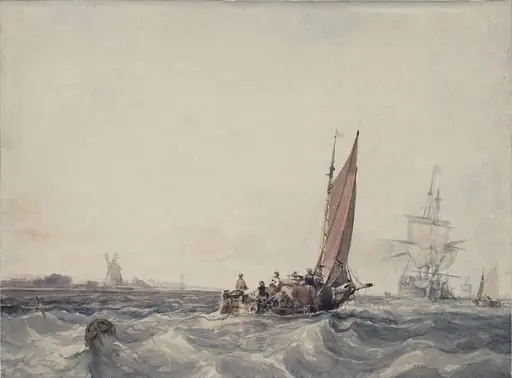 Seascape
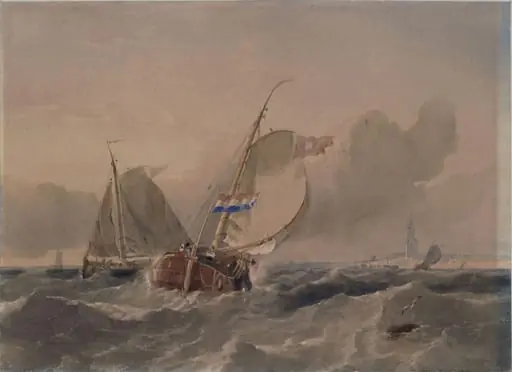 Dutch Fishing Boats in a Breeze
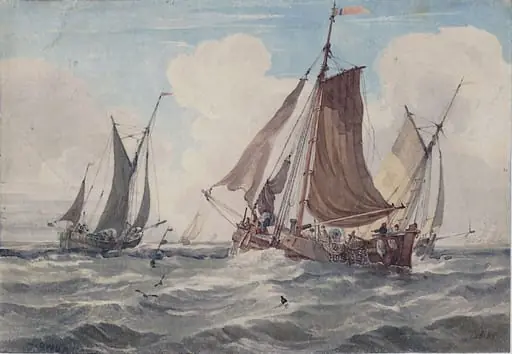 Sea piece with fishing boats
 Shipping at the Mouth of the Thames
 Seascape
 Fishing Boats Tossed before a Storm
 After the Storm
 Storm on the Meuse River
 Seascape
 Coasting Vessels with a Harbour