Artwork
Tarantella at Mergellina
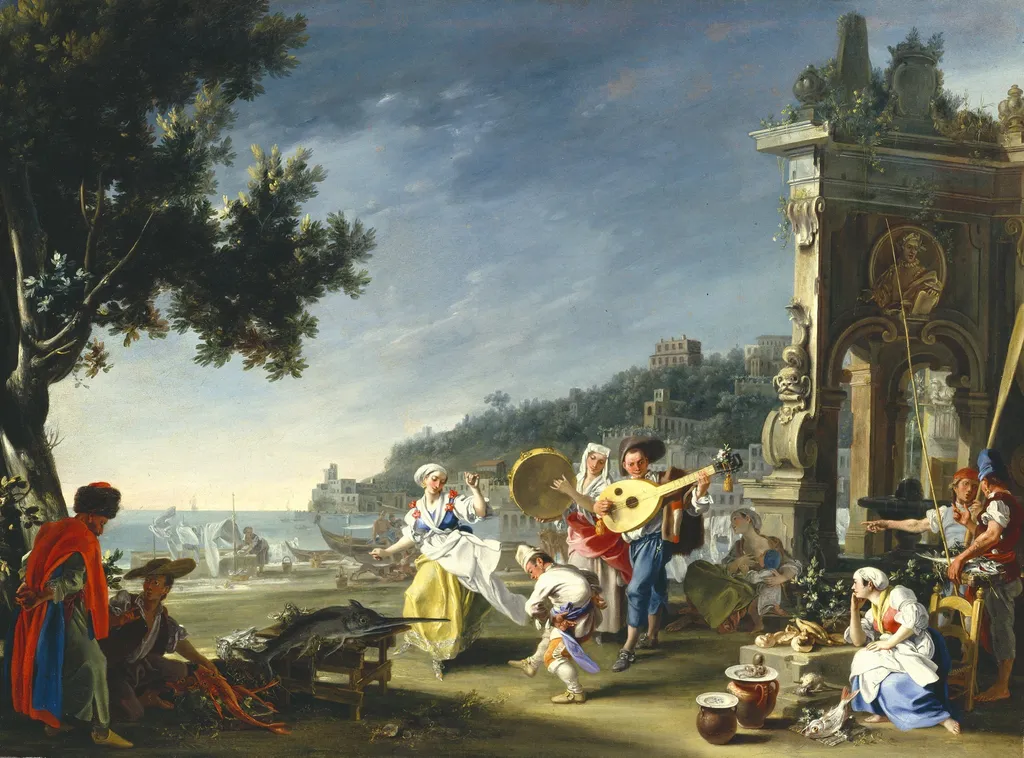
Tarantella at Mergellina is an oil painting by the Rococo painting artist Filippo Falciatore. It dates from 1750 and is held in the collection of the Detroit Institute of Arts.
About this work
Overview
Painted around 1750 by Filippo Falciatore, Tarantella at Mergellina is an oil-on-canvas work depicting a communal dance in a coastal setting. It resides in the collection of the Detroit Institute of Arts. The scene captures a moment of informal celebration, rendered with attention to motion and local costume, reflecting regional customs of 18th-century southern Italy.
Subject & Meaning
The setting suggests a seaside festival, where dance served both cultural expression and communal bonding, possibly tied to seasonal or religious observances.
The painting portrays a tarantella, a traditional Neapolitan dance often performed at social gatherings. A central couple, dressed in contrasting white and yellow garments, leads the movement, flanked by musicians playing drum and stringed instrument. The setting suggests a seaside festival, where dance served both cultural expression and communal bonding, possibly tied to seasonal or religious observances.
Technique & Style
Falciatore employs loose brushwork and vivid, saturated hues to convey energy and spontaneity. Figures are arranged diagonally across the canvas, creating rhythmic flow that mirrors the dance. Light falls naturally across the figures and landscape, enhancing depth without idealizing forms. The background, with distant boats and buildings, grounds the scene in a recognizable locale without distracting from the foreground activity.
History & Provenance
The painting entered the Detroit Institute of Arts’ collection in the 20th century, though its earlier ownership remains undocumented. It is one of few known works by Falciatore, an artist whose output was largely regional and not widely recorded in major art historical texts of the period. Its survival suggests it was valued locally before entering institutional care.
Context
In mid-18th-century Naples, folk dances like the tarantella were integral to public life, often linked to rituals meant to expel illness or celebrate harvests. Artists like Falciatore documented these customs with observational precision, offering visual records of everyday culture outside aristocratic or religious commissions. Such works contrast with the grand historical or mythological themes favored in academic circles.
Legacy
Tarantella at Mergellina stands as a rare surviving example of Neapolitan genre painting from the period. While Falciatore’s broader influence is limited, this work contributes to understanding how regional traditions were visually preserved outside major artistic centers. It remains a quiet testament to the vitality of popular culture in pre-modern Italy.
Own this work as a print
Artist & collection
Artist

 The Bird Catchers
 The Fountain of Love
 El parque del Retiro con paseantes
 Concert in a Garden
 "The Piper (Shepherd Scene with Shawm Player
 Dance before a Fountain
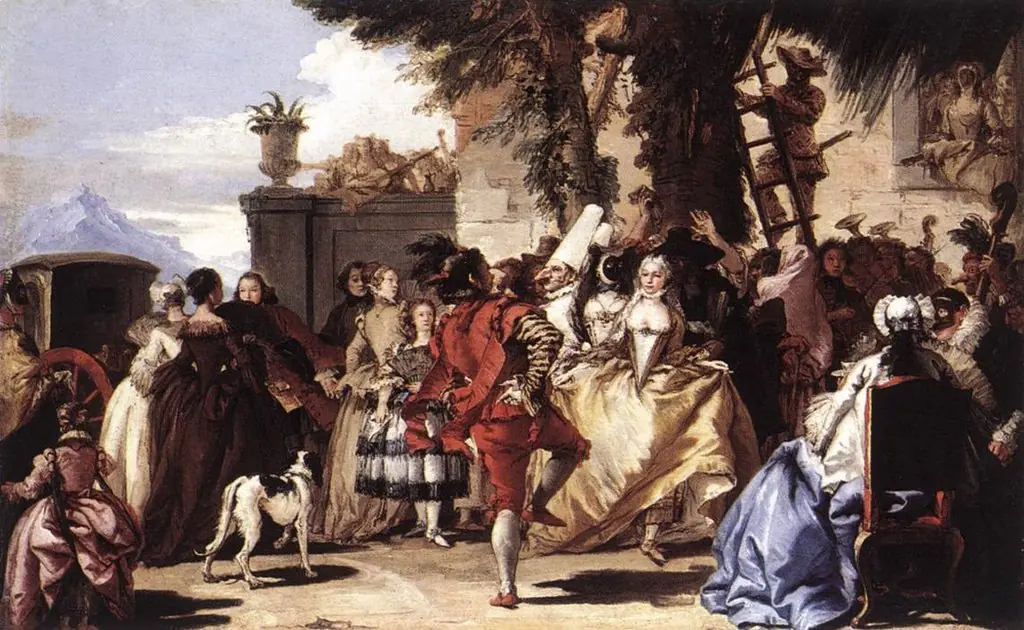 A Dance in the Country
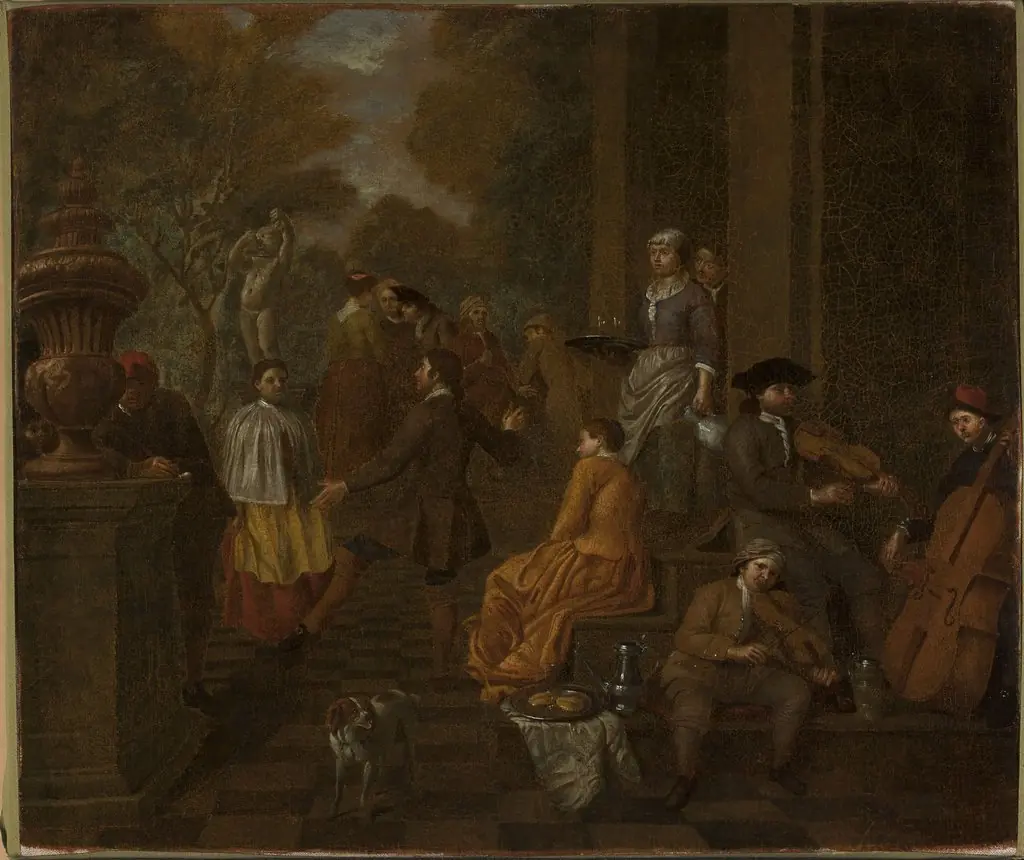 Company in the garden
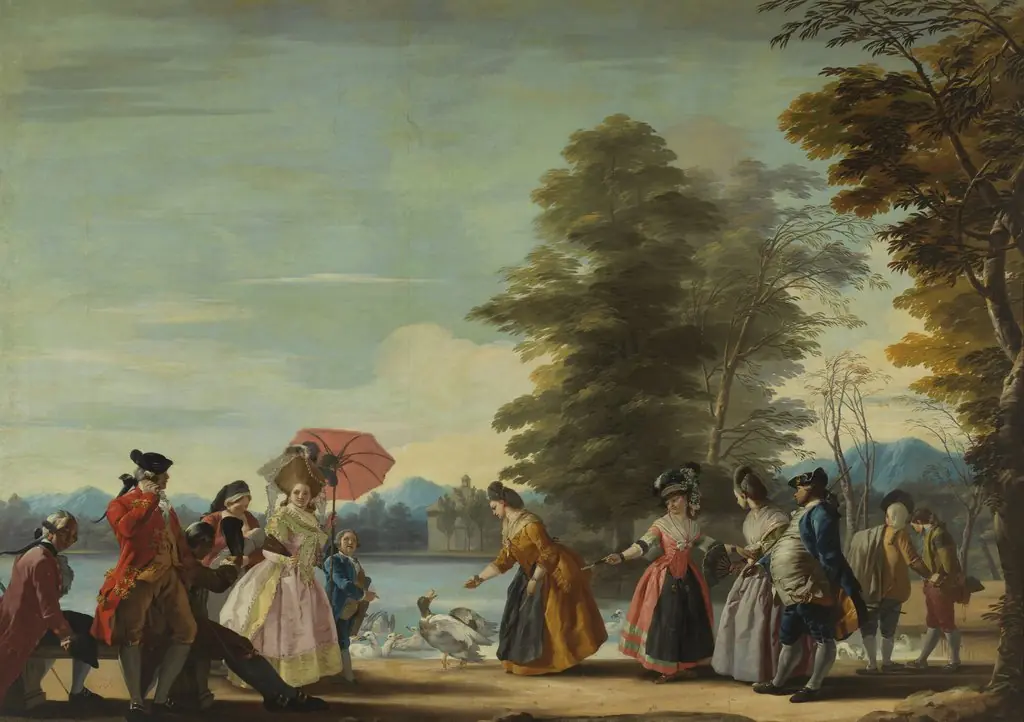 Un paseo a la orilla del Estanque del Retiro
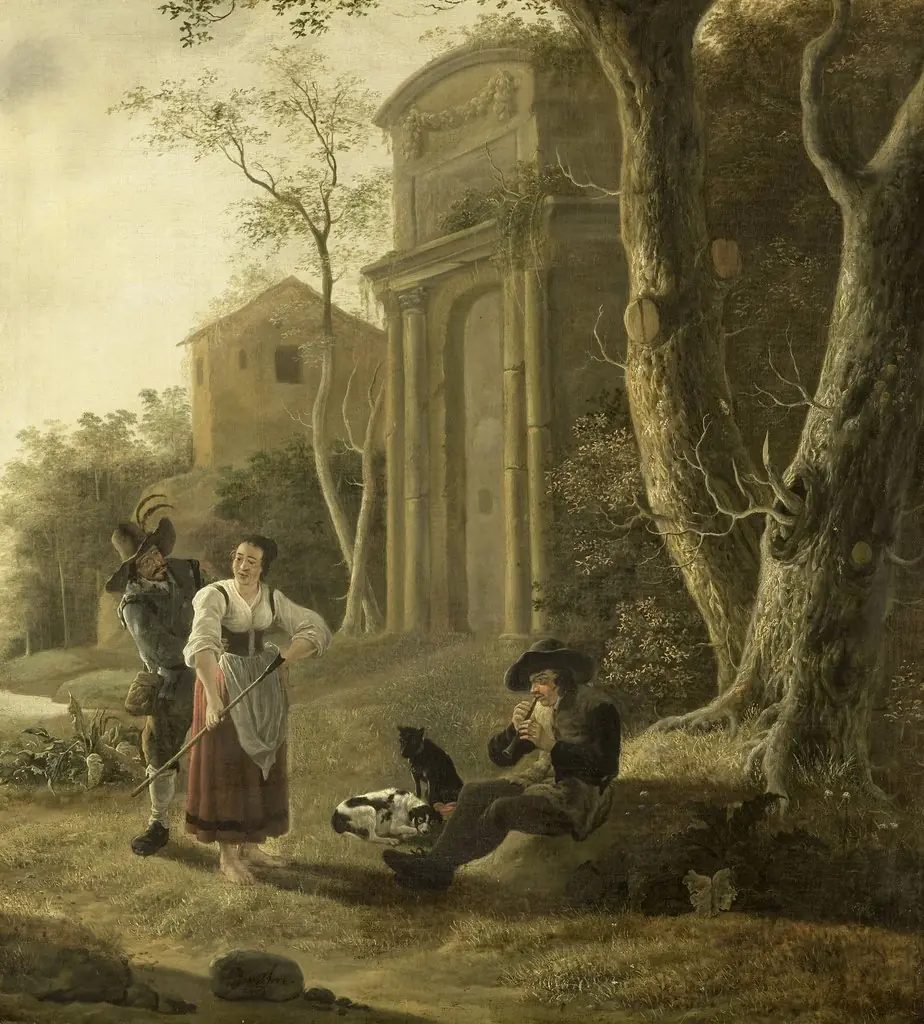 Pastoral scene with a flute player
 Singerie: The Dance
 The Fête champêtre