Artwork
Singerie: The Dance
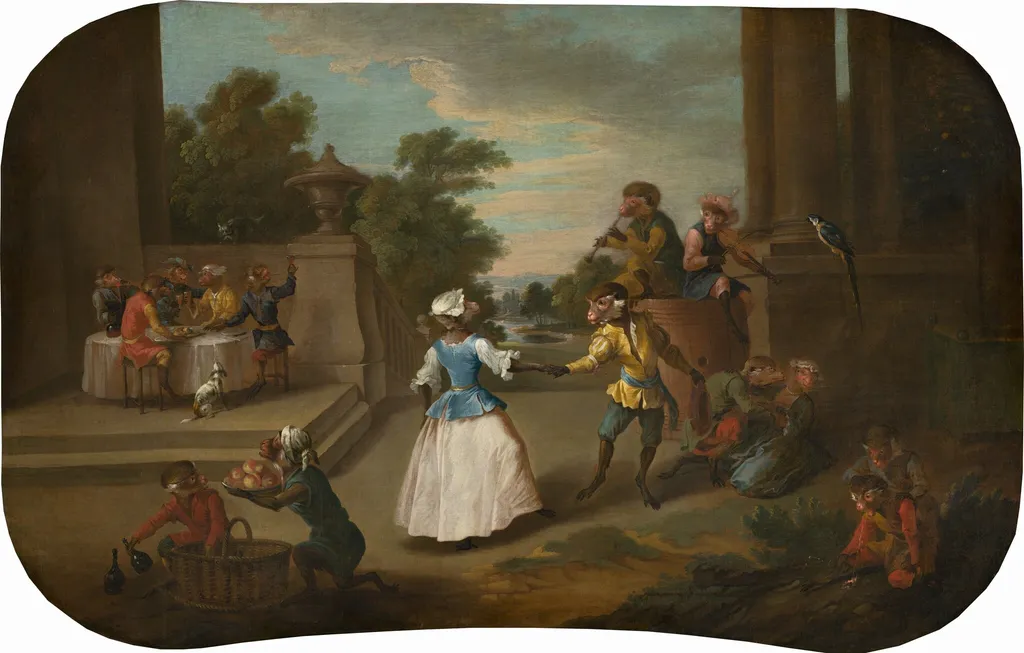
Singerie: The Dance is an oil painting by the Baroque artist Christophe Huet. It dates from 1739 and is held in the collection of the National Gallery of Art.
About this work
Overview
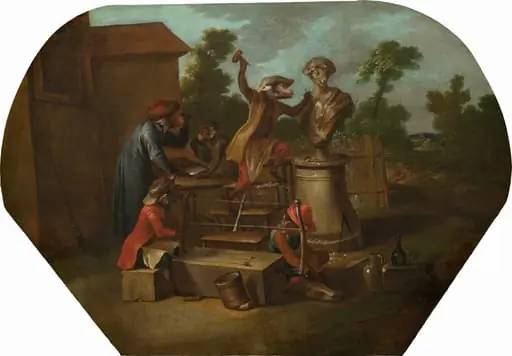
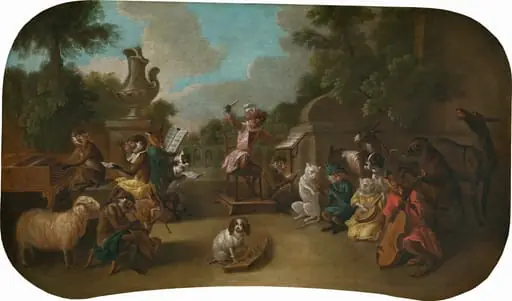
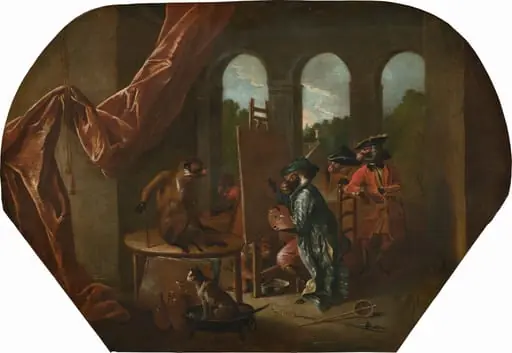
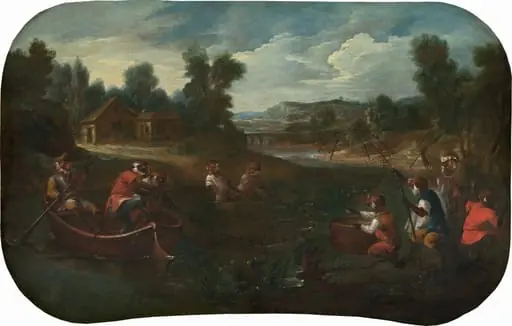
Christophe Huet’s oil on canvas, dated around 1739, presents a whimsical gathering of monkeys in a festive setting. The composition captures a moment of revelry, with the primates engaged in music, dance, and convivial dining. Rendered in the late Baroque period, the work combines vivid coloration with dynamic arrangement, guiding the eye across the bustling scene.
Subject & Meaning
The painting depicts a troupe of monkeys assuming human roles—playing instruments, dancing, and sharing a meal—evoking the tradition of singerie that humorously mirrors societal customs. Their animated gestures and expressive faces convey a light‑hearted critique of human indulgence, inviting viewers to reflect on the thin line between nature and culture.
Technique & Style
Huet employs a rich palette and strong chiaroscuro to emphasize volume and movement, hallmarks of Baroque aesthetics. Brushwork varies from fine detailing on the monkeys’ fur to broader strokes in the surrounding space, creating depth. The composition’s diagonal thrust and rhythmic placement of figures enhance the sense of motion throughout the canvas.
History & Provenance
Created circa 1739, the work emerged during Huet’s active period in French decorative painting. While specific ownership records are sparse, the piece reflects the popularity of decorative panels for aristocratic interiors of the era, suggesting it may have originally adorned a salon or private chamber.
Context
Singerie enjoyed prominence in 18th‑century French art, often employed to entertain and subtly comment on social mores. Huet’s contribution aligns with contemporaneous works that used anthropomorphic animals to satirize courtly life, situating the painting within a broader trend of playful yet pointed visual allegory.
Artist & collection