Artwork
Adoration in the Forest
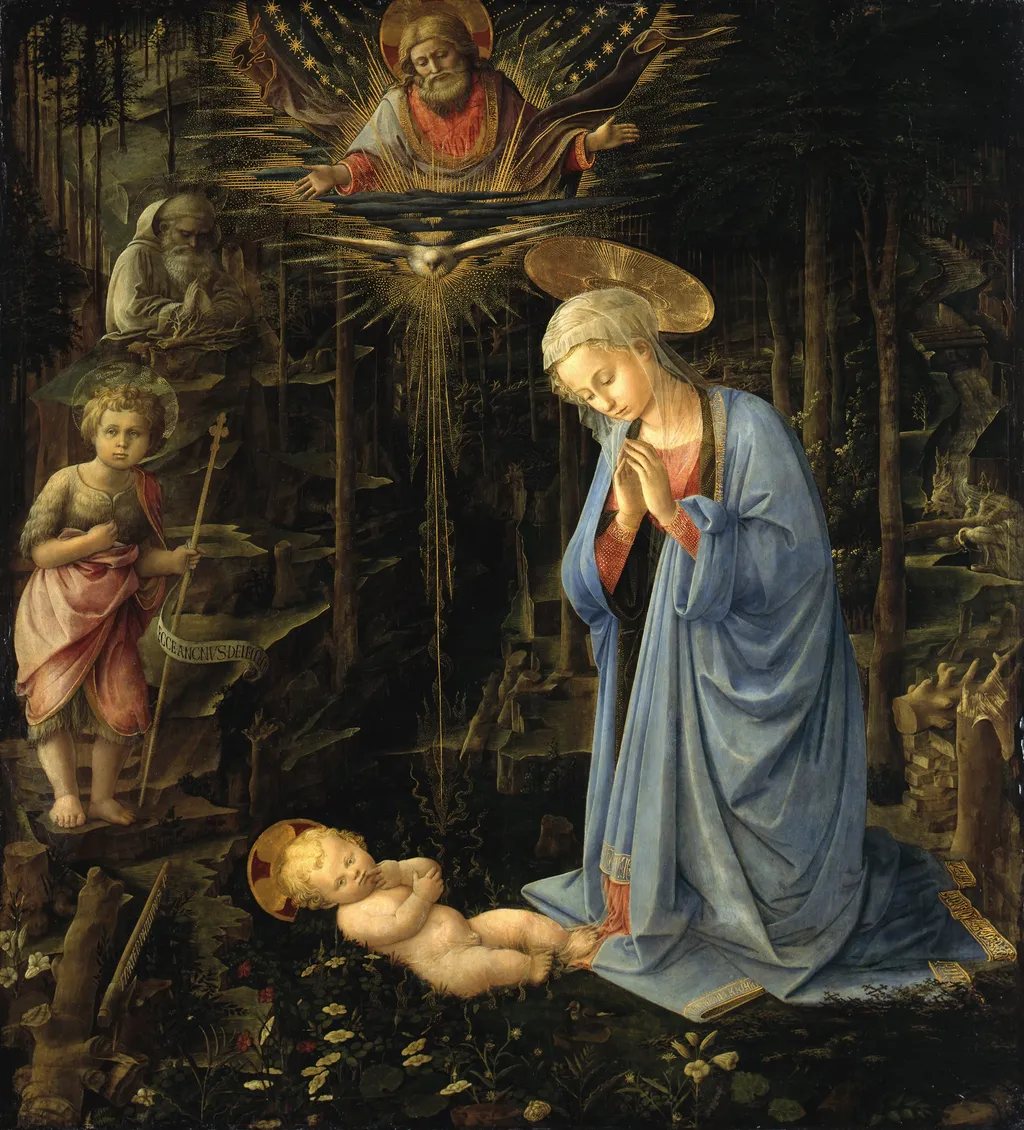
Adoration in the Forest is an oil painting by the Early Renaissance artist Filippo Lippi. It dates from 1459 and is held in the collection of the Gemäldegalerie Berlin.
About this work
The scene shows the Nativity but not in a stable—instead it’s set in a forest with cut logs and stumps.
Fra Filippo Lippi painted *Adoration in the Forest* around 1459. It’s an oil painting, now at the Gemäldegalerie in Berlin. The scene shows the Nativity but not in a stable—instead it’s set in a forest with cut logs and stumps.
This is a rare take on a familiar story. Lippi swapped the usual stable for a wooded hillside. The usual figures and animals seem replaced by others entirely.
Look up the artist Filippo Lippi next.
Overview
Fra Filippo Lippi’s *Adoration in the Forest*, executed around 1459, presents the birth of Christ in an unconventional woodland setting. Rendered in oil on panel, the work replaces the traditional Bethlehem stable with a forested slope strewn with felled trunks and stumps, creating a distinctive backdrop for the holy family.
Subject & Meaning
The composition reinterprets the Nativity by situating Mary, the infant Jesus, and attendant figures amid a rugged, timber‑cut landscape. This shift from a domestic stable to a natural, perhaps untamed environment may suggest a theological emphasis on Christ’s emergence from the wilderness of the world, while the altered entourage of figures and animals invites contemplation of alternative symbolic associations.
Technique & Style
Lippi employs the luminous qualities of oil paint to model forms and convey atmospheric depth, allowing subtle gradations of light across the forest canopy. The handling of foliage and bark demonstrates a keen observation of texture, while the figures retain the graceful linearity characteristic of his early Renaissance style, balancing naturalism with idealized elegance.
History & Provenance
Commissioned as the altarpiece for the Magi Chapel in the newly built Palazzo Medici in Florence, the painting later left its original setting. It now resides in Berlin’s Gemäldegalerie; a later copy by an unknown hand occupies the chapel today, preserving the work’s liturgical context while the original remains in a museum collection.
Context
Created during a period of intense artistic activity in mid‑15th‑century Florence, the piece reflects Lippi’s willingness to experiment with narrative settings. The Medici patronage, which encouraged innovative approaches to religious subjects, provided a framework for such departures from conventional iconography, aligning the work with broader humanist currents of the time.
Own this work as a print
Artist & collection
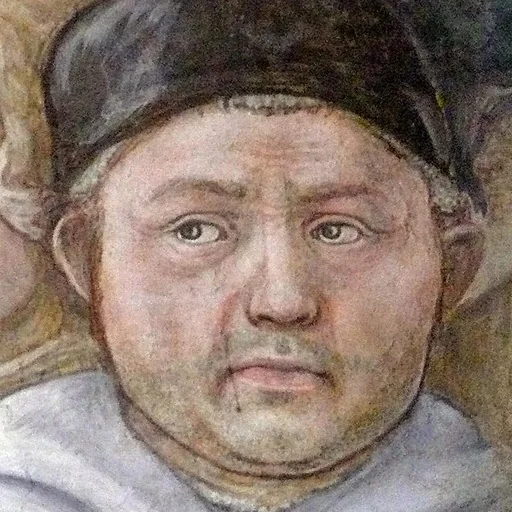
Artist
Filippo Lippi (c. 1406 – 8 October 1469), also known as Lippo Lippi, was an Italian Renaissance painter of the Quattrocento (fifteenth century) and a Carmelite priest. He was an early Renaissance master of a painting…