Artwork
A still summer day: hilly landscape, with cascade and ruin
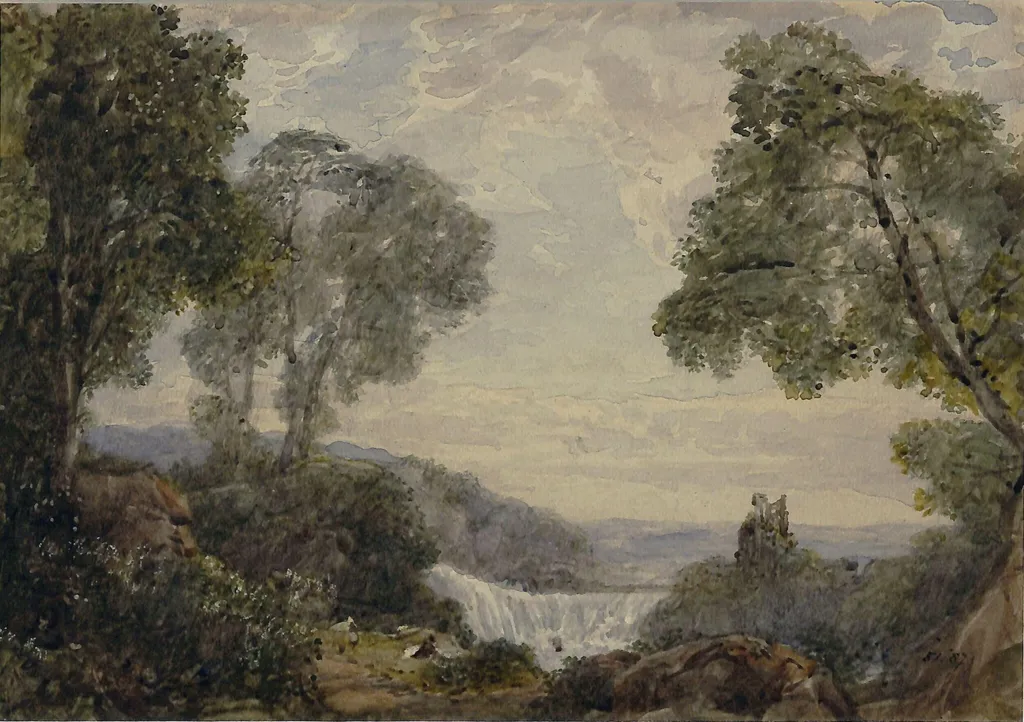
A still summer day: hilly landscape, with cascade and ruin is a watercolor work on paper by the British Romanticist artist Finch. It dates from 1825 and is held in the collection of the Victoria and Albert Museum.
About this work
Overview
Created in 1825, this watercolour by Finch captures a tranquil rural scene in the English countryside. The composition centers on a gentle cascade descending over moss-covered stones, framed by dense trees and a distant ruin. The work’s quiet atmosphere and restrained palette reflect a contemplative engagement with nature, typical of early 19th-century British landscape watercolours.
Subject & Meaning
The painting presents a harmonious blend of natural and architectural elements: a flowing waterfall and the weathered remains of a structure suggest the passage of time. The absence of human figures and the stillness of the scene invite reflection on solitude and impermanence. Nature is not idealized but observed with quiet reverence, evoking a sense of peaceful decay.
Technique & Style
Finch employed loose, fluid brushwork to convey the movement of water and the softness of foliage. Transparent washes of green, blue, and ochre create depth without heavy detail, while the white of the paper suggests foam and light. The sky is rendered with minimal strokes, allowing the paper’s texture to imply cloud cover. The waterfall’s rapid execution gives it an ephemeral quality.
History & Provenance
The work was completed during a period when watercolour was gaining recognition as a serious medium in Britain. Finch, active in the 1820s, was part of a circle of artists who documented the countryside with intimate, observational precision. The painting’s early provenance is undocumented, but it likely circulated among private collectors familiar with the Romantic tradition.
Context
Emerging alongside Romanticism’s emphasis on emotion and nature, Finch’s work aligns with a broader trend of artists turning to rural landscapes as subjects of quiet contemplation. Unlike dramatic Alpine scenes by continental peers, this piece favors subdued, domesticated scenery—reflecting a distinctly British preference for intimate, familiar terrain over the sublime.
Legacy
Though not widely known today, Finch’s watercolours contribute to the historical record of British landscape art’s evolution. His restrained technique and focus on everyday natural beauty influenced later generations of watercolourists who valued observation over spectacle. This work remains a modest but thoughtful example of early 19th-century landscape practice.
Own this work as a print
Artist & collection


 Landscape: Ripon Cathedral in the distance
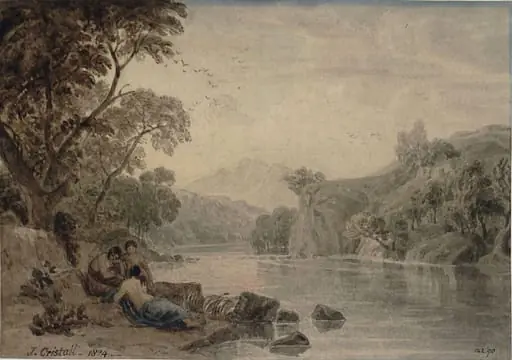 Borrowdale, Cumberland : Skiddaw in the distance
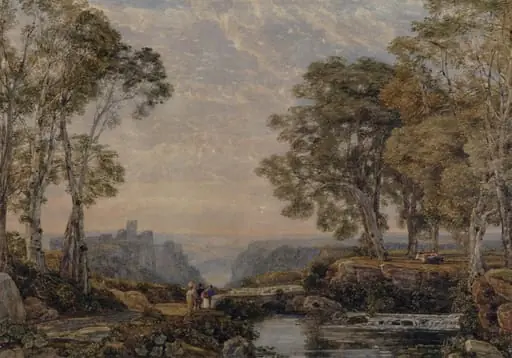 Morning: A Composition
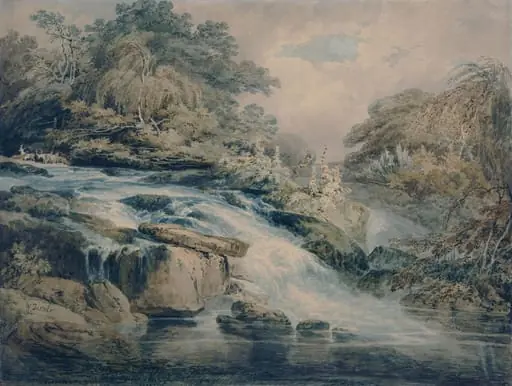 The Cascades, Hampton Court, Herefordshire
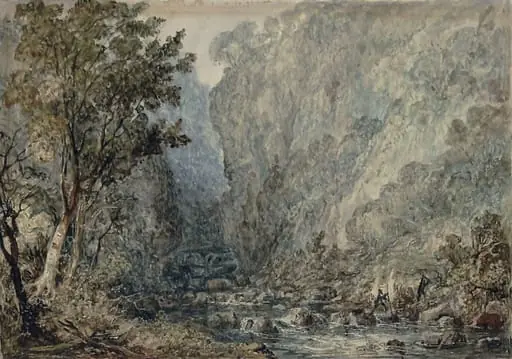 The Daryles, Ireland
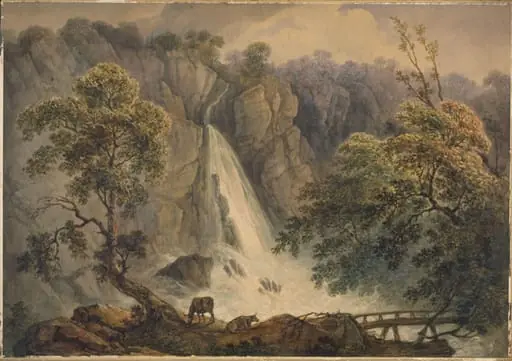 Falls of Powerscourt, near Bray, Co. Wicklow
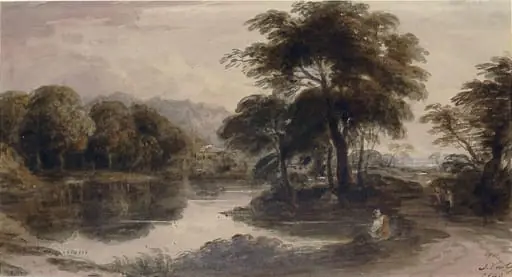 Landscape with pond
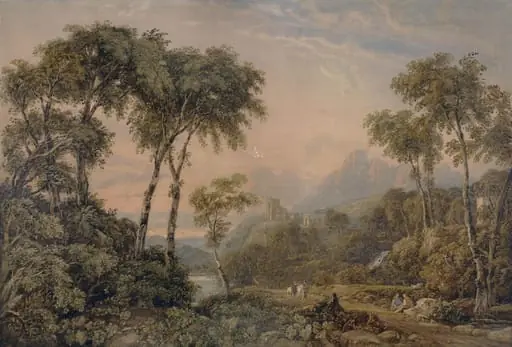 Landscape with Ruined Temple: Sunrise
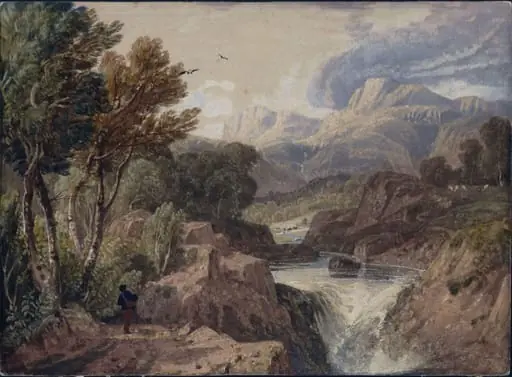 Landscape
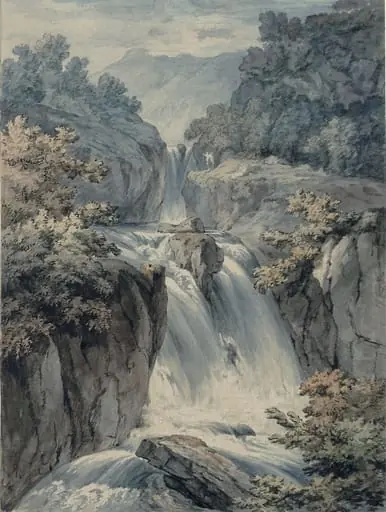 The Waterfall
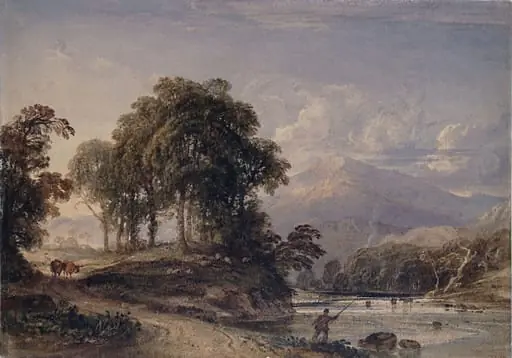 Moel Hebog, looking down the vale from Dinas Emrys, near Beddgelert
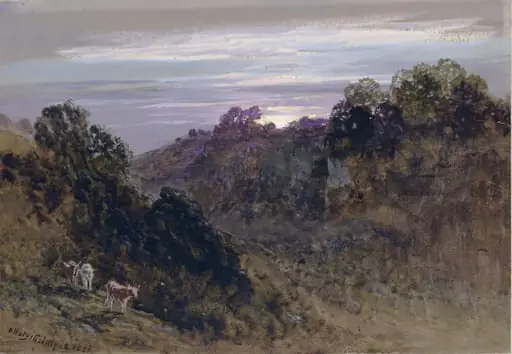 Hilly Landscape - Sunset