Artwork
Moonlight : classic landscape
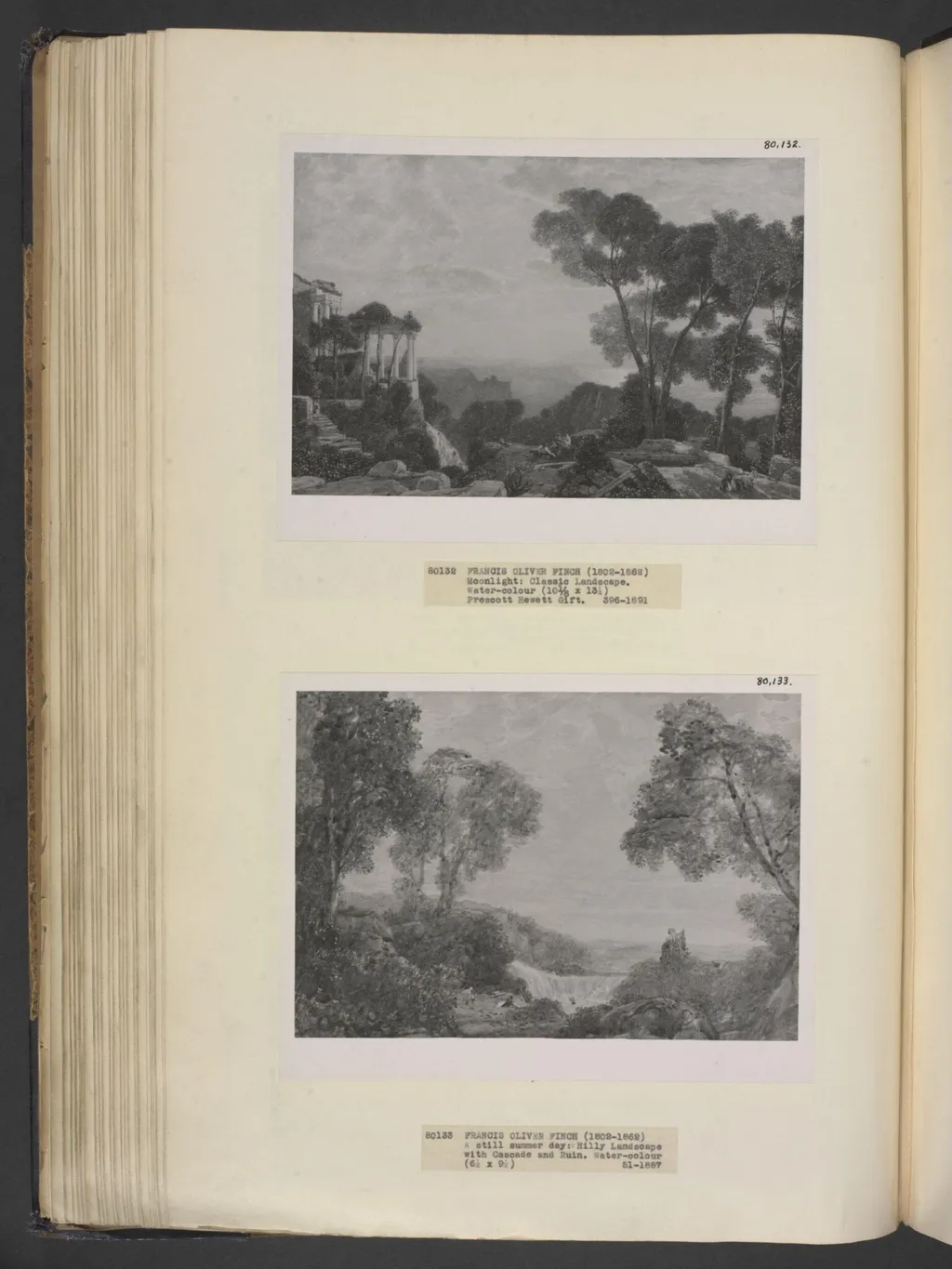
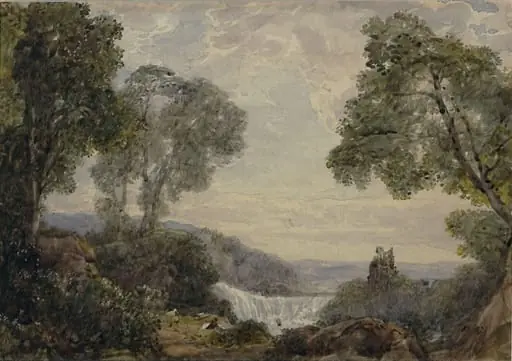
Moonlight : classic landscape is a watercolor work on paper by the British Romanticist artist Finch. It dates from 1817 and is held in the collection of the Victoria and Albert Museum. This watercolour landscape captures a tranquil hillside under moonlight, rendered with delicate washes and subtle tonal shifts.
About this work
Overview
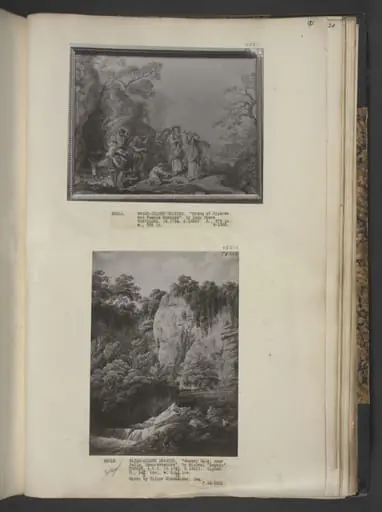
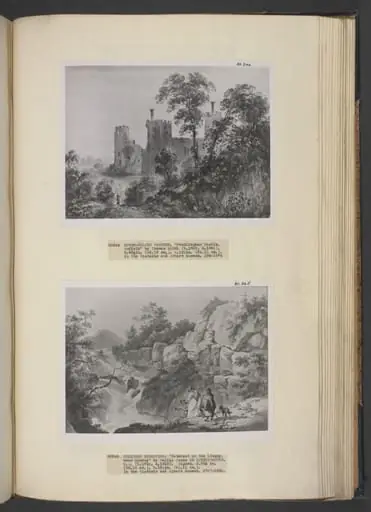
The composition centers on a gentle cascade falling over weathered stones, framed by sparse vegetation and the remnants of a stone wall.
This watercolour landscape captures a tranquil hillside under moonlight, rendered with delicate washes and subtle tonal shifts. The composition centers on a gentle cascade falling over weathered stones, framed by sparse vegetation and the remnants of a stone wall. The sky fades softly into the distant hills, creating a sense of quiet stillness. The medium’s transparency enhances the ethereal quality of the scene, avoiding heavy detail in favor of atmospheric suggestion.
Subject & Meaning
The scene presents a solitary natural setting untouched by human activity, emphasizing solitude and the passage of time. The crumbling wall hints at abandoned habitation, while the moonlit water and darkening hills evoke a contemplative mood. Rather than dramatizing nature, the work invites quiet reflection, aligning with Romantic ideals that valued introspection and the emotional resonance of the natural world.
Technique & Style
The artist employed watercolour’s fluidity to build layers of translucent pigment, allowing the paper’s white to suggest moonlight. Soft gradients transition the sky into the hills, while minimal brushwork defines the waterfall and foliage. Shading is restrained, using tone rather than line to suggest form and depth. The lack of sharp edges contributes to the dreamlike, hushed atmosphere characteristic of the artist’s approach.
History & Provenance
The work dates from the early nineteenth century, a period when watercolour was gaining recognition as a serious medium for landscape study. It likely originated in Britain, where artists increasingly turned to nocturnal and twilight scenes to explore mood and light. Its provenance traces to private collections of the period, though no public exhibition record is documented.
Context
Created during the height of Romanticism, the piece reflects a broader cultural shift toward emotional engagement with nature. Artists of the time moved away from idealized classical landscapes toward intimate, personal views—often at dusk or night—to evoke solitude and the sublime. This work aligns with contemporaries who favored quiet, unheroic moments in nature over grand narratives.
Legacy
Though not widely exhibited, the painting exemplifies a quiet strand of Romantic watercolour practice that prioritized atmosphere over spectacle. Its influence is seen in later artists who explored nocturnal landscapes with similar restraint. It remains a quiet testament to the capacity of watercolour to convey mood through subtlety rather than intensity.
Artist & collection